The Big Adventures of a Little Tree: Tree Finds Friendship
Written by Nadja Springer
Illustrated by Tilia Rand-Bell
A little tree possesses an overwhelming urge to travel and see the world. But how can he move? His roots are deep and entrenched in the soil.
The tree has an idea. He recruits the birds of the forest to help him. Slowly, he advances forward. When he comes upon a group of children, he has the opportunity to create deep friendships. Seasons come and go. Will the little tree be able to sustain his dreams?
I like the ideas and concepts that are conveyed through the simple words and illustrations. Having read the kindle version, the size of font was small even when enlarged. That is a drawback for beginning readers who want to read the electronic version.
This book affords the opportunity to explore many topics such as immigration, nature, environment, and mindfulness. That is why I would recommend it for readers of all ages.
If you enjoyed reading this book, please subscribe by clicking on the word Follow or by hitting the orange RSS FEED button in the upper right-hand corner of this page.
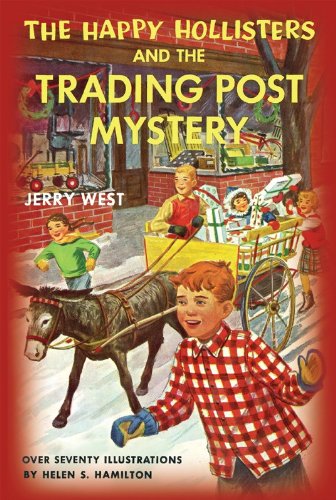
The Happy Hollisters and The Trading Post Mystery (Volume 7)
Written by Jerry West
Illustrated by Helen S. Hamilton
I love the Hollister series of books. They are vintage mysteries that harken back to a simpler life in the 1950s.
Sue has made a Christmas wish for a donkey. When the family receives a telegram to pick it up at the airport in New Mexico, Sue is elated. Soon they notice a note pinned around its neck.
How will the family use this Christmas gift to help other members of their community? What obstacles will they need to solve both mysteries?
Rollicking good fun with black and white illustrations of the period that will bring back memories to parents and grandparents and lots of questions from young readers.
This book is a good read for any age but especially for middle-grade readers.
If you enjoyed reading this post, please subscribe by clicking on the word Follow or by hitting the orange RSS FEED button in the upper right-hand corner of this page.
What a charming book to encourage children who have social anxiety fears! This book will certainly benefit children who are moving into new neighborhoods or schools or those who are shy and introverted.
Kayla has just begun class in a new school. She desperately wants to follow her grandma’s advice to try new things and the words, “What’s the worst that can happen,?” echo in her brain. But somehow she is afraid to approach classmates or new situations. She feels physical and mental anxiety.
One day, Kayla is invited to a party that will open the door for her.. Kayla also reveals her kindness toward her younger autistic brother.
This beautifully illustrated multicultural book teaches empathy, kindness and social-emotional skills to primary grade children in an easy to understand format. Highly recommended to parents and teachers.
If you enjoyed reading this book, please subscribe by clicking on the word Follow or by hitting the orange RSS FEED button in the upper right-hand corner of this page.
A Letter to My Fifth Grade Self (The Diary of Janie Ray Book 2)
Written by Lila Segal
Janie Ray gets a diary from her mom as a gift. She has the same problems most fifth graders experience. Janie spends most of her time with her best friend, Sheila. But fifth grade is full of social anxiety. There are snobs, bullies, teacher problems and family adjustments.
One thing about Janie is very different. When she was seven, she found a medallion. Together with Sheila. she has developed a secret language. Soon they would find a connection to the medallion that would allow them to travel back in time. Janie would learn about the perils of interfering with events and the responsibility of being the keeper of the medallion.
The book is a coming of age novel, mixed with fantasy and preteen relationships. It moves along fairly quickly and ends with a cliffhanger that will lead to the next book in the series. I did not read the series books prior to this one and did not find that a problem.
Recommended for readers ages eight through twelve.
If you enjoyed reading this post, please subscribe by clicking on the word Follow or by hitting the orange RSS FEED button in the upper right-hand corner of this page.
Superheroes Wear Masks: A picture book to help kids with social distancing and covid anxiety
Written by Chris Stead
Illustrated by Yohan Priyankara
A young boy narrates this story. He explains why he does not like wearing a mask. He cannot recognize the faces of people, they look scary, and these masks are uncomfortable to wear.
When he has a fight with this parents about wearing a mask, they ground him. That gives him time to think about people he knows who wear masks to protect themselves at work, like a doctor, a fireman, a construction worker, and a chemist. That reassures him. Maybe protecting yourself from harm is just being careful and smart.
This book is a good choice for parents and teachers to use in explaining the necessity of masks during the pandemic and reassuring the fears of young children.
If you enjoyed reading this post, please subscribe by clicking on the word Follow or by hitting the orange RSS FEED button in the upper right-hand corner of this page.
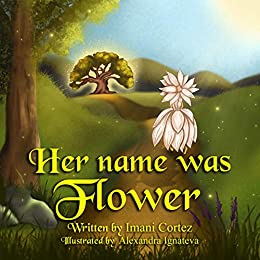
This book is a series of short stories to encourage empathy and acceptance of differences among members of the human race. The protagonist is named Flower. She is the daughter of the Sun and Moon.
Flower struggles to find her identity. She has trouble and sometimes disrespects her parents who try to teach her. When Flower becomes a bit older, she goes off to search why others do not accept her. Along her journey, Flower discovers that the most beautiful part of our Earth is the ability to respect and accept our uniqueness.
The illustrations in this book are beautiful. Cortes’ sends her readers many worthwhile lessons. However, young children may be confused and need guidance as to how to interpret them.
If you enjoyed reading this post, please subscribe by clicking the word Follow or hitting the RSS FEED button in the upper right-hand corner of this page.
There’s something special about looking back through treasures from your childhood. A long forgotten picture or story that you wrote in fourth grade brings you back to memories of you and your family today. Wouldn’t it be great to preserve memories for each of your children?
CONSIDER THESE SUGGESTIONS FOR COLLECTING AND PRESERVING WONDEFUL MEMORIES OF CHILDHOOD FOR EACH MEMBER OF YOUR FAMILY:
Obtain a box for each child’s memories.
If you already have designated storage space for each child’s mementos, it will be easy to stash new items into their “treasure box.”
The box can be as large as you have room to store it. Decorative boxes of different shapes and sizes are available at your local big box or craft store.
Or consider purchasing a plastic storage draw unit from a big box or stationery store. Label each drawer with your children’s names. When you have something to add, open the drawer and pop it inside.
Save school papers and projects.
Put the date, the grade when the task is completed, and the name of the child’s teacher on the back of the papers and the artwork you want to save.
Depending on how specific you want to provide, you can include the name of the school and the address you lived at during that time.
Preserve special photo memories.
You can use computer storage for files of pictures for each child. Back up your pictures each month to a flash drive or an external hard drive.
Or you can take pictures, print the ones you like, and date them on the back of the print. Add a brief description or record one, if you prefer.
Store hard-copy pictures in the child’s memory box. Then placing them in a fireproof safe or safe deposit box at a bank will protect them from loss or natural disaster.
Document special events.
Another fun way to preserve memories is by recording your observations and thoughts about your child’s experiences. Recording a one or two-page summary will help you recall them later.
So many of us would love to remember our childhoods for many years in the future. Take a little time now to document these occurrences for them.
Some suggestions include successful moments in the classroom, dance recitals, sports triumphs, or graduations.
But do not forget about struggles. Overcoming obstacles or failures that made a child stronger is just as important to recall.
Don’t forget those funny moments. A funny situation or a silly question make lovely memories.
To sum up, recording snippets of time from your child’s experiences through writing, pictures, and video are now available to us through modern technology. They are valuable tools to make documenting our memories simple and efficient.
Ten or twenty years from now, you will be able to sit down and view these memories through the eyes of two adults who have shared so many memories.
Don’t neglect to build a family history because you are too busy with everyday chores. I can personally attest to wishing that I had the technology available today to preserve more of my own children’s memories.
Kayla Dunn had just begun fifth grade in Boston when her parents inform her that they were achieving a lifelong dream to buy a farm in her father’s hometown of rural Orchard Falls.
Trouble begins almost immediately. Kayla is determined to outsmart Charlie Slade, whose family has always won the local pumpkin growing festival. After Kayla plants her pumpkin seeds, it rapidly becomes clear these are no ordinary pumpkins.
Monsters, giant pumpkins, aliens, and family feuds pepper the plot of this middle-grade adventure. This book is an exciting page turner. I would recommend it as Halloween party story or a classroom read-aloud as well.
If you enjoyed reading this post, please subscribe by clicking on the word Follow or by hitting the orange RSS FEED button in the upper right-hand corner of this page.
This children’s picture book is beautifully illustrated with soft colors and detailed images of a close-knit family living in a small cabin on the Canadian prairie at the beginning of the twentieth century.
Belle is one of eight children living with her parents. Christmas is nearly here. She is excited. Each family member receives one small gift. Belle cherishes her delightful wiener treat. When she wakes up the next morning, her gift has disappeared! Will her Christmas be spoiled? Read the heartwarming tale to find out.
This multicultural book entertains and educates children. They learn a bit of history, culture and family traditions. Bonus activities include a find the hidden picture on each page, discussion questions for parents and teachers to use after reading, a Christmas cookie recipe, and instructions for a walnut Christmas decoration.
I recommend this book for elementary school and middle school children and their families or classrooms to share.
If you enjoyed reading this post, please subscribe by clicking on the word Follow or by hitting the orange RSS FEED button in the upper right-hand corner of this page.
Last month, I posted an article on #World Kindness Day. Then I thought about the lack of it.
It seems life has taken us to a place where we no longer value kindness as a trait. In fact, kindness has been replaced with self-importance and wanting to stay impersonal. The question is why has the world become less kind? Is it that we no longer care about others? Do we believe kindness makes us weak? Is the lack of kindness from some global change?
I believe that kindness has become less important in the world today for many reasons:
We’re in a big hurry. Life has become so fast paced, filled with appointments and places to be that we no longer take the time to simply listen to someone.
Technology has taken place of the human face-to-face, voice-to-voice interactions of the past. No longer do we pick up the phone or meet face-to-face to talk to others. Now we spend our time texting, posting, getting involved in others drama or simply playing mindless games on our cell phones, tablets, computers and even our watches.
Technology has allowed us to say it’s okay to be late all the time. After all, we can simply text our friend we’re running late, and they’ll know. It’s taken away the common courtesies of saying thank you, hello, nice to meet you, please and “how can I help you”.
We no longer smile at others when we see them. We no longer sympathize or help someone who is having a rough day. Instead we place an emoji on our social media post or in a text and call it done.
There’s an app for everything. Want to have a relationship? Use this app. Want to order your dinner? Use this app. Are these apps taking away the connectedness we once had that created kindness? I believe they do.
Self-centeredness and greed is another reason kindness has taken a backseat. Many people are focused on their own lives, on getting ahead and doing whatever is necessary to beat the other guy.
People are more interested in taking care of their own self before they reach out and extend some type of kindness to others. We’ve become a society of “me first” that wasn’t seen as often just a few years ago.
Our environment causes us to withdraw from others. Living in crowded cities among strangers can make you quickly hide your natural tendency to be generous and kind to others. With crime, kidnappings, murders and other fears running wild in many cities, people have found it safer to keep to themselves. Road rage keeps people from stopping to help someone with car trouble.
Family structure has changed. Our upbringingwas different 30 years ago. We believed in helping each other. Neighbors looked out for each other. People weren’t afraid to help the poor and needy. People and children were taught to respect others and to be trustworthy and honest.
Today people are more afraid to show their kindness. Society is deeply divided. There is fear that we will be attacked for what we say or do. We don’t want to appear vulnerable and to get hurt so we attack with words and actions as a way to self-protect ourselves.
Kindness has taken a backseat to greed, technology, poor manners and the environment we live in. Instead of showing kindness we’re afraid to be seen as the nice guy because we might be taken advantage of.
I do not mean to imply all is lost. Like my Little Miss HISTORY character, I prefer to look at the world through rose-colored glasses. There are many philanthropic organizations out there that strive to alleviate suffering and help those in need. But I think we all need to be consciously aware of how easy it is to shut others out because we are too much wrapped up in ourselves.

 February 7, 2021
 bamauthor
 Comments Off on LOOKING TO PUT DOWN ROOTS









 Barbara Ann Mojica's BLOG
You must be logged in to post a comment.