Posts tagged ‘communication’

GUESS HOW MARION FEELS – A VIRTUAL BLOG TOUR AND GIVEAWAY

This post is sponsored by Maya Nurtures. The review and opinions expressed in this post are based on my personal view.

ABOUT THE BOOK

Guess How Marion Feels

Written by Miss Kaye

Illustrated by Miss Waitthk

Ages 3+ | 34 Pages

Publisher: ‎ Maya Nurtures (2024) | ISBN-13: 9781738593026

Publisher’s Book Summary: Marion is a kind, creative, and easy kid… but he’s faced with BIG emotions. Help Marion identify those BIG feelings in this interactive children’s picture book.

Guess How Marion Feels is a transformative experience that lays the foundation for emotional intelligence and meaningful connections. A gentle Social Emotional Learning (SEL) tool to guide parents, caregivers, and teachers to teach kids who struggle to pick up social cues and have challenges in social situations.

This book is made to celebrate and honor the feelings of our little ones, foster open communication, and create inclusive learning with our neurodivergent kids. Written by a neurodivergent author, Miss Kaye aims to support kids and everyone struggling with social interactions.

PURCHASE LINK

Amazon

Barnes and Noble

Bookshop.org

ABOUT THE AUTHOR

Miss Kaye was born in the Philippines. She had challenges as an adult neurodivergent. This serves as her inspiration for writing fun, engaging, and educational stories to teach life skills and mindfulness to kids.

ABOUT THE ILLUSTRATOR

Miss Waitthk is from Hongkong. She enjoys making people feel happy and joyful through her drawings. As a kid, she remembered drawing anime characters and coloring them with colored pencils. Since then, she kept on drawing.

MY REVIEW OF THIS BOOK

IT’S OKAY TO FEEL THIS WAY…

Guess how Marion Feels

Written by Miss Kaye

Illustrated by Miss Waitthk
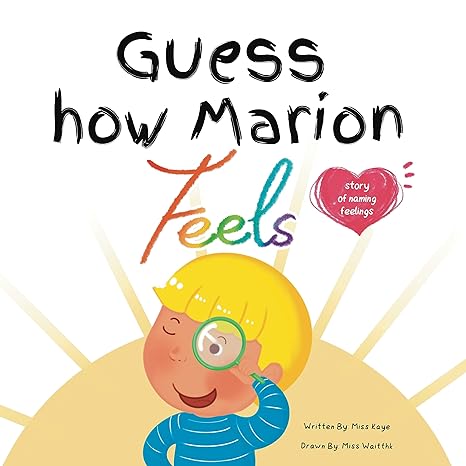
A beautiful, interactive picture book that allows young children to explore and communicate their emotions with others.

Marion wakes up happy to start the day. When his mother reminds him that today is the first day at school, his feelings switch to being scared and apprehensive. As the day progresses, readers watch Marion, and his feelings change. A new situation creates mixed feelings of excitement, worry, hope, anger, confusion, and relief.

Young readers are asked to guess what Marion is feeling in each situation by studying the pictures and text. At the end of the book, they get a summary of the book when Marion discusses the whole range of emotions with his parents.

The book is targeted for readers ages one through seven, but I feel the message in the tale is just as valuable for older children.

GIVEAWAY

Enter the giveaway for the chance to win a 1-hour FREE coaching session to launch your own picture book, along with signed copies of Guess How Marion Feels (one to keep and one to share with a neurodivergent charity of your choice under your name).


Click here for the entry form: https://www.thechildrensbookreview.com/guess-how-marion-feels-by-miss-kaye-awareness-tour/

TOUR SCHEDULE

Friday, February 9, 2024The Children’s Book ReviewBook Tour Kick-Off
Monday, February 12, 2024Life Is What It’s CalledAuthor Interview with Miss Kaye
Tuesday, Ferbuary 13, 2024icefairy’s Treasure ChestBook Review of Guess How Marion Feels
Wednesday, February 14, 2024The Momma SpotBook Review of Guess How Marion Feels
Thursday, February 15, 2024Barbara Ann MojicaBook Review of Guess How Marion Feels
Friday, February 16, 2024A Blue Box Full of BooksBook Review of Guess How Marion Feels and Little Free Library Drop
Monday, February 19, 2024One More ExclamationBook Review of Guess How Marion Feels
Tuesday, February 20, 2024Satisfaction for Insatiable ReadersAn article by Miss Kaye
Wednesday, February 21, 2024Crafty Moms ShareBook Review of Guess How Marion Feels
Thursday, February 22, 2024Get Outside and ReadBook Review of Guess How Marion Feels
Friday, February 23, 2024My Reading GetawayAuthor Interview with Miss Kaye
Monday, February 26, 2024Froggy Read TeachBook Review of Guess How Marion Feels
Tuesday, February 27, 2024Country Mamas with KidsBook Review of Guess How Marion Feels
Wednesday, February 28, 2024The Fairview ReviewBook Review of Guess How Marion Feels
Thursday, February 29, 2024Pages for PaigeBook Review of Guess How Marion Feels
Friday, March 1, 2024Cover Lover Book ReviewAuthor Interview with Miss Kaye
Monday, March 4, 2024Shooting Stars MagBook Review of Guess How Marion Feels
Tuesday, March 5, 2024Me Two BooksA Storytime Activity Paired with Guess How Marion Feels

LEARNING TO BALANCE OUR EMOTIONS

Social Skills for Kids 3-10

Written by Kate Herm

I like the detailed introduction explaining just how to use the book. It is important to note that the author requests the book be read in sequential order. While the child may only need work enforcing one or two areas, it is necessary to examine each stage within the framework of social-emotional development.

Herm presents activity suggestions grouped in categories like communication, listening, body language, self-control, empathy, problem-solving, manners and developing friendships. Of course, many of these categories contain social emotional skills that overlap. Parents can mix and match activities according to resource availability and time constraints. Most of the activities can be adapted to be flexible with an older or younger child. Perhaps siblings could work on some of these together or parents might introduce them on play dates.

A good addition to a parent or teacher’s education bookshelf for preschool and elementary school social skills.

SUBSCRIBE TO THIS BLOG FOR NEW BOOK REVIEWS EVERY WEDNESDAY AND SUNDAY.

DO YOU WANT TO KNOW A SECRET?

Do you ever wonder what heights you could rise to in your personal and professional life if you put all of your thinking into focus? So much of our brain capacity is unused and lying dormant. In a world that centers on acting on impulse and making snap decisions, what we need to do is put on the brakes. Even more important, how can we teach our children to make their own decisions, form their own opinions, and learn to become the independent thinkers that leaders and inventors must develop? What if you knew the secret of thinking so that your life would improve tenfold and help you achieve all the goals you have in life? Then you could pass these skills on to your children and grandchildren.

Critical thinking is developed over time and is like learning any sport or art. You can’t just get up one morning and say, “I think I’ll become a critical thinker today.” No one can simply will it into happening. For many, it takes years to develop a critical thinking knack. In some older citizens, we call it, “wisdom.”

The only paths through which a person can develop insightful thinking are by knowing and accepting the truth that there are flaws in your thinking. You must also constantly practice becoming a thinker who can effectively solve problems through logical thinking rather than emotions.

Becoming a critical thinker can help you develop strategies where you overcome the obstacles that life presents. Here are some obstacles you may want to obliterate from your life – and that’s possible with critical thinking:

Analyze the influences in your life. Learn to make your own decisions rather than falling under those influences.


Get your ego under control. Your ego may be keeping you back from advancing at work and from developing better relationships. Critical thinking can help you think without the influence of an inflated ego.


• Solve problems. Being too scattered to solve problems and “thinking” with emotions usually doesn’t solve anything. Using critical thinking can help you get in touch with your emotions and solve problems through logical thinking.


• Stop wasting time. You may be wasting entire days of productivity by going in many directions at once. We pride ourselves on multi-tasking, but in doing more, are we accomplishing less? We may not actually be enjoying anything we do to waste time because we know we’re going to be behind on our work or frustrated about wasting the day. Critical thinking can teach you how to evaluate your time and spend it wisely.

We all have a great capacity to think critically and to improve our lives immensely, but most of the time, it’s dormant. That’s because it’s undeveloped. We can make it better with practice, just as we would when learning a musical instrument or sport.

Non-critical thinking is a habit that we’re not even mindful of most of the time. We sit, staring at a mindless program on television, playing mindless video games, or engaging in gossip or other pursuits that don’t require critical thinking. Deep down in our hearts, we know that we are spinning our wheels.

If you want to develop the traits of a critical thinker, know that you must study and research – then, put what you’ve learned into practice on a daily basis. It’s worth the effort. Your life and that of those you care about will be happier for it.

Remember, “If you don’t know your history, you don’t know what you’re talking about.”

Go back

Your message has been sent

Warning
Warning
Warning
Warning.

HOW TO CUT THROUGH THE NOISE – TEACHING OUR CHILDREN TO BE CRITICAL THINKERS

About 64 million Americans get their news from social media. The reliance on newspapers, radio, and television news segments has been diminished or disappeared. Even broadcasts advertised as the “breaking news” rely on panels of “experts” to relay information. The days of a journalist simply reporting the facts without attaching opinions are gone.

Our children probably rely on social media to an even greater degree. How can we teach them to cut through the noise, sift through the mire, and uncover the objective truth? I have a few suggestions.

VARIETY IS THE SPICE OF LIFE

Make it a point to watch and listen to many different stations and social media outlets. Show your children how different outlets and reporters present information. Do they show both sides of an issue? Are certain people and groups ignored? Tell children they need to hear and see both sides of an issue before judging it as authentic. Ask them if the information was reported fairly. Did they get the whole picture?

EVERY STORY HAS MANY ANGLES

Explain how different people look at the same situation differently. Use examples of how family members like different foods, play different sports and choose different friends. Even mom and dad sometimes argue about preferences. The same applies to news issues. Adults can choose different media outlets and reporters to illustrate how there can be a multitude of different views about the same topic in the news.

IS THAT A FACT?

Use everyday situations to illustrate the difference between a fact and an opinion. I am wearing a red shirt today. That is a fact. When you say, that red shirt is ugly, you are issuing your opinion. Facebook and Twitter are littered with opinions. What do people share or retweet? They share and comment on the opinions with which they strongly agree or disagree. Social media outlets do not report the news, they display the opinions of those followers who have decided to reject or endorse them. Children need to understand that reality does not coincide with the majority of social media opinions. Point of view on an issue does not necessarily make what is communicated true. In fact, the reality might be something completely different.

YOU BE THE JUDGE

Adults and children can have fun and learn a lot by analyzing the ads seen in print and on TV. Study that boring commercial and think deeply about the message that is being communicated. How are the actors dressed? What do their gestures tell you? What words do they use? Do they exaggerate the benefits of the product? How are they trying to manipulate you into buying something you don’t really need?

After doing this a few times, take what you learned and apply it to the commentators, reporters, and “expert panels” that you see reporting the news. You will learn a lot about how much opinion is introduced into what is being reported as factual news. This knowledge will go a long way in developing critical thinking skills that will benefit children as they mature and develop the life skills they will need in future careers.

SEEING IS NOT BELIEVING

It’s okay to be skeptical. In the world of modern technology in which we can press a button to order in minutes, see ourselves in virtual reality, and communicate with friends, family, and co-workers instantly, it has never been more important to be vigilant and careful. We worry about computer hackers but often neglect to train our own brains to filter out the noise and the mixed messages that seek to distract and deceive us.

BE SMART AND RESPONSIBLE

Watch this quick video to learn how.

Check out all my learning resources for the entire family at http://www.LittleMissHISTORY.com

Subscribe to my YouTube channel

https://www.youtube.com/@bamauthor

GROWING AND CHANGING

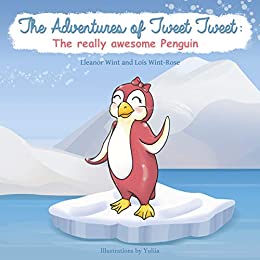
The Adventures of Tweet Tweet: A really awesome Penguin

Written and illustrated by Eleanor Wint and Lois Wint-Rose

This sweet little story is coauthored by a grandmother and nine-year-old granddaughter. It is based on a stuffed penguin who is personified in this tale.

Tweet-Tweet, the young penguin, brings beginning readers on a journey that explains how he broke his wing. Along the way, readers learn a bit about life in the Arctic, how penguins move and communicate, and an accident that lands Tweet-Tweet in the hospital.

Children learn about family bonds, adapting to change, and being resilient. The color illustrations add charm to the story. Readers will enjoy the dialogue format and personification of the characters. Two more books are in progress to continue Tweet-Tweet’s adventures.

Recommended especially for children ages five through eight.

If you enjoyed reading this post, please subscribe by clicking on the word Follow or by hitting the orange RSS FEED button in the upper right-hand corner of this page.

Check out all my learning opportunities at http://www.LittleMissHISTORY.com

#HOW TO TEACH LEADERSHIP SKILLS IN CHILDREN # 7 – A Short List

So you have attempted to provide a nurturing environment, set up good examples, and encouraged leadership qualities in your children.

Whether you are a teacher, parent, or other type of caregiver, you have probably heard about the importance of instilling leadership. But how? What skills? Following is a basic list of leadership skills you can teach kids. They are not numbered because each is equally important.

INDEPENDENT THINKING

Help your child break out of a “cookie cutter” mindset by teaching him/her to think independently. Ask for your child’s opinions on many different subjects, without judging or stating your opinion. Be open-minded. Listen so that no opinion is “wrong” or valueless. You might then share your own opinion respectfully, and if it differs, that’s okay – part of independent thinking is hearing many sides of an issue and coming to your own conclusions.

RESPONSIBILITY

Age-appropriate responsibilities are important stepping stones on the ladder of skills necessary for building leadership. Give your child responsibilities as preschoolers, and have him deal with the consequences if those responsibilities are not met. Of course, your child will require guidance; but once your explain what the consequences will be, it’s best to let them play out.

FAIRNESS

Leaders need to be fair and just. Being too rigid and unbending is not the best way to teach your kids about fairness, but being too permissive encourages a child to put himself first. Help them to understand what is fair and what isn’t, and how sometimes being fair means being firm even when your child or others might get upset.

NEGOTIATION

Have you thought about the importance of negotiation skills in leadership? Leaders understand the necessity for give and take and that often means compromise, Think about it: government leaders, particularly the president, need to be well-versed in the art of negotiation. It’s okay to discuss your child’s wants and desires. – Allow your children to present a convincing argument as to why they think they should have whatever it is, or participate in an activity. Be prepared to allow yourself to be “talked into” something now and then!

ORGANIZATION

Being organized is essential to good leadership. Teach your children how to prioritize tasks and organize their time. Explain how to use calendars to keep things straight, and show how time can be organized in different ways when prioritizing tasks.

Children need to be taught how to organize priorities in terms of immediate and future goals. In the category of organization is also the concept of making lists. Have your children make lists of what tasks they plan to complete each day and then in one week. This also helps break tasks down into steps – maybe your child has a book report or research paper due one or two weeks from now. Helping your child break that down into weekly and daily steps can be useful- not only in accomplishing the completing of the task, but also in instilling the leadership skill of organization.

COMMUNICATION

This is a vital skill for leadership. Leaders must express their goals and their vision for whatever project or task they are leading or coordinating. They can’t expect others to read their minds or carry out instructions without direction. Teach your kids good communication and listening skills by encouraging them to share their thoughts even if you disagree, and by actively listening yourself. Both you and your child will be happier and more successful.

If you enjoyed reading this post, please subscribe by clicking on the word Follow or by hitting the orange RSS FEED button in the upper right-hand corner of this page.

Discover all my learning opportunities at http://www.LittleMissHISTORY.com

OCEAN PLAYMATES

DOLPHINS: Fun Facts and Amazing Photos of Animals in Nature

Written by Emma Child

I have read several of the amazing animals books written by this author. Who can resist looking at the face of a dolphin? Child begins by describing the general features of dolphins like smooth skin and bottlenoses and then goes on to explain there are many variations. I had never heard of the dalmatian dolphin and was surprised to learn that dolphins migrate each year.

Child’s discussion of the way dolphins communicate by echolocation and a whistle sound that is unique to each dolphin is fascinating. I learned that dolphins use sea sponges to protect their mouths from spiny fish and that some dolphins have more than one hundred teeth. Children will be surprised to learn that dolphins live in families like theirs and that they delight in playing with each other. The dolphins’ intelligence level is second only to that of a human and they are good problem solvers.

This book is informative and a great research tool for children in the elementary or middle grades. Only one thing disappointed me. The photos on the Kindle can be enlarged by double-clicking, but this was not simple to do and once enlarged some of the photos looked blurry.

Recommended for dolphin lovers everywhere regardless of age.

If you enjoyed reading this post, please subscribe by clicking on the word Follow or by hitting the orange RSS FEED button in the upper right-hand corner of this page.

A SYMBOL OF PRIDE

African Wild Dogs: Amazing Facts and Fun Photos About African Wild Dogs

Written by Rita Terry

africanwilddogspic

An interesting picture book for elementary school children and all those who are interested in unusual animals. African wild dogs are related to canines and wolves. Unlike domesticated dogs they have four claws instead of five. Like wolves they live in packs. They are carnivores and their hunting habits require a rather large habitat area of 1,500 square kilometers. African wild dogs are sometimes called painted dogs because they are covered with patches of red, black, white, yellow, and brown patches. Today their habitat has been largely reduced to South Africa due to rabies, vehicle accidents and the rapid encroachment of farmers upon their territory.

Terry discusses how these creatures communicate and the rituals they perform before the hunt. She explains how the pack is dominated by an alpha male and female, but stresses the fact that all members of the pack understand their roles and are protected and maintained by the rest of the family. The inside photographs are excellent; they capture the spirit and character of the animal. The print is large and easy to read for the younger reader, and the text well-written for the most part. Nice book to put on a classroom reference shelf for those interested in animals or dogs in particular. The author has written other nonfiction books about many other animals living in the past and present. Available in kindle and print format.

If you enjoyed reading this post, please subscribe by clicking on the word Follow or by hitting the orange RSS FEED button in the upper right hand corner of this post.

FURRY FRIENDS

Guinea Pig Books for Kids Amazing Pictures and Interesting Facts

Written by Susie Eli

guineapigspic

Guinea pigs are lovable, furry, easy to maintain pets. This nonfiction book contains lots of interesting information about the creatures as well as instructions on their care.

No one knows for sure how they got their name. These creatures belong to the mammal class, though they are actually rodents. At one time they might have been transported through New Guinea or a thriving species in Guiana in South America. Others theorize that Europeans who bought them as pets paid a coin called a guinea to make their purchase. Today the largest population in the wild lives in various parts of South America

Males are called boars; females are named sows. These animals are herbivores, preferring fruits and vegetables. Average lifespan is five years. They have poor eyesight, but a keen sense of smell. Guinea pigs communicate by squealing, and prefer living in small groups. In the wild they are common prey for larger animals. These small creatures grow up to ten inches and weight two to three pounds. If kept as pets, they require little more than a clean cage with soft bedding, separate bowls for food and water, and enough room for moderate exercise.

This book is perfect for the beginning reader who is thinking about a pet, loves animals, or is seeking to build up a library of information about animals. Adorable photos of these cuddly creatures are a bonus.

If you enjoyed reading this post, please subscribe by clicking on the word Follow or by hitting the orange RSS FEED button in the upper right hand corner of this page.

SIGNS OF SUCCESS

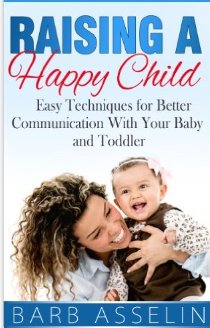
Raising a Happy Child: Easy Techniques for Better Communication With Your Baby and Toddler

Written by Barb Asselin

ASLsign,pic

This book focuses on using American Sign Language with babies and young children in an effort to provide a means for parents to better answer the communication needs of their children. Learning and using ASL allows a child to communicate with parents before they are able to use spoken language.

Asselin bases the book on her own experiences with her two girls. She begins by explaining what American Sign Language is composed of and the types of populations for which it was designed. The author provides some history of its use. While ASL is used primarily with the deaf, Down’s Syndrome or Learning Disabled children, parents and caregivers have learned that babies can easily learn the basic signs to use for communication. She lists the 50 plus signs that are most common, milk, again and more are often starting points. Asselin cautions parents not to overdo or force learning, but to gradually build up a set of vocabulary words. Once you have begun to communicate with your child, the next step is to introduce the program to caregivers and teachers. Finally, the author provides a comprehensive list of resources for reference and additional support in using the program.

I have a nephew whose parents have introduced him to sign language. He is quite adept and comfortable with basic sign and takes to it naturally. This book is a good tool for any parent who is interested in exploring earlier and better communication with a child and is willing to take the time to invest in mastering it. I would recommend all parents and prospective parents to take a look at it.

If you enjoyed reading this post, please subscribe by clicking on the word Follow or by hitting the orange RSS FEED button in the upper right hand corner of this page.