Posts from the ‘nonfiction’ Category

SWINGING WITH THE PLANETS

Sing the Planets: I’ll Remember That (Volume 1)

Written and Illustrated by Bonnie Ferrante

SingthePlanets,pc

A different and innovative approach to introduce the planets of our solar system to children. Wish I had this book when I was teaching the solar system to third grade students. This author combines beautiful photos of the planets with multicultural drawings of children. Instead of simply presenting information, readers are provided with a story about the mythological background behind the name of each planet. The author distinguishes between the inner and outer planets and explains the features which make them different. Each planet is assigned different notes and a musical song that can be sung to the tune of “Alouette.” Drawings indicate a unique movement associated with each planet like hugging yourself, flapping arms like wings or spinning around. Children can feel themselves moving in space as the planets do. The information is up to date; Pluto is no longer classified a planet. Some children remember better with a word rhyme so Ms. Ferrante suggests the sentence, My Very Excellent Mother Just Served Us Noodles as a mnemonic to remember the planetary names. At the end of the book, a glossary redefines and elaborates on all scientific terminology mentioned in the text.

Such a wealth of knowledge packed into 35 pages. Younger children will enjoy looking at the photos and performing the gestures. Older students will expand their knowledge base of the solar system.

A child will be able to use this book over and over again for a number of years. Recommended for children ages five and up. Also a great family or classroom group activity!

If you enjoyed reading this post, please subscribe by clicking on the word Follow or by hitting the orange RSS FEED button in the upper right hand corner of this page.

STRETCH YOUR NECK

Giraffes: Fun Facts and Amazing Photos of Animals in Nature

Written by Emma Child

Giraffes,pic

Emma Child gives us another well-written selection in the animals of nature series. The author presents a comprehensive view of the life of a giraffe in the wild. She covers their appearance, eating habits, social habits, environment, breeding, and enemies. At the end of the book there is a kind of summary or fun facts page, which children can use to share quickly with friends. Here are just a few things I learned in this book: a giraffe’s neck might weigh as much as 600 pounds, giraffes have four stomachs and a purple tongue to help protect against sunburn, and giraffes sleep only from ten minutes to two hours per day!.

Four color photo illustrations accompany each chapter. Unlike most children’s e books, these pictures can be enlarged so that the reader can study them in greater detail. The author has a good sense of humor and the book is written in a casual free flowing text style. Perhaps because the giraffe is considered such a docile animal, it is often overlooked. Children who are animal lovers will enjoy learning and looking at this book over and over. Appropriate for any age, but especially recommended as an independent read for children ages seven and older.

If you enjoyed reading this post, please subscribe by clicking on the word Follow or by hitting the orange RSS FEED button in the upper right hand corner of this page.

AZTECS AT A GLANCE

Legends of History:Fun Learning Facts about the Aztecs

Written by Matt Curtis

AztecHistory,pic

This was my first time reading a book in this series. Other books in this series discuss civilizations such as the Vikings, Egyptians, and Celts. Quite a bit of knowledge packed into thirty-four pages. Curtis uses a conversational approach in discussing what peoples made up the Aztecs, where they originated, who were their leaders, and how they got elected. He includes descriptions of the cities they lived in, the pyramids within them, and their controversial religious views which involved human sacrifice. One of the sections that I found most interesting was Curtis’ explanation of the social stratification system and the erratic system of justice they followed.

Curtis gets down to everyday life when he talks about children, the games they played, their pictograph language, and the type of ornate artwork and clothing worn and displayed, especially among the noble classes. Of course the empire came to a swift end once the Spaniards landed and the welcoming Aztecs realized that Cortes and the Spaniards intended to deplete their economy and rule their lands with an iron fist. Two years later in 1521, the Aztec Empire had been conquered.

These books are targeted for ages five through fifteen. While the text is clearly written, I feel it most appropriate for readers in the eight to twelve age range. The photos included are small but relevant. Parents, teachers, students and librarians will appreciate having this book on their shelves for reference and a good starting point for further exploration of the topic. I look forward to checking out others in the series.

If you enjoyed reading this post, please subscribe by clicking on the word Follow or by hitting the orange RSS FEED button in the upper right hand corner of this post.

WHAT IS IT?

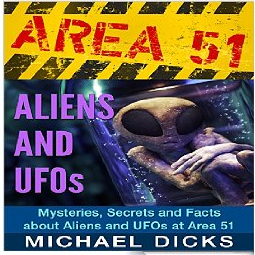
Area 51 Aliens and UFOS – Mysteries, Secrets and Facts about Aliens and UFOs at Area 51

Written by Michael Dicks

Area51,pic

Dicks has done his research on a controversial topic; he presents it in a straightforward and objective fashion. This book is not a sci-fi tale of invasion of the earth by little green men. In this book of approximately eighty pages, the author covers a lot of territory.

To summarize briefly, readers will learn about the exact location and historical background of Area 51. They will learn about the earliest projects dating back to the 1940’s and 1950’s like the A-12 Spy Plane and the Lockheed U-2, plus other projects that have been rumored tested there. The author explores the conspiracy theories, and the rumored alien crash at Roswell, NM. He discusses mysterious cleanup activities around the base. I found the discussion about ancient texts around the world and DNA analysis interesting. Dicks discusses the testimony of those who claimed to have seen aliens including astronauts and pilots from the US and Russia. Perhaps the most controversial part of the book is the work of Dr. Dan Burisch and the Lotus Project which discuss aliens as human intelligences from the future.

Whether you believe in aliens or not, this book is a well-written analysis on the subject of Area 51. Appropriate for readers ages twelve and older, I am sure that budding middle grade scientists and sci-fi fans interested in the subject will be able to handle the text.

If you enjoyed reading this post, please subscribe by clicking on the word Follow or by hitting the orange RSS FEED button in the upper right hand corner of this page.

LEARNING TO LIVE WITH A TODDLER

Zen Parents, Cooperative Toddlers: Your parenting tool set to staying calm, eliminating whining, and living a fun family life.

Written by Anna Anderson

ZenParents,pic

Sound like pie in the sky? This brief book is not meant to be the definitive how-to guide by an expert but a sympathetic parent who is sharing her experiences. The author offers some common sense approaches to maintaining sanity and family peace during this trying time. Andersen encourages parents to be nice to themselves, develop a positive attitude of love and cooperation, and to learn to let go and be more patient while letting go of stress. It is necessary to set home rules, but at the same time relax unrealistic expectations and give the young child choices within reason.

When communicating with a toddler, a parent needs to connect in a way that the child can understand and to listen as well as speak. Parents must learn the fine line between firmness and gentleness. Use the philosophy, “walk a mile in my shoes.” Toddlers are curious, but must also learn how to respect boundaries while exploring. Give them chores and realistic expectations to spark creativity.

Finally, the author sets forth scenarios in which toddlers do make unreasonable demands and recommends different approaches to handling them. By making the young child see that their behavior is inappropriate, ignoring it, and then astonishing them by doing something that is playful; you will allow your child to feel as if you are able to understand their thinking and not demand compliance with your way of doing things. If parents allow themselves to develop tools to handle stress and be grateful and proud of their children, life will become easier and more enjoyable

Andersen offers a free download of a morning and evening routine chart. I would recommend this book to parents, teachers, grandparents and daycare personnel as an easy to read helpful guide from which you will surely pick up at least one or two ideas you can use.

If you enjoyed reading this post, please subscribe by clicking on the word Follow or by hitting the orange RSS Feed button in the upper right hand corner of this page.

AUTISM AWARENESS

Early Signs of Autism in Toddlers, Infants and Babies: Diagnosis and Treatment Options

Written by Leslie Burby

AutismEI,pic

The author is the mother of two children on the Autism spectrum and the Editor of Autism Parenting Magazine. She wrote this book to share her experiences and enlighten the public about identifying the signs of Autism in young children, a condition that is widely misunderstood. Burby endeavors to help parents understand what the signs are, how diagnosis criteria have changed, what sensory conditions may accompany Autism, how to get a diagnosis and who to contact as well as ancillary medical conditions and treatment possibilities.

I worked in this field for many years as a special educator and know first hand how Autism affects every child differently, how much conflicting information is out there, and how confusing the myriad symptoms and treatment options appear. The author systematically breaks down the old and new ways of identification and the five common types of Autism. She outlines the early signs and possible accompanying behaviors. Burby presents parents with a guideline of developmental milestones to look for in the areas of cognition, speech, social, adaptive, gross and fine motor skills. The section on sensory issues explains the differences between hypo and hyper sensitivity and indicates the behaviors that might accompany each. She also suggests ways to soothe children from her own personal experiences. Autism generally comes with a host of other medical conditions. Leslie outlines them: obsessive compulsive disorder, attention deficit disorder and Fragile X Syndrome are just a few.

Most importantly, the author insists that parents not ignore the problem or allow pediatricians to suggest that they wait. She summarizes many of the popular early intervention strategies for cognitive, motor, speech and sensory issues. Even more valuable is the section which gives contact information country by country. Burby gives answers to frequently asked questions and offers a free copy of Autism magazine as well as sharing her personal contacts and reference sources.

This is a book that every parent, health clinician and educator should have in their library. Our children are counting on us.

If you enjoyed reading this post, please subscribe by clicking on the word Follow or by hitting the orange RSS FEED button in the upper right hand corner of this post.


BIBLE STORIES….YES OR NO?

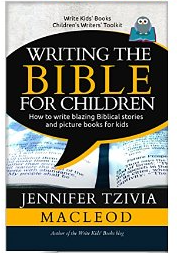
Writing The Bible for Children: How to Write Blazing Biblical Stories and Picture Books for Kids

Written by Jennifer Tzivia MacLeod

WritingBiblestories,pic

I was drawn to this book by the second part of the title. Because I write picture books for kids (and adults), I was curious to see how the author would connect the concept with the writing of biblical stories.

Strangely enough, she begins by stating the reasons for NOT writing Biblical stories. These include the wish to get rich, demonstrate superior intelligence or the presumption that you and your religion can teach better than anyone else. The correct reason for writing them is that the Bible is full of timeless stories that can be meaningful to any generation. Proceeding from there, the author lays out how to write such a story, how and where to search for one, the journalistic method , the technique of story flow, presenting the protagonist, writing the dialogue, and presenting your point of view.

Once your story is written, the really hard work begins. The author must edit over and over again, gather the artwork, design the cover, correctly format the work and then publish the story. Authors must know how to interpret the inconsistencies in the Bible and reconcile them with their own view of Christianity. MacLeod gives the writer some excellent pointers on how to avoid mistakes that can derail a book if the appropriate illustrations are not carefully chosen to correlate with the meaning of the text.

I thoroughly enjoyed the author’s presentation and common sense advice. Even though I have never written a Biblical story, I appreciate the relevance of the topic to that of writing picture books for children. This book is a must for writers as well as parents, librarians or teachers who are the vehicles for providing access to the literature that their children read.

If you enjoyed reading this post, please subscribe by clicking on the word Follow or by hitting the orange RSS Feed button in the upper right hand corner of this page.

HORSING AROUND

Horses: Amazing Pictures & Fun Facts on Animals in Nature

Written by Kay de Silva

Horses,pic

This book is a must for a child interested in horses or for an adult who wants to know more about these beautiful animals that have played such an important part in history. It is well organized and illustrated with color photographs. The author explores the family and habits of horses, their anatomy, how horses communicate, the types of breeds, and relationship to man.

Here are a few interesting facts that I discovered. A horse lies down for only 45 minutes a day, and when it does, others in the herd keep watch. A horse’s eyes are the largest of all the land mammals. Horses have baby teeth like humans. You are able to tell a horse’s age by looking at its teeth. Older horses have yellow teeth and other pattern markings. That is where the expression that it is rude to look a gift horse in the mouth originated! I learned that a horse’s height is measured in hands (each measures four inches or ten centimeters).

One of the most interesting sections discussed temperament. Horses are classified as hot blooded, warm blooded or cold blooded. Hot blooded horses are quick to learn and have lots of energy; many are race horses. Warm blooded horses are calmer and are more suitable to be riding horses. The cold blooded horses are heavier and more muscular. They are very calm and suited to work like working on farms. Today horses are involved in sporting events like horse racing and individual equestrian events. Earlier in our history, horses were used in warfare.

The author packs a lot of information in this book of less than sixty pages. Whether the reader is a horse enthusiast or just an admirer, the book and its illustrations are pleasing and informative. It is written in simple language. Recommended for children and adults ages eight and up. If you admire these beautiful animals, I don’t think you will be disappointed in this book.

If you enjoyed reading this post, please subscribe by clicking on the word Follow or by hitting the orange RSS FEED button in the upper right hand corner of this page.

GROW YOUR MIND

Mind Mapping for Kids: How Elementary Students Can Use Mind Maps to Improve Reading Comprehension and Critical Thinking

Written by Toni Krasnic

MindMapping,pic

Cautionary Note; This book is not intended to be read and forgotten; be prepared to spend time putting it to the test! Krasnic’s goal is to engage elementary students to use mind maps to connect the dots not just collect them. Once that task is accomplished, students can see and use the big picture to ask meaningful questions allowing them to become better readers and learners. The author’s purpose is to provide a guide for teachers and parents to help young students use mind maps to improve their reading comprehension and critical thinking.

Krasnic divides the book into three parts. Part One explains the fundamental principles of visual mapping both in mind mapping and concept mapping. In the second part, the Concise Reading Method (CRM) is fully explained. This technique marries the eight reading strategies to mind maps. These strategies will sound familiar. They include Summarizing, Applying Previous Knowledge, Visualizing, Evaluating, Synthesizing Information and then asking Critical Questions. Teachers and parents working with the common core curriculum will recognize many of these. Part Three contains enrichment activities with additional examples, templates, and tips for students, parents and teachers on how to use these techniques.

The author speaks to each of the target audiences. Teachers are encouraged to experiment and teach children to use their unique abilities and interests to create many kinds of maps Students are urged to believe in themselves by taking control of their learning and assuming personal responsibility for their education. Parents of very young children must allow their children to choose what and how to learn by facilitating their natural curiosity. Once a child becomes school-aged, a parent needs to partner with the school and display the child’s work throughout the home.

The materials in this book are comprehensive but well organized and easy to follow. Readers are encouraged to ask questions and seek additional assistance. The drawings and illustrations make the concepts easy to understand. I urge parents, teachers and students to spend some time looking them over. Time and energy invested now might last a lifetime.

If you enjoyed reading this post, please subscribe by clicking on the word Follow or by hitting the orange RSS Feed button in the upper right hand corner of this page.

I’M IN…ARE YOU?

jointhereadingquestsmall

CLICK ON THIS BUTTON TO START YOUR QUEST!

WATCH THE VIDEO TO LEARN MORE ABOUT THE READING QUEST.

Happy New Year from all the Authors in the Ultimate Reading Quest! This year myself, and all the Quest authors, want you to enjoy your reading experiences more than ever! So in 2015, the Ultimate Reading Quest has more, more, more! More authors and more books, means more mystery, more danger, more intrigue and more edge-of-your-seat adventure awaits you! We want you, our readers, to be able to fill that Kindle, tablet or E-reader you got for Christmas, with fabulous reads to take you through 2015. The Quest is so much fun! Who doesn’t love searching for treasure? The ULTIMATE READING QUEST is about finding books that are “perfectly” suited to your reading taste by clicking on choices. To thank you for participating, the authors have decided to give away oodles of prizes for free! Enter your name to win Amazon cards and free books from authors! Plus a whole store of treasured books are just waiting to be discovered by you!

Enjoy your journey as you travel through the QUEST! Don’t forget to enter the raffle on the first page of the Quest. And please leave comments or questions for the authors of the Quest. We would love to hear from you. What are you waiting for? Click on the button above or below to get started on your QUEST for the next ULTIMATE READ!

 
Integrating the art of story with technology and curriculum to enhance learning for the 21st century.

questteaching@gmail.com

Meet the author and get extras at : www.questteaching.com/wordpress/

Novel available at the following links : https://www.amazon.com/author/sharonskretting
Twitter: @QuestTeaching https://twitter.com/QuestTeaching