Posts from the ‘Parenting’ Category

WHO’S AT FAULT?

Blame the Child – It’s Easier: Learning Difficulties Can Be Solved!

Written by Henry Blumenthal

Blamethechild,pic


This book portrays a common sense approach based on the author’s lifelong experiences in education. He bases his conclusions on study and experience which dictates it is far wiser to withhold blame and take an objective and realistic approach to the difficulties manifested in the learning process.

Student victims are often stressed because of the undue pressures placed upon them by parents, teachers and other students. The author attempts to explore flaws in the educational system, parents and supporting personnel. There are many reasons why a student falls behind, excessive absence, changing schools, peer pressure, and poor foundation in basic learning concepts. The system often finds it easier to do a complete psychological testing rather than allow the teacher to discover a particular educational diagnosis of a specific weakness that can be easily remedied. Some teachers move too quickly, teach only in large groups, and do not allow for individual differences. Placed under stress by school districts, teachers feel compelled to cover everything in the curriculum rather than ensuring a firm foundation for future learning. Understanding rather than memorization should be the goal. Teachers need to acknowledge that they too have weaknesses. Rather than fall into the trap of labeling and treating with medication, they should investigate possible symptoms of learning problems.

Blumenthal provides teachers with suggestions for teaching as well as hints for parents. He explores new ways of testing, approaches to curriculum and suggestions for incorporating good nutrition in successful learning environments, as well as productive ways to assess successful teaching. Instead of blaming, parents, students, teachers, and medical personnel can share in their success.

If you enjoyed reading this post, please subscribe by clicking on the word Follow or by hitting the orange RSS FEED button in the upper right hand corner of this page.

SIGNS OF SUCCESS

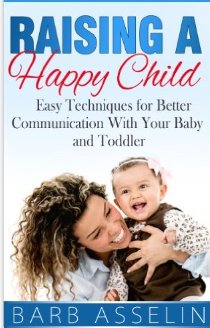
Raising a Happy Child: Easy Techniques for Better Communication With Your Baby and Toddler

Written by Barb Asselin

ASLsign,pic

This book focuses on using American Sign Language with babies and young children in an effort to provide a means for parents to better answer the communication needs of their children. Learning and using ASL allows a child to communicate with parents before they are able to use spoken language.

Asselin bases the book on her own experiences with her two girls. She begins by explaining what American Sign Language is composed of and the types of populations for which it was designed. The author provides some history of its use. While ASL is used primarily with the deaf, Down’s Syndrome or Learning Disabled children, parents and caregivers have learned that babies can easily learn the basic signs to use for communication. She lists the 50 plus signs that are most common, milk, again and more are often starting points. Asselin cautions parents not to overdo or force learning, but to gradually build up a set of vocabulary words. Once you have begun to communicate with your child, the next step is to introduce the program to caregivers and teachers. Finally, the author provides a comprehensive list of resources for reference and additional support in using the program.

I have a nephew whose parents have introduced him to sign language. He is quite adept and comfortable with basic sign and takes to it naturally. This book is a good tool for any parent who is interested in exploring earlier and better communication with a child and is willing to take the time to invest in mastering it. I would recommend all parents and prospective parents to take a look at it.

If you enjoyed reading this post, please subscribe by clicking on the word Follow or by hitting the orange RSS FEED button in the upper right hand corner of this page.

LOOK AT THE BRIGHT SIDE

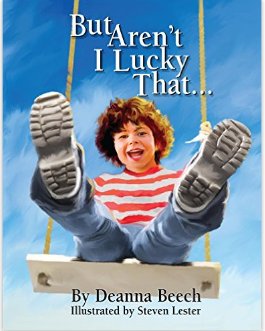
But Aren’t I Lucky That….

Written by Deanna Beech

Illustrated by Steven Lester

But..lucky,pic

“Tiger” wakes up thinking about his upcoming baseball game. He is sad to note that his dad has to go the work and will miss the game. When baby sister Maya smears dad’s shirt with jelly, he just laughs. Mom points out that they are lucky that dad has a job. Then Mrs. Wong, a neighbor, falls and hurts her ankle; “Tiger” is afraid they will be late for the game. Mom guides him to understand that doing a good deed in helping someone else, makes us feel even better about ourselves. When they finally arrive at the game, the other team is crushing them. Will “Tiger” find a way to understand that even storm clouds might have a silver lining?

This book will help children in elementary grades learn that real happiness lies not in material possessions but in positive thinking. The author hopes to give parents and teachers a way to communicate this to their children through her story. Lester has done a marvelous job with the illustrations. The models for the characters come from Brazil, Trinidad, Puerto Rico and the United States. They paint a multicultural picture for children of all races and genders. Highly recommend this book for parents, teachers and librarians of elementary school children as a thought-provoking read.

If you enjoyed reading this post, please subscribe by clicking on the word Follow or by hitting the orange RSS FEED button in the upper right hand corner of this page.

SLOW DOWN AND RELAX

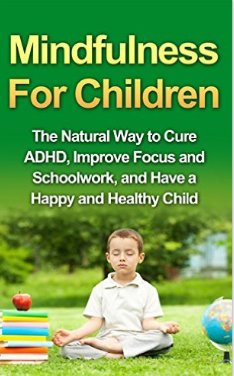
Mindfulness for Children: The Natural Way to Cure ADHD, Improve Focus and Schoolwork, and Have a Happy and Healthy Child

Written by Tony Robson

Mindfulness,pic

This title is a mouthful; it seems like a magic formula. The author promises to explain the technique without a lot of extra boring information, and the book is less than thirty pages. He focuses on strategies that can be especially helpful for parents of children and teens who struggle with ADHD.

Robson begins with the definition of mindfulness which is meditation based on accepting and focusing on emotions and thoughts that are occurring in a person’s present moment in time. He lists the benefits of practicing mindfulness: better sleep and health, less stress, improved schoolwork, and keeping emotions in check. Next, he briefly explains how to determine when and where to meditate, how to influence your child and how to do the meditation. Robson suggests making it active, perhaps a superhero walk for a young child or a pretend driving lesson for teens. The parent must keep the child away from distractions, and search for what things worry the child. It is important to learn how to choose battles and when to respond. This will allow a child to better control emotional outbursts. Finally, teach children to be grateful so they remember the good things rather than the bad.

While these suggestions are helpful, parents need to understand that they must be able to meditate and stay in control if this technique is to be successful with their child. Robson refers them to another of his works for more detailed information. Anyone who is serious about learning and using this technique should know that this book is probably not sufficient for mastery of the technique. Certainly recommended to parents and teachers of ADHD children who are interested in finding non medical alternatives for their children

If you enjoyed reading this post, please subscribe by clicking on the word Follow or by hitting the orange RSS FEED button in the upper right hand corner of this post.

FAMILY FUN VACATION PLAN

Mommy Camp (For Dads Too) Plan the Best Summer Ever

Written by Barb Asselin

MommyCamp,pic

Practical planning guide for moms, dads, grandparents, and caregivers. This planning guide is really for any time of the year that a family knows they will have to share together. The key is to do the research and plan ahead including both indoor and outdoor activities. Camp does not have to be sleep away, and vacations need not be expensive with hotels and airfare. Depending on budget, there are numerous ways to have a great time.

Some of the ideas included will be familiar to readers like going to the beach, building a fort, or picnicking, or visiting with family members. Others stress finding inexpensive community resources like local theater, museums and libraries. Families may visit local fairs, farmer’s markets and yard sales. Asselin includes many recipes for cooking in the kitchen and crafts like home-made play dough. Gardening and volunteering opportunities can be found in any neighborhood. While the author does not reinvent the wheel, she does a good job of presenting suggestions and then providing a template that the reader can download free to implement their own ideas after discussing with their own families.

Recommended for moms, dads, grandparents and caregivers who don’t want to spend another summer or school vacation faced with children who say, “I’m bored, what can we do today.?”

If you enjoyed reading this post, please subscribe by clicking on the word Follow or by hitting the orange RSS FEED button in the upper right hand corner of this page.

SO SAD

Runaway Smile: An unshared smile is a waste of time (Niditales Book 1)

Written by Nicholas C. Rossis

Illustrated by Dimitris Fousekis

RunawaySmile,pic

Readers who take the time to read the Prologue will discover the secret of this book. Plot is simple: a little boy wakes up one morning and finds that he has lost his smile. Shortly after, the reader is introduced to a set of quirky characters that will definitely make him smile. The boy’s dog, wears glasses, reads Proust and drives a car. A clothes-eating monster lives in the bedroom closet and ants windsurf across the boy’s breakfast cereal, but the boy is steadfast in his search to find the missing smile.

The boy meets several adult characters on his way to school. A workman, a man walking his goldfish, a king being photographed, the greatest salesman in the world, and a clown, each display smiles that they are unwilling to share with the boy. At school, the boy asks his teacher , but she replies that a classroom is no place for a smile and proceeds to pass out a test! By this time the poor boy is completely disheartened. When he gets home, he asks his mother how to find his smile. She reveals the secret.

The sepia toned illustrations in this book are done beautifully; they capture the spirit and humor of the tale. A poem, “Ode to a runaway smile,” included at the end portrays the cleverness and wit of the author. Adults will understand all the nuances of this story. The simple illustration on the cover is a bit misleading as to the underlying story. Young children will enjoy the pictures but probably won’t grasp some of the concepts without adult guidance. I feel the book is best suited for independent readers who enjoy different kinds of books with an unusual plot so I would especially recommend it for ages ten and older.

If you enjoyed reading this post, please subscribe by clicking on the word Follow or by hitting the orange RSS FEED button in the right hand corner of this page.

LOOKING BACK AND GLANCING FORWARD……

I would like to wish all my friends and followers a HAPPY NEW YEAR!

newyear

Feliz Año Nuevo

Frohes neues Jahr

Bonne année

un felice anno nuovo

I could go on and on, but my wish is sincere in any language.

During this past year, I have shared and reviewed more than 100 books with you, and I hope that you have enjoyed exploring them with me. My Little Miss HISTORY Travels to….series  added two new adventures one to Intrepid Sea, Air & Space Museum and a trip back in time to Ellis Island, the pathway to a new world and life of opportunity. To find out more about these books and where to purchase, please visit http://Littlemisshistory.com

IntrepidCover2EllisFrontCVR

Looking ahead to next year, Little Miss will guide us through the home of George Washington at Mount Vernon, revealing a different side of America’s first president.

MTVcvr

She is carefully laying out plans to travel way back in time and land in a place where few humans have set foot. That’s about all I can say right now, but I do want to make sure that parents, teachers and students are aware of some tremendous opportunities available through 2016……..

2016 is the Centennial of the National Park Service. National Park System comprises 401 areas called “units” covering more than 84 million acres. These units include national parks, monuments, battlefields, military parks, historical parks, historic sites, lakeshores, recreation areas, scenic rivers and trails, and the White House.

Find Your Park is about more than just national parks! It’s about the National Park Service working in your community through education programs, community assistance projects, and more. It’s about state parks, local parks, trails, museums, historic sites, and the many ways that the American public can connect with history and culture, enjoy nature, and make new discoveries.

Join in the action. Visit FindYourPark.com to sample upcoming centennial events near you, share your stories, and find your park! Participate in Find Your Park Experiences to learn, discover, be inspired, or simply have fun in national parks.

To help engage and create our next generation of park visitors, supporters and advocates, the White House, in partnership with the Federal Land Management agencies, launched the Every Kid in a Park initiative. The immediate goal is to provide an opportunity for each and every 4th grade student across the country to experience their federal public lands and waters in person throughout the 2015-2016 school year.

Beginning September 1st all kids in the fourth grade have access to their own Every Kid in a Park pass at www.everykidinapark.gov. This pass provides free access to national parks, national forests, national wildlife refuges, and more!

The Every Kid in a Park pass is good for the 2015-2016 school year, until August 31, 2016. Information on obtaining the pass is available by visiting www.everykidinapark.gov.

PLEASE JOIN WITH ME BY READING AND EXPLORING in 2016!

If you enjoyed reading this post, please subscribe by clicking on the word Follow or by hitting the orange RSS FEED button in the upper right hand corner of this page.


DOGGIE DILEMMA

I Want a Dog: My Opinion Essay The Read and Write Series

Written by Darcy Pattison

Illustrated by Ewa O’Neill

iwantadog

Clever and interesting way to discuss a subject that many families face. Dennis and his cousin Mellie both want a dog and have been emailing each other about what kind of dog to get. Now Dennis has been assigned a school essay to write about what kind of dog would be best for his family.

Mrs. Shirky informs Dennis that he must use criteria (reasons) to explain his choice. As the story continues, Dennis compares his criteria including size, energy, attention, exclusivity, training, grooming and others with the needs of his cousin, which are very different from his. At the end of the book the reader sees the essay Dennis wrote as well as the choices and names that he and Mellie picked. Lots of illustrations accompany the text as well as names and pictures of the most popular breeds of dogs.

Teachers could use this book as an interesting way to generate interest and jump start a personal essay lesson. While the pictures and concepts are simple, the actual writing lesson is more suitable for children in second through fourth grades. Parents who are contemplating adding a canine to their family could also use this story as an incentive to guide their final choice.

If you enjoyed reading this post, please subscribe by clicking on the word Follow or by hitting the orange RSS FEED button in the upper right hand corner of this page.

RECIPE FOR SUCCESS

Above & Beyond: How To Help Your Child Get Good Grades In School, and Position Them For Success in College, Career And Life

Written by Dr. Nicoline Ambe

Above&Beyond,pic

Quite a mouthful for a title! Most any parent would say they want all these things for a child, yet delivering them is by no means an easy task. The author of this book is not revealing new information, but organizing and structuring it in an easy to read, practical guide.

The book is divided into fourteen chapters starting with the big picture and working toward specific steps for implementation. At the outset parents must believe in their children, ensuring that they don’t feel inadequate, celebrating their successes and avoiding nagging. Parents need to understand why school is important by building up a child’s dreams, discussing the future and helping them to discover their own passions and talents. Then parents can follow through by setting realistic but high expectations and helping children move toward them.

In the later sections of the book, the author explains the importance for the child to listen to the teacher and how parents can encourage that. Ambe insists that achievement is tied to a love of reading, which spills over into all subjects of the curriculum. She explains the importance of completing homework, maintaining a good structure at home by establishing routines, doing extra credit work and practicing for tests. I found the section on math interesting. Ambe stresses the importance of mastering math skills in the early elementary grades and urges parents to visit the school to ensure those supports are in place. Other important areas for parents are teaching character and integrity through personal example, demanding accountability, and communicating empathy. Parents will help a child find balance and provide discipline by seeking the right extracurricular activities to instill motivation and leadership qualities. Above all, the parents themselves must put their best foot forward as mentally and physically stable role models who pursue their own passions and goals.

At the end of each of the fifteen short chapters, parents are give a short exercise by answering pertinent questions about their own child to help reinforce the content of that section. These can serve as a kind of notebook or reference guide. This book of approximately one hundred pages belongs on every parent and guidance counselor’s bookshelf. I found the common sense and practical guide valuable and easy to follow. Wish I had this when my children were still in school.

If you enjoyed reading this post, please subscribe by clicking on the word Follow or by hitting the orange RSS FEED button in the upper right hand corner of this page.

FUN WITH FACES

What’s Missing: Faces A Toddler Learning Activity

Written and Illustrated by Bonnie Ferrante

What'smissing,pic

What a delightful way for a parent or caretaker to share playing a game and learning all at once! In this fun book for toddlers, simple multicultural faces are presented with one part missing. The child then guesses what feature is missing. The author explains in simple fashion how that part of the body is used. Eyes, ears, nose, mouth, teeth and hair are explained. Ms. Ferrante goes on to include eyebrows and tongue. Near the end of the book, a few familiar animals like ducks, cats, and elephants are presented. They possess additional facial features such as whiskers, trunks and bills that are an important part of that animal’s face.

Children ages two to five can have lots of fun with this book while stretching their minds, using their senses, and moving their little bodies. Highly recommended for parents, grandparents, teachers and librarians as a must have for their kindle or bookshelf.

If you enjoyed reading this post, please subscribe by clicking on the word Follow or by hitting the orange RSS Feed button in the upper right hand corner of this page.