Posts from the ‘reference book’ Category

JUST DO IT!

Do The Opposite Of Nothing: The Ridiculously Simple Strategy for Serious Procrastinators…

Written by Nealey Stapleton
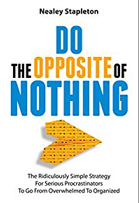
The author spends a lot of time in her introduction explaining procrastination and how it leads to clutter. When one procrastinates, none of a person’s goals can be achieved. Stapleton then spends a chapter on each of ten methods that might be employed to enable a person to succeed at decluttering and ending procrastination. I found a few to be especially valuable for myself. To avoid a sense of overwhelming frustration, I need to set aside a small, realistic amount of time and select one task to achieve before moving on to more ambitious plans. I am also guilty of the “homeless” mistake. A successful organizer needs to establish a spot for every object and make sure that it stays there.  Many of my friends and I are guilty of buying more than we need, resulting in a storage problem. Do you keep stuff for too long and procrastinate about going through those things that really have no useful purpose in your life?

There are a lot of simple things one can do to feel a sense of accomplishment and organization that will allow a more productive use of time and many of one’s important goals to be achieved. Stapleton provides a plethora of links and resources in each chapter. I must admit they do become repetitive and can slow down the flow of the book. However, I enjoyed the straightforward presentation and practical advice, which I plan to implement daily. Recommended for anyone who has too much stuff and too little time on their hands.

If you enjoyed reading this post, please subscribe by clicking on the word Follow or by hitting the orange RSS FEED button in the upper right-hand corner of this page.

SIZE DOESN’T MATTER

Deadly Animals: 25 Most Deadly Animals in the World That You Should Know!

Written by Hathai Ross


While this book contains a lot of interesting information, I would rate it 3.5 stars because the photos that are included are often undersized and unclear.

The author includes animals found all over the world. Their size varies from the tiny mosquito and tsetse fly to the huge animals like the hippopotamus and polar bear. Habitats range from the sea to the glaciers and arid deserts of the Sahara. Readers will find many familiar names like the lion, rhinoceros, leopard, and elephants, but also more unfamiliar species like the Brazilian Wandering Spider, the Blue-Ringed Octopus, the Cone Snail, and the Cape Buffalo.

Ross describes each animal, its habitat, why it is dangerous, and how it affects humans. Some facts that I found particularly interesting are that the Poison Dart Frog is the most poisonous animal on the planet, the poisonous Puffer Fish is a delicacy eaten by many people, and the cute Polar Bear is not afraid of humans, and when hungry enough will even eat its own cubs.

The book is a collection of individual chapters that provide reference information about each of the twenty-five animals selected. It is useful as a starting point of research on some of the most interesting and dangerous animals with which we share our planet. Recommended for middle-grade, young adult or adult readers interested in animal research.

If you enjoyed this post, please subscribe by clicking on the word Follow or by hitting the orange RSS Feed button in the upper right-hand corner of this page.

BRIDGING THE GAP

The Middle Ages: People of the Middle Ages – Kings, Queens, Minstrels and Merchants, Vikings and Knights – 2nd Edition

Written by Dominique LeBeouf


This book presents a simplified view of the Middle Ages, a period that is often overlooked and misunderstood in history. The author tries to support her view that the period was not stagnant and dark but rather vibrant. LeBeouf discusses each of the main classifications of groups living during this period. There are brief individual studies of a few like Saint Nicholas, Joan of Arc, and Alfred the Great. She discusses major groups of the period such as the Vikings, minstrels, merchants, clergy, vassals, women, and children.

The book is not particularly well-written and there are many editing errors. Its value lies in providing an overview of the entire period and allowing readers to investigate topics further. The book permits readers to choose areas for comparison, contrast, and discussion. Homeschool parents might want to feature particular topics. Classroom teachers might divide the class into groups to launch further study after previewing this summary.

Recommended as an introduction to the Middle Ages, but not as a verifiable historical guide for ages ten and older.

If you enjoyed reading this post, please subscribe by clicking on the word Follow or by hitting the orange RSS FEED button in the upper right-hand corner of this page.

SHARKS MADE SIMPLE

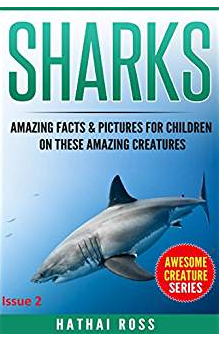
Sharks: Amazing Facts & Pictures for Children, Issue No. 2

Written by Hathai Ross


The author has written a simple reference book that will provide young readers with the essential facts on these fascinating sea creatures. Hathai begins with a history of sharks, pointing out to young readers that they existed before the dinosaurs. She includes a few simple photos to illustrate fossil remains. In the next chapter, Ross discusses anatomy and function. Ross provides a quick glimpse of different types of sharks and their special qualities like electrical sensors, and an exceptional sense of vision, smell, and hearing. Before concluding, Ross tries to convince her readers that despite movie depictions, there are reasons not to be afraid of sharks. She delves into their unique characteristics, and the organizations working to protect them.


Much of the book is written in the form of question and answer. That enables young readers to follow easily, but it does break up the flow of the narrative. This book is laid out more in the form of a reference book or research tool. I don’t think that will deter readers who are fascinated by these creatures and would like a quick, comprehensive overview. The illustrations and diagrams vary in effectiveness because some are difficult to see. Recommended for animal enthusiasts and children seeking information for a research project.

If you enjoyed reading this post, please subscribe by clicking on the word Follow or by hitting the orange RSS FEED button in the upper right-hand corner of this post.

GOOD NIGHT, SLEEP TIGHT

Dreams: A No-Fluff Guide to Dreams Meanings, Dreams Symbols, and Nightmares Hidden Meaning…

Written by Jada Levitt

This book provides an interesting overview and analysis of dreams and how they affect us. Levitt begins her book with an introduction that defines dreams as a way for the subconscious to communicate with the conscious mind that allows one to relive or experience their emotions. Most people will spend about six years of their life dreaming. Most dreams are forgotten within ten minutes of waking up; even those who claim they don’t remember dreaming do so regularly. There are five stages of sleep, and it is only in the fifth stage that we can dream.

Levitt describes the most common types of dreams, which range from daydreaming, falling, fires, being chased, and swimming, among many others. While an exact diagnosis for an individual cannot be made, she describes the types of symbolism within each type and what that symbolism might suggest in a person’s life situation. For example, a dreamer finding herself back in school might be facing unresolved insecurities or facing situations in life now that involve new lessons to be learned.

The author explains what happens in each of the five stages of sleep, and how to best prepare for a good night’s sleep. She talks about why remembering dreams are important and suggest some techniques that will facilitate doing so. By taking stock of our dreams relating to what is happening in our daily lives, one will be better able to cope with daily situations.

If you enjoyed reading this post, please subscribe by clicking on the word Follow or by hitting the orange RSS FEED button in the upper right-hand corner of this post.

AUTISM: 101

Autism: Simple and Inexpensive Natural Autism Therapies to Help Your Autistic Child Live a Calm and Healthy Life

Written by Nancy Perez

The author is a proponent of natural therapies to relieve stress and anxiety. She has used them to treat her own diabetes for years and has written how to employ them to assist in the treatment of autism. In this book, Perez provides an overview of the autism spectrum. While there is a myriad of symptoms and behaviors, all autistic children suffer from communication and socialization issues. Autism appears to have connections with both genetics and the environment.

The heart of the book deals with treatments. While many patients diagnosed with autism require some sort of medication, Perez focuses on more natural treatments. A definite diagnosis is often not made until after age five, but early intervention is important to address a child’s needs. Speech, physical and occupational therapy may be needed as well as special education to address cognition. Depending on the issues the individual faces, music therapy, art therapy, animal therapy, nature therapy, and swing therapy, might be effective interventions. I found the discussion of using horses (hippotherapy) to help a child process sensory movements enlightening. Simpler steps that can be implemented easily in the home include removing chemical products, messaging the child, experimenting with dietary needs, and introducing yoga. Learning each child’s preferences and needs is the most difficult aspect of living and working with a child on the autistic spectrum.

As an educator who has worked as a member of an interdisciplinary team treating autistic children, I would definitely recommend this book to parents and educators who are new to the field of autism as an easy to read introduction to the subject.

If you enjoyed reading this post, please subscribe by clicking on the word Follow or by hitting the orange RSS FEED button in the upper right-hand corner of this page.

IT’S FINALLY HERE! – Just in Time for #Christmas Giving


Ever wonder what it would be like to live 40,000 years ago in The Pleistocene Ice Age? Yes, it would be cold, but certainly not dull. Imagine living in the center of Los Angeles, not in Hollywood, but instead walking among pools of sticky tar. Herbivores and carnivores alike meet their fate as they are crushed and trampled by predators. Look down into the pits to gaze at their fossil remains. Watch scientists at work in “The Fishbowl,” cleaning and categorizing archaeological finds. Then marvel at reconstructed skeletons of mastodons, camels, and giant sloths. Step inside and stroll through Rancho La Brea.

CHECK OUT THE AWARD-WINNING SERIES OF BOOKS AT http://www.LittleMissHISTORY.com

Ask for this book at your favorite bookstore or check out the links below:

http://www.goodreads.com/book/show/37054141-little-miss-history-travels-to-la-brea-tar-pits-museum

HAPPY AND HEALTHY

Paleo: Paleo for Kids Top 100 Paleo Diet Recipes for Kids

 Written by Paul English


This book contains breakfast, lunch, dinner, and snack recipes, although many of these are interchangeable. They are detailed, easy to follow, and nutritious choices for both children and adults. There a quite a few that I want to try. In the breakfast area, I discovered berry pancakes, Scotch eggs, and omelet cupcakes. Under lunches, pork and apple stew and pumpkin bacon hot salad look appetizing. For dinner, I might try bison and butternut chili or zucchini pizza for a unique change of pace. Passion Fruit and mango sorbet and fruit and almond soufflé have my mouth watering. While some of the recipes might be familiar, a lot of these unique combinations are certainly worth a try for picky eaters or anyone searching for a healthy, change of pace.

If you enjoyed reading this post, please subscribe by clicking on the word Follow or by hitting the orange RSS FEED button in the upper right-hand corner of this page.

HEALTHY HANDOUT

SMART HEALTH: What Today’s Doctors Aren’t Telling You

Written by Dr. Craig C. Koehler

This book is written by a chiropractor, whose personal health struggles began with a bicycle accident as a twelve-year-old child. After hitting his head on the cement, he began to experience nasal problems with sneezing and coughing. In an effort to find the cause, doctors prescribed medications, antibiotics, shots and a tonsillectomy. Five years later, he injured his back and visited a chiropractor where he learned about the connection of the nervous system with the sinuses. Koehler decided on becoming a chiropractor and dedicating himself to help patients deal with pain.

The statistics are scary. In the United States, medical misdiagnosis is the 3rd leading cause of death. Perhaps even more telling is the fact that 80% of the world’s pain-killing drugs are consumed by Americans. Relieving pain becomes more important than finding the cause of that pain. Koehler details the diseases that really are killing people and how consumers are harming themselves with sugar and junk food. By switching off what we put into the body, the natural immune systems can use good nutrition, exercise, meditation, and proper sleep habits to recharge the body. None of this these are easy tasks to accomplish. The doctor urges consumers to join up with a support team to work at establishing a system to turn unhealthy habits into a new pattern that will lead to a healthier body and a longer life.

Recommended as a good reference guide and motivational tool for anyone who desires to establish a healthier lifestyle.

If you enjoyed reading this post, please subscribe by clicking on the word Follow or by hitting the orange RSS FEED button in the upper right-hand corner of this page.

BACK TO THE SOURCE

Egyptian Mythology: A Fascinating Guide to Understanding the Gods, Goddesses, Monsters, and Mortals

Written by Matt Clayton

The author has written a series of books of ancient societal mythologies. In this book, he sets out to explore the Fertile Crescent, and ancient Egypt, in particular. Part One focuses on the myths associated with Isis, Osiris, Seth, and Horus. Clayton narrates in the third person, interspersed with imaginary dialogue between the gods. He moves on to the most popular creation stories. Clayton next weaves together how the gods and humans came to interact with each other.

In Part Two the author zeroes in on the darker sides of Egyptian religion discussing gods who inflicted chaos upon the world, specifically Apep the snake, and Seth the god of war and confusion. Part Three is the section focusing on what we know of the history of Egypt and the mortals who interacted with the gods to change it. Readers learn about Chancellor Imhotep and how he assisted the king in uniting Egypt. Clayton explores Amenhotep IV and the chaos that ensued over Ra and Aten, the sun gods. Then the story evolves to the reign of Ramesses and his struggles against the Hittite enemy. Finally, the reader is brought to the final stages of the Egyptian empire under Cleopatra and Roman rule.

Clayton packs a lot of information into this volume of fewer than one hundred pages. The author has done a good job in constructing an easy to follow narration of thousands of years of myth and history. Perfect choice for adults who would like a taste of the subject as well as for middle-grade students studying Egyptian history.

If you enjoyed reading this post, please subscribe by clicking on the word Follow or by hitting the orange RSS FEED button in the upper right-hand corner of this page.