This report includes nine powerful tips and three actionable steps you can take right away.
It also includes a list of suggested reading for those who are looking for even more information.
TOP TIPS
When you think of spring-cleaning, you probably think of the time of year where you go all out cleaning up your house. You know the time you move the fridge and sweep out all the nooks and crevices. What if you took that same idea, but instead of cleaning your physical surroundings, you tidied up your life? If you don’t quite understand what that means, here are nine examples that can get you started.
Take Stock
Before you start to spring-clean your life, you should take careful stock of how you are currently doing. Do you have goals? How are they going? Are there any areas of your life you’d like to change up? Taking stock of where you are at will help you direct your energy where it’s needed.
Clean Up Your Relationships
Do you have any toxic relationships? Maybe it is time to part ways with these people. If the people in your life don’t cheer you up, lift you up or build you up, why are they in your life anyway?
Tidy Up Your Habits
It might be time to clean up those bad habits of yours. Bad habits add up over time and cost you in the long run. If you feel like you already do a good job of that, focus on building some new positive habits.
Clear Your Mind
We all got a lot going on in our heads. Maybe you should take some time to clean things up a bit. Developing a daily meditation practice is a great way to clear your mind. You might also try journaling. Getting those thoughts spinning around in your head onto paper can make a world of difference.
Unplug
Technology is great, but sometimes we need to unplug and live in the moment. Don’t be afraid to prune some of our social media accounts. Aim to spend less time on your devices and more time just taking in the world around you.
Refresh Your Fitness Routine
Has your fitness routine got boring or stale? Do you even have a fitness routine? Why not shake things up? Spring-cleaning is all about out with old and in with the new. Find a new exercise, sport, or activity that gets you excited, and try to fit it into your daily routine.
Sort Your Diet
A great way to tidy up your life is to clean up your diet a bit. Think about adding more natural whole foods and cut down on your guilty pleasures. Find a healthy way of eating that you can sustain.
Organize Your Workspace
This is almost real spring-cleaning! Organizing your workspace is a great way to boost your productivity and get more excited about working in general. Reorganizing is less about cleaning and more about making sure every item has its space and every space has a purpose.
Rearrange Your Goals
For the vast majority of people, some of their goals work out, and some don’t. This is why it’s important to adjust your goals once in a while. Figure out what is working, and double down on that. Find out what isn’t working, and figure out why. Make it a regular practice to check in on your goals.
ACTIONABLE STEPS
Reflect on the past year of your life. Make a list of things that worked and another list of things that didn’t. This will help you direct your “cleaning” efforts.
Tidy up your social media by unfollowing the people who constantly annoy or push your buttons. Think about who matters to you, and unfollow those that don’t.
Schedule your spring-cleaning time into your calendar. Choose a few days over the upcoming weeks to focus solely on tidying up your life.
FURTHER READING
Winning the War in Your Mind: Change Your Thinking, Change Your Life
30 Days – Change your habits, Change your life
Change Your Schedule, Change Your LIfe
Make Your Bed: Little Things That Can Change Your Life
Subscribe to this blog for tips, resources, book reviews, and news you can use.
Publisher: Belle Isle Books | ISBN-13: 9781953021519
Publisher’s Book Summary: One day, Odette the ant wakes up feeling stressed. After realizing that all she does is work, Odette decides to leave her anthill in search of the freedom to create her own world. Along the way, she meets Marcus, a lost mouse, and together they discover simple ways to feel better. Inspired by her journey and this wonderful new friendship, Odette finds her way back home to the colony with a new sense of being.
Odette’s Alphabet is a mindful story that offers a map to handle big emotions with kindness, unity, and courage. Fun and easy activities support each of the chapters, along with letters of the alphabet to provide additional opportunities for learning while encouraging young readers to explore meditation practices.
Sandrine Marlier woke up one day in her New York apartment feeling out of sorts. She realized that no matter how many trips she would take around the world, thanks to her modeling career, only a journey within could bring her peace. Eventually, she trained with world-renowned meditation teacher davidji. That training inspired this book, as she found herself drawing an ant and a sound: A, the beginning of all beginnings. Sandrine is a mother, meditation teacher, transformational coach, and Reiki practitioner. She shares free meditations about healing and empowerment on Instagram (@sandrinemarlier).
An alphabet book like no other. Marlier provides her readers with an adventure story that teaches the value of friendship, love, courage, teamwork, and cooperation.
The protagonist, Odette, wakes up feeling stressed. Every day she works hard in the ant colony. Determined to take a break, Odette leaves the colony to find peace and rid herself of stress. Odette meets Marcus, a mouse who is lost. They set off to find his home.
Each part of their adventure features a letter of the alphabet paired with a word. On the bottom of each page, Marlier suggests a meditation or relaxation activity for children and/or adults to practice. Each of these facilitates a peaceful, stress-free state.
By the end of the adventure, children learn many valuable life lessons as well as practical steps to relieve stress and create empathetic community relationships. Simple colorful illustrations enhance the text.
Highly recommended for children ages three to eight but it could be a useful tool for anyone seeking to rid themselves of stress.
GIVEAWAY
Enter the giveaway below for the chance to win a paperback copy of Odette’s Alphabet and a $25 Amazon gift card!
Extra Special Heart: Highlighting the Beauty and Strength of a Child Born with CHD, Congenital Heart Defect
Written and illustrated by Carli Valentine
A beautiful picture book that tells the story of a little boy born with congenital heart disease. Children are told that the boy’s heart is super strong and that he is very brave in facing the challenges the condition brings to him. He faces surgery with courage and his spirits bouyed up by the support of his family and friends.
What a wonderful way to teach children about inclusion and to see physical handicaps as a strength rather than a weakness! It is a wonderful teaching tool to open up a discussion on all sorts of disabilities.
Highly recommended as a resource for parents and teachers of children with disabilities but also to build empathy for these children from kids in the general population.
SUBSCRIBE TO THIS BLOG FOR NEW BOOK REVIEWS EVERY SUNDAY AND WEDNESDAY.
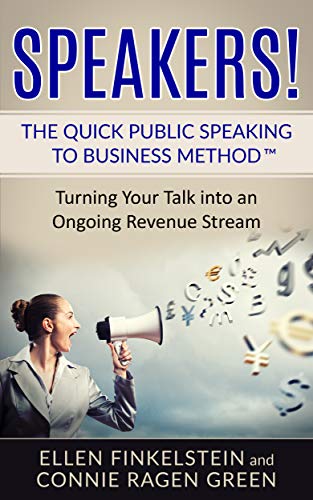
Speakers! The Quick Public Speaking to Business Method: Turning Your Talk into an Ongoing Revenue Stream
Written by Ellen Finklesteinand Connie Ragen Green
The only course you will ever need if you are just starting out in business or want to incorporate speaking into your business as an effective tool.
While I have followed both of these authors in blog articles and videos, this book brings all the tools together in one place. It is easy to read, follow, and implement.
As a historian, I appreciated the section on the history of public speaking because one must know where something comes from and how it evolved in order to understand its role in our lives today. Readers are taught how to choose appropriate topics, set goals, find audience niche, and then use public speaking as a means to create an ongoing revenue stream for a business.
The authors discuss the importance of influencer relationships, creating funnels, and the various ways to transmit your talk. Then there is the art of storytelling and the types of stories you can use in public speaking.
The book creates a feeling of joy and optimism that will incentivize the reader to jump in and seize the opportunities offered by public speaking.
I highly recommend this guide to anyone at all curious about public speaking.
SUBSCRIBE TO THIS BLOG FOR NEW BOOK REVIEWS EVERY SUNDAY AND WEDNESDAY.
Do you know anyone who seems to be bulletproof? You know, that friend of yours that takes failures in stride and is always smiling and moving forward in life. How do they do it? You know they’re not immune to setbacks or hardship. They just seem to be able to bounce back quickly. Life’s inevitable difficulties don’t keep them from living the life they desire.
By the way, that person can be you. Mental resilience is something that can be developed. It’s not a character trait you have to be born with. Every time you suffer some type of loss or failure, you have an opportunity to respond with resilience and emotional control.
“Never confuse a single defeat with a final defeat.”
That is such a powerful reminder that your outlook is everything. The person with resilience chooses a positive outlook. They understand that negative things are going to happen in their life. Yet they don’t allow that to be the end of their journey.
They don’t embrace any single failure or loss as the final declaration of who they are.
Just Take One More Step
Resilience means persisting. You keep going. You push forward and see life’s difficulties as nothing more than challenges. You can either become stronger and more capable or allow a defeat or failure to be a statement of who you are.
This can seem like simple advice, but the truth is, sometimes, the hardship we encounter in life can be truly debilitating. We simply don’t see a way out. The worst of possible things has happened, and there’s simply no way that we see any good coming from this.
When this happens, as it inevitably will in life, just take one step forward.
Don’t worry about some big end result. You may be in a terrible situation. If you are, just make one positive movement.
Have one positive thought. Move in the direction of a positive outcome. Even if it’s miles away, don’t worry about that end result. Just take the first step that moves you a little bit away from the difficulty you encountered.
Never let any single defeat be your final defeat. The instant you decide to relentlessly push forward, you show the world and yourself that you are a resilient human being. You won’t be kept down for long because your unbreakable mental resolve won’t allow you to be defined by defeat.
You can learn to bounce back and help others do the same.
IT IS NEVER TO EARLY TO START DEVELOPING RESILIENCE FOR WHAT LIFE WILL THROW OUR WAY!START TODAY!
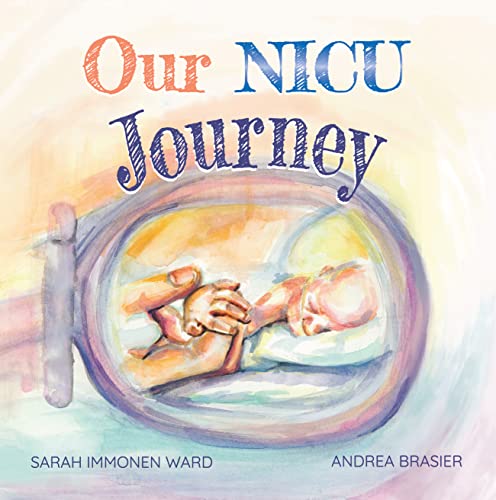
A charming picture book that tells the story of premature birth. Soft pastel illustrations and crisp rhymes detail the real life experience of a couple whose twin daughters were born at twenty eight weeks of age. It expresses the hopes and fears of parents, family, and friends as they eagerly await the outcome.
This book would make a wonderful gift for any new parent, but especially for those families who have experienced a premature birth or would like to know how to tell the story to other children in the family who may feel confused or upset. At the end of the book, the story of the author is included as well as a list of resources that families might find useful.
SUBSCRIBE TO THIS BLOG FOR NEW BOOK REVIEWS EVERY SUNDAY AND WEDNESDAY.
You have more control than you realize. Eliminating bad habits and replacing them with good habit strategies can prevent the tell-tale signs of aging on your face.
Get enough Vitamin D, especially in Winter.
Use sunscreen when outdoors to protect against Ultraviolet rays.
Moisturize your skin daily to keep it soft and supple.
Stay active by exercising regularly.
Eat a healthy diet. Cut out junk food.
Cut down on alcohol. Moderate or eliminate it completely.
Stop smoking.
Hydrate yourself to keep skin clear, firm, bright, and smooth.
Avoid stress at work or at home. Try yoga or meditation.
Get enough sleep, ideally seven to eight hours each night.
My Name is Eva: An absolutely gripping and emotional historical novel
Written by Suzanne Goldring
At the beginning of this work of historical fiction, the reader meets Eva who is living in a nursing home in the English countryside. Is Eva actually suffering from dementia?
When an intriguing document is found in her home, Eva is questioned about it. That shifts the story to 1939 and the war in Germany. Readers learn about the husband who left Eva behind and the events that followed. The author discusses issues like the holocaust, the suffering of the citizens, and the atrocities experienced by all throughout the land.
The characters are interesting, the plot contains twists and turns, and the historical details add interest to Eva’s adventure.
A quick read that sustains interest throughout.
SUBSCRIBE TO THIS BLOG FOR NEW BOOK REVIEWS EVERY SUNDAY AND WEDNESDAY.
One of the best ways of tapping into your subconscious mind is by the use of positive affirmations. Affirmations bypass your conscious mind with its tendency to examine and judge everything and go straight to your subconscious mind.
Used consistently for a sustained period of time, positive affirmations can successfully reprogram your self-talk to make it more positive and upbeat. This unleashes the power of your subconscious to help you achieve your goals because you will have removed the blocks created by self-doubt and a negative self-image.
Using positive affirmations in this way is simple but time-consuming. First, you need to know the biggest issues you have to work on. Pick the ones that stand directly between you and your goals, not the ones that are only minor obstacles. Write them down so you know what you need to work on.
You should only work on one issue at a time. Select a single issue. This issue may be self-confidence, doubt, fear, or anything that stands in your way. Find or create some positive affirmations around it that speak to you. You only need two or three affirmations. You can find plenty of affirmations online and in books or write your own.
The only requirements are a) these affirmations must be positive and b) they need to resonate with you. If both things are not true, you will not succeed with this method.
Next, you are going to start speaking aloud, thinking, or writing down these affirmations 3-5 times each several times a day. Many people speak them aloud in front of a mirror or while driving. You can think of them to yourself when you are around other people. All you need to write them down is a pen and a sheet of scrap paper.
You can also use a combination of these three methods throughout the day.
You should use your affirmations no less than three times per day -once in the morning, once before bed, and once sometime during the day. The more you use them, however, the better and faster they will work. You must be consistent and use the affirmations every day for them to work.
Over the course of weeks or a few months, these affirmations will sink into your subconscious and slowly reprogram your self-talk and your self-image. The negative thoughts they are replacing will slowly fade and eventually become extinguished entirely. When you see success with one issue, you can move on to the next.
You have undoubtedly heard about meditation and its many uses. It is one of the best, if not the best, methods of tapping into your subconscious known. It is primarily used for that purpose, in fact, and has been for thousands of years because it works so well.
There are many forms of meditation. The most common, and the one you have probably heard about several times, is the method where you sit cross-legged and focus on your breathing while clearing your mind of all thoughts. That is one method, yes, but it does not work for everyone.
Not only do some people not like traditional meditation, but others simply cannot use it due to issues such as ADHD. The other forms of meditation tend to be much more user-friendly for them.
A few of the kinds of meditation available for you to choose from include mantra/chanting meditation, movement mediation, progressive-relaxation meditation, focused meditation, mindfulness meditation, loving-kindness meditation, guided meditation, and visualization meditation.
You can spend months or years just trying different kinds of meditation to find the one that is best for you. You do not need a teacher or a class to learn meditation. If you want to do some kinds, such as guided meditation, you will need a guide, but you can find these in recordings online or use an app.
Meditation will not only help you tap into your subconscious, but it will give you many other benefits as well. Meditation helps you relax, lowers stress, anxiety, and depression, and increases overall well-being. People who meditate regularly tend to be healthier than those who do not. They are also happier overall.
Try several different kinds of meditation before you decide on the one (or ones) that you want to use for your personal practice. There is no rule saying you only have to do one type. You can switch back and forth whenever you want to.
Whichever form of meditation you decide to try, be sure to start slowly. You do not want to dive into an extensive form of a new practice without preparation. Trying to meditate for forty-five minutes five days a week starting from nothing is a great recipe for fast failure.
Instead, start slowly and do your meditation practice a few minutes at a time. Do it two or three times per week. Once you have it down to a routine, you can gradually add days and times to your practice.
Free association is a common technique used to access the innermost thoughts of your subconscious mind. These are the ones that you have trouble even tapping into, much less expressing to yourself or others in an intelligible form.
Free association works well to let you express those thoughts and the feelings behind them. It is used for many applications, most particularly in therapy, but a less intense form of it has been used as a method of brainstorming creative ideas.
If you want to try free association, it is paramount that you do so in a quiet, safe space. Safe does not refer to physical safety here (though that is also important), but emotional safety. Do this exercise either alone or with people you trust to support you and not exercise judgment.
There are two ways to do free association. The first is topical. That is, you choose a topic -usually a single word -to base the session on. The second is completely free and just makes use of the first thought to come into your mind when you start the session.
Whenever you are ready to do a free association session, go to the space you have selected and make yourself comfortable. You can do this alone or have another person there to assist you.
You are going to be speaking your thoughts, so if you are alone you will need to dictate your thoughts to a recorder or a text-to-speech device. If you have someone else with you, they will need something to write your thoughts on.
When you are ready, either think about the topic you have chosen or wait to see what comes to your mind. Begin speaking these thoughts aloud as they come up. Do not analyze them. Do not hold them back to see what they are. Do not judge them. Just speak them as they come to your mind.
It is extremely important that you do this properly and it will be difficult for you to do so for the first few times. We all want to examine our thoughts before they leave our brains -especially via speech. We have filters in place to keep us from doing so, and you will have to let those filters down to use this method.
Doing so lets you tap into your unconscious mind directly, however. Keep speaking your thoughts until you run out of thoughts on the subject or cannot keep going. Later you can go back and see what you said. You will learn much about yourself and your beliefs with this method.
You are probably familiar with the use of visualizations as a technique to help you achieve your goals and dreams. Deliberate visualizations are often used for the purpose of motivating you and training your subconscious mind to believe you can reach them and help you do it.
When you use visualizations that way, what you visualize is deliberate. You think about what you want and picture it in your mind. You see it, feel it, and taste it as if it were real in the here and now. You do this often and spend a good deal of time doing it every day.
You can also use a different visualization process to tap into your subconscious. Are you trying to understand your thoughts, feelings, or motivations? Are you not clear about what you want? Is your subconscious sending you mixed signals? Are you just plain confused about life? Daydream visualizations can help you with all of these things.
This process is simple, but like many simple techniques, it is much harder to do it properly than it seems. The first thing you need to do is find a quiet place and make yourself comfortable. Close your eyes and relax.
Now let your mind begin to drift. Do not try to guide it. Do not tell it what to do or what to think about. See what comes up. Let yourself drift into daydreaming like you are a child imagining riding a dragon or scoring the winning goal in the big game.
What comes up and forms dreams and images in your mind will be your innermost dreams and desires, what you really want from life. Some of the things you daydream about might be things you had no idea you wanted, such is how closely we sometimes guard our hearts.
Both your conscious and subconscious minds may try to fight you in this process. Sometimes we try to keep our innermost dreams secret from even ourselves to protect us from the hurt and rejection that can accompany them. We can be our own harshest critics.
It may take you several sessions to relax enough and let your guard down enough to let yourself engage in this process without fighting. That is normal, particularly if you are experiencing a lot of confusion. The more confused you are, in general, the more your mind will fight this process.
Keep going, and you will eventually succeed and be able to tap into the deepest parts of your subconscious mind.
The subconscious is extremely complex and often not very direct. This means that tapping into it -and the power it holds -often requires approaching it from the rear or side. One of the best ways to do this is to access your creativity.
Every human being is creative. It is part of our nature. You do not have to be an exceptional artist to be creative or enjoy creating. The subconscious mind is the source of all our creativity, which means that engaging in creative pursuits inevitably taps into the subconscious.
Doing this gives you benefits that can go far beyond making art. It can help you solve problems, figure things out, come up with ideas, and more. That is all just from tapping into your subconscious mind. Creating has other benefits too, including stress reduction and relaxation. It is also fun, something that is important even when you are an adult.
Most hobbies count as creative hobbies. The traditional artistic pursuits -painting, sculpting, pottery, and so forth -are all creative, of course, but there are many more. Did you know that woodworking is a creative hobby? So is glassblowing.
All of the fiber arts, from knitting to spinning, count as creative hobbies. Even adult coloring books are creative. Any hobby in which you make or modify something is a creative hobby, whether it is painting pre-built figures from a hobby store, creating an oil painting from scratch, or crocheting a scarf.
You can find a creative hobby to suit you no matter what your budget is or what your interests are. Look around and try different ones until you find something that catches your interest and creates that “spark” of creativity in you. It does not matter what you choose, as long as you choose one or more that you like.
Do pick a hobby that is different from your day job, however. If you do a lot of writing at your job, pick something not related to words. If you paint for a living, pick something that has nothing to do with paint.
You should engage in whatever hobby you choose regularly to get the most benefit from it. Consistency is the key to this method as with so many others. Try to set aside some time at least twice a week just for working on your hobby. Half an hour is enough to give you the benefits and help you tap into your subconscious.
You may be wondering what sleep has to do with tapping into your subconscious mind. Plenty, as it turns out. What does your conscious mind do while you are sleeping? Absolutely nothing. It shuts off completely.
At no other time in your life (unless you are unconscious for medical reasons) does your conscious mind completely switch off. This gives your subconscious mind free rein to control your body and do whatever it wants and it wants to do plenty -process your memories, help you repair cell damage, solve problems and think about anything that has been bothering you.
Sleep is one of the best, most unhindered ways to tap into your subconscious simply because your conscious mind cannot get in the way. How many times have you woken up in your life knowing the answer to a question or having an idea for solving a problem? Your subconscious did that for you while you were sleeping.
We give sleep short shrift in this society. Sometimes it seems like going without enough sleep is a badge of honor. It is anything but. Not getting enough sleep damages your health, wrecks your job performance, and can impair your relationships. Not to mention that it keeps you from listening to your subconscious.
Our subconscious mind not only does the things mentioned above when we sleep, but it talks to our conscious mind and tells it things (like answers and ideas). It does this through our dreams. To tap into your subconscious mind and talk to it like this, you have to get enough sleep.
Dreaming primarily occurs in the REM stage, which is the deepest stage of sleep. We are supposed to get lots of REM sleep but in our culture today often get much less than is ideal. This means we do not have enough chances to talk to our subconscious minds, among all the other issues it brings.
If you are interested in tapping into your subconscious mind, one of the most important things you can do is make getting enough sleep each night a priority. Most people need between 7 and 9 hours per night. You will need to experiment to find out how much is right for you.
You should also start noticing your dreams when you wake up each morning. Sometimes they are random and meaningless, but most of the time they are indications that your subconscious mind is trying to tell you something.
Sometimes tapping your subconscious mind is difficult and requires that you learn new methods of self-awareness like those discussed above. Sometimes it is absurdly simple. As in, all you need to do is learn to listen to it.
Your subconscious mind wants to communicate with your conscious mind. It is designed to do so, after all. It is only us silly humans with our silly ways of doing things and ridiculous notions that make this difficult.
Two of those ridiculous notions are that instincts are not real, or at least cannot be trusted, and that we do not have an inner voice that tries to guide us. Neither one of these notions is true.
What those things are is your subconscious mind trying to communicate with you. It cannot do so directly -the subconscious is rarely able to speak in words and never in a conversational manner -so it does so indirectly by giving you hints and clues.
It would be so much better if your subconscious could metaphorically tap you on the shoulder and say “Hey! I think you should pay attention to this!” Unfortunately, it does not work that way.
Have you ever gotten a hunch that something was wrong and the hunch turned out to be right? Have you ever guessed the answer to a question based on something your gut told you? Both of these are examples of your subconscious mind talking to you and trying to tell you something.
What this means is that you do not need to learn any fancy techniques or methods to begin tapping into your subconscious. The best thing you can do is also one of the oldest and simplest methods of learning anything: start listening.
That is right: taking the time to listen to yourself is one of the best methods for tapping into your subconscious mind.
Instead of ignoring hunches and that little voice inside, start paying attention to them. Slow down and listen when something inside of you is speaking. It is your subconscious mind trying to tell you something, and it has a reason for doing so.
This is not to say that your subconscious mind is infallible, and your instincts and hunches are always right. Sometimes they will be wrong. That is unavoidable. There is still a reason for the message, however, and it may be just as important as the message itself.
But you will never know what it is if you do not slow down and start listening.

 May 2, 2023
 bamauthor
 Comments Off on SPRING-CLEAN YOUR LIFE TIPS REPORT










 Barbara Ann Mojica's BLOG
You must be logged in to post a comment.