Posts tagged ‘technology’

PARENTING POWER – WHAT YOU NEED WHEN YOU NEED IT

This is the first in a series of articles dedicated to helping parents raise happy, confident and successful children.

5 tips to help tweens and teens resist peer pressure.

Talking to children about resisting peer pressure is crucial for helping them develop strong self-esteem and decision-making skills. Here are five tips that can guide parents in these important conversations:


1.Foster Open Communication:

Create an environment where your child feels comfortable sharing their feelings and experiences with you. Start conversations about their day, their friends, and any concerns they have. Encourage them to express themselves freely without fear of judgment. This open line of communication can make it easier for them to come to you when they’re facing peer pressure.


2.Role-Play Scenarios:

Help your child prepare for potential peer pressure situations through role-playing. Discuss different scenarios they might encounter, such as being offered drugs, being encouraged to skip class, or facing pressure to bully someone. Practice how they can respond assertively. For example, they can learn to say “No, thanks, I’m not interested” or “I’d rather not do that, let’s do something else instead.” This rehearsal can make them feel more confident in real situations.


3.Discuss the Importance of Individuality:

Emphasize the value of being true to oneself. Talk about the importance of having personal values and sticking to them, even when it’s hard. Share stories of people, possibly even from your own life, who stood up for what they believed in. Highlight how respecting their own feelings and thoughts above others’ expectations is a sign of strength and maturity.


4.Teach Critical Thinking Skills:

Encourage your child to think critically about the motives behind peer pressure and the potential consequences of giving in. Ask them questions like, “Why do you think they’re pressuring you to do this?” and “What could happen if you follow along?” This can help them assess situations more effectively and make decisions that are in their best interest.


5.Build Their Self-Esteem:

Children with high self-esteem are more likely to resist peer pressure because they value their own opinions over fitting in with the crowd. Celebrate their achievements, encourage their interests, and support them through challenges. Make sure they know they’re loved and valued for who they are, not for conforming to what others think they should be.

Remember, resisting peer pressure is a skill that needs to be nurtured over time. By using these tips, you can equip your child with the tools they need to stand up for themselves and make choices that are right for them.

<script>
;(function () {
  var script = document.createElement('script')
  script.src = 'https://app.offerlab.com/assets/embed/offerlab-cta.js'
  script.async = true
  script.dataset.publishableKey = '6STWkMgJ3bL4gWhh7LXqeG28'
  document.head.appendChild(script)
})()
</script>

The Secret Lives of Teens on Social Media: Here’s What You Need to Know

Social media has become an integral part of our everyday lives. Parents use it, just like their children. However, on average, teenagers are the ones who spend the most time on Facebook, Instagram, Snapchat, Twitter, and similar platforms.

This leaves many parents worried. Some are afraid that this habit will grow into an addiction, while others are concerned about cyberbullying, over-sharing, and an “all-about-attention” attitude.

Author Donna Lynn Hope asks an important question: “How different would people act if they couldn’t show off on social media? Would they still do it?”

If our children were to be born in more innocent times, without social media, would they be any different?

Consider these questions:

  • How do we know what our children are doing online?

  • Is there a way to control our child’s behavior on social media, without invading their privacy and breaking their trust?

  • How do we recognize if social media is negatively affecting our children?

This topic is complicated, and there are no simple answers. However, if you ask your child about the time they spend on social media, you might be surprised at how willing they are to talk about it.

When you speak with them about their emotions and challenges, and address potential issues in self-esteem, you may find that social media won’t pose such a threat to them.

Even so, you may still be wondering how you can safely explore your child’s secret life on social media.

These solutions will help:

  1. Dignify their devices. If you want to limit your child’s social media usage, avoid taking away their device. They will find another one. Help them find effective ways to self-regulate, instead.

● Teens are aware of the consequences this habit creates. Encourage them to reflect on these consequences and focus on the impact social media overload has on their personal, academic, and other goals.

  1. Ask about the apps. Ask your child which apps they spend the most time on. Is it Instagram, Facebook, or perhaps Snapchat? Once you find out, install those apps on your phone, too, and figure out how they work.

● Some apps have geolocation which can pose a real danger. Try to manage your child’s social media activity by informing them of the danger rather than imposing your opinion.

Don’t be a manager, be a mentor.

  1. Help them to protect their privacy. Talk about privacy settings on different social media accounts. Some teens are not aware of this option.

Agree with them to accept only the followers and friends that they know personally. This is not an easy task for a teen because the number of followers is often the barometer of popularity.

● However, if they understand the necessity for well-managed online presence, this shouldn’t be a problem.

  1. Talk about sexting. Parents find the infamous conversation about “The Birds and the Bees” just as awkward as children do. However, now you have another level to deal with – sexting.

● Teens can often confuse sending explicit messages and photos for intimacy that might not exist.

Talk about what it means to have a healthy relationship and how to develop and maintain one.

  1. Overcome social media prejudice. Many parents believe that social media is completely, or almost completely, bad. However, it is neither good nor bad per se. It’s a new form of communication.

● When parents talk to their children about social media from this standpoint, the child is likely to withhold and hide information.

● Genuine curiosity and an open mind about your child’s interest in social media can make a significant difference.

  1. Care about their emotions. Teenagers want their opinions to be heard. This especially goes for the things they’re passionate or angry about. Social media offers instant feedback to their posts, which makes kids feel listened to, validated, and acknowledged.

However, if you offer empathy for challenges your child is facing, you can provide listening and validation inside of your family, too. This will give you an insight into what your teen posts on social media and an opportunity to help them self-filter.

When your child asks you for the first time if they can open a social media account, avoid judging them or jumping to conclusions. Accept their need to engage in such community-based way of communication, talk about it, and help them build a safe profile.

Teach them how to protect themselves and what to expect.

You’ll never have all the information about their activity, but if you’re interested and understanding, you might get just the right amount.

MAKING HISTORY WITH YOUR FAMILY

COLLECTING MEMORIES FOR YOUR CHILDREN

There’s something special about looking back through treasures from your childhood. A long forgotten picture or story that you wrote in fourth grade brings you back to memories of you and your family today. Wouldn’t it be great to preserve memories for each of your children?

CONSIDER THESE SUGGESTIONS FOR COLLECTING AND PRESERVING WONDEFUL MEMORIES OF CHILDHOOD FOR EACH MEMBER OF YOUR FAMILY:

Obtain a box for each child’s memories.

If you already have designated storage space for each child’s mementos, it will be easy to stash new items into their “treasure box.”

The box can be as large as you have room to store it. Decorative boxes of different shapes and sizes are available at your local big box or craft store.

Or consider purchasing a plastic storage draw unit from a big box or stationery store. Label each drawer with your children’s names. When you have something to add, open the drawer and pop it inside.

Save school papers and projects.

Put the date, the grade when the task is completed, and the name of the child’s teacher on the back of the papers and the artwork you want to save.

Depending on how specific you want to provide, you can include the name of the school and the address you lived at during that time.

Preserve special photo memories.

You can use computer storage for files of pictures for each child. Back up your pictures each month to a flash drive or an external hard drive.

Or you can take pictures, print the ones you like, and date them on the back of the print. Add a brief description or record one, if you prefer.

Store hard-copy pictures in the child’s memory box. Then placing them in a fireproof safe or safe deposit box at a bank will protect them from loss or natural disaster.

Document special events.

Another fun way to preserve memories is by recording your observations and thoughts about your child’s experiences. Recording a one or two-page summary will help you recall them later.

So many of us would love to remember our childhoods for many years in the future. Take a little time now to document these occurrences for them.

Some suggestions include successful moments in the classroom, dance recitals, sports triumphs, or graduations.

But do not forget about struggles. Overcoming obstacles or failures that made a child stronger is just as important to recall.

Don’t forget those funny moments. A funny situation or a silly question make lovely memories.

To sum up, recording snippets of time from your child’s experiences through writing, pictures, and video are now available to us through modern technology. They are valuable tools to make documenting our memories simple and efficient.

Ten or twenty years from now, you will be able to sit down and view these memories through the eyes of two adults who have shared so many memories.

Don’t neglect to build a family history because you are too busy with everyday chores. I can personally attest to wishing that I had the technology available today to preserve more of my own children’s memories.

START CREATING YOUR FAMILY’S HISTORY TODAY!

HOW TO CUT THROUGH THE NOISE – TEACHING OUR CHILDREN TO BE CRITICAL THINKERS

About 64 million Americans get their news from social media. The reliance on newspapers, radio, and television news segments has been diminished or disappeared. Even broadcasts advertised as the “breaking news” rely on panels of “experts” to relay information. The days of a journalist simply reporting the facts without attaching opinions are gone.

Our children probably rely on social media to an even greater degree. How can we teach them to cut through the noise, sift through the mire, and uncover the objective truth? I have a few suggestions.

VARIETY IS THE SPICE OF LIFE

Make it a point to watch and listen to many different stations and social media outlets. Show your children how different outlets and reporters present information. Do they show both sides of an issue? Are certain people and groups ignored? Tell children they need to hear and see both sides of an issue before judging it as authentic. Ask them if the information was reported fairly. Did they get the whole picture?

EVERY STORY HAS MANY ANGLES

Explain how different people look at the same situation differently. Use examples of how family members like different foods, play different sports and choose different friends. Even mom and dad sometimes argue about preferences. The same applies to news issues. Adults can choose different media outlets and reporters to illustrate how there can be a multitude of different views about the same topic in the news.

IS THAT A FACT?

Use everyday situations to illustrate the difference between a fact and an opinion. I am wearing a red shirt today. That is a fact. When you say, that red shirt is ugly, you are issuing your opinion. Facebook and Twitter are littered with opinions. What do people share or retweet? They share and comment on the opinions with which they strongly agree or disagree. Social media outlets do not report the news, they display the opinions of those followers who have decided to reject or endorse them. Children need to understand that reality does not coincide with the majority of social media opinions. Point of view on an issue does not necessarily make what is communicated true. In fact, the reality might be something completely different.

YOU BE THE JUDGE

Adults and children can have fun and learn a lot by analyzing the ads seen in print and on TV. Study that boring commercial and think deeply about the message that is being communicated. How are the actors dressed? What do their gestures tell you? What words do they use? Do they exaggerate the benefits of the product? How are they trying to manipulate you into buying something you don’t really need?

After doing this a few times, take what you learned and apply it to the commentators, reporters, and “expert panels” that you see reporting the news. You will learn a lot about how much opinion is introduced into what is being reported as factual news. This knowledge will go a long way in developing critical thinking skills that will benefit children as they mature and develop the life skills they will need in future careers.

SEEING IS NOT BELIEVING

It’s okay to be skeptical. In the world of modern technology in which we can press a button to order in minutes, see ourselves in virtual reality, and communicate with friends, family, and co-workers instantly, it has never been more important to be vigilant and careful. We worry about computer hackers but often neglect to train our own brains to filter out the noise and the mixed messages that seek to distract and deceive us.

BE SMART AND RESPONSIBLE

Watch this quick video to learn how.

Check out all my learning resources for the entire family at http://www.LittleMissHISTORY.com

Subscribe to my YouTube channel

https://www.youtube.com/@bamauthor

UNDER THE COVER…

SPIES, CODE BREAKERS, AND SECRET AGENTS: A WORLD WAR II BOOK FOR KIDS

Written by Carole P. Roman

Illustrated by Alessandra Santelli

Author-winning children’s book author, Carole P. Roman has hit it out of the park with this nonfiction book. This book provides a comprehensive of about the importance of spies during World War II.

Chapter One begins with the background and causes leading to the war’s outbreak. The importance of spies in winning the war in both the Atlantic and Pacific spheres is the focus of the book.

Young readers receive a clear picture of the training, weapons, and tools used in spycraft. Secret armies and the intelligence organizations operations in each country are discussed. Illustrations provide visuals that provide greater insight.

I found the chapters featuring biographical portraits of the spies one of the most interesting sections. Spies worked in many professions. Chef Julia Child and author Graham Greene operated undercover. Roman discusses double agents and the Native Americans who broke the Japanese code. Before closing, the author explains how some wartime spy organizations still exist and how they have adopted modern tools of technology.

The Glossary explains terms used and provides more websites to explore. It also lists espionage monuments and museums that may be visited. For inquisitive minds looking to find out even more, Roman includes a bibliography of the resources she used in her research.

I would recommend this book to children who love adventure, espionage, and history. It’s a perfect read for middle-grade students, but an eye-opener for adults as well.

If you enjoyed reading this post, please subscribe by clicking on the word Follow or by hitting the orange RSS FEED button in the upper right-hand corner of this page.

B.D. BEFORE THE DIGITAL AGE

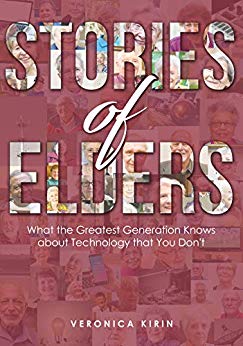
Stories of Elders: What the Greatest Generation Knows About Technology That You Don’t

Written by Veronica Kirin

This book is a fascinating study conducted by a trained anthropologist who became an entrepreneur. Kirin traveled across America to interview members of what she calls The Greatest Generation, Americans who were born before 1945. She wanted to discover what it was like to live before the advent of technology from the mouths of those who grew up living without it.

Kirin developed a list of fifteen interview questions which covered basic demographic information as well as the type of childhood, their occupations, and how technology has changed their lives and those who are growing up in a world dominated by technology. Her questions touched on poverty, economic issues, family, religion, safety, and community. Her conclusions discuss the advantages and disadvantages of growing up with or without technology. Kirin provides a list of participants in an index.

I believe that millennials will find this study interesting and enlightening. As a person who grew up between these two groups, I found the information fascinating.

If you enjoyed reading this post, please subscribe by clicking on the Follow button or by hitting the orange RSS FEED button in the upper right-hand corner of this page.

WITTY AND WONDERFUL

20 Degrees from Normal: Creative Poems for All Ages

Written by Anissa Ferris and Antonio Ferris
Illustrated by Fanny Liem

This brother and sister duo has put together a wonderful collection of poems that address a plethora of topics with skill and humor. Almost anyone can find several that will strike a responsive chord. Readers, young and old, will find themselves agreeing with the futility of getting rid of a fly that has entered the house and the annoyance of a leaky faucet. Teenagers will not be able to avoid laughing at the two poems presenting a teenager’s and a parent’s point of view. The importance of everyday objects like the wheel and a lighthouse are simple poems that point out the importance of objects used and seen every day. I really could not stop laughing while reading the poem about a pet spider and the smartest phone. On a more serious note, the authors strike a chord with the poem about a teacher’s real responsibility and the poem which encourages us to soar by realizing that each new challenge entails possible risks.

This collection is certainly enhanced by the double-page spread illustrations of Fanny Liem. They are big, bold and vibrant drawing the eye right into the text. I would highly recommend this collection for any family’s bookshelf. Students in the middle grades and older will be able to fully appreciate the messages of the poems.

If you enjoyed reading this post, please subscribe by clicking on the word Follow or by hitting the orange RSS FEED button in the upper right-hand corner of this page.

THREE TECHIE FRIENDS

Ai and Big City Adventure: New Age Pinocchio, Adventures of Ai, his new friends, and Old Man in the Big City

Written by Olga Go


Old Man Steve lives by himself in a small apartment in New York City and often feels lonely. One day he finds a smartphone and decides to try to fix it. He names the phone Ai. Suddenly, the phone comes to life. The next day, Ai leaves the apartment while Steve is sleeping. He plays in the park with a computer, a camera, and an i pad. They exchange information with each other. The new friends hatch a scheme to sell Ai to get some money. Ai is sold to Jack, but Ai feels guilty about leaving his friend Steve. They arrive at a compromise that makes everyone happy.

This story is a clever 21St Century Pinocchio story. The illustrations are modern, crisp, and colorful. Elementary school children will enjoy the clever characters and empathize with Steve’s plight. My only recommendation would be to make the print text bolder as it is sometimes difficult to read when placed against the illustrations.

If you enjoyed reading this post, please subscribe by clicking on the word Follow or by hitting the orange RSS FEED button in the upper right-hand corner of this page.

TRAINING FOR THE FUTURE

The Innovative Engine

Written by Jim Gribble

Illustrated by Jack Gribble

This book is a unique tale combining technology, fairy tales, and student writers. The Innovative Engine grew up in New York City hearing the tales of the little engine that could. One day she received a letter from a teacher with a special request that she readily accepted. A group of student bloggers would board her at Grand Central Station. There they would begin a nationwide trip stopping at cities, farms, and lake country to learn about innovation and write about their discoveries.

After stopping at Washington D.C. and receiving a tour of the Capitol, the students travel west to explore old technology and experiment with new ideas. The Innovative Engine is then equipped with solar panels, the students learn about using magnets for transportation, and how to transform the engine into a vegetable garden to feed the hungry. At the end of their journey, the President greets them and thanks them for blogging about their discoveries.

Readers find a pleasant mix of traditional characters, a dose of upcoming technologies, and meet some student journalists of the future.  Illustrations and images that were drawn by the students for their blog entries are included. The plot is unique, fanciful and creative. Particularly recommended for middle-grade students, but an enjoyable read for all ages.

If you enjoyed reading this post, please subscribe by clicking on the word Follow or by hitting the orange RSS FEED button in the upper right-hand corner of this page.

TRANSFORMATION FROM WITHIN

Raywyn and the Golden Bow

Written by Angelos Ashes

Young Raywyn and her parents are journeying from London to Australia by sea when they are shipwrecked. Raywyn has washed ashore where she is discovered by beachcombers. When she wakes up in the hospital, she realizes that her parents are dead. Raywyn meets her uncle, Patrick Blake, who will become her guardian. She is whisked away to his home named Black Swan at the southern tip of Australia.

Once there, Raywyn is immersed in a totally different environment. Patrick and his friend Rollo introduce her to archery, philosophy, literature and meditation. Raywyn discovers how to meditate and transform herself from within. The reader participates in her spiritual journey to the netherworld, the City of Light and the Ganges. Raywyn discovers how and when to fight. Her spiritual journey takes the reader on a roller coaster ride immersed in fantasy, science fiction and reality filled with interesting characters and life lessons. Recommended for readers ages eight and older who enjoy these genres.

If you enjoyed reading this post, please subscribe by clicking on the word Follow or by hitting the orange RSS FEED button in the right-hand corner of this post.