Posts tagged ‘responsibility’

#HOW TO TEACH LEADERSHIP SKILLS IN CHILDREN # 7 – A Short List

So you have attempted to provide a nurturing environment, set up good examples, and encouraged leadership qualities in your children.

Whether you are a teacher, parent, or other type of caregiver, you have probably heard about the importance of instilling leadership. But how? What skills? Following is a basic list of leadership skills you can teach kids. They are not numbered because each is equally important.

INDEPENDENT THINKING

Help your child break out of a “cookie cutter” mindset by teaching him/her to think independently. Ask for your child’s opinions on many different subjects, without judging or stating your opinion. Be open-minded. Listen so that no opinion is “wrong” or valueless. You might then share your own opinion respectfully, and if it differs, that’s okay – part of independent thinking is hearing many sides of an issue and coming to your own conclusions.

RESPONSIBILITY

Age-appropriate responsibilities are important stepping stones on the ladder of skills necessary for building leadership. Give your child responsibilities as preschoolers, and have him deal with the consequences if those responsibilities are not met. Of course, your child will require guidance; but once your explain what the consequences will be, it’s best to let them play out.

FAIRNESS

Leaders need to be fair and just. Being too rigid and unbending is not the best way to teach your kids about fairness, but being too permissive encourages a child to put himself first. Help them to understand what is fair and what isn’t, and how sometimes being fair means being firm even when your child or others might get upset.

NEGOTIATION

Have you thought about the importance of negotiation skills in leadership? Leaders understand the necessity for give and take and that often means compromise, Think about it: government leaders, particularly the president, need to be well-versed in the art of negotiation. It’s okay to discuss your child’s wants and desires. – Allow your children to present a convincing argument as to why they think they should have whatever it is, or participate in an activity. Be prepared to allow yourself to be “talked into” something now and then!

ORGANIZATION

Being organized is essential to good leadership. Teach your children how to prioritize tasks and organize their time. Explain how to use calendars to keep things straight, and show how time can be organized in different ways when prioritizing tasks.

Children need to be taught how to organize priorities in terms of immediate and future goals. In the category of organization is also the concept of making lists. Have your children make lists of what tasks they plan to complete each day and then in one week. This also helps break tasks down into steps – maybe your child has a book report or research paper due one or two weeks from now. Helping your child break that down into weekly and daily steps can be useful- not only in accomplishing the completing of the task, but also in instilling the leadership skill of organization.

COMMUNICATION

This is a vital skill for leadership. Leaders must express their goals and their vision for whatever project or task they are leading or coordinating. They can’t expect others to read their minds or carry out instructions without direction. Teach your kids good communication and listening skills by encouraging them to share their thoughts even if you disagree, and by actively listening yourself. Both you and your child will be happier and more successful.

If you enjoyed reading this post, please subscribe by clicking on the word Follow or by hitting the orange RSS FEED button in the upper right-hand corner of this page.

Discover all my learning opportunities at http://www.LittleMissHISTORY.com

#How to Foster Leadership Skills in Children – #3 Focus on Teens

How to Lead Teens

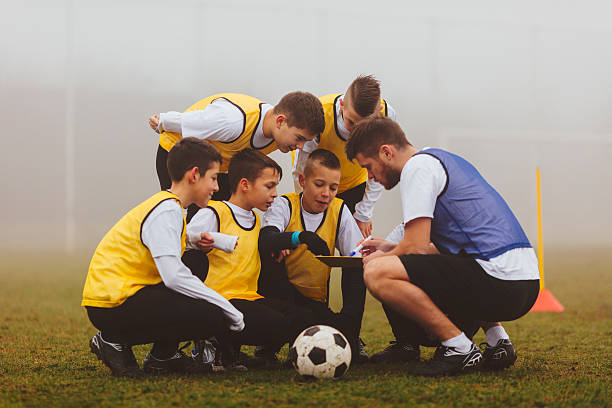
Leading teens is different than leading children and older adults. Your role is to guide them into maturity and teach them how to manage adult responsibilities. Teens can handle more responsibilities and understand what’s expected.

But many older adults are intimidated to lead teens since they have a reputation for being rebellious. What if they won’t listen? What if they ignore your advice and “walk all over you”?

Here are some tips that may help you to lead teens.

The Right Attitude

It’s important to respect a teen’s place in the leadership process. (This is important with all ages, but teens are more aware of their own independence.) Remember that you can’t be a leader without followers! The teens have to be there for the leadership to happen.

Respect

Respecting those you lead is important. Teens probably won’t respond well to just being given orders. One way you can show your respect to the youths under your care is to listen to them. Really hear them, and respond respectfully to what they say. This proves your respect for them, In addition, it also sets a respectful tone in your group. When you do this, you’re leading by example.

Insist on Respectful Behavior

Because you’re modeling it, this shouldn’t be difficult to enforce. Ask that your teens treat each other with respect, and you can set yourself up as an example.

Be “Real”

Teens have a nose for sniffing out when something or someone is faking it. The teens in your charge don’t really expect perfection. They would prefer to interact with someone whose flaws they can identify with than someone distant and unfamiliar. Make sure to guard against hypocrisy. It’s fine to be genuine and share that you used to be a smoker or drinker while telling your teens not to smoke or drink, but if you are still smoking, your words will ring hollow and fake.

The Importance of a Good Relationship

Leading teens means assuming the role of a mentor and adviser. Mentoring means setting up an environment where learning takes place. Always set aside a time for teaching and answering questions. To form an effective leadership relationship with teens, it’s critical to know when to step back and let the teen try on his or her own and when to step in. If you develop a good relationship with your teens, then you will likely know them well enough to have figured out when to get involved and when to back off.

#Ellie’sElaboratePlan

The Underground Toy Society Helps Ellie Elephant

Written by Jessica D. Adams

Illustrated by Janelle and Janiece Adams

Janelle and Janiece are on a trip with their parents. Janiece is having so much fun. She forgets and leaves her stuffed elephant, Ellie on the swing. Now Ellie is a very smart stuffed elephant. She knows that the family will depart soon. Ellie desperately tries to run and jump up into the camper before anyone discovers her missing. To her dismay, she is not successful.

Ellie finds a chipmunk who says he can help. Chippy directs Ellie to a mole who tells her about The Underground Toy Society that helps reunites toys with their owners. Ellie discovers it’s not so easy to find Murry the Mole. Along the way, she meets a toy train and a bunny who also try to help her. Readers learn about the kindness of all these toy characters. Ellie wants to get home before Janiece discovers her missing because she does not want Ellie to feel sad. Ellie displays much love and concern for her owner.

Readers get the underlying message that children need to take good care of their toys and develop a sense of responsibility. There are a few wonderful child drawings to personalize this beginning chapter book for early readers.

FOREVER FRIENDS

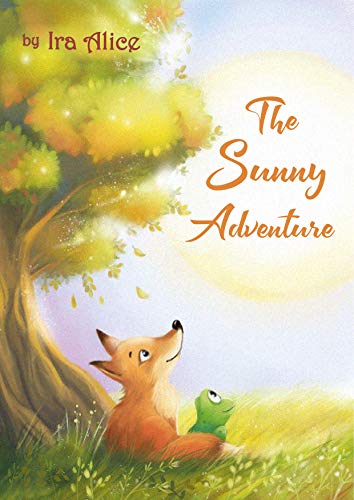
The Sunny Adventure: a story about friendship

Written by Ira Alice

Illustrations by ElenaTeplove

Translated by Nina Kutia

This book is a tender tale about a little fox named Redkin and her first hunting quest. Redkin is rather lazy. She reacts with shock where her mother tells her to go out and find her own food. A bit reluctantly, Redkin sets off on her quest. She looks up at the Sun and decides that it looks like a delicious pancake. She decides to bring it home to her mother.

Redkin meets a frog named Loudcroak along her route. They decide to become partners. Redkin remains fearful but Loudcroak provides the courage and inspiration to continue their search. Other animals offer advice, but the sun continues to elude them.

How will Redkin handle her defeat? What does the fox learn about friendship, compassion, and bravery?

This book is targeted for ages six through twelve. While the length of the book is appropriate for a beginning chapter book, some of the vocabularies are a bit advanced for the lower end of this audience. I would recommend the book particularly for reluctant readers; the illustrations are beautiful and suited to the mood of the tale. Recommended especially for readers ages eight through twelve.

If you enjoyed reading this post, please subscribe by clicking on the word Follow or by hitting the orange RSS FEED button in the upper right-hand corner of this page.

FOREVER FRIENDS

The Sunny Adventure: a story about true friendship (Animal World Alice Ira Book 1)

Written by Alice Ira

Illustrated by Elena Teplova

Translated by Nina Kutia

This book is a tender tale about a little fox named Redkin and her first hunting quest. Redkin is rather lazy. She reacts with shock where her mother tells her to go out and find her own food. A bit reluctantly, Redkin sets off on her quest. She looks up at the Sun and decides that it looks like a delicious pancake. She decides to bring it home to her mother.

Redkin meets a frog named Loudcroak along her route. They decide to become partners. Redkin remains fearful but Loudcroak provides the courage and inspiration to continue their search. Other animals offer advice, but the sun continues to elude them.

How will Redkin handle her defeat? What does the fox learn about friendship, compassion, and bravery?

This book is targeted for ages six through twelve. While the length of the book is appropriate for a beginning chapter book, some of the vocabulary is a bit advanced for the lower end of this audience. I would recommend the book particularly for reluctant readers; the illustrations are beautiful and suited to the mood of the tale. Recommended especially for readers ages eight through twelve.

If you enjoyed reading this post, please subscribe by clicking on the word Follow or by hitting the orange RSS FEED button in the upper right-hand corner of this page.

RIGHT OR WRONG?

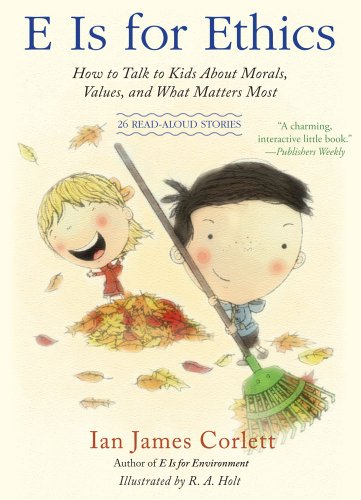
E is for Ethics: How to Talk to Kids About What Matters Most

Written by Ian James Corlett

Illustrated by R.A. Holt


The author is a Children’s TV writer and animator by trade. Distressed by the fact that schools no longer include ethics and civics teaching in their curriculum, he decided that he and his wife must assume that responsibility. Many years ago when his children were young, he and his wife decided to set one night a week as a family discussion time. Corlett developed a series of twenty-six stories that exemplified different aspects of moral behavior. Following each story, the children engaged in interactive questions for discussion as well as suggested activities.

The following is a list of the topics discussed in these stories: honesty, understanding, forgiveness, courage, perseverance, tact, politeness, loyalty, gratitude, truthfulness, sincerity, integrity, citizenship, responsibility, kindness, generosity, helpfulness, empathy, charity, trust, willingness, respect, fairness, acceptance, patience, and effort. There are simple colorful illustrations of a young child like the character of Lucy or Eliot featured in each story. A few famous quotations are sprinkled throughout.

This book provides a wonderful opportunity for parents to spend time getting to know what their children are thinking as well as fulfilling a necessary parental responsibility to guide and form a child’s character and values. Recommended for all ages in the family to enjoy and share.

If you enjoyed reading this post, please subscribe by clicking on the word Follow or by hitting the orange RSS FEED button in the upper right-hand corner of this page.

#Cybils2017 #Finalists

Proudly presenting two more books that were finalists in the contest this year:

EASY READER CATEGORY

FRIENDS FINDING SOLUTIONS…

My Kite Is Stuck! And Other Stories

Written by Salina Yoon


All three stories feature the same three main characters, Little Duck, Big Duck and Porcupine. In the first story, Big Duck gets his kite stuck in the tree. His two friends try to help, but only make the problem worse. Children will laugh at the silly solutions the characters invent.

The second tale revolves around Porcupine making friends with a bug. Big Duck and Little Duck discuss the qualities needed in a friend and try to persuade Porcupine why he can’t be friends with a bug. There is a surprise ending.

In the third story, the three friends decide to build a lemonade stand. They model cooperation, patience and hard work. Of course, there are a few hiccups and lots of humor when the friends forget about the main ingredient needed for their success.

These stories employ speech balloons with dark text and brilliant digital illustrations that fill the page. I would recommend it to preschoolers and kindergarten beginning readers. Each story can be enjoyed separately for beginning readers with shorter attention spans.

EARLY CHAPTER BOOK CATEGORY:

SCIENCE, MAGIC, AND GIRL POWER…

Zoey And Sassafras: Dragons and Marshmallows

Written by Asia Citro

Illustrated by Marion Lindsay


What a charming way to combine science, a bit of magic and a strong female role model in an interesting story! Zoey is an inquisitive, intelligent, sweet girl. One day she discovers her mother holding a photograph that appears to be glowing. Her mother attempts to hide it, but when Zoey reveals that she can see the glowing creature, her scientist-mother reveals her secret.

As a child, her mother discovered a purple glowing frog that was severely injured. To her amazement, the frog named Pip began talking to her. Ever since that day, Zoey’s mom had been helping other magical creatures who needed assistance. She installed a hidden doorbell in the barn. Zoey’s mom thought she was the only one who had this ability, but now she understands that Zoey also has the gift.

When Zoey’s mom must travel to a scientific conference, Zoey hopes that she will receive a call for help from one of these magical creatures. Zoey studies her mom’s journals, notes, and photos. Sure enough, a few days later, she hears the bell and finds a small reptile near death in the barn. Zoey gets to work, but there is so much to learn. She sets forth a hypothesis and sets out her materials. Like a true scientist, she uses trial and error and controls in her experiments. Together with her cat, Sassafras, they work to save the creature. Who is this creature? Will Zoey be successful?

I found lots to like in this chapter book. Large print, beautiful black and white drawings, and a table of contents that lists the subject of each short chapter. Citro carefully crafts a multicultural, curious and hard-working female protagonist who is empathetic and appealing to young readers. Children quickly become engrossed with the plot, while hardly realizing they are learning about the scientific method and the reptile species. The glossary reinforces understanding of unfamiliar vocabulary. Highly recommended for beginning readers, but certainly challenging enough for middle-grade readers.

If you enjoyed reading this post, please subscribe by clicking on the word Follow or by hitting the orange RSS FEED button in the upper right-hand corner of this page.


GROWING UP MUCH TOO SOON

DOG BONE SOUP Launch Banner

DOG BONE SOUP is not only the title of Bette A. Stevens’s debut novel; it ranks high among the paltry meals that the book’s protagonist, Shawn Daniels, wants to forget. Plodding through mounting snow and battling howling winds, Shawn is ready to leave it all behind—living in poverty, Dad’s drinking, life in foster care, the divorce, the bullies….

Travel with Shawn Daniels through the guts and the glories of life. You’ll find them all in DOG BONE SOUP, a Boomer’s coming-of-age saga. Available now at “YOUR AMAZON”

From the Reviewers

“Dog Bone Soup is the poignant tale of a dysfunctional family struggling to survive in America in the 50s and 60s, when most others were on the crest of a wave. It will make you laugh, it will make you cry. But most of all it will make you glad you read it.” ~ Charlie Bray, founder of the Indietribe

“In Dog Bone Soup, Bette Stevens captures the feeling and images of growing up in hardscrabble times perfectly.” ~ John Clark, librarian and author

DOG BONE SOUP

READ the opening Excerpt from Chapter One right here…

DOG BONE SOUP BW Border 2015The postcard arrived four days before my eighteenth birthday. All I had to do now was sign the final papers and light out for basic training. I could hardly wait to leave this place behind.

There were six of us ready to become soldiers. The other five guys were headed to Fort Dix. Soon as we were inducted, the sergeant who swore us in started calling us a bunch of lily-assed bastards and worse. When the jerk marched the other five guys off, I was happy as hell I wasn’t one of them.

Lieutenant Richards called me into his office. “You’ll be heading out tomorrow, Private Daniels. Here are your tickets.”

We sat in his office and talked about my future with the U.S. Army. Then he handed me a schedule for the next day’s journey and we went over every detail.

“Now let’s get you home so you can get a good night’s sleep before you fly off to serve Uncle Sam, soldier.”

“Good luck Private,” the lieutenant said when he dropped me off at the house. We saluted and I stood there watching until his car disappeared over the hill.

I’d always liked army people. They called me Mr. Daniels and even sir sometimes. Now I was officially a private in the U.S. Army and I was ready to start a new life. I pictured myself in an officer’s uniform one day—a lieutenant, a captain, maybe even a general.

Mum and I didn’t get much more than a few winks of sleep that night. I don’t know how many pots of coffee she perked while we sat at the kitchen table and talked the night away. Of course, it was Mum did most of the talking. Once she opened her picture books, I felt like I was drinking in the life I wanted to leave.

Mum took all of those pictures with her Brownie—that camera was her pride and joy. None of us kids was allowed to touch it unless she supervised a picture taking every now and then. If Dad wasn’t around, it was me peeking through the lens. Mum was fussy about taking pictures just so.

Five books were piled on the table and we went through them one page at a time. Mum had a story for every snap shot. Some made me laugh so hard that I doubled over.

It was two minutes shy of three when she closed the last album.

“Thanks for staying up. I’ve got the alarm set for six and I know that won’t give us much sleep.” Mum pulled out her hanky, sniffled and hugged me before we turned in. My leaving would to be hard on her.

Willie was snoring away, likely dreaming about cars. I slipped in next to him and pulled away some puffs and huddled under them.

The minute I closed my eyes I started dreaming about my new life. No more freezing to death up north. I was headed for southern sunshine and I saw myself soaking it all in.

Bzzzzzzz. I jumped out of bed, threw on my clothes, grabbed the suitcase and headed for the kitchen. Mum already had breakfast on the stove, so I ran outside to do my business and came back in to grab a hot biscuit and down it with a cup of steaming coffee.

I was half frozen and snow was whipping around me in circles when I headed out on the three-mile walk into town to catch that bus.

I shook flakes big as quarters from my jacket when I climbed the steps of the Greyhound. Two hours and I’d be boarding a plane headed to Fort Jackson. South Carolina was sure the place to be, especially in February.

### end of excerpt

About the author

BAS Author logo stamp 2015Inspired by nature and human nature, author Bette A. Stevens is a retired elementary and middle school teacher, a wife, mother of two and grandmother of five. Stevens lives in Central Maine with her husband on their 37-acre farmstead where she enjoys writing, gardening, walking and reveling in the beauty of nature. She advocates for children and families, for childhood literacy and for the conservation of monarch butterflies (milkweed is the only plant that monarch caterpillars will eat).

Bette A. Stevens is the author of award-winning picture book AMAZING MATILDA; home/school resource, The Tangram Zoo and Word Puzzles Too!; and PURE TRASH, the short story prequel to DOG BONE SOUP.

Find out more about the author and her books right here on “YOUR AMAZON”

MY BOOK REVIEW

Dog Bone Soup

Written by Bette A. Stevens

DogBone,pic

Anyone who grew up in the 1950’s and 1960’s or who has a grandparent or parent who has told them stories about it, will truly empathize with this coming of age novel. It touches on so many timeless issues like poverty, alcoholism, bullying, domestic violence, family relationships, and self-identify crises. There are many touching and authentic incidents described in a way that makes the characters so alive and appealing to the reader.

Shawn Daniels is the oldest child in a poor family living in a small rural town. They live in a unfinished house that has no bathroom, running water or heat, yet his dad finds money for a TV. Dad spends most of his time drinking or bullying the family. When a friend from school spends the night, everyone at school learns of Shawn’s plight and make fun of his situation. Shawn’s mother is very proud; she works several jobs to make ends meet. At the same time Mrs. Daniels refuses to accept help from “uppity rich folks.” Largely left to his own resources, Shawn accepts responsibility for the family, he learns about logging, gardening; he will do what is necessary by stealing apples or teaching himself how to milk a cow and then steal the milk. By the time Shawn is in high school and his mother finally divorces his father, he faces the difficult decision of whether to maintain his dream to attend college or accept reality and his self-imposed family responsibility. His choices are to leave home to join the military and perhaps face death fighting in the Vietnam War or living on another family’s charity while finishing high school.

This book is written from the heart. Though the setting is over fifty years in the past, the issues remain contemporary. I feel that the book is appropriate for young adults and adults or mature middle grade students. There are a couple of curse words. Well-written, worthwhile and powerful in scope and detail.

If you enjoyed reading this post, please subscribe by clicking on the word Follow or by hitting the orange RSS Feed button in the upper right hand corner of this page.

BABYSITTER BASICS

How To Baby-sit (Survival Skills)

Written by Joy Berry

Illustrated by Bartholomew

Howtobabysit,pic

Joy Berry has written many books on behavior; this one does exactly what the title says. The manual includes everything a parent, child or prospective babysitter needs to know. Berry covers how to mentally prepare, search for a position, set up the home, deal with misbehavior and practice consideration for the child and family for which you are providing babysitting services.

There are six steps anyone needs to ponder if thinking about a babysitting job. A prospective applicant needs to do the following: 1) get permission from his parents to babysit for other people’s children, 2) learn everything possible about child care and first aid, 3) get first-hand experience and on-the-job training before beginning, 4) decide how much to charge for services, 5) find parents who might need a baby-sitter and let them know that you are available, and 6) gather items for a “Babysitter Survival Kit.” These include supplies for an emergency in the home, pen and paper, playing cards, crayons, stickers, books, a ball, an old sheet for pretend play, and paper stacking cups. All these supplies need to be age appropriate for the child.

Preparation does not end here. Once a job is accepted the baby sitter must prepare by visiting the family and child ahead of time, taking notes, and building a rapport with the child. The sitter must know how to deal with misbehavior and comfort a child, practice safety for self and the child while in the home, and inspect toys to make sure that they are safe. Berry’s cardinal rule is to treat the child the way you would like to be treated. She gives detailed instructions exactly how to do everything that has been outlined above.

I cannot think of anything that has not been covered in this guide. It is a must for any child contemplating babysitting as well as the parents of the sitter and prospective employers. While much of this book is common sense, Berry’s ability to pull things together concisely and clearly is unparalleled. The cartoon illustrations are well done adding to the appeal and effectiveness of the book. Highly recommended and appropriate for children age eight and above. Book is available in hard cover, paperback and kindle formats.

If you enjoyed reading this post, please subscribe by clicking on the word Follow or by hitting the orange RSS FEED button in the upper right hand corner of this page.

TURTLE TRUTHS

Samantha Loses The Box Turtle

Written by Daisy Griffin
Illustrated by Matthew Gauvin
SamanthaLosesTheBoxTurtlepic
This book is a fictional story about a girl named Samantha who is traveling with her grandparents and two younger sisters when a box turtle suddenly crosses the road. She pleads with them to stop, and to her surprise grandpa not only rescues the turtle but hands it to her. Once they return home, the girls plead with their parents to keep it, but mom explains that a box turtle needs to live in the wild. She agrees that they can keep it until the next day. Samantha also gets her teacher’s permission to bring the turtle to school.

Many adventures ensue as the turtle they have named Gayzer manages to escape both at home and in the classroom. Samantha introduces us to several of her friends and their reactions to her turtle. Because they are studying the food chain in science, their teacher, Mrs. Klutz, has devised a very clever “answer the question and pass the turtle” game to teach the children. At the same time, the reader is learning a lot of facts about turtles, nature and ecosystems. An element of suspense is introduced when the turtle goes missing and the neighborhood cat somehow gets into the classroom. This causes the entire student body to go into an uproar as everyone in the room desperately searches for Gayzer Samantha is supposed to protect and return her turtle to the nature preserve after school. Now she feels guilty that she may have caused it harm.

This chapter book with beautiful black and white illustrations is just over one hundred pages. The charming way the story is told will entertain children in first grade and up if read in chapters. Older children will amass a great deal of information about reptiles and nature; such as, how to tell the sex of a turtle, what they eat, how they survive in their habitats, and how long they live. The adult characters guide the children, but do not preach or make decisions for them. There is just the right amount of humor like naming the teacher Mrs. Klutz, and the toddler sister placing stickers on the turtle so that she could identify it when searching for it in the nature preserve. I thought the questions based on the book at the end were well done and an excellent resource for teachers to test comprehension. In the conclusion, the author reveals that the story is based on the real life experience of a family with three daughters and grandparents who rescue a box turtle named Gayzer and release it to a nature preserve. She also provides additional fun facts about box turtles and includes her website www.samsanimals.info. I am looking forward to many more animal adventure stories with Samantha and her family.

If you enjoyed this post, please subscribe by clicking on the word Follow or hit the orange RSS feed button in the upper right hand corner.