NaMOOste: A Yoga Book to Develop Social-Emotional Skills
Written by Marlee Kostiner
Illustrated by Manvi Semalty
A very cute book for a parent or teacher who wants to introduce young children to yoga as a way to relax, become mindful, and deal with social emotional issues.
Thirteen basic yoga poses are presented by different animals portrayed in attractive watercolor illustrations. After trying out the poses, young readers can move on to the fourteen emotional skills in the glossary. The author explains the behavior in simple terms. The author also includes discussion questions based on the content in the book and a link to free resources like videos and free printables.
An excellent introduction to yoga for primary grade and elementary age students.
SUBSCRIBE TO THIS BLOG FOR NEW BOOK REVIEWS EVERY WEDNESDAY AND SUNDAY.
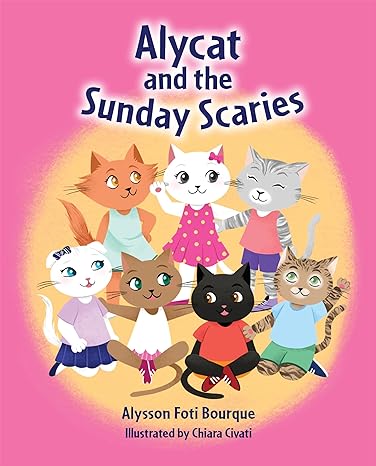
Publisher’s Book Summary: It’s Sunday, the day before the school week begins, and Alycat is nervous. She just knows that Monday is going to be the Mondayest Monday ever! On the playground, Alycat realizes she isn’t the only one suffering from the Sunday Scaries. It’s hard to ride a bike. What if Kit falls? The treehouse is so high. Will Spotty make it safely back down? The kittens band together to overcome their fears, but can they turn the Sunday Scaries into a Sunday Funday? The themes of the books in the Alycat Series all reflect a reliance on friendships, imagination, and creativity toward problem-solving.
Fans of Alycat and her friends will enjoy spotting references to the kittens’ daily adventures within these pages. Tips for a successful lemonade stand are included!
Alysson Bourque began her career as a teacher after graduating from the University of Louisiana at Lafayette with a degree in Elementary Education and went on to earn a law degree from Southern University Law Center in 2007.
After practicing law for nearly eight years, it was time to trade in writing trial briefs for writing children’s books and collaborating with non-profits to support philanthropic initiatives such as Foster the Love with First Lady Donna Edwards, Lafayette Walk to Defeat ALS, The Family Tree, Operation Shower, Wild Cat Foundation, and Hayley’s Bracelet fundraiser to benefit Lurie Children’s Hospital.
Her series has won over 23 awards and has received glowing reviews.
Another delightful picture book in the Alycat series, which teaches young children how to overcome problems, work cooperatively, and create lasting friendships.
In this adventure, Alycat confides in her mother that although it is Sunday, she is already imagining a Monday full of her worst fears. Her mother urges her to enjoy her Sunday and play with her friends.
Alycat and her friends go bike riding but soon find that their friend Kit needs help and encouragement. After overcoming this problem, the friends encounter Spotty in trouble at his treehouse. What can they do to help?
The book series contains attractive easy to read text and bright illustrations. Most importantly, primary grade readers learn the value of developing strong friendships, teamwork, and ways to solve problems creatively and with compassion.
A highly recommended series for children ages four through eight.
GIVEAWAY
Enter the giveaway for a chance to win a signed copy of the book and three adorable Alycat plush toys!
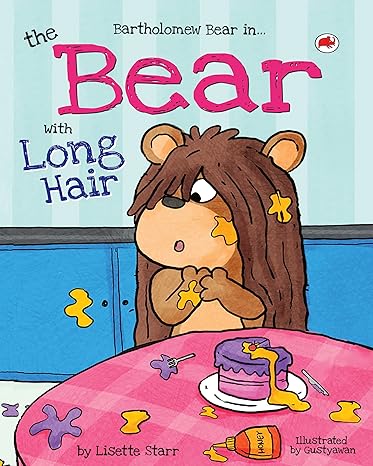
Bartholomew Bear refuses to cut his hair. Eventually it grew to his knees and he no longer looked like a bear. Despite his family’s concern, he refused to comply.
One day when home alone, Batholomew decided he wanted a snack. That snack involved honey. His troubles began as he kept creating more turmoil and left the house in a mess. Eventually, he could not see and his hair was a sticky mess. Can you guess what happens when his mom returns home?
This book is a fun way to teach children to clean up themselves and their belongings. Bartholomew is a fun character with which young children will identify.
The rhymes are funny and the story fun to read aloud. Also, a good choice for parents with children who are reluctant to cut their hair.
Recommended especially for ages three through seven.
Subscribe to this blog for new book reviews every Wednesday and Sunday.
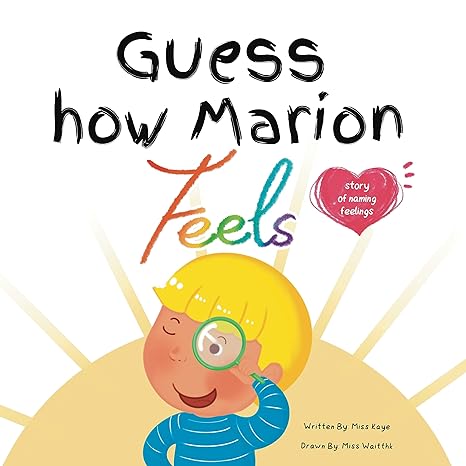
Publisher’s Book Summary: Marion is a kind, creative, and easy kid… but he’s faced with BIG emotions. Help Marion identify those BIG feelings in this interactive children’s picture book.
Guess How Marion Feels is a transformative experience that lays the foundation for emotional intelligence and meaningful connections. A gentle Social Emotional Learning (SEL) tool to guide parents, caregivers, and teachers to teach kids who struggle to pick up social cues and have challenges in social situations.
This book is made to celebrate and honor the feelings of our little ones, foster open communication, and create inclusive learning with our neurodivergent kids. Written by a neurodivergent author, Miss Kaye aims to support kids and everyone struggling with social interactions.
Miss Kaye was born in the Philippines. She had challenges as an adult neurodivergent. This serves as her inspiration for writing fun, engaging, and educational stories to teach life skills and mindfulness to kids.
ABOUT THE ILLUSTRATOR
Miss Waitthk is from Hongkong. She enjoys making people feel happy and joyful through her drawings. As a kid, she remembered drawing anime characters and coloring them with colored pencils. Since then, she kept on drawing.
MY REVIEW OF THIS BOOK
IT’S OKAY TO FEEL THIS WAY…
Guess how Marion Feels
Written by Miss Kaye
Illustrated by Miss Waitthk
A beautiful, interactive picture book that allows young children to explore and communicate their emotions with others.
Marion wakes up happy to start the day. When his mother reminds him that today is the first day at school, his feelings switch to being scared and apprehensive. As the day progresses, readers watch Marion, and his feelings change. A new situation creates mixed feelings of excitement, worry, hope, anger, confusion, and relief.
Young readers are asked to guess what Marion is feeling in each situation by studying the pictures and text. At the end of the book, they get a summary of the book when Marion discusses the whole range of emotions with his parents.
The book is targeted for readers ages one through seven, but I feel the message in the tale is just as valuable for older children.
GIVEAWAY
Enter the giveaway for the chance to win a 1-hour FREE coaching session to launch your own picture book, along with signed copies of Guess How Marion Feels (one to keep and one to share with a neurodivergent charity of your choice under your name).
Sometimes we don’t know what to do with them or how to change our thoughts that cause these feelings. The first day of school can be scary, but “Furrapist” Jackson Johnson and cute pup Ralphy of Ralphy’s Rules for the Good Life are committed to helping a busload of kids understand and manage their big feelings. During the ride to school, Furrapist Jackson Johnson teaches the children that they can choose their emotions and decide how to respond to them. Ralphy and Jackson make the complicated subject of emotional intelligence accessible for kids to understand and, more importantly, implement in their everyday lives.
So hop on the bus with us, and let’s learn about how taking charge of our feelings can change our day!
Talar Herculian Coursey is a lawyer by day and a children’s book author, Life Coach, and philanthropist by night (more like mornings). She has been a General Counsel since 2011 and recently joined ComplyAuto, a privacy/cybersecurity SAAS company. Before going in-house, she was a file clerk, associate, and partner at the national labor and employment law firm Fisher Phillips LLP. Talar is a co-author of both #Networked: How 20 Women Lawyers Overcame the Confines of COVID-19 Social Distancing to Create Connections, CultivateCommunity, & Build Businesses in the Midst of a Global Pandemic and Women In Law: Discovering the True Meaning of Success. Her first children’s book,Ralphy’s Rules for Living the Good Life, was published in 2021.
Talar has served as the President of the Salt Lake City Chapter of the Society for Orphaned Armenian Relief (“SOAR”) since 2015. SOAR, founded in 2005, supports orphanages in Syria, Lebanon and Armenia. She runs the Salt Lake City Half Marathon every year to raise money for SOAR in memory of her father. Net proceeds from her children’s books also go to SOAR. In addition to being a mother, wife, lawyer, life coach, and philanthropist, she is also a runner, yogi, and Jesus, Eckhart Tolle, Peloton, and Brandon Flowers groupie.
SOCIAL-EMOTIONAL SKILLS EXPLAINED FOR YOUNG CHILDREN
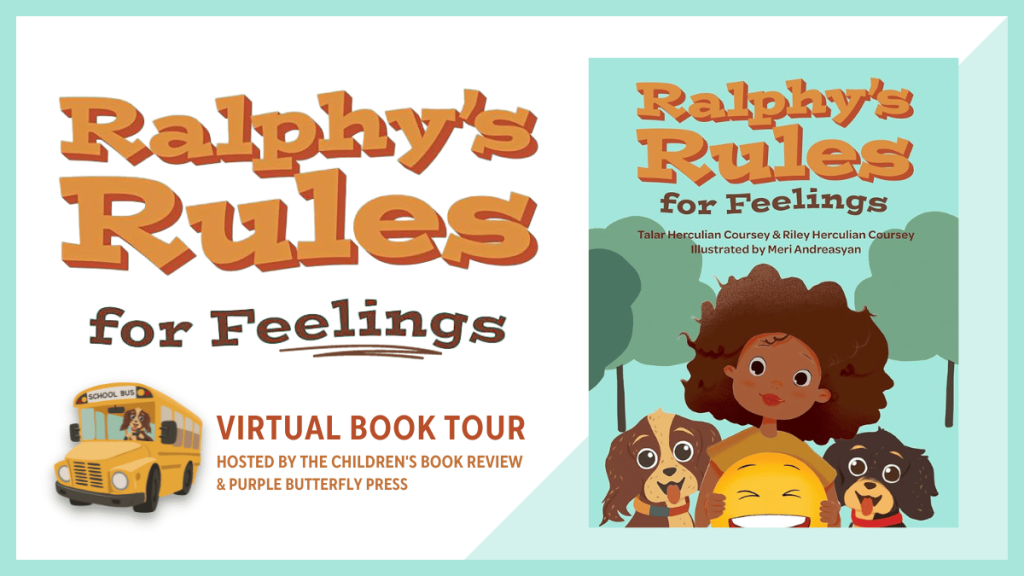
Ralphy’s Rules for Feelings
Written by Talar and Riley Herculian Coursey
Illustrated by Meri Andreasyan
This is the second picture book in a series that defines and explains how to deal with emotions for elementary school age children.
Ralphy, a dog, drives the school bus and his friend Jackson Johnson, the Furrapist, sits next to him on the first day of school. As each child passenger enters the bus, Jackson asks how they are feeling. The children express feelings like excitement, sadness, nervousness, and tiredness. Jackson encourages each child to put this feeling on the front seat and decide later whether to leave it or take it with them when getting off the bus at school, teaching children that a feeling can be changed by thinking differently about it. The book portrays a wide range of feelings exhibited by multicultural children, which allows any reader to identify with the characters. At the end of the story, readers are encouraged to discuss their own feelings.
While the book is targeted for readers ages four through ten, it is relevant for a reader of any age. I would recommend it to parents and teachers for a read aloud and discussion.
GIVEAWAY
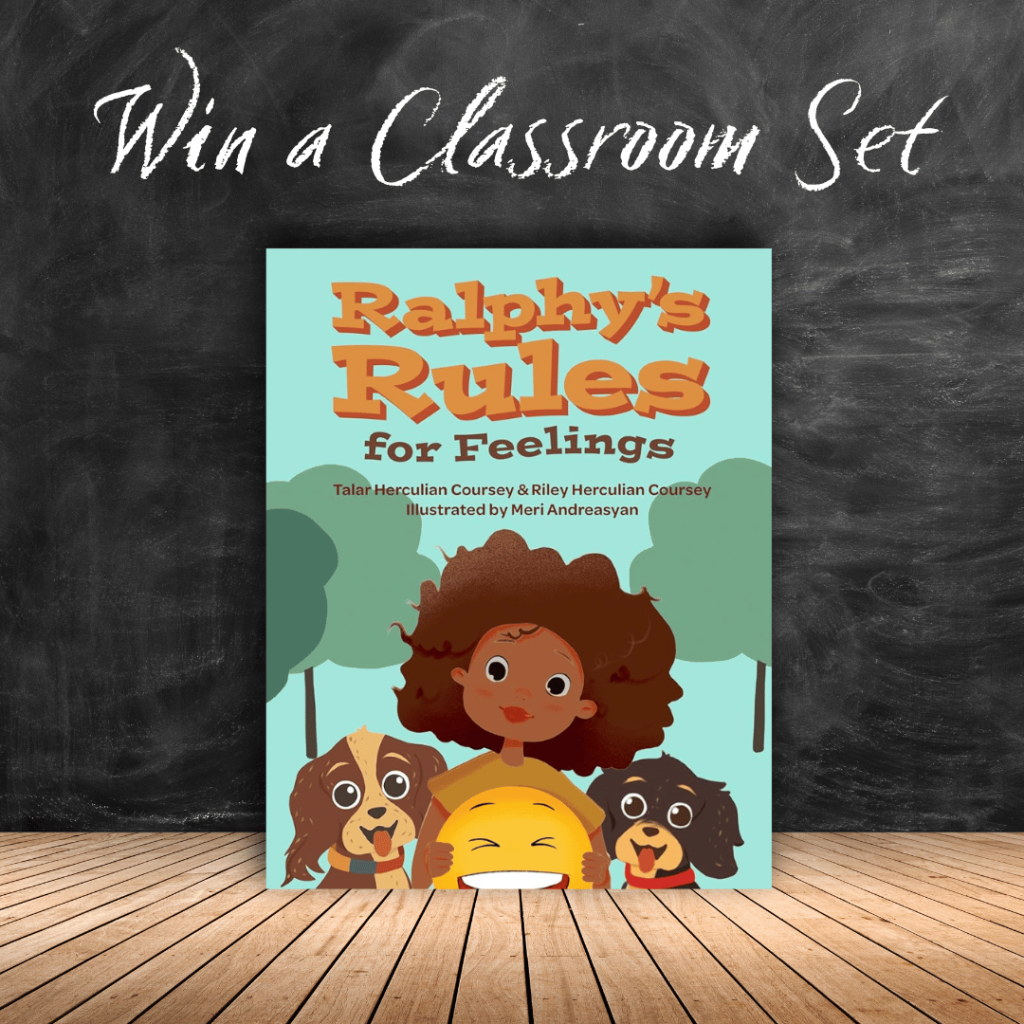
Enter the giveaway for the chance to win a classroom set that includes 25 copies of Ralphy’s Rules for Feelings!
Five Signs You Might Need to Focus on Emotional Healing
What is emotional healing? It’s the process by which you recover emotionally and mentally from a negative life experience. You can’t keep tough times from appearing in your life. When you are emotionally healthy and balanced, you deal with those difficult situations that inevitably pop up, and you can move on with your life.
This isn’t always the case when your emotions are out of whack.
Sometimes, we don’t understand we need emotional healing. That’s the problem. If you suffer some injury and have a broken bone, you can see it. You can certainly feel it. You know you have to get it fixed.
You might think your emotional responses to your experiences are correct and healthy. They may be anything but. Here are five signs you could use some emotional healing to live a more complete and fulfilling life.
You Don’t Experience a Wide Range of Emotions
You have access to 34,000 different and unique emotions. That’s what psychologist Robert Plutchik believed. He stated that most of us only experience eight primary emotions most of the time. These are anger, sadness, disgust, trust, fear, joy, surprise and anticipation.
If only a couple of those are usually present, you probably need more emotional balance. This could indicate that you aren’t properly processing situations and human interactions.
Low Self-Esteem and a Poor Self-Image
This is an offshoot of what we just talked about. You constantly look down on yourself. Everyone has times when they doubt their abilities. That’s only normal. We recover and move on. The emotionally unhealthy person usually has a low sense of self-worth, even when there is evidence this isn’t the case.
You Have Difficulty Trusting Others
A lack of trust can come from emotional imbalance. You must love yourself and truly believe you can overcome a bad relationship experience, or you’ll never trust others.
You Can’t Move Past a Negative Experience
Life can be difficult, at times seemingly impossible. It might look like you’ll never recover in the middle of the most trying hardship. You will. Don’t embrace and hold onto negative emotions. Practice gratitude for the great things in your life. Lean on your support network and get whatever help you need if you can’t seem to let go of negative emotions.
Constant Anxiety and Stress
Chronic stress is a killer and has been directly linked to many common causes of death. A constant display of stress and anxiety could mean you’re not always responding to life correctly where your emotions are concerned.
There is no miracle pill you can pop to always enjoy perfect emotional balance. You will have ups and downs, experiencing difficult times that hurt you emotionally.
For you to live your best life and for those that you love, you need to learn to recognize a negative life experience, give it its due, and then move on. Consider seeking help if you often display these signs of poor emotional health.
Have You Seen My Sock? A Fun Seek-and-Find Rhyming Children’s Book for Ages 3-7.
Written by Barbara B. Thompson
Illustrated by Remesh Ram
I loved this rhyming picture book for toddlers and preschoolers. A little boy becomes increasingly frustrated when he cannot find his favorite dinosaur sock. The repetitive lines encourage vocabulary retention and early reading skills. Bright illustrations draw children into the story. It teaches them the necessity of patience and the ability to be patient as they learn to logically follow a sequence of steps to solve a problem. This book encourages interactivity and helps parents and teachers to guide their young charges to follow through and remain on task.
I highly recommend it for a home or classroom bookshelf.
SUBSCRIBE TO THIS BLOG FOR BOOK REVIEWS EVERY WEDNESDAY AND SUNDAY.
Publisher: Brandylane Publishers, Inc. | ISBN-13: 9781958754368
Publisher’s Book Summary: With a sigh, she went pacing before a large mirror that stood,
Remarking: “Ugh! I’m hideous! None of this looks very good!”
After struggling to find the perfect outfit, Emily Soo dances the night away at a fun party. But when she gets home, her inner voice Emily Two tries to put a damper on her evening.
Confronting our thoughts, fully facing tough emotions, and affirming ourselves can be difficult.
Can Emily Soo find it within herself to squash her Worry and Woe?
Drew Palacio grew up in Mendocino County, California. He received his doctorate in clinical psychology from the American School of Professional Psychology in San Francisco and currently practices in Kansas. Clinically, he implores partnership and efforts from local families, schools, and the community. Lastly, Dr. Drew is himself a child a heart, using his love of magic and worldly mystery, whether via comic books, animation, video games, or through the passing daydream, to always stoke his inspiration.
MY REVIEW OF THIS BOOK:
What a wonderful resource for children in upper elementary grades, middle schools and even young adults! Palacio reminds us not to listen to that nagging inner voice that tries to pull us into negativity. In this beautifully written rhyming story, Emily Soo has spent much time choosing her outfit and then enjoying a night out dancing. But when she returns home, that nagging voice in her head tries to tear her positive image down. Children need to learn we are all unique and special. Rather than paying attention to negative self talk, we need to develop affirmations to remind ourselves to stay positive. Palacio provides the tools to put us on the right path to form a healthy life-long habit of self-esteem and healthy lifestyle.
As an educator, I highly recommend classroom teachers and school counselors add this book to their library.
GIVEAWAY
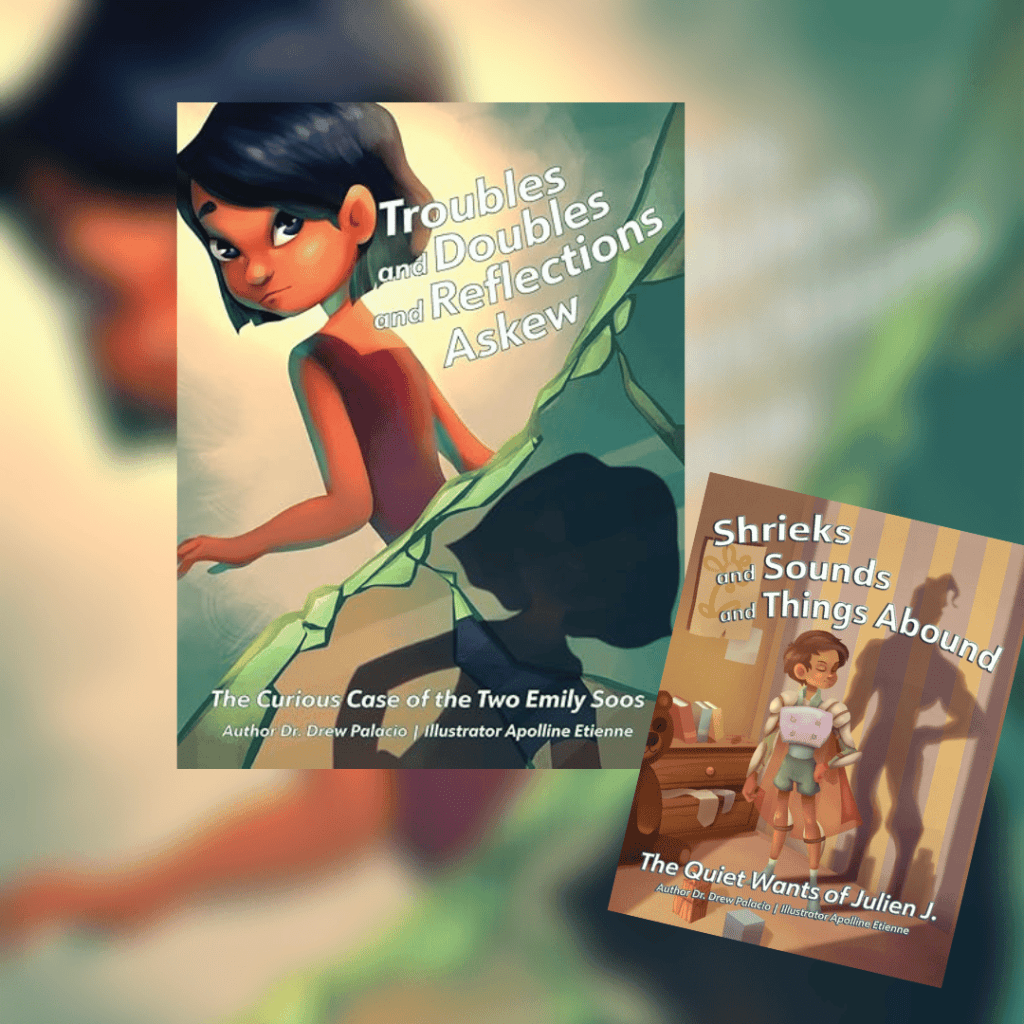
Enter for the chance to win a personalized hardcover copy of Troubles and Doubles and Reflections Askew: The Curious Case of the Two Emily Soos and Shrieks and Sounds and Things Abound: The Quiet Wants of Julien J.
Twelve (12) winners receive:
-A personalized, signed copy of Troubles and Doubles and Reflections Askew: The Curious Case of the Two Emily Soos
–A personalized, signed copy of Shrieks and Sounds and Things Abound: The Quiet Wants of Julien J.
Allie Strom and the Ring of Solomon: A Middle Grade Fantasy (Bringer of Light Book 1)
Written by Justin M. Stone
How much bad news can one twelve-year-old handle? Allie has just learned her best friend is leaving, her mom has been deployed overseas, and Allie is about to start seventh grade in a new school.
If that were not enough, Allie faces bullies, her mother’s disappearance, and finding a necklace belonging to her mother that appears to have mysterious powers. This is the first book of a series that contains themes familiar and popular to a middle-grade audience but written in a way to appeal to an older audience as well.
Allie meets Daniel who will participate with Allie on her quest. I enjoyed the interesting sketches of the characters included in the book that make them come alive. This feature also will engage reluctant readers.
Readers of coming of age, paranormal, fantasy and magic will find something to like here.
SUBSCRIBE TO THIS BLOG FOR NEW BOOK REVIEWS EVERY WEDNESDAY AND SUNDAY.
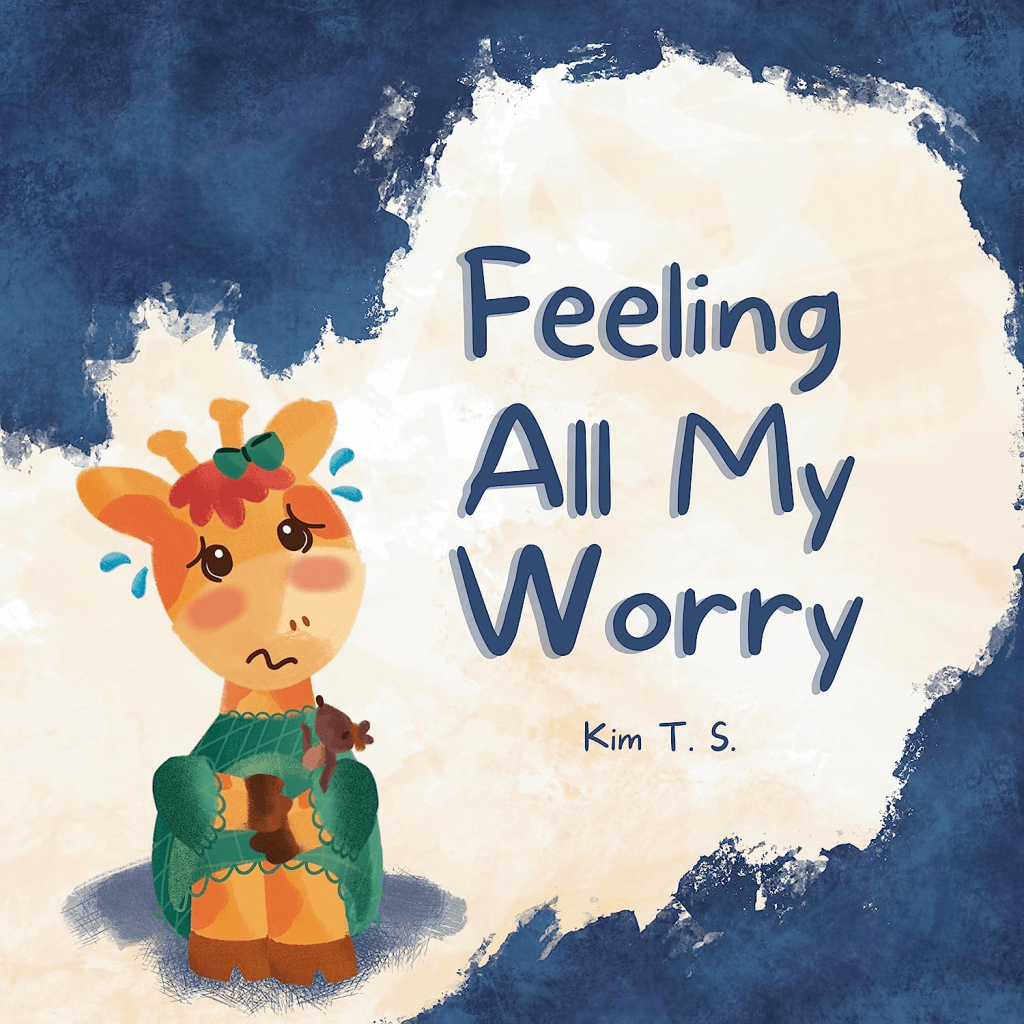
A beautifully illustrated picture book that explains the emotion of worry to even the youngest child.
The author covers the nature of worry, reassures children that it is a common occurrence, and presents examples of situations in which a young child might be afflicted with worrying. It instills a feeling of self-confidence and urges children to either take action or seek advice from an adult when facing the problem.
SUBSCRIBE TO THIS BLOG TO GET NEW BOOK REVIEWS EVERY WEDNESDAY AND SUNDAY.


 April 7, 2024
 bamauthor
 Comments Off on USING YOGA AS A SOCIAL-EMOTIONAL TOOL








 Barbara Ann Mojica's BLOG
You must be logged in to post a comment.