Keys to Being an Effective Leader of Fellow Adults
An entirely different approach is called for, but some of the principles are the same no matter what age you’re leading.
Maybe you are going to be training a group of adults for a specific job, or perhaps you have to organize a community consignment sale. Maybe you need to find volunteers for a work or church function. There numerous situations where adults need to lead adults. Here are some keys to being an effective leader of your fellow adults.
Know Where You’re Going
No one wants to follow someone who has no idea where they’re going! Having a goal or vision is essential. It’s possible that goals may evolve or change as you go forward – it’s good to be flexible, too – but when you start out, having a clear vision can inspire others to follow you. If you really believe in it and know it can be done, your enthusiasm tends to be infectious. People like to get on board with someone who knows how to fly the plane!
Listen
As noted above, it’s good to be flexible, and that’s where listening comes in. As you express your vision and goal, even if it’s just getting things done well and on time, it’s a good idea to listen to the input of others. Someone might point out something you hadn’t taken into consideration, or he/she might have a good point about your choice of venue.
Obviously, a good leader can’t please every person’s whim, but you can take people’s concerns into consideration. If everyone seems to be saying the same thing, maybe you should change your plans a bit! People tend to appreciate a leader who listens, even if it doesn’t always mean change.
Clear Steps
In addition to a clear goal, you’ll need clear steps on how to reach that goal (or multiple goals). Explaining a “contagious” vision is great, but teaching people how you plan to realize that vision is just as important. It can seem unrealistic if you cannot clearly outline your plan. Break it down into manageable steps to present to the members in your group. A critical part of this, of course, is being organized.
Confidence
If you don’t believe in what you’re doing, how can you expect others to follow you? Make sure you are confident and certain of your plan and your methods. While it’s not a good idea to be so confident that you refuse to listen to anyone or pay attention to their concerns; demonstrating confidence and a clear vision, is contagious. Be sure of yourself and the goals that you want to accomplish.
If you enjoyed reading this post, please subscribe by clicking on the word Follow or by hitting the orange RSS FEED button in the upper right-hand corner of this page.
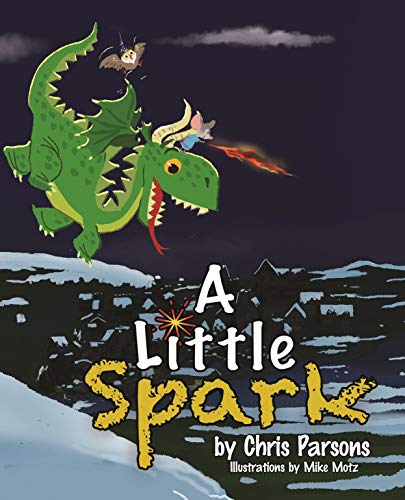
Publisher’s Synopsis: When the survival of their hometown is threatened, two unlikely comrades join forces on a quest to defeat a dangerous enemy and bring back the only one who can save them all.
Beyond the frozen mountains there lies an oasis from the frigid cold and the howling winds. A place the animals call Lake Zuron. What a wonderful place, happy creatures of all kinds, living in harmony and warmth thanks to their very own fire-breathing dragon named Daniel.
But one day everything changed when the unthinkable happened. The Dragon fire goes out and immediately the air begins to chill. Things were not looking good but just when all hope was lost, an unlikely hero steps up. Join Spark the mouse on an adventure of a lifetime as he and his friends do their part to save their town from an icy demise.
With the magical power of Daniel, the Dragon there could be hope. But first, they must face and defeat a dangerous enemy, the vile beasts who own these mountains where nobody passes through.
Along this journey maybe you will discover that it’s that little Spark in each of us that really matters, and that a little Spark could save them from the coming cold. The story reminds us that we all need something in life every day to ignite our passion and spirit – to help the world be a “warmer” place and to look for ways to “Be That Spark.”
Ages 7+ | Publisher: Zuroam Media | October 1, 2020 | ISBN-13: 978-1735145501
About the Author
Chris Parsons grew up in the small fishing village of Flatrock, Newfoundland where he was surrounded by storytellers. When he became a father, he began creating his own children’s stories, and soon he was sharing them with a wider audience.
Over time, his audience grew up, but he continued to create his stories and colorful characters mostly for his own enjoyment. One day he had a flash of inspiration about a little mouse named Spark and began to create the world of A Little Spark.
Today, Chris lives in Dallas. He has left the high-tech world of innovation and business development behind and is focused on his real passion – to create new meaningful experiences for children centered around powerful and engaging stories like ” A little Spark.”
Together with his wife, Kathleen, daughter, Maggie, and son, Kealan, they share a love for all God’s creatures.
Mike Motz is a children’s book illustrator and publishing professional based out of Toronto, Canada. Motz has helped writers around the world fulfill their dreams of publishing their works. To date, Motz has been responsible for the creation of the artwork for over 300 self-published children’s books.
About the Narrator
Brandon McInnis is a voice actor and singer known primarily for his work on animation and video games. He voices Sir Nighteye in My Hero Academia, Ganos in Dragon Ball Super, Finral Roulacase in Black Clover, Asagiri Gen in Dr. Stone, Yuna D. Kaito in Cardcaptor Sakura: Clear Card, Frodo Baggins in Lord of the Rings Online, Patrick Phelps in Black Butler, Sonosuke Izayoi in Danganronpa 3, Erlang Shen in SMITE, and many more.
With a deep love for music production and originally trained as an opera singer, Brandon also produces music for release on YouTube and Spotify. He can be followed on Twitter, TikTok, and Instagram: @BranMci.
About the Music Producer
Bruce Faulconer is a musician, composer, and record producer based in Dallas, Texas. He is the owner and founder of Faulconer Productions Music, and CakeMix Recording Studio. Faulconer writes music for orchestra, various instrumental and choral groups, along with the music for feature films, and TV series, including the anime Dragon Ball Z. He recently completed twelve songs for A Little Spark, included in a new audiobook, an interactive children’s book, and an animated feature film in development. He resides in Dallas with his wife Lisa and is the father of two sons.
My Review of A LITTLE SPARK
SMALL BUT MIGHTY
A Little Spark
Written by Chris Parsons
Illustrated by Mike Motz
This interactive book is a valuable resource for young children’s minds on so many levels. It is innovative, inspiring, and entertaining.
The target audience range is a wide one. This book contains rich illustrations that could place it in the picture book category. But with a length of more than one hundred fifty pages, it also might be considered a chapter book or a middle-grade reader. What it delivers is a range of fascinating animal characters which are personified with a range of human emotions and aspirations. There are fire-breathing dragons, bears, mice, weasels, goats, cats, and raccoons. They live in Lake Zuron, an oasis on the edge of a frozen world. Their world survives only because of the warmth provided by Daniel, a fire-breathing dragon. Lake Zuron is not an ideal society. The “Supervisors” contain the stronger animals, a ruling class. Far below them, “The Streeters,” perform all the work.
One day, Daniel loses his ability to produce fire. Lake Zuron faces extinction. But Sparky, a tiny mouse, finds within himself the courage to make the perilous journey over the frozen wasteland of their enemies, the Scabes, to follow a rumor that another land survives on the other side of the mountain. He and Veen venture to the other side. Will they discover salvation or face extinction?
Young readers learn many lessons from the colorful cast of characters as the adventure unfolds. Hope, courage, friendship, equality, fairness, and responsibility are exemplified in the faces and actions of the characters, both large and small. But Parsons provides much more than an excellent book. Embedded within its pages are a collection of twelve songs, private video messages from the characters, the ability to take a photo with your favorite character, or an opportunity for readers to share their personal opinions on the interactive lesson pages at the end of the book.
I highly recommend this unique educational resource for readers age eight through eighty-eight.
PURCHASE LINK
Before October 1st, pre-order your copy, email the team at Zuroam Media, and they’ll give you the audiobook free so you can enjoy it while you wait for the book to arrive. You can find all the email address and links to your favorite bookstore here:https://bethatspark.com/shop/.
Leadership skills are crucial for success in life, from employment to relationships. The general consensus is that many of these skills are lacking among adults and young people. Whether you have youth and young adults living in your home or placed under your supervision, you can invest in their futures by teaching them how to be leaders.
Qualities necessary for teaching youth and young adults to be leaders.
Give Them Responsibility
As a youth group leader, parent, teacher, or other authority figure, this can seem like a scary prospect. Are they ready for responsibility? Can they handle it? Give them something to be responsible for that will build their self-confidence, but don’t make it something that’s life-and-death. Take your teens’ personal skills, strengths, and weaknesses into consideration, too.
Here are some examples of responsibilities for teens.
Running an errand for you, such as picking up something from the store. If they can’t drive, you can drop them off to run the errand.
Opening up a bank account.
Let them lead a class or group.
Household chores like laundry could be delegated to the young adults and teens in your home.
Have them organize the set-up and clean-up of an event.
Jobs
One of those ironies of good leadership is that being under leadership is often a great way to learn it. Youth and young adults would do well to work at least part time, This fosters learning responsibility and also learning what is involved in good leadership. Having a job is an important responsibility that can prepare young people to lead.
Consider jobs like camp counselor or babysitter, too. Those are both jobs that put young people in charge of others.
Workshops
Are there leadership workshops available in your area? If not, see if you can hire a leadership consultant to come in and speak to your group. Maybe you can find someone to speak to your teen’s class, or hold a seminar on your young adult’s college campus. If there is a workshop available, take your youth group to the workshop, or sign your kids up.
Groups and Organizations
Organizations like Boy and Girl Scouts are also good ways for young adults and youth to learn leadership skills. Don’t let the names “boy” and “girl” deter you – there are all kinds of opportunities in these organizations for youth and young adults. Other clubs and groups encourage leadership among members, too. Find out about what is offered in your community – even your local YMCA/YWCA might have some ideas or programs.
Take stock of the opportunities available that are tailored to the career opportunities that are unique to the community in which you live and the curriculum available in schools and colleges in your area. Discuss the hopes and dreams held by your youth and teens and encourage them to share them with you and their peers. Innovation and success spring from the seeds of ideas.
If you enjoyed reading this post, please subscribe by clicking on the word Follow or by hitting the orange RSS FEED button in the upper right-hand corner of this page.
So you have attempted to provide a nurturing environment, set up good examples, and encouraged leadership qualities in your children.
Whether you are a teacher, parent, or other type of caregiver, you have probably heard about the importance of instilling leadership. But how? What skills? Following is a basic list of leadership skills you can teach kids.They are not numbered because each is equally important.
INDEPENDENT THINKING
Help your child break out of a “cookie cutter” mindset by teaching him/her to think independently. Ask for your child’s opinions on many different subjects, without judging or stating your opinion. Be open-minded. Listen so that no opinion is “wrong” or valueless. You might then share your own opinion respectfully, and if it differs, that’s okay – part of independent thinking is hearing many sides of an issue and coming to your own conclusions.
RESPONSIBILITY
Age-appropriate responsibilities are important stepping stones on the ladder of skills necessary for building leadership. Give your child responsibilities as preschoolers, and have him deal with the consequences if those responsibilities are not met. Of course, your child will require guidance; but once your explain what the consequences will be, it’s best to let them play out.
FAIRNESS
Leaders need to be fair and just. Being too rigid and unbending is not the best way to teach your kids about fairness, but being too permissive encourages a child to put himself first. Help them to understand what is fair and what isn’t, and how sometimes being fair means being firm even when your child or others might get upset.
NEGOTIATION
Have you thought about the importance of negotiation skills in leadership? Leaders understand the necessity for give and take and that often means compromise, Think about it: government leaders, particularly the president, need to be well-versed in the art of negotiation. It’s okay to discuss your child’s wants and desires. – Allow your children to present a convincing argument as to why they think they should have whatever it is, or participate in an activity. Be prepared to allow yourself to be “talked into” something now and then!
ORGANIZATION
Being organized is essential to good leadership. Teach your children how to prioritize tasks and organize their time. Explain how to use calendars to keep things straight, and show how time can be organized in different ways when prioritizing tasks.
Children need to be taught how to organize priorities in terms of immediate and future goals. In the category of organization is also the concept of making lists. Have your children make lists of what tasks they plan to complete each day and then in one week. This also helps break tasks down into steps – maybe your child has a book report or research paper due one or two weeks from now. Helping your child break that down into weekly and daily steps can be useful- not only in accomplishing the completing of the task, but also in instilling the leadership skill of organization.
COMMUNICATION
This is a vital skill for leadership. Leaders must express their goals and their vision for whatever project or task they are leading or coordinating. They can’t expect others to read their minds or carry out instructions without direction. Teach your kids good communication and listening skills by encouraging them to share their thoughts even if you disagree, and by actively listening yourself. Both you and your child will be happier and more successful.
If you enjoyed reading this post, please subscribe by clicking on the word Follow or by hitting the orange RSS FEED button in the upper right-hand corner of this page.
Whether you think that leaders are born or made, some characteristics that distinguish leaders from others stand out.
Have you wondered if you or someone you know is a natural leader? Are you interested in learning why they become leaders? Here are some personality characteristics that seem to go with effective leaders.
Task-Oriented
Are you the kind of person who likes to get things done? Do people come to you and ask you to do something for them and know you’ll do it? Not everyone is task-oriented, but those who are may end up being effective leaders. Being task-oriented means being a “doer,” the kind of person who focuses on getting something done and not stopping until the task is finished.
Task-oriented people generally follow through. This is important in a leader, because leaders have definite goals to reach and people to lead, and people will stop following you if you don’t get things finished.
Also, task-oriented leaders do not need “babysitting” to get something done. They can take initiative on their own – the task itself is motivation.
Honest Self-Image
Leaders tend to be pretty honest about their weaknesses and strengths, but not to the point of letting either one take over. For instance, a leader can balance between recognizing his weakness and not letting that stop him/her, and a leader can see his/her strengths without getting conceited. Those in leadership positions may find that they garner more respect when they are honest and “transparent” about their flaws than if they pretend to be perfect.
People Person
A leader tends to be a people person – someone who derives lots of energy from being around people. Such extroverted personalities make great leaders, but introverts are not barred from leadership, either. You can have a love for people and be introverted; you just respond differently to interacting with others.
In other words, you can be a “people person” even if you find yourself tired of leading at the end of a day. Extroverts and introverts can both be motivated by a love for people and their wellbeing.
“Infectious” Joy
Have you ever been around someone who just seems happy with life in general? If a person shares an idea or thought and seems really happy about it, do you feel like joining him or her? Leaders tend to exhibit this kind of infectious joy that draws other people to them. Positive-thinking leaders have a zest for life that compels other people to join them.
The general consensus is, characteristics of a good leader can be in-born or learned, or a bit of both. If you don’t have all of these traits naturally, you can learn many of them. No two leaders are the same.
If you enjoyed reading this post, please subscribe by clicking on the word Follow or by hitting the orange RSS FEED button in the upper right-hand corner of this page.
Visit my website http://www.LittleMissHISTORY.com to discover all my learning opportunities for #children #parents #authors and #teachers.
Is your child a strong leader? Do you suspect that he or she might grow up to be an effective and proactive leader? Maybe you aren’t sure what to look for. Does it matter if you discover leadership abilities early? Actually, some sources say it does matter. Observing leadership qualities early means parents, teachers and caregivers can work to develop those talents so they do not fall by the wayside.
If you want to make sure you develop your child’s leadership qualities, here are some signs to watch for. Some of them may surprise you!
Talkative
Does it sometimes drive you crazy that your child talks so much? Actually, being talkative may be a sign of things to come. A chatty nature indicates a child with excellent verbal skills, which are necessary for good leaders. Did your child talk early and proficiently? This may be a sign that he or she will be a good leader.
Treats Others with Respect
If you notice that your child seems to end up in responsible positions – team captain or band director – and you know he didn’t get that position because of “muscling” his way to the top or bullying others, then this may be a sign of leadership ability. Notice if others seem to “gravitate” toward her and wish to emulate her. Observe whether or not this is due to respectful treatment. If it is, you may have a strong leader on your hands.
Sees Both Sides
Some kids display an ability to understand both sides of an issue. They tend to be peace keepers, helping two arguing kids or adults to see reason, for example.
In the Know
Does your child always know what’s going on? Is he or she always aware of the latest events at school or in the family? This is not the same as being a gossip (that’s not a good leadership quality), but it does mean that he or she is paying attention and interested in what’s going on with others.
Inquisitive
A good leader is not afraid to ask questions, but he/she is not afraid to go looking for answers on his own. Too much questioning may indicate self-doubt – your child is always trying to make sure about things. On the other hand, healthy questions that spring from a real desire to know more about something may be a sign of leadership ability.
If you enjoyed reading this post, please subscribe by clicking on the word Follow or by hitting the orange RSS FEED button in the upper right-hand corner of this page.
So you have tried to create a home environment conducive to instilling leadership skills for all your children, whether they be preschoolers or teens. It’s been said that leadership starts at home and directly linked to early training. Experts disagree about how much leadership is inborn and how much is learned. I believe that it’s a combination of learning plus a child’s innate abilities.
If you’d like to do what you can to raise your children to be good leaders, here are some tips that may help.
Teach Them to Think
Some argue that the school system, whether it be public or private, teaches kids what to think rather than how to think. Common core curriculum has placed uniform requirements and testing standards on schools across the United States. There are likely exceptions to this – special schools and special teachers – but it’s entirely possible that your kids are not being taught how to think. So whether you homeschool or enroll your children in a traditional school setting, you might try some of these exercises to encourage independent thinking.
Give them an age-appropriate reading task that expresses a particular point of view. An opinion piece in the newspaper is a good place to start. Ask what your child thinks about it, and have him or her write an age-appropriate response. Do the same thing with an article that expresses a contrary or different opinion.
Encourage them to read about topics and books that covers a range of opinions and views.
Ask them if they agree or disagree, and why.
Any time your child reads something, ask him (or her) what he thinks about it. Find out what information he drew from the reading rather than finding out if he picked up what she was “supposed to” from the reading. Let them know it’s okay to disagree with parents and teachers. Encourage them to discuss the reasons behind their disagreement.
Leaders tend to be independent thinkers, so these exercises may go a long way toward teaching your child to be a good leader.
Teach Organization
This may be something of a challenge for parents who aren’t that organized themselves! On the other hand, for those parents who are very organized, you might find that you tend to organize everything for your kids without teaching them to do it themselves. Parents need to discover a comfortable balance between the two.
Give them a calendar and show them how to keep track of their own activities. Chore lists are an excellent way to help them organize their time. Age-appropriate chores and activities, written down or drawn on a calendar, can help kids “see” their time and how they are using it, even if they are too young to tell time yet.
Ask for Arguments
Huh! Are you joking with me? Ask your kids to talk back to you?
The art of arguing respectfully is an important leadership quality. We’re not talking about angry arguments. Think in terms of negotiation and persuasion. Ask your child to tell you why he (she) wants a certain thing, or why he should be permitted to attend an event or participate in an activity. This helps your children learn how to analyze his thoughts and present reasons that produce an argument to justify why he should achieve this goal.
If you enjoyed reading this post, please subscribe by clicking on the word Follow or by hitting the orange RSS FEED button in the upper right-hand corner of this page.
Leading teens is different than leading children and older adults. Your role is to guide them into maturity and teach them how to manage adult responsibilities. Teens can handle more responsibilities and understand what’s expected.
But many older adults are intimidated to lead teens since they have a reputation for being rebellious. What if they won’t listen? What if they ignore your advice and “walk all over you”?
Here are some tips that may help you to lead teens.
The Right Attitude
It’s important to respect a teen’s place in the leadership process. (This is important with all ages, but teens are more aware of their own independence.) Remember that you can’t be a leader without followers! The teens have to be there for the leadership to happen.
Respect
Respecting those you lead is important. Teens probably won’t respond well to just being given orders. One way you can show your respect to the youths under your care is to listen to them. Really hear them, and respond respectfully to what they say. This proves your respect for them, In addition, it also sets a respectful tone in your group. When you do this, you’re leading by example.
Insist on Respectful Behavior
Because you’re modeling it, this shouldn’t be difficult to enforce. Ask that your teens treat each other with respect, and you can set yourself up as an example.
Be “Real”
Teens have a nose for sniffing out when something or someone is faking it. The teens in your charge don’t really expect perfection. They would prefer to interact with someone whose flaws they can identify with than someone distant and unfamiliar. Make sure to guard against hypocrisy. It’s fine to be genuine and share that you used to be a smoker or drinker while telling your teens not to smoke or drink, but if you are still smoking, your words will ring hollow and fake.
The Importance of a Good Relationship
Leading teens means assuming the role of a mentor and adviser. Mentoring means setting up an environment where learning takes place. Always set aside a time for teaching and answering questions. To form an effective leadership relationship with teens, it’s critical to know when to step back and let the teen try on his or her own and when to step in. If you develop a good relationship with your teens, then you will likely know them well enough to have figured out when to get involved and when to back off.
Parents and teachers want children to be independent thinkers. They encourage children to develop their own opinions and have the courage to stand up for them. Whether you are working with children who are yours or you’re a caretaker for someone else’s children, learning how to lead them effectively is important. You may want to lead your kids to practice a healthy lifestyle, develop better communication skills, or something else. In any case, good leadership is a way to reach your goals with the children in your care.
How do you become a good leader for kids? It can be hard to know if you’re not used to it, or if you didn’t have strong leaders when you were a child. Here are some tips.
Set an Example
You’ve probably heard “lead by example,” but that means more than just doing something and hoping your kids will notice and imitate your behavior. It also means being purposeful in setting an example, and you’ll need to stop practicing certain behaviors and pay attention to what you say.
For instance, if you want your children to be patient with others – an important leadership attribute – then take care that you’re patient with them. If you want your children to be able to make decisions like a leader, then make sure you’re not making all of their decisions for them. Don’t be a helicopter parent. Permit your children to make mistakes and learn from them. To lead by example, you need to think about more than just living out healthy, positive lifestyle choices (although that’s important, too). It’s also important to set an example of how to treat others.
Include Them
Whether you are a teacher or a parent, including the children in your care is important to instill leadership. How do you include them? First, let them help. In the classroom, this might be a simple task like collecting papers and passing out papers. Students might be allowed to write an assignment on the board for the teacher. At home, let your children be a part of your daily routines, helping you wash the car and clean the house. After all, these are life skills, and those are the building blocks for good leadership.
Delegate
Good leaders know how to delegate responsibilities and tasks. In your home or classroom, give kids many different responsibilities. You can set things up so that the children in your care have a job to complete, and they have to delegate tasks to others to finish it. A different approach could be to simply explain the task, and give a job to each child to get it done. They will see the value of delegating. Perhaps, you might may explain that many jobs cannot be completed by one person without help from others. Each child participating will still have the satisfaction of helping to get something done.
Allow Them to Help Others
Wherever you can, let your kids help each other without being bossy or bullying. In fact, being bossy is not a good leadership skill. This is important to emphasize when you are working with children in different age groups. Teach them how to help others in an appropriate way, and then set up a scenario where that help can happen. When older siblings learn how to mentor rather than supervise a younger sibling, they learn how to transfer this skill from the family to the outside world. This method works in the classroom or at home with friends and/or siblings.
To Sum Up
Children are like sponges. They soak up what they see and hear in the world around them. Adults are their first role models. Parents, teachers, and caretakers set the example for the youth who will become tomorrow’s future. We will reap what we sow.
If you enjoyed reading this post, please subscribe by clicking on the word Follow or by hitting the orange RSS FEED button in the upper right-hand corner of this page.
Publisher’s Synopsis: The secret to happiness? It’s written on a whale’s tail. At least that’s what Koa hears, and so he sets out in search of Wally Whale and the valuable knowledge that he hopes Wally will share.
Wally Whale’s Mighty Tail, one of the first books in the EQ Explorers series, teaches the powerful EQ principle: Happiness is a Choice. It’s a lesson of emotional intelligence that is essential for any child—including Koa, who learns as he journeys through the Pacific with Wally Whale.
Publisher’s Synopsis: The last thing Danny expects to come across during his hike in the forest is a very insecure bear. And yet, Compare Bear is precisely that—a bear who struggles to see his own strengths, and instead constantly compares himself to other animals, with astonishing results.
In Compare Bear’s Double Dare, one of the first books in the EQ Explorers series, Danny helps his unique new friend take to heart the powerful EQ principle: Be Yourself. Don’t Compare. It’s a lesson of emotional intelligence that is essential for any young reader.
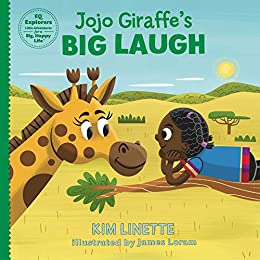
Publisher’s Synopsis: Jojo Giraffe’s Big Laugh, the third book in the EQ Explorers series, takes children on a journey through the African Savannah, learning what it means to be wonderfully unique along the way—just like the spots on each and every giraffe.
The story centers around the powerful EQ principle: Don’t Take Things Personally. It’s a lesson of emotional intelligence that is essential for any child—including Kali, who learns through a series of fun adventures with Jojo Giraffe.
Another happy book in the EQ Explorers series. Little Koa searches for Wally because the boy has heard that Wally has the secret to being happy written on his tail. Koa will be the leader of his tribe one day. Koa wants to know how to lead his people to happiness.
But Koa is dismayed when the message on Wally’s tail is smudged. He sees Happiness is a ch…. What are the missing letters? Wally teases Koa and plays a guessing game with him. Koa makes guesses like cheer, chocolate, and chair. Finally, Wally relents and provides the correct answer. He explains to Koa that our emotions are like the waves of the ocean. Sometimes we feel happy and sometimes sad. When you choose happiness, you can find ways to stay happy through tough times.
Discussion questions to illustrate the book’s lessons are included as well as fun facts about whales. Loram does not fail to disappoint with colorful multicultural illustrations.
Recommended for elementary school readers.
Compare Bear’s Double Dare
Danny is never afraid of trying something new. One day, he embarks on a hike through the woods. He meets an unusual bear. Compare Bear is afraid of climbing trees, racing, fishing, or roaring. Every time the bear finds another who is better than he at something, he stops doing it. To make matters worse, parts of his body change into that animal.
Danny urges him to be himself and dares him to compete. Will Compare Bear find the courage to accept himself and stop trying to be perfect?
Fun facts about bears and discussion questions are included in this beautifully illustrated picture book.
Jojo Giraffe’s Big Laugh
This book is part of the EQ Explorers, Little Adventures for a Happy Life. The profits from the sale of these books are donated to underserved children.
Kali is hiding in a tree crying because the other kids make fun of her for being short and spending her time climbing trees. Jojo passes by and encourages her to laugh. He shows her perspective, a new way of looking at things. The giraffe shares his personal experience with other giraffes. He encourages her not to take things personally and to value her own opinions of herself rather than those of others. As they walk and meet other animals like ants, hippos, and zebras, the lesson becomes clear.
Beautiful colors and expressive images foster the imprinting of the story on young minds. This book is a good choice for a read aloud or bedtime story for children in elementary school.
GIVEAWAY
Enter for a chance to win an EQ Explorers prize pack!
One (1) grand prize winner receives:
A copy of Jo Jo Giraffe’s Big Laugh autographed by Kim Linette.
A copy of Compare Bear’s Double Dare autographed by Kim Linette.
A copy of Wally Whale’s Mighty Tail autographed by Kim Linette.
A play fort perfect for reading and imagination play.
Two (2) winners receive:
A copy of Jo Jo Giraffe’s Big Laugh
A copy of Compare Bear’s Double Dare
A copy of Wally Whale’s Mighty Tail
Giveaway begins July 6, 2020, at 12:01 A.M. MT and ends August 6, 2020, at 11:59 P.M. MT.
If you enjoyed reading this post, please subscribe by clicking on the word Follow or by hitting the orange RSS FEED button in the upper right-hand corner of this page.



 September 10, 2020
 bamauthor
 Comments Off on HOW TO FOSTER LEADERSHIP SKILLS IN CHILDREN – #9 What Happens When You Need to Deal with Adults?




























 Barbara Ann Mojica's BLOG
You must be logged in to post a comment.