This book lives up to its title. It is a learning guide that focuses on familiar tunes from cultures across the world. The introduction section is important to spend time learning the basics. There are clear visuals and simple text explanations. This section must be mastered to proceed to the next level.
The book can be used with very young children with parent or teacher guidance. The songs are familiar to school children and fun to play. As the student gains more confidence, she can move up to level two in the series or graduate to more difficult sheet music.
Looking for more interesting books to read? Subscribe to this blog to get new suggestions every Wednesday and Sunday.
Publisher’s Synopsis: Meow is definitely not a cat. Cats lick their butts. Follow along as this wild child’s unique way of following instructions ends up going a little bananas.
Meow Is Not Cat is a completely goofy story, guaranteed to make kids laugh. With a cynical cat, wild monkeys, butt jokes, and a banana cannon, even pre-readers will love shouting out their favorite parts as you read aloud. Nestled among the laughs is a lesson about how embracing a person’s different way of interpreting the world can lead to surprisingly good results —and bananas, lots of bananas.
Kelly Tills is the creator of her own uniquely shaped family. Kindness, neurodiversity, and potty humor are her jam. She writes silly stories for kids and believes even the smallest hat-tip, in the simplest of books, can teach our kids how to approach the world. Kelly’s children’s stories are perfect to read aloud to your little humans or to have your older kids read to you (hey, let them flex those new reading skills!). Either way, you’ll enjoy the giggles.
Tills authors this book to celebrate neurodiverse children who think and respond to situations differently from most children.
The protagonist is a young boy called Meow by his teacher. Meow protests he is not a cat and does not act like one. The author adds a cat as a character who ad-libs as the story proceeds. This boy just cannot seem to fall in line. He goes off in the opposite direction. When the class participates in an outing to feed the monkeys, the situation gets out of control. Will Meow find a way to fit in with the group? More importantly, is it fair that he even tries to do so?
The book is full of hilarious illustrations and situations that will have primary-grade readers laughing. They will learn the value of empathy, kindness, and respecting the rights of others regardless of physical or mental differences.
GIVEAWAY
Enter for a chance to win a copy of Meow Is Not a Cat!
While this book is written to inspire children, anyone of any age who wants to write will find it useful.
It gives prompts to jumpstart the writing process. First, simple ideas to create a story. Then, scenarios for creating compelling characters. Can’t think of a plot? Plaja provides ideas to weave details into a finished plot. She even includes suggestions for creating the dialogue between characters and finding an appropriate title. Before closing, the author tackles organization with suggestions for keeping track of your progress.
The book provides a quick reminder of writing tasks and a good reference checklist for the newbie or established writers.
To get free tips for authors and teaching lessons subscribe to my youtube channel
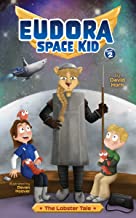
Publisher’s Synopsis: Freedom for lobsters! The second in the Eudora Space Kid series: a hilariously funny, early reader sci-fi chapter book perfect for elementary-aged kids. Can Eudora and her best friend, Arnold, rescue her favorite lobsters from becoming the next meal at the spaceship’s New Year’s buffet?
Eudora is a normal third-grader who just happens to live on a 36 deck AstroLiner. In SPACE! As a math and science whiz who’s been adopted by what you might call . . . aliens, she has normal ambitions—like being the chief engineer on an AstroLiner. But when her favorite lobsters on board appear on the menu at Chef Franklin’s dinner buffet, Eudora and her best friend, Arnold, hatch a plan to break them out. Will they save their crustacean friends? Or will they end up locked in the ship’s brig? Again . . .
Brilliant for engaging emergent and early chapter book readers.
David Horn lives in New Jersey with his wife, two daughters, and a funny dog named Trixie. He is a huge science fiction fan and loves reading science fiction books from both the old and new greats. His daughters inherited his love of science fiction and love watching sci-fi shows like Star Trek, Babylon 5, Stargate, and Star Wars. The Eudora Space Kid early reader chapter book series started as funny stories he told his daughters at dinner to get milk to come out of their noses. He hopes your children love Eudora’s silly antics in space too and milk comes out of their noses too!
Eudora Jenkins is a third-grader who lives on a spaceship in the future. She is a math, science, and engineering genius. Her home, The Athena, is a space vessel protecting the Planetary Republic. Its crew consists of humans and space aliens.
This book is the second in the series but can easily be a stand-alone story. Readers quickly learn that Athena and her best friend, Arnold have a penchant for getting into trouble for their pranks and landing in the brig. At the beginning of the tale, they inject dancing music while the crew is engaged in a battle drill on the bridge. More trouble looms when they decide to rescue the lobsters doomed to be on the menu for a special buffet dinner. Eudora never runs out of clever ideas that get her into trouble. Will Eudora succeed? How long will the adults tolerate her schemes?
This sci-fi series contains humor, imagination, pranks, and clever characters. Perfect choice for elementary grade students learning to read chapter books. The black and white illustrations assist with attention retention and are enticing for reluctant readers. A bonus word search activity at the end continues the fun.
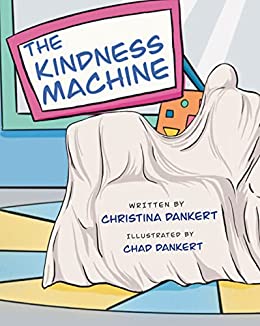
Publisher’s Synopsis: Creative and artistic 2nd-grade teacher, Mr. Wilson, wants to teach his students about kindness. Mr. Wilson creates The Kindness Machine, a special machine that shows the students exactly what they can do to bring kindness to their classroom and into their hearts! Instead of telling his students to “be kind,” which is something children hear from a very early age, they learn exactly what they can do in their own lives by pressing the special buttons. In the end, Mr. Wilson teaches his students that they each have their own Kindness Machine within them to help make kind decisions for others and themselves.
This creative, innovative, and fun teaching method will direct kids to be kind to one another in their classroom and beyond. The book includes discussion questions to help the reader consider not only kindness towards others but also kindness towards themselves, a lesson that is not always taught.
The Kindness Machine is a practical and innovative tool for teaching emotional literacy, kindness, and acceptance of self and others.
Available in hardcover, paperback, and as an ebook.
Christina Dankert is a second-grade teacher. She has a passion for literacy and believes that we can change the world by reading to the children in our lives. This is her debut picture book. She lives in Sylvania, Ohio, with her husband, Chad, and their two children. She has dreamed of collaborating with her husband to merge their two professions of educator and artist into one meaningful product. The Kindness Machine allowed that dream to come true.
What a wonderful message for elementary school children! This multicultural book portrays a diverse second-grade class with a wonderful role model as a teacher.
Mr. Wilson is a popular teacher with a penchant for invention. One day he brings one of them to class. He hides the invention under a bedsheet. The children are excited and curious. What could it be?
Mr. Wilson asks the class to identify their superpowers. When they claim not to have any, Mr. Wilson shows them how his invention is the kindness machine that will reveal each student’s superpower.
Can this be true? One by one the students step up to the machine and learn how each possesses a unique superpower that can help them to spread kindness.
The author includes wonderful illustrations and discussion questions to use before, during, and after the reading, making this picture book a valuable teaching tool.
GIVEAWAY
Enter for a chance to win a classroom set of The Kindness Machine or one of five individual copies!
One (1) winner receives:
A classroom set (30 copies) of The Kindness Machine will be sent directly to the winners’ school of choice, along with autographed bookplates personalized for each student and the teacher.
Five (5) winners receive:
A copy of The Kindness Machine, with bookplates autographed by author Christina Dankert
Do you ever wonder what heights you could rise to in your personal and professional life if you put all of your thinking into focus? So much of our brain capacity is unused and lying dormant. In a world that centers on acting on impulse and making snap decisions, what we need to do is put on the brakes. Even more important, how can we teach our children to make their own decisions, form their own opinions, and learn to become the independent thinkers that leaders and inventors must develop? What if you knew the secret of thinking so that your life would improve tenfold and help you achieve all the goals you have in life? Then you could pass these skills on to your children and grandchildren.
Critical thinking is developed over time and is like learning any sport or art. You can’t just get up one morning and say, “I think I’ll become a critical thinker today.” No one can simply will it into happening. For many, it takes years to develop a critical thinking knack. In some older citizens, we call it, “wisdom.”
The only paths through which a person can develop insightful thinking are by knowing and accepting the truth that there are flaws in your thinking. You must also constantly practice becoming a thinker who can effectively solve problems through logical thinking rather than emotions.
Becoming a critical thinker can help you develop strategies where you overcome the obstacles that life presents. Here are some obstacles you may want to obliterate from your life – and that’s possible with critical thinking:
• Analyze the influences in your life. Learn to make your own decisions rather than falling under those influences.
• Get your ego under control. Your ego may be keeping you back from advancing at work and from developing better relationships. Critical thinking can help you think without the influence of an inflated ego.
• Solve problems. Being too scattered to solve problems and “thinking” with emotions usually doesn’t solve anything. Using critical thinking can help you get in touch with your emotions and solve problems through logical thinking.
• Stop wasting time. You may be wasting entire days of productivity by going in many directions at once. We pride ourselves on multi-tasking, but in doing more, are we accomplishing less? We may not actually be enjoying anything we do to waste time because we know we’re going to be behind on our work or frustrated about wasting the day. Critical thinking can teach you how to evaluate your time and spend it wisely.
We all have a great capacity to think critically and to improve our lives immensely, but most of the time, it’s dormant. That’s because it’s undeveloped. We can make it better with practice, just as we would when learning a musical instrument or sport.
Non-critical thinking is a habit that we’re not even mindful of most of the time. We sit, staring at a mindless program on television, playing mindless video games, or engaging in gossip or other pursuits that don’t require critical thinking. Deep down in our hearts, we know that we are spinning our wheels.
If you want to develop the traits of a critical thinker, know that you must study and research – then, put what you’ve learned into practice on a daily basis. It’s worth the effort. Your life and that of those you care about will be happier for it.
Remember, “If you don’t know your history, you don’t know what you’re talking about.”
Cinnamon the Adventurous Guinea Pig Goes to Devil’s Island
Written by Daniel Turner
Illustrated by Gayle Skinner
This is a delightful beginning reader chapter book. It contains a few simple illustrations peppered throughout to keep the reader interested. The animal characters featuring guinea pigs and Siamese cats are delightful. They provide young readers with models of compassion, kindness, empathy, resilience, and teamwork.
Driven to flee their home because of a volcanic eruption, the animals get lost at sea, captured by the nasty, Captain Blood, and develop a plan to resist their enslavement. Will they be able to escape his clutches? What will the future hold for them?
The book is under sixty pages which makes it a good choice not only for a beginning but also for a reluctant reader. I would also recommend it as a classroom read-aloud that could be used to teach desirable values.
If you are looking for more teaching resources, check out my youtube channel.
Extraordinary Women in History, 70 Remarkable Women Who Made a Difference
Written by Leah Gail
This book is packed with information. The author explores the lives of 70 women, some of whom are well-known and others left forgotten in the annals of history.
Familiar faces include Florence Nightingale, Amelia Earhart, Dian Fossey, and Joan of Arc. Their field of endeavor ranges from military heroes, activists, athletes, inventors, and creative thinkers. The book harkens back to ancient and medieval times as well as contemporary examples. These women are representative of many races and many countries.
There is a bibliography for additional research. This book would be a good starting point for research on women representatives to be used in the study of woman’s history. My reason for a lower rating is that the writing is choppy in sections which can make it difficult to read. I would still recommend it as a reference book, particularly for middle-grade students.
Alex is dismayed that his best friend, Luke, is moving. The summer becomes a boring nightmare. When Alex wakes up late for the first day of school, he is certain it is an evil omen.
This book contains well-defined characters that will appeal to the middle-grade reader. So many familiar struggles. There are bullying, school and family relationship struggles, trust, and acceptance issues.
This book is a quick read, under one hundred pages, and a good choice for reluctant readers. I would recommend it for the eight through twelve age group.

 May 22, 2022
 bamauthor
 Comments Off on FAMILIAR AND FUN





 Barbara Ann Mojica's BLOG
You must be logged in to post a comment.