Amy, Sarah, and Joe, along with their friend Joe are with their guide Uti. Because their parents suddenly had to cancel, Uti is taking them to Oxley, a remote island on the outskirts of the Bermuda Triangle to see the exotic native animals.
Shortly, after their arrival, a sudden storm sweeps them out to sea before Uti can return to the wheelhouse. Alone and scared, the children are terrified when a ship crashes right into them. To their dismay, Captain Red, a pirate, is in command. Will the children survive the storm and escape from the pirates?
That is just the beginning of their adventures. A white gorilla, slithering reptiles, scary Natives, Will’s disappearance, aircraft, tunnels, and vampire bats are among the things the intrepid children will need to face.
The characters are nicely developed, the settings intriguing, and the action is nonstop, providing the perfect backdrop for a middle-grade or young adult thriller adventure.
If you enjoyed reading this post, please subscribe by clicking on the word Follow or by hitting the orange RSS FEED button in the upper right-hand corner of this page.
YouTube Video Marketing: Video Marketing Tips, Tricks And Strategies EXPOSED
Written by Lavorite Martin
This book is written in an easy, non-technical style. While certainly not intended for an expert in videography, this book is a good choice for beginners. Authors who want to explore using video clips in their marketing campaigns will find it a good introduction.
Martin begins with explaining the importance and techniques for identifying and zooming in on your ideal customer and target audience. This is crucial for success. The author also stresses the need to tie video marketing in with the rest of your social media platform. The section on the many types of videos will help the reader decide which is the right kind of approach to video marketing.
Success will rise or fall if you don’t have the right equipment. Martin gives suggestions. I learned a lot about which formatting is most effective and how to choose the right one in each situation. Finally, Martin explains how to optimize videos with calls to action, keywords, and tags. He tells the reader how to embed a video on various social media platforms.
I recommend this book as a handy reference tool and quick reminder for a marketer’s video needs.
Anya is only thirteen. She lives in Cardiff, and her life has been difficult. Tad, her alcoholic father, has spiraled into alcoholism and depression. Unable to support himself and his daughter, he secures a position as a scullery maid in London for her.
Anya’s adventure begins with a train ride on a contraption she has never laid eyes on. When she disembarks at Paddington Station, the sights and smells of Victorian England surround her. She has no idea of what to expect. When she meets her boss, Mrs. Axton, her fears escalate.
But as Anya settles into a life of drudgery, more trouble looms before her. Anya has secured a few friendships, but she has also made many enemies. The novel traces her struggle to clear her name. This young Victorian girl is determined to obtain a measure of happiness and find a family to accept and love her.
The book is a fast-moving historical fiction adventure that is perfect for middle-grade readers.
If you enjoyed reading this post, please subscribe by clicking on the word Follow or by hitting the orange RSS FEED button in the upper right-hand corner of this page.
The illustrations say it all. Soft colors and exquisite expressions portray the emotions set out in the rhymes. Most of the rhymes are on the mark, perhaps a couple stretch the meaning of the words.
Toddlers and preschoolers will get the message clearly by looking at the images. I think the book would have made an even greater impression if a few human examples of mother and child were included. Luckey gives specific examples of why a mother’s love is so deep and truly everlasting.
This book would be an excellent gift for a new mother. Grandmothers and caretakers will also enjoy reading it aloud or as a bedtime story.
If you enjoyed reading this post, please subscribe by clicking on the word Follow or by hitting the orange RSS FEED button in the upper right-hand corner of this page.
Publisher’s Synopsis: Buckets is a curious French Bulldog, and he’s determined to find out where snow comes from! One wintry day, Buckets runs away from his home in Brooklyn in hopes of finding its origin…but what happens when he gets lost along the way?
Buckets Goes on a Winter Adventure is a story of friendship and determination, and will encourage readers of all ages to explore the mysteries of the world around them.
This post is in partnership with The Children’s Book Review.I received a free copy of The Monster Twins to review. All opinions are my own.
THAT TWIN THING…
The Monster Twins
Written by Robert and Karen Hanvik HaHHhh
Illustrated by Ella Ransom
First book in a new series. Bella and Bertie are twins who have never met each other. When they were born, the rules did not allow them to live together. Why? Because they were monsters and the law said they must be adopted by separate human families.
Bella has been adopted by a couple who live in Singapore but travel all over the world. Bertie lives with a shy couple who live in London. Each have different personalities but have one thing in common. Both monsters feel that something is missing They each long for a best friend.
Will circumstances ever change? Will Bella and Bertie employ their twin skills to discover each other’s existence.
I especially liked the way the author introduces children to the fact that families can be different and that growing up in different cultures does not preclude similarities between siblings.
Publisher’s Synopsis: Bella and Bertie are twins, but they don’t know that, or each other. Separated while babies by bad law, they grew up 6000 miles apart, in Singapore and London. Follow the twins as they discover their shared past and do their best to make a better future for themselves, their families, and others like them.
So you have tried to create a home environment conducive to instilling leadership skills for all your children, whether they be preschoolers or teens. It’s been said that leadership starts at home and directly linked to early training. Experts disagree about how much leadership is inborn and how much is learned. I believe that it’s a combination of learning plus a child’s innate abilities.
If you’d like to do what you can to raise your children to be good leaders, here are some tips that may help.
Teach Them to Think
Some argue that the school system, whether it be public or private, teaches kids what to think rather than how to think. Common core curriculum has placed uniform requirements and testing standards on schools across the United States. There are likely exceptions to this – special schools and special teachers – but it’s entirely possible that your kids are not being taught how to think. So whether you homeschool or enroll your children in a traditional school setting, you might try some of these exercises to encourage independent thinking.
Give them an age-appropriate reading task that expresses a particular point of view. An opinion piece in the newspaper is a good place to start. Ask what your child thinks about it, and have him or her write an age-appropriate response. Do the same thing with an article that expresses a contrary or different opinion.
Encourage them to read about topics and books that covers a range of opinions and views.
Ask them if they agree or disagree, and why.
Any time your child reads something, ask him (or her) what he thinks about it. Find out what information he drew from the reading rather than finding out if he picked up what she was “supposed to” from the reading. Let them know it’s okay to disagree with parents and teachers. Encourage them to discuss the reasons behind their disagreement.
Leaders tend to be independent thinkers, so these exercises may go a long way toward teaching your child to be a good leader.
Teach Organization
This may be something of a challenge for parents who aren’t that organized themselves! On the other hand, for those parents who are very organized, you might find that you tend to organize everything for your kids without teaching them to do it themselves. Parents need to discover a comfortable balance between the two.
Give them a calendar and show them how to keep track of their own activities. Chore lists are an excellent way to help them organize their time. Age-appropriate chores and activities, written down or drawn on a calendar, can help kids “see” their time and how they are using it, even if they are too young to tell time yet.
Ask for Arguments
Huh! Are you joking with me? Ask your kids to talk back to you?
The art of arguing respectfully is an important leadership quality. We’re not talking about angry arguments. Think in terms of negotiation and persuasion. Ask your child to tell you why he (she) wants a certain thing, or why he should be permitted to attend an event or participate in an activity. This helps your children learn how to analyze his thoughts and present reasons that produce an argument to justify why he should achieve this goal.
If you enjoyed reading this post, please subscribe by clicking on the word Follow or by hitting the orange RSS FEED button in the upper right-hand corner of this page.
Publisher’s Synopsis: Fitz the Fox can’t wait to see all that New York City has to offer — but will he get to see the penguin feeding or will a subway snafu derail his plans? A whimsical, sight-seeing jaunt that encourages wonder with rhyming text, peppered with facts and trivia along the way!
Join Fitz as he visits the Statue of Liberty with her 8-foot long index finger, the bustling crowds of Grand Central Terminal, the wondrous, book-filled spaces of the New York Public Library, and marvels at the sky-scraping height of the Empire State Building.
Continue to wander with a walk from Manhattan to Brooklyn across the Brooklyn Bridge and visit the Bronx Zoo along with more iconic landmarks while exploring this exciting city!
Ages 3-10 | Good Avenue Books | August 10, 2020 | ISBN-13: 978-1734602104
If you enjoyed reading this post, please subscribe by clicking on the word Follow or by hitting the RSS FEED button in the upper right-hand corner of this page.
Leading teens is different than leading children and older adults. Your role is to guide them into maturity and teach them how to manage adult responsibilities. Teens can handle more responsibilities and understand what’s expected.
But many older adults are intimidated to lead teens since they have a reputation for being rebellious. What if they won’t listen? What if they ignore your advice and “walk all over you”?
Here are some tips that may help you to lead teens.
The Right Attitude
It’s important to respect a teen’s place in the leadership process. (This is important with all ages, but teens are more aware of their own independence.) Remember that you can’t be a leader without followers! The teens have to be there for the leadership to happen.
Respect
Respecting those you lead is important. Teens probably won’t respond well to just being given orders. One way you can show your respect to the youths under your care is to listen to them. Really hear them, and respond respectfully to what they say. This proves your respect for them, In addition, it also sets a respectful tone in your group. When you do this, you’re leading by example.
Insist on Respectful Behavior
Because you’re modeling it, this shouldn’t be difficult to enforce. Ask that your teens treat each other with respect, and you can set yourself up as an example.
Be “Real”
Teens have a nose for sniffing out when something or someone is faking it. The teens in your charge don’t really expect perfection. They would prefer to interact with someone whose flaws they can identify with than someone distant and unfamiliar. Make sure to guard against hypocrisy. It’s fine to be genuine and share that you used to be a smoker or drinker while telling your teens not to smoke or drink, but if you are still smoking, your words will ring hollow and fake.
The Importance of a Good Relationship
Leading teens means assuming the role of a mentor and adviser. Mentoring means setting up an environment where learning takes place. Always set aside a time for teaching and answering questions. To form an effective leadership relationship with teens, it’s critical to know when to step back and let the teen try on his or her own and when to step in. If you develop a good relationship with your teens, then you will likely know them well enough to have figured out when to get involved and when to back off.
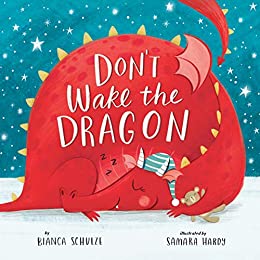
Publisher’s Synopsis: Shhh! Be very quiet. The rascally dragon is finally asleep. But, when the page turned, the breeze blew the door shut with a BANG! Did it wake up the dragon? Create a fantastic bedtime experience by reading this interactive story featuring a reluctant-to-sleep dragon—a character that children will surely relate! Designed to be read aloud, parents will take pleasure in the playful text as much as children will enjoy hearing it. When the story finally comes to an end, and the gentle lullaby is repeated, the dragon – and your child! – are encouraged to drift off to sleep.
What a charming interactive picture book! The dragon is sleeping, and the kingdom will be in danger if she wakes up.
A door blows shut when the page is turned. The knights are having a birthday party in the castle. They are singing, playing drums and dancing. Oh, no, the cooks are banging the pots. Will the dragon remain a sleep?
Readers are urged to join in the activities as the characters perform them. Lot’s of onomatopoeia words like boom, jiggle, and clank add to the fun. The illustrations are vibrant and creative.
This book is highly recommended for preschoolers and primary grade children.
GIVEAWAY
Enter for a chance to win a Don’t Wake the Dragon prize pack!
One (1) grand prize winner receives:
A hardcover copy of Don’t Wake the Dragon, autographed by Bianca Schulze.
A Kids’ Sleep Training Alarm Clock.
A $25 Visa gift card.
Giveaway begins June 29, 2020, at 12:01 A.M. MT and ends July 27, 2020, at 11:59 P.M. MT.

 August 23, 2020
 bamauthor
 Comments Off on CARIBBEAN CAPER















 Barbara Ann Mojica's BLOG
You must be logged in to post a comment.