Furry Fighters to the Rescue: How to Stop Feeling Angry Kids Book
Written by Lieve de Lint
Illustrated by Debby Rahmalia
A brilliantly vivid picture book to help preschool and primary grade children deal with feelings of anger.
They learn to face their feelings by identifying with furry, firefighting creatures who team up to identify and analyze their strong feelings and get them under control.
A good resource for parents, teachers, and counselors who work with children experiencing anger issues.
SUBSCRIBE TO THIS BLOG FOR NEW BOOK REVIEWS EVERY WEDNESDAY AND SUNDAY.
Good Evening, Good Evening: Mindfulness and Affirmations for Babies and Kids.
Written by Kaarjal Agnani
Illustrated by Ekta Makhijani
This is a sweet rhyming picture book for toddlers and preschoolers. It contains short affirmations connected to evening that will calm them down and prepare them for bed, while reminding them of the many beautiful images associated with winding down at the end of the day.
Recommended for children ages two through five to be read aloud as a bedtime lullaby.
SUBSCRIBE TO THIS BLOG FOR NEW BOOK REVIEWS EVERY WEDNESDAY AND SUNDAY.
Navigating the Middle School Transition: A Parent’s Guide
IS YOUR CHILD ANXIOUS ABOUT ENTERING MIDDLE SCHOOL?
Saying Goodbye to Elementary School
Transitioning from the familiar environment of elementary school can be challenging for some children. Kathy Glass, a former middle school teacher and author specializing in curriculum and instruction, notes, “Children often spend several years at their elementary school, making it feel like home. When multiple elementary schools merge into a single middle school, it can be socially overwhelming, potentially straining old friendships and fostering new ones.”
Embracing Independence and Organization
Middle school demands greater independence and organizational skills from students. “Unlike the single, self-contained classrooms of elementary school, middle school students rotate through different classes with various teachers, each with unique expectations. This can be daunting for some children,” explains Glass.
As a parent, you can offer support by listening, sympathizing, and guiding your child through this transition while clearly communicating the importance of focusing on schoolwork and succeeding academically.
SEVEN STRATEGIES TO KEEP YOUR CHILD ON TRACK
Provide Hands-On Guidance
Advocate for your child with teachers, counselors, and school staff.
Monitor homework, asking guiding questions like:
What information do you need for this assignment?
Where will you look for it?
What steps will you take next?
Assist with Organization
Help your child develop a system for managing important papers.
Use binders with folders for completed and returned work.
Ensure your child uses a planner to track assignments and deadlines.
Communicate with Teachers
Discuss any organizational challenges with your child’s teachers or school counselor.
Brainstorm solutions together.
Teach Time-Management Skills
Reinforce the habit of referring to a planner regularly.
Break down large assignments into manageable tasks.
Help your child estimate how long each task will take and create a realistic schedule.
Develop Note-Taking Skills
Encourage starting a new page for each class daily, using key words and abbreviations.
Review notes after class to ensure accuracy.
Teach your child to take notes from reading assignments by pre-reading to grasp main themes.
Hone Study Skills
Encourage active learning techniques such as highlighting, making study cards, and diagramming concepts.
Identify the best study times for your child and establish consistent study habits.
Use mnemonic devices to aid memorization.
Engage with Teachers
Address specific teacher-related challenges through communication.
Ensure your child understands each teacher’s expectations and homework policies.
Seeking Extra Help
If your child continues to struggle, consider hiring a tutor. Literacy coach Laura Hendrick advises, “Middle schoolers still need parental support, both academically and emotionally. Be firm and establish accountability measures.”
Reading Tips for Middle Schoolers
To become a successful reader, students should:
Maintain an organized home study space.
Practice reading daily.
Use textbook headings and questions to guide comprehension.
Advice for Parents
High school teacher Lance Balla suggests:
Understand your child’s learning style and provide a conducive study environment.
Stay engaged with teachers and monitor your child’s progress regularly.
Foster a college-going culture and model enjoyable reading habits.
Encourage your child to read newspapers and discuss their learning content, focusing on understanding rather than grades.
This middle-grade book will be especially enjoyed by preteen girls. Lilah is a twelve-year-old seventh grader who faces a myriad of challenges.
In the opening scene, Lilah is at her mother’s wedding when she is stuck by lightning. Fortunately, she is not seriously hurt and makes a quick recovery. Unfortunately, there is one lasting result. She now has acquired the qualities of a medium and hears dead voices. Lilah encounters them at home and in school. She cannot seem to get rid of them.
How much can a twelve-year-old handle? Lilah really wants to go to the school dance with Andrew, her crush, but she keeps hearing his dead father’s voice. Lilah’s own father doesn’t want to take her advice. An eighth-grade girl is bullying her. Lilah somehow copes with all of these problems with a sense of humor.
Middle-school readers of divorced families, victims of bullies, those adjusting to fitting in with peers and family relationship difficulties will empathize with Lilah and her struggles.
Highly recommended for the middle school audience.
SUBSCRIBE TO THIS BLOG FOR NEW BOOK REVIEWS EVERY WEDNESDAY AND SUNDAY.
TAKE READING ON THE ROAD. Bring books on a picnic, to the park, visits to friends, and appointments.
SET AN EXAMPLE BY SHOWING YOUR CHILDREN THAT YOU LIKE TO READ. Encourage them to ask questions about what you are reading and ask for their opinions.
CHOOSE BOOKS THAT HAVE BEEN MADE INTO MOVIES. Encourage the child to read the book and then offer a movie night to watch the same story. Have a discussion about similarities and differences. Ask which version the child prefers.
SEARCH FOR READING INCENTIVE PROGRAMS. Local libraries offer summer reading incentive programs that reward children for reading. In the past organizations like Six Flags and Pizza Hut have offered rewards for reading programs.
SET UP YOUR OWN READATHON. This works well on a rainy day at home. Provide blankets and snacks and camp out in your living room with the family spending the day reading. You can also do this by spending a night under the stars in your backyard or arranging a sleepover with a child’s friends each bring their favorite books.
This book is written and illustrated by parents of an autistic child. As a special educator who has worked with dozens of autistic children, I highly recommend this book both to autistic parents and teachers and also to those seeking to understand autism.
Jo is a beautiful child who is autistic. He has a special interest in music and space, both areas in which he excels. Jo learns differently. He sometimes shouts out his words and needs to have a structured routine in which to function. Jo tries his best to fit in socially though he sometimes needs adaptations.
I liked the way the illustrator portrays children with disabilities in a wheelchair and a child wearing noise-cancelling earphones. The parents support Jo with unconditional love. Every child deserves to learn in the way that best suits his talents and capabilities.
Another valuable part of the book comes at the end when the author shares tips about communication, socialization, and the sensory needs of autistic children, which are a valuable source of knowledge for any adult working with an autistic child.
Highly recommended as a read aloud discussion book for preschool and elementary school children.
SUBSCRIBE TO THIS BLOG TO GET NEW BOOK REVIEWS EVERY WEDNESDAY AND SUNDAY.
This is a beautifully illustrated, rhyming picture book told from the perspective of a father of a newborn child. He wants to share with his new child all the wonders of the world in addition to a multitude of learning experiences that he intends to teach his child.
The rhymes are sweet and heartfelt, just the type of emotion any new parent experiences. The vivid colors of the multicultural characters and places discussed will open up a young child’s mind to new vistas and experiences.
I would highly suggest the book as a bedtime story or read-aloud for toddler and preschool children.
SUBSCRIBE TO THIS BLOG FOR NEW BOOK REVIEWS EVERY WEDNESDAY AND SUNDAY.
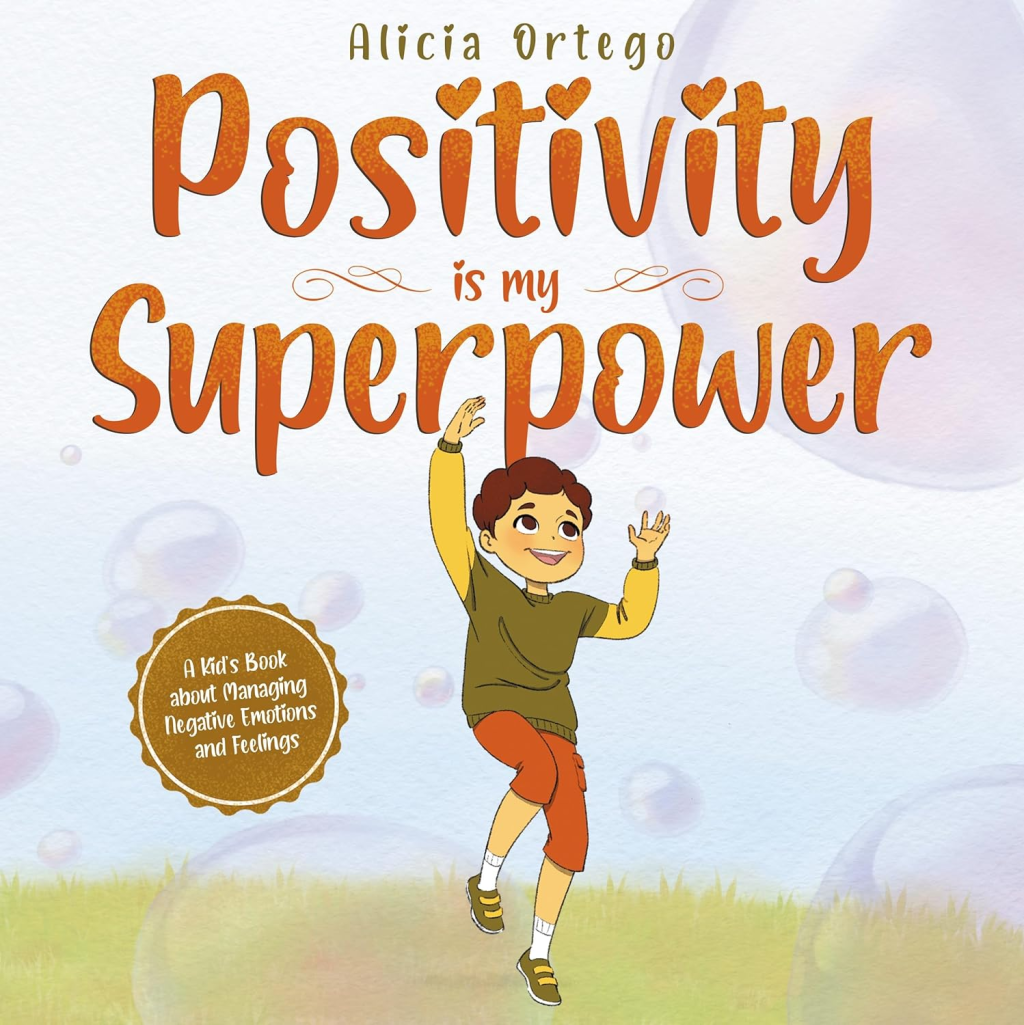
Positivity is My Superpower: A Kid’s Book about Managing Negative Feelings and Feelings(My Superpowers Books 10)
Written by Alicia Ortego
This book is part of a series that focuses on dealing with children’s emotions and turning them into superpowers.
In this book, Lucas is the protagonist. He is facing a move to a different city. That releases a flood of emotions, most of them negative. Lucas is dealing with anxiety, uncertainty, and fear of the unknown. He does not want to leave the house he grew up or the friends he cherishes.
Lucas’s mom comes to the rescue She reassures him with gentle words and simple actions like blowing bubbles that turn his negative feelings into positive ones like hopefulness, confidence, and a sense of adventure.
This rhyming picture book serves as a good teaching tool for elementary age students to enhance social-emotional skills.
SUBSCRIBE TO THIS BLOG TO GET NEW BOOK REVIEWS EVERY WEDNESDAY AND SUNDAY.
Have you experienced decision fatigue? I’m sure you have, you may just not have had a word for it. It’s that feeling when you get toward the end of a busy and even stressful day, and you simply can’t make another decision. You can’t figure out what you should cook for dinner, and even the idea of picking something to watch on Netflix seems like a chore. Those are the days you’ve been suffering from decision fatigue.
We all experience them, and the more taxing your job is, and the more you’re required to make decisions throughout the day, the more you find yourself suffering from decision fatigue. That shouldn’t come as a big surprise. When we spend all day walking or running around, we feel tired in the evening and our muscles fatigue. If you’ve ever participated in any endurance sports event (or gone for a long run after a period of inactivity), you’ve experienced muscle fatigue. Why shouldn’t we experience the same when we tax our mind with lots of decision making?
Not only does decision fatigue impair our ability to make decisions altogether, but it also affects the quality of our decision making and our willpower. In short, after a long day of making good choice after good choice, we tend to start making bad ones. There’s a reason we see a lot of “Made for TV” products and infomercials on TV late at night and it isn’t just because of the cheaper advertising rates. It’s because that’s the time of day we’re most prone to making impulse purchases. It’s also when we give up on our diets and healthy eating intentions.
Keep this idea of decision fatigue in mind when you try to get a few last minute tasks done at the end of a long day. That may not be the best time for important choices or tasks that require well thought out responses or clear decision making.
Similarly, you should expect your team members, coworkers, bosses, and loved ones to experience the same. Asking your boss for a raise right before quitting time on Friday may not be a good idea. Your chances of getting a yes significantly increase if you wait until first thing Monday morning. Don’t expect your family to make healthy dinner and snack choices in the evening. Instead, plan your meals early on in the day and have them figured out well before lunchtime.
Important Lesson #1 – Don’t tackle important or difficult decisions late in the day, particularly if you’ve made a lot of decisions in the hours leading up to it already.
Now that we’ve established that there is such a thing as decision fatigue, we’ll investigate some things we can do to void it. The answer is simple. We need to find a way to reduce the number of decisions we make on a daily basis. Here are some simple ideas for cutting some of them from our lives.
Use Habits and Routines To Your Advantage
Let’s start with something you already know how to do. You may just not realize it. That’s creating routines and habits to cut back on the decisions you have to make. You don’t have to decide to brush your teeth every morning or talk yourself into deciding to go to work today. Instead, it’s a habit and something you do without having to think about, and more importantly without having to waste one of your precious and limited decisions.
As you go about your day and make decisions, particularly if they are decisions that you make on a regular basis, stop yourself and see if there’s a way you can turn that decision into a habit or routine.
Instead of spending the first minutes of your day figuring out what you should wear, create a simple uniform for yourself. Find a few pairs of similar pants and a couple of mix-and-match tops. Rotate through those outfits, so you always know what to wear on a given morning.
If there is a recurring task at work, you should schedule to do it first thing in the morning or right before you head to lunch. That gets it out of the way without having to decide when to take care of it.
Plan Ahead
Another great solution is to batch your decisions and plan ahead. Let’s use your food choices as an example. We all eat, and we make quite a few daily decisions about what to eat. You can cut those out of your daily routine by creating a weekly or monthly meal plan. Start with dinner. Sit down and come up with your dinner ideas for the week. Write them down and post them on the fridge door. When you go grocery shopping be sure to pick up everything you need. That way you don’t have to agonize about what to fix for dinner when you get home after a long day at the office. From there, expand and include breakfast and lunch plans as well. You can even choose a daily snack for yourself. For bonus points, create a couple of these menus and start rotating through them week after week. Once you’ve made your original meal plans, there’s no more decision making involved.
You can easily adapt this principle to other areas of your life and work. Sit down and make out a to-do list first thing in the morning or before you head home in the afternoon. You can batch a whole bunch of decisions together and have a game plan for your workday. Think about other ways to incorporate this into your life and cut back on the decisions you make.
Delegate And Cut Down Choices
Last but not least, start reducing the choices you have to make altogether. Not every decision has to be made by you. If you’re working in a team or have people under you, don’t be afraid to delegate. Yes, in the beginning, it’s a little extra work to explain what needs to happen and what’s involved. But as you start to delegate and give these people more and more responsibility, your decision making tasks will be considerably cut back. That allows you to focus on the critical stuff.
Another great strategy is to simply cut down on the number of choices you give yourself (and others). Get in the habit of trimming the list before you even attempt to choose.
These tips may seem like little things, but they will quickly add up. It doesn’t take a lot of decision cutting back to notice a big difference in when and how hard decision fatigue hits. Give it a try.
I thought we should end on a high note. The good news is that your decision-making abilities replenish and they do so regularly. In the last section of this short report, we’re going to go over the various ways we can encourage that replenishment and when and how it happens naturally.
In general, your decision-making ability replenishes with rest and with relaxation. Since we’re getting less and less of that in these busy times, it’s no wonder decision fatigue is becoming a big issue.
Decision-Making Ability Replenishes Overnight
Don’t panic when you find yourself unable to make another decision at the end of a long day. Sleeping replenishes your ability to make smart choices overnight. You’ll be back to a clear head and able to make important decisions in the morning. Use this to your advantage. If you feel decision fatigue is setting in you should rein things in for the rest of the day. Don’t schedule important meetings in the evening and use your mornings wisely.
Sometimes It Pays To Take A Mental Health Day
We all get busy, and we all get stressed out from time to time. When a good nights sleep doesn’t seem quite enough to bring your decision making batteries back to full strength, it may be a good idea to take the day off.
Do something fun, relax, destress, and most importantly make as few decisions as possible and certainly no important decisions. You’ll come back refreshed and ready to go.
Go Outside And Get Some Air
Sometimes taking the day off or waiting for the following morning isn’t an option. An important decision is expected from you before you leave the office, or within the next hour or so. If you’re feeling decision fatigue is setting in when a decision is needed there are two things I want you to remember. The first is that all other decisions can wait. Focus on making just the one more that can’t wait.
Go outside, get some air, and clear your head before you make your choice. While this won’t work as well as sleep or a day off, it may be just enough to give you that little boost of energy and willpower you need to make the right decision.
It May Be Time For A Vacation
Last but not least, let’s talk about taking a few days off and going on vacation. You know from experience how invigorating and restful a trip can be. Take advantage of this and come back ready to make those important decisions about the future of your company, your family, or what projects you want to tackle during the next quarter.
Above all remember to use your decision-making skills wisely and learn to recognize decision fatigue before it leads you to make a bad choice.
SUBSCRIBE TO THIS BLOG FOR TIPS ON HOW TO FIND RESOURCES TO LIVE A MORE FULFILLING LIFE FOR YOU AND YOUR FAMILY.
Benun has managed to combine storytelling with an effective presentation of stem concepts, large mathematical numbers, and ecology in one easy-to digest- picture book.
This book encourages even the youngest child to stretch these skills. Pebbles, a butterfly with an insatiable curiosity, sets out to travel the world to find the largest number. Along the way, she travels through deserts, rainforests, oceans, and space. At every stop readers discover fun facts, scientific knowledge, and learn about the animals living in each habitat.
Children learn a ton of information without even realizing it. This book can be enjoyed over and over, revealing something new in each page.
I would highly recommend this book to homeschoolers, teachers, and parents of elementary and middle-school students. Warning! adults will be expanding their brains along with the young reader.
SUBSCRIBE TO THIS BLOG FOR NEW BOOK REVIEWS EVERY WEDNESDAY AND SUNDAY.


 August 21, 2024
 bamauthor
 Comments Off on QUENCHING THE FIRE














 Barbara Ann Mojica's BLOG
You must be logged in to post a comment.