Posts from the ‘Parenting’ Category

IS YOUR CHILD GIFTED OR TALENTED?

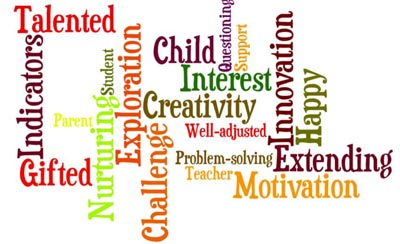
Since it is widely agreed upon in the educational and child development communities that early recognition of the characteristics of a gifted child, is a key factory in successfully developing the child, it is important for the parent to have at least a general understanding of these gifted characteristics.
First of all in order to be classified as a gifted child, the child must have the ability to perform at a level that is significantly beyond other children of like age. O.K. So, for a parent, what might this look like or what should I look for in my child?

Of course, every child is endowed with unique capabilities and has the potential for maximizing these qualities.


The following are some guidelines to help your awareness when it comes to recognizing the characteristics of a gifted child. Keep in mind that there are varying levels of giftedness, as you view the guidelines.

Cognitive Skills (thinking or though processing)


Ability to master new skills with extraordinary speed.
A deeper knowledge than other children the same age.
Extraordinary memory and recall of events, facts, and/or figures.
Advanced creativity and ability to improvise.
Acute alertness to their surroundings.
Advanced or more complex sense of humor.

Learning Patterns


Great and constant curiosity along with high level of motivation to learn.
As a result of the previous, being bored easily if not challenged
Advanced ability to stay focused or lengthy attention span. Even with more difficult topics.
Advance organizational or planning skills.
Advance logic and problem solving skills.

Speech and Language


Well developed word vocabulary and language compared to children of the same age.
Creative uses of words and sentence structure and again, sense of humor.
Ability to adapt their use of the language to a given level to fit the situation.
Ability to understand and carry out complex instructions.
General advanced ability in reading, writing, and working with numbers.

Social


Sensitivity to other s feelings
Use of their advance language skills to resolve conflict or debate.
Organize and direct behavior of other children (may seem bossy to other children).
Many times will feel more at home with older children.
May have high expectations of themselves (and others) that can lead to frustration and even anger.

Other


A generally high aptitude for logical problems, games, puzzles, or any type of problem solving or activity that requires creative thinking and reaction.

Final Note: Although these characteristics of a gifted child may provide you with some initial insight and understanding, it is important to seek a formal assessment of your child in this area if you feel that your child exhibits several of these characteristics.

SUBSCRIBE TO THIS BLOG FOR NEWS YOU CAN USE

← Back

Thank you for your response. ✨

Rate your experience(required)

Peer Pressure Playbook Course: Equip Your Kids with the Confidence to Stand Strong!

ROLLING ENROLLMENT ONLINE AT YOUR OWN PACE


Why This Course Matters
Helping your kids develop resilience and independence is a challenge—especially when peer pressure enters the picture. This course is designed to give parents the tools to:
• Raise strong, self-assured kids who can handle pressure with grace.
• Support your child’s unique personality and interests without losing confidence.
• Feel empowered to tackle common parenting challenges with guidance and ease.

Limited-Time Enrollment – Only $97
This special launch price is available now to help as many families as possible empower their child to withstand peer pressure.
Ready to Build Confidence? Reserve Your Spot Today!
[Enroll Now] Weekly videos and materials delivered via email to complete at your own pace!

Peer Pressure Playbook Course: Equip Your Kids with the Confidence to Stand Strong!

Peer pressure doesn’t just affect kids—it affects families. My Peer Pressure Course is designed for parents who want to help their children build inner strength, make independent decisions, and resist unhealthy influences. With expert guidance and real-world strategies, you’ll learn how to raise a child who confidently stays true to themselves. Let’s create a future of empowered, resilient kids together. Proven Strategies from a Lifetime of Experience You deserve expert guidance! With over 40 years in education, I’ve crafted this 5-week video course in bite-sized 30 minute lessons to help parents like you foster resilience in kids. Don’t miss this first-time offer at a special low cost—your child’s confidence is worth it!

$97.00

← Back

Thank you for your response. ✨

LEARNING HOW TO BE A BIG SISTER

How to Be a Big Sister Book for 3 Year Old and Up Girls: A Fun Rhyming Story to Help Your Little Girl Welcome a New Baby Sibling with Love and Confidence — The Perfect Gift for Toddlers

Written by Elowen Clover

This rhyming picture book is meant to prepare the future big sister for her new role in her growing family.

The book is easy for toddlers and preschoolers to understand. Large expressive illustrations enhance the lessons. The new big sister is taught how to assist with feeding, changing, singing, bathing, and family outings. There are simple ways to learn how to be a loving big sister and friend to the new sibling.

Hidden pacifiers on the pages encourage interactivity and increase engagement.

Recommended to expectant parents to prepare for the new arrival.

Subscribe to this blog for new book reviews every Wednesday and Sunday.

WHY IS CRITICAL THINKING NECESSARY?

Teaching critical thinking to children in elementary school is crucial for their overall development and future success. Here are a few reasons why it is important:

  1. Enhanced Problem-Solving Skills: Critical thinking equips children with the ability to identify, analyze, and solve problems creatively. By encouraging them to think critically, we empower them to approach challenges with a logical and analytical mindset. This skill is not only beneficial during their academic years but also helps them navigate real-life situations effectively.
  2. Promotes Independent Thinking: Teaching critical thinking encourages children to question information, sources, and perspectives. They learn to evaluate evidence, form their own opinions, and make informed decisions. This fosters independence of thought, empowering children to rely on their own judgment rather than simply accepting what they are told.
  3. Develops Analytical Abilities: Critical thinking helps children develop strong analytical skills. They learn to break down complex problems into smaller manageable parts, analyze each part individually, and then synthesize the information to form a coherent understanding. This process of analysis develops their ability to assess situations objectively and make logical connections.
  4. Encourages Curiosity and Creativity: When children are taught critical thinking, they naturally become more curious and open-minded. They learn to ask questions, explore various possibilities, and seek a deeper understanding of the world around them. This curiosity fuels their creativity and enables them to think outside the box, fostering innovation and originality.
  5. Prepares for the Future: In today’s rapidly evolving world, critical thinking skills are more important than ever. As children grow up, they will encounter new challenges, diverse perspectives, and complex issues. By nurturing their critical thinking abilities from an early age, we equip them with the skills necessary to adapt, problem-solve, and thrive in an increasingly complex and dynamic society.

In conclusion, teaching critical thinking to children in elementary school is essential for their intellectual growth and overall development. It empowers them to think independently, make informed decisions, and face challenges with confidence. By fostering critical thinking skills, we prepare them for a future where adaptability, creativity, and analytical abilities are highly valued.

SUBSCRIBE TO THIS BLOG FOR NEWS YOU CAN USE.

HOMESCHOOL OR PUBLIC SCHOOL?

It’s a difficult choice, but here’s what you need to consider in a nutshell.

Benefits of Homeschooling that outweigh Public Schools

Homeschooling Strengthens Values & Beliefs

  • Homeschooling allows families to intentionally instill values that are important to them and the freedom to share and practice their faith without restrictions.
  • Public schools promote a fixed set of values, often without room for critical thought or diverse perspectives.
Self-Discipline is required in homeschooling.
  • In homeschool, discipline comes from within, not from peer pressure or performance competition.
  • Learning to do the work even when it’s hard or boring = real growth.
  • Contrast this with the high-achieving public-school students often running on OCD-like habits.
Early Intervention
  • Problems—academic, behavioral, learning disabilities—are often caught early in homeschool.
  • Public school systems often miss these issues until it’s too late or harder to reverse unhealthy habits.
Social Struggles and safety
  • Homeschooling minimizes exposure to toxic social games: popularity, fashion, peer pressure.
  • Public school culture tends to push conformity over individuality.
  • There has been a rise in school shootings and safety concerns over the years.
Bullying
  • It exists in public school, period—even the good ones.
  • Homeschool environments naturally reduce bullying due to smaller, safer social dynamics where adults are present.
Independent Thought

Public school tends to promote conformity through standard curriculum and groupthink dynamics.

Homeschool fosters real critical thinking: reading widely, analyzing deeply, discussing openly.

The Case for Public Schooling

  1. Access to Certified Teachers & Specialists
    Public schools employ trained educators, special education professionals, counselors, and support staff who are equipped to handle a wide range of academic and emotional needs.
  2. Built-in Socialization
    Students interact daily with a variety of peers, helping them develop essential social skills, emotional intelligence, and teamwork—sometimes these skills are hard to replicate in smaller settings.
  3. Diversity of Perspectives & Experiences
    Public school classrooms often reflect broader society, exposing students to different cultures, beliefs, socioeconomic backgrounds, and worldviews.
  4. Extracurricular Opportunities
    Sports teams, music programs, theater, clubs, and leadership organizations are often more accessible and varied and are often offered free of cost to students.
  5. Support for Working Families
    Public schools provide consistent, structured schedules and resources like transportation and school meals, offering vital support for dual-income or single-parent households.

Challenges and Trade-offs

While both homeschooling and public schooling offer unique benefits, they also come with their share of challenges and trade-offs. Homeschooling requires a significant time and energy investment from parents, who are also juggling teaching with their other responsibilities. And while most homeschoolers are tired of hearing about “socialization” it can also be a concern if families aren’t intentional about creating community connections.

On the other hand, public school students may face larger class sizes, less individualized attention, and exposure to bullying or peer pressure. While public schools offer a more structured environment and access to trained educators, they also come with curriculum constraints and limited flexibility.

What It Really Comes Down To

It’s a big decision to decide on your child’s educational path. But you are the best person to make that choice. Consider what is truly important to you and what is best for your child and your family then move forward in that direction. Homeschooling has changed a lot over the years. You don’t have to do it alone. There is a plethora of online classes, support groups, co-ops, and people that are around you if you just look.

HOPE FOR MOMS – VIRTUAL BOOK REVIEW TOUR AND GIVEAWAY TOUR

This post is sponsored by Expound Publicity. The review and opinions expressed in this post are based on my personal views.

ABOUT THE BOOK

Hope for Moms: It’s Tough Out There, but So Are You

Written by Anna McArthur

Ages: 18+ | 168 Pages

Publisher: Beaver’s Pond Press (2025) | ISBN: 978-1-64343-560-2

Publisher’s Book Summary: Many of us did everything we could to prepare for becoming moms, but there just wasn’t any way to know what might lie ahead. Most of us have, at one point or another, looked around and wondered if we are alone in our parenting challenges. Hope for Moms offers a heartfelt guide for mothers navigating both the joys and heartbreak of being a mom, sharing Anna McArthur’s personal journey through parenting difficulties such as learning disabilities, LGBTQ+ identities, and adoption. Structured around a triage plan that helped the author prioritize her family’s needs, it includes practical insights, quotes, and reflection questions to support moms in their journey of resilience and soul care. With gentleness and humor, McArthur provides reassurance to mothers, reminding them they have the strength to not only survive motherhood, but thrive.

McArthur provides reassurance to mothers, reminding them they have the strength to not only survive motherhood, but thrive. If you’re a mom who feels overwhelmed by the curveballs life has thrown your way, you aren’t alone—yes, it’s tough out there, but so are you!

PURCHASE LINK

Amazon

Barnes and Noble

Bookshop.org

ABOUT THE AUTHOR

Anna McArthur is a mom to four kids, including two recent college graduates and twin girls who are high schoolers. She is a blogger, newspaper guest columnist, and contributor to parenting magazines and websites, including Her View from Home and the Motherly Collective. Anna’s essays have recently been published by Grown and Flown and Business Insider.

A graduate of Clemson University and Columbia Theological Seminary, Anna lives in Athens, Georgia, with her husband, Bryan, and their teenaged girls, who are much cooler than her. Anna loves to read, garden, hike, and eat dips for dinner.

For more information, visit hopeformomsbook.com.

https://www.instagram.com/hopeformomsbook

https://www.facebook.com/profile.php?id=61555908861922

MY REVIEW OF THIS BOOK:

TURNING LIFE’S CURVEBALLS INTO HOME RUNS


Hope for Moms: It’s Tough Out There, but So Are You
Written by: Anna McArthur

A book written from the heart by a mom who has faced social-emotional challenges, physical disabilities, and financial distress while raising her family. Any parent will attest to the fact that parenting is one job that comes without a playbook or set of rules. McArthur shares her difficult journey in the hope that her experiences and difficult lessons will benefit other families.

She reminds moms that it is okay to accept help from others, to stop expecting perfect kids, and to be realistic in your hopes and dreams. Instead, understand that moms cannot protect themselves or their children from heartaches or disappointments. The author reminds the reader that raising a family is hard for all of us.


All parents make mistakes; it is more important to keep trying. Stop comparing your parenting style to others. Find the things that make your family unique. Do not compare your family to others. As children grow older and become more independent, moms must learn to listen more than talk. The best solution is to keep an open mind and keep learning.

I highly recommend this book for new parents as well as those facing challenges.

GIVEAWAY

Enter for a chance to win a paperback copy of Hope For Moms: It’s Tough Out There But So Are You by Anna McArthur.

CLINK ON THE LINK BELOW TO ENTER:

https://gleam.io/2SqLW/hope-for-moms-book-giveaway

TOUR SCHEDULE

Thursday, April 24, 2025The Children’s Book ReviewBook Review of Hope For Moms: It’s Tough Out There But So Are You
Friday, April 25, 2025Confessions of a Book AddictBook Spotlight on Hope For Moms: It’s Tough Out There But So Are You
Monday, April 28, 2025The Starlit PathBook Review of Hope For Moms: It’s Tough Out There But So Are You
Tuesday, April 29, 2025icefairy’s Treasure ChestBook Review of Hope For Moms: It’s Tough Out There But So Are You
Wednesday, April 30, 2025Barbara Ann Mojica’s BlogBook Review of Hope For Moms: It’s Tough Out There But So Are You
Thursday, May 1, 2025Deliciously SavvyBook Review of Hope For Moms: It’s Tough Out There But So Are You
Friday, May 2, 2025Country Mamas With KidsGuest Post about Hope For Moms: It’s Tough Out There But So Are You
Monday, May 5, 2025Q&As with Deborah KalbAuthor Interview with Anna McArthur
Tuesday, May 6, 2025Cover Lover Book ReviewBook Review of Hope For Moms: It’s Tough Out There But So Are You
Thursday, May 8, 2025@pieladybooksBook Review of Hope For Moms: It’s Tough Out There But So Are You
TBD@bookstrofficialAuthor Interview with Anna McArthur

I LOVE YOU MORE THAN…

You Taught Me Love

Written by Misty Black

Illustrated by Marina Batrak

A phrase that has been shared over and over by many generations. A mother and child share different ways of expressing their love for one another. Is it a game? Is it a competition?

How many times have parents or grandparents played this game with their precious children. Each generation of a family finds new and different ways to reinforce this message. This book contains beautiful illustrations and exquisite analogies.

This lovely picture book is part of a series and would make a wonderful gift for a new parent or grandparent to share as a bedtime story.

SUBSCRIBE TO THIS BLOG FOR NEW BOOK REVIEWS EVERY WEDNESDAY AND SUNDAY.

← Back

Thank you for your response. ✨

PARENTING POWER – WHAT YOU NEED WHEN YOU NEED IT

This is the first in a series of articles dedicated to helping parents raise happy, confident and successful children.

5 tips to help tweens and teens resist peer pressure.

Talking to children about resisting peer pressure is crucial for helping them develop strong self-esteem and decision-making skills. Here are five tips that can guide parents in these important conversations:


1.Foster Open Communication:

Create an environment where your child feels comfortable sharing their feelings and experiences with you. Start conversations about their day, their friends, and any concerns they have. Encourage them to express themselves freely without fear of judgment. This open line of communication can make it easier for them to come to you when they’re facing peer pressure.


2.Role-Play Scenarios:

Help your child prepare for potential peer pressure situations through role-playing. Discuss different scenarios they might encounter, such as being offered drugs, being encouraged to skip class, or facing pressure to bully someone. Practice how they can respond assertively. For example, they can learn to say “No, thanks, I’m not interested” or “I’d rather not do that, let’s do something else instead.” This rehearsal can make them feel more confident in real situations.


3.Discuss the Importance of Individuality:

Emphasize the value of being true to oneself. Talk about the importance of having personal values and sticking to them, even when it’s hard. Share stories of people, possibly even from your own life, who stood up for what they believed in. Highlight how respecting their own feelings and thoughts above others’ expectations is a sign of strength and maturity.


4.Teach Critical Thinking Skills:

Encourage your child to think critically about the motives behind peer pressure and the potential consequences of giving in. Ask them questions like, “Why do you think they’re pressuring you to do this?” and “What could happen if you follow along?” This can help them assess situations more effectively and make decisions that are in their best interest.


5.Build Their Self-Esteem:

Children with high self-esteem are more likely to resist peer pressure because they value their own opinions over fitting in with the crowd. Celebrate their achievements, encourage their interests, and support them through challenges. Make sure they know they’re loved and valued for who they are, not for conforming to what others think they should be.

Remember, resisting peer pressure is a skill that needs to be nurtured over time. By using these tips, you can equip your child with the tools they need to stand up for themselves and make choices that are right for them.

<script>
;(function () {
  var script = document.createElement('script')
  script.src = 'https://app.offerlab.com/assets/embed/offerlab-cta.js'
  script.async = true
  script.dataset.publishableKey = '6STWkMgJ3bL4gWhh7LXqeG28'
  document.head.appendChild(script)
})()
</script>

A GOOD MESSAGE FOR PARENTS

Horace Won’t Sing: Unless He Doesn’t Have To

Written by Barbara Roman

Illustrated by Vladimir Cebu

As a singer, storyteller, and composer, Barbara Roman possesses the right credentials for writing this beautiful picture book with a wonderful message for parents and an interesting story for young readers.

When Horace’s parents hear strange sounds coming from his room at night, they are curious to investigate, but when asked, Horace says he doesn’t want to explain unless he has to. Furtively, the parents try to peek through the keyhole, climb a tree, and peer down from the attic to find the answer. When they hear Horace singing into a conch shell, they are even more mystified.

The answer is revealed at the school talent show, and things seem to return to normal. There is a surprise ending at the end of the story that puts a smile on the face of the reader. The text contains prose and rhyme, accompanied by colorful illustrations. A book that can be enjoyed by a reader of any age, but highly recommended for middle-grade readers.

SUBSCRIBE TO THIS BLOG FOR NEW BOOK REVIEWS EVERY WEDNESDAY AND SUNDAY.

← Back

Thank you for your response. ✨

SOUND FINANCIAL ADVICE

Profitable Money Skills for Kids

Written by Michael Slochowsky

This is a basic primer for kids with all the necessary information to understand money.

It is written in fairly simple language though I believe younger children will need additional guidance for complete understanding. The author begins with an introduction as to why he wrote the book, and why he included interactive strategies to implement its lessons.

Chapter One explains the history of money and its purposes. Then we move on to different types of saving strategies, budgeting, and tools to use. Kids learn the differences between needs and wants, and how to invest smartly. There are suggestions about how kids can earn money, give to charity, and avoid scams. Finally, there are goal-planning strategies, and discussions about planning for a sound financial future.

This book is a valuable financial literacy tool that can grow with the child providing a strong foundation for a sound financial future. Highly recommended to parents and teachers.

SUBSCRIBE TO THIS BLOG FOR NEW BOOK REVIEWS EVERY WEDNESDAY AND SUNDAY.

← Back

Thank you for your response. ✨