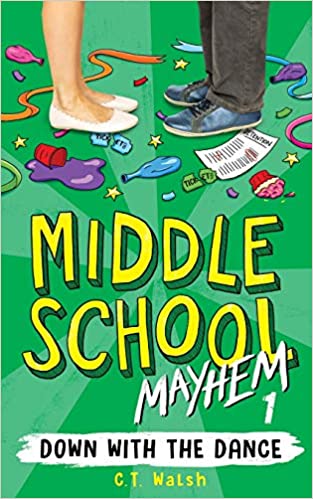
This book is the first in a new series. The story opens on the first day of middle school for Ben. He is smart and clever but haunted by his older brother, Derek. Derek is just eleven months older. Unlike Ben, he is athletic and popular.
Middle-school readers will delight in the colorful characters like Mr. Buthaire, the principal students love to outsmart. Ben desperately wants to take Sophie to the Halloween Dance but there is a plot to derail it and destroy Ben’s plan. The book contains lots of humor, sibling and peer rivalry, and smart kids determined to outsmart the adults in their lives.
This book is a good choice for readers in grades four through six, though reluctant readers and many young adults will also find it an interesting read.
If you enjoyed reading this post, please subscribe by clicking on the word Follow or by hitting the RSS FEED button in the upper right-hand corner of this page.
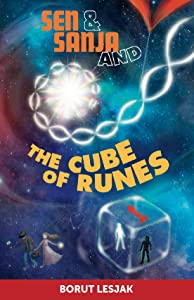
This is book one of a middle-grade detective fantasy series. Sanja is awakened by a thunderstorm. Her older brother seems unconcerned. Shortly after the two siblings discover their parents are missing under mysterious circumstances. To make matters worse, Social Services wants to place them in foster care.
These intrepid siblings find a mysterious cube in the attic. They vow to employ their detective skills to solve the mystery and outrun Social Services. Sen and Senja employ magic and wizardly to navigate through time dimensions and mysterious portals encountering many interesting characters along the way. Will they solve the mystery of the cube, find their parents, and stay together?
The plot moves quickly and sustains interest. Lots of fun for readers ages eight through twelve.
If you enjoyed reading this post, please subscribe by clicking on the word Follow or by hitting the RSS FEED button in the upper right-hand corner of this page,
As a special educator, I have worked with preschoolers and elementary school age children diagnosed with reading disabilities and speech language problems. I taught the Wilson Reading Program, which is a phonics based approach to reading. While I found it effective with many of my students, it did not meet the needs of all of them.
A lifelong book-lover, Dr. Karen Holinga’s interest in helping children learn to read began during her six years as a classroom teacher, where she saw how much some children struggled to master the skill. Her desire to solve the puzzle only increased during the twelve years she homeschooled her own children.
Eager to better understand the reading process, Dr. Karen pursued a doctorate in Developmental Reading, Curriculum, and Professional Development from The Ohio State University.
With Happy Cheetah Reading, she has taken all her expertise—years of classroom experience, years homeschooling, her doctoral research, and her extensive clinical practice—and crafted a simple plan. As The Reading Doctor, she has successfully helped over 25,000 children learn to read— many of whose parents had lost hope. She knows how some students struggle, and she knows how to help.
I am presenting this program as a resource for parents and educators and not as an endorsement or beneficiary of any of its products.
As you might guess from the name, auditory processing relates to sound. But children with poor auditory processing are not usually hearing impaired. Rather, these children’s brains don’t interpret the incoming sounds correctly.
Is There a Cure?
Auditory processing is a developmental issue.
This means it’s like losing teeth, which is another developmental milestone. Children who lose their first teeth at age four are not “better” than those who lose their first teeth at age seven. If your five-year-old doesn’t have a loose tooth yet, you don’t get angry, or start Tooth Loosening Therapy. Teeth loss is developmental, and it will happen when it happens.
With auditory processing, it’s the same way. You can’t make it happen, so release yourself from any pressure. There is no appointment for you to make, no official diagnosis that will help. There is no fix for the neurology.
Most children work through their auditory processing issues and eventually catch up with their peers, when their body is ready.
Symptoms of Poor Auditory Processing
If, as you read through these symptoms, one or two stand out to you, then assume that, yes, your child deals with auditory processing.
1) Poor phonemic awareness. A single sound is called a phoneme (FOE neem), and children who can’t hear the difference between sounds have “poor phonemic awareness.” This means they cannot easily separate or distinguish individual sounds, and have an especially hard time distinguishing between short vowel sounds, such as bet and bit.
Children with poor phonemic awareness will probably not be able to determine which of these pairs of words rhyme:
sock – sell
rim – slim
sink – drink
tap – shirt
These children can’t hear the wrong rhymes, and can’t guess the right rhymes.
This also can show up in very slow letter sound acquisition. It took my son three years of daily work to (mostly) remember the 26 basic letter sounds and their written component.
2) Difficulty with word retrieval. My son would know what he wanted to say, but his brain couldn’t access the specific words. For example, he might say, “Hey, Mom, remember the book about the person who went on a trip?”
And based on the context of whatever we had recently been talking about, I could usually guess, “Do you mean the book about Chris taking the logs down the Mississippi in Swift Rivers?”
But not always. “Hey, Mom, do you remember when we went to that place and rode on that thing?” could equally apply to the time when our family went to the amusement park and rode the tram, or to the airport and rode on the moving sidewalk, or to the lake and rode on the paddle board. Which sentence is my son trying to communicate?
When children have difficulty with word retrieval, the specifics of language are missing, those clarifying and important words that differentiate experience.
3) Unclear or delayed speech. Self-explanatory.
4) Delayed auditory processing. These children’s brains overload really easily, because they can’t process language quickly.
In fact, some children process information 80% more slowly.
Think about trying to do anything if your brain had slowed down 80%. How much less would you comprehend?
4) Poor auditory memory. Children with poor auditory memory don’t remember what they hear, so they miss a lot.
If a parent says, “Go to your room, get your shoes, and meet me at the door,” the children will show up at the door, but without their shoes.
This isn’t because they’re deliberately disobeying. They simply cannot remember.
On occasion, my son will have listened to almost all of a chapter book. Then, on page 250 of 300, he’ll ask about a key secondary character, “Now who was that again?” He more-or-less has understood the book, but he clearly doesn’t have specific ideas about the different characters.
5) Difficulty with hearing the number of syllables in a word. You may have heard the trick of clapping syllables, a clap for each syllable. So one clap for cat, two claps for tiger, three claps for beautiful, four claps for hyperactive.
My son would guess: “Does computer have one syllable? Does cake have two?” It was astonishing to see all the ways he would contort his speech to make the syllable claps fit the word.
When children can’t hear syllables, it makes reading programs that focus on syllables almost impossible.
Does this sound like your child?
If this sounds like your child, I encourage you to keep reading. Some children, like my son, have both auditory processing delays, and the other challenge that we’ll cover tomorrow.
But if this sounds like your child, only one reading program on the market is going to help your child. Every Orton-Gillingham program, supposedly the “gold standard” for struggling readers, focuses on syllable division and rule memorization. For a student who has a hard time hearing and remembering the letters themselves, loading them down with rules is unhelpful at best, and destructive at worst.
I am thrilled that a program exists that acknowledges and allows struggling readers to move forward, even with delayed auditory processing.
The Happy Cheetah Reading System is designed to get your child up to speed as quickly as possible. happycheetah.com
If you have enjoyed reading this post, please subscribe to my blog by hitting the RSS FEED button in the upper right-hand corner of this page or by clicking on the Follow button.
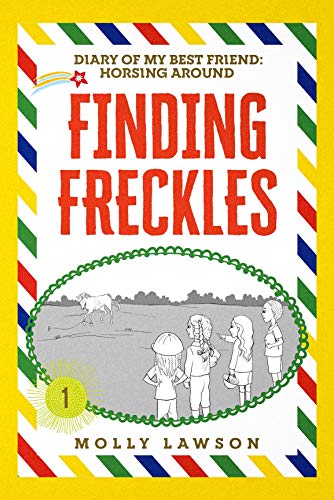
Finding Freckles, Diary of My Best Friend, Horsing Around
Written by Molly Lawson
This middle-grade chapter book is narrated by Emma Williams, an eleven-year-old girl living in a rural South African village. The impetus for the diary is a writing assignment from Emma’s English teacher.
Emma writes honestly and openly. She reveals her hopes, fears, and dreams. Her fervent desire is to own a horse and become an expert jumper. Unfortunately, her single mom cannot afford to buy her a horse. Luckily, Emma’s best friend, Christine, lives on a neighboring farm. Christine is a good rider and that allows Emma to be around horses.
Emma’s story pulls the reader in because she is relatable to her readers. The characters are believable and appealing to a middle-grade audience. Not only do readers learn about horses, but they also pick up knowledge of geography and South African culture. This is book 1 of a series that promises to be the first of an interesting series. Will Emma achieve her dreams?
If you enjoyed reading this post, please subscribe by clicking on the word Follow or by hitting the orange RSS FEED button in the upper right-hand corner of this page.
Onward: The Search for the Dragon Gem: An InQuestigation
Written by Steve Behling
The book is based on the Disney movie. It is primarily a middle-grade read for fans of fantasy, magic, dragons, and coming-of-age novels.
Sadalia is a sophomore at Mushroomton High, Her passion is journalism. She constantly searches for that big story. When a red mist appears around the school one evening, her dream comes true. The high school is taken over by a dragon. The adventure of a lifetime begins.
Will things ever get back to normal? What part have her two schoolmates, Ian and Barley have in the mystery? Can Sadalia get her big scoop? Fans of the movie will want to check out the book. Recommended for grades three through seven.
If you enjoyed reading this post, please subscribe by clicking on the word Follow or by hitting the orange RSS FEED Button in the upper right-hand corner of this page.
DON’T KNOW HOW TO ORGANIZE FAMILY SCHEDULES WHILE WE ARE ALL WORKING FROM HOME?
Here are a few ideas to keep things running smoothly and making everyone in the family more productive.
Create a To-Do List the Night Before
Instead of waking up in the morning to make your to-do list, make your list the night before. This way you can go to bed relaxed and confident for the next day. You also wake up in the morning knowing exactly what you have planned for the day. You might also consider planning on Sunday night for the upcoming week. Then when you wake on Monday you have a plan in place.
Prioritize
Take a look at the tasks on your list. What tasks offer the largest return? What tasks offer the most value and achievement? For example, answering email or paying bills isn’t a task that offers a large return. However, making a sale or meeting with a client is a very productive task. Put your most profitable or results-oriented tasks first on your list.
Get a Good Night’s Sleep
The quality of your sleep is important to sustain your energy levels throughout your day. Good sleep means you’ll be fresh and energetic all day long. Creating a to-do list is a good way to help you get a good night’s sleep because you can put the day’s stresses to rest.
Also consider adding soothing nighttime rituals to your routine. For example, meditate, stretch or read before you go to bed. Keep a gratitude journal and write before you sleep. Go to bed and wake at the same time to help your body know what to expect.
Eat Healthy
The food you eat has a direct correlation to how energetic and productive you are. Junk food will make you sluggish. Healthy food will help you stay energized all day long. Feed your body well and it will respond by keeping you alert and energetic.
Get Organized
If you spend half your time searching for files, names and numbers, you are wasting time. Make sure any items that you use on a regular basis are easy to grab from your desk chair or find in your computer. They should be easy to find and use.
Take Breaks
Productivity doesn’t mean working from sun-up to sundown. In fact, if you work without stopping, you’re likely to burn out. Instead, commit to taking a break every hour. Walk around or get some air to get the blood moving throughout your body.
Focus
Do you multi-task hoping it’ll make you more productive? Do you manage one task while your mind is already onto the next task? Both habits are unproductive. When you focus on what you’re doing, not only is the task more enjoyable, it also gets done faster and better.
Productivity is possible. With a little planning, attention, and self-care you can get more done in half the time. These tools are simple but effective. Try just one of these steps and watch your own personal productivity improve.
This book is a tender tale about a little fox named Redkin and her first hunting quest. Redkin is rather lazy. She reacts with shock where her mother tells her to go out and find her own food. A bit reluctantly, Redkin sets off on her quest. She looks up at the Sun and decides that it looks like a delicious pancake. She decides to bring it home to her mother.
Redkin meets a frog named Loudcroak along her route. They decide to become partners. Redkin remains fearful but Loudcroak provides the courage and inspiration to continue their search. Other animals offer advice, but the sun continues to elude them.
How will Redkin handle her defeat? What does the fox learn about friendship, compassion, and bravery?
This book is targeted for ages six through twelve. While the length of the book is appropriate for a beginning chapter book, some of the vocabularies are a bit advanced for the lower end of this audience. I would recommend the book particularly for reluctant readers; the illustrations are beautiful and suited to the mood of the tale. Recommended especially for readers ages eight through twelve.
If you enjoyed reading this post, please subscribe by clicking on the word Follow or by hitting the orange RSS FEED button in the upper right-hand corner of this page.
The Further Adventures of Mrs. Trimble’s Magic Teapot!
Written and illustrated by Steven-Watson Morris
So delighted that the author is giving us a sequel. Book Two contains seven more magical adventures. Readers meet a one-eyed giant, a silver snake, a naughty goblin, the Easter bunny, an alien planet, some bubbles, and a castle of dreams. Children learn that we should be kind and understanding toward others even when others are angry with us. Mrs. Trimble teaches us that when we are naughty like the goblin, we need to undo the harm we have done to others. Then apologize, and make restitution for our mistakes. When Mrs. Trimble meets the Dream Maker, she learns how sweets can turn into healthy fruits. What child would not like to have a bubble adventure!
When the Easter bunny oversleeps one year, our heroes must rescue him. In their last adventure, our friends land on the Teapot planet where everything is shaped like a teapot. Here they meet Earl Grey, who will restore the magic to their teapot. To return his kindness, Mrs. Trimble leaves him a special gift.
As in the first book, there are delightful pencil drawings. The book ends with coloring pages that feature all the characters in the book’s stories. I recommend the book for elementary and middle-grade readers and anyone who likes to let their imagination soar.
If you enjoyed reading this post, please subscribe by clicking on the word Follow or by hitting the orange RSS FEED button in the upper right-hand corner of this page.
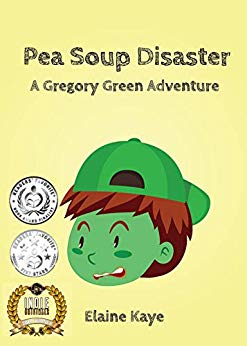
Pea Soup Disaster (A Gregory Green Adventure Book 1)
Written by Elaine Kaye
Gregory Green is excited to find a thermos of green pea soup in his thermos. Unlike most kids, he loves his mother’s homemade pea soup. After lunch on the playground, his friends begin making fun of him. Gregory has turned green! Gregory is feeling bad when an unexpected buddy comes to his rescue to end the bullying.
This book contains elements of fantasy, a family curse, a lesson about bullying, and strong family bonds. The layout is more like a chapter book but there are some multicultural illustrations. I read the book in kindle format which did contain a few formatting errors, but the clever storyline and message make the book a good choice for beginning readers, reluctant readers and a parent read-aloud for any age child.
If you enjoyed reading this post, please subscribe by clicking on the word Follow or by hitting the orange RSS FEED button in the upper right-hand corner of this page.
A boy and his father visit the pound a couple of days before Christmas. The little boy chooses a black puppy with a white spot on his chest and a red bow around his neck.
They bring the dog back to their farm where he eagerly plays in the snow. On Christmas morning, the puppy receives three gifts, for which he is so grateful. The boy promises to love, feed and train the puppy, and he is rewarded with all the love the puppy can give.
This book is written in rhymes that are easy to read. Children learn respect for animals, love, kindness and responsibility. Harwell captures the mood well in her illustrations. This is a winner for any child who loves animals. Caution, they may ask you for a wet nose puppy after reading this book.
If you enjoyed reading this post, please subscribe by clicking on the word Follow or by hitting the orange RSS FEED Button in the upper right-hand corner of this page.
 May 24, 2020
 bamauthor
 2 Comments







 Barbara Ann Mojica's BLOG
You must be logged in to post a comment.