Four grandsons describe a grandmother who keeps them guessing about her next exploit. This grandmother lives on a farm. She fills her days with adventures like collecting bugs, milking cows, diving in a swimming hole, pouring concrete, or climbing a tree.
Visiting gramma is certainly an experience worth looking forward to. A nice book to share when family gathers together. Good choice for preschoolers and older readers. The illustrations complement the mood perfectly.
SUBSCRIBE TO THIS BLOG FOR NEW BOOK REVIEWS EVERY WEDNESDAY AND SUNDAY.
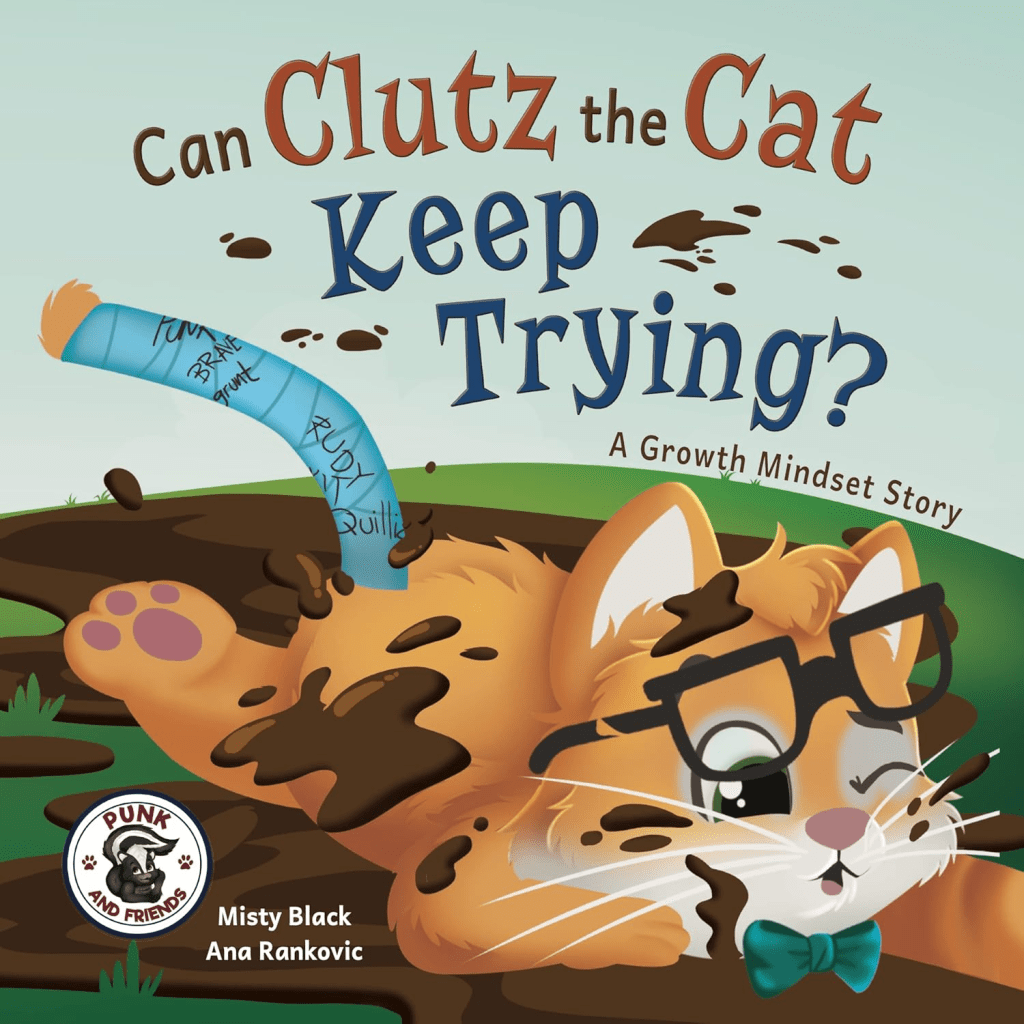
Can CLUTZ THE cAT Keep Trying?: A Growth Mindset Book
Written by Misty Black
Illustrated by Ana Rankavic
This book is part of a motivational mindset series for elementary school readers.
In this volume, Clutz the cat has recently fallen out of a tree and broken his tail. He is a clutz, but has lots of friends to support him. When his teacher announces a bike race, the cat feels badly. Luckily, his friend Punk the Skunk offers to teach Clutz how to ride a bike. Clutz uses the power of affirmations to keep his spirits up.
Will Clutz persevere and be successful? This fun read aloud contains clever rhymes and pleasing illustrations to delight kids and adults. I enjoyed the interactive discussion guide included to reinforce the mindset lesson.
SUBSCRIBE TO THIS BOG FOR NEW BOOK REVIEWS EVERY WEDNESDAY AND SUNDAY.
Publisher’s Book Summary: Alex, Kali, and Roman are three fifteen-year-old friends who live in a small town. Alex is a great communicator, Roman is a bit of an inventor, and Kali is an intuitive empath. It’s summertime, and an adventure is triggered when they find themselves in the middle of a protest outside the local library by people who want to ban certain books. During the protest, people are focused on what they believe to be their Constitutional rights, causing the three teenagers to realize how little they know about the Constitution.
In their search for answers, they discover a book with magical properties, which becomes a catalyst in helping them discover what the Constitution is really all about.
Join the teenagers as this mysterious book enables them to travel through time and space—bringing to life historical figures like Ben Franklin, Wyatt Earp, Alice Paul, Ruth Bader Ginsburg, and many more. Each of these historical figures will teach them about the original Constitution and its amendments. Through the eyes of these three teenagers, you’ll be able to explore what it was like when the original Constitution was signed. You’ll even travel to other countries, like Russia, where you’ll meet Aleksandr Solzhenitsyn in a field within the Gulag where he was imprisoned.
The Constitution, by itself, can be a difficult document to read, but The Constitution Kids will bring it to life with unusual experiences, humor, and fun, no matter your age.
Gary J. Gabel, Ed.D., has spoken to groups throughout the United States on the subjects of personal takeover, accountability, and leadership. He has personally trained thousands of people, primarily in the areas of leadership, management, motivating performance, presentation effectiveness, sales, and customer service. He has worked with over 200 CEOs, helping them build high-performing teams.
Gary has written several books, including Day One, which was jointly authored with Tom Buck and published in 2020. Gary’s other book, Personal Takeover, was published in the United States by Career Press in 2003. It was translated into Korean in 2004, with an Arabic translation in 2005. The second edition of Personal Takeover was released in October 2019.
Gary was the 2001 Entrepreneur of the Year for Service Companies in Michigan. He has bachelor’s and master’s degrees in Economics and a doctorate in Education. He formerly served as Chair of the National Council on Education and Human Development at The George Washington University. His current memberships include the Oakland Schools Education Foundation Board of Trustees and Mensa.
Gary’s presentations at TEDxDetroit and others can be viewed on YouTube. Gary lives with his wife, Lisa, in Michigan, and they have two children and three grandchildren.
MY REVIEW OF THIS BOOK:
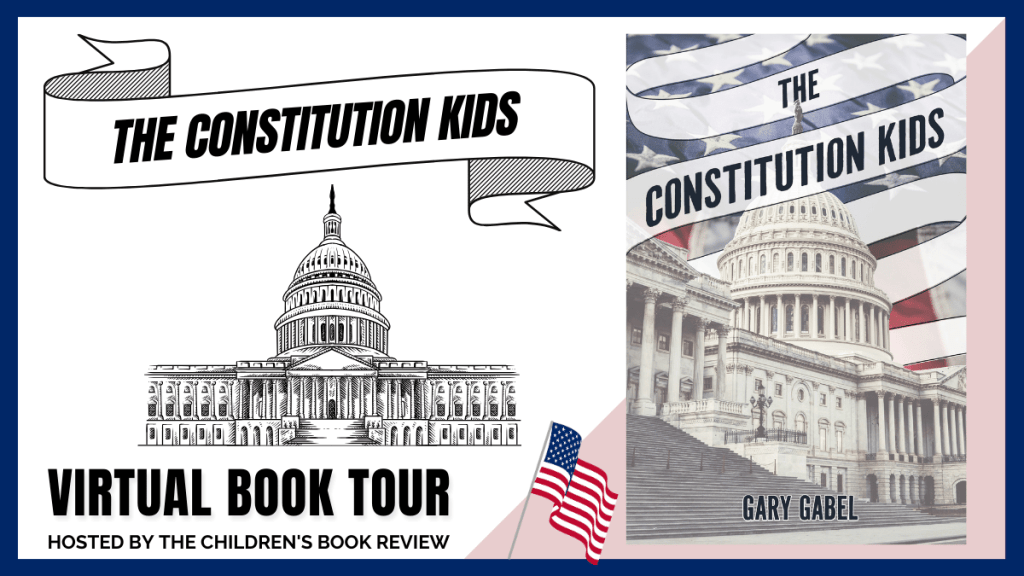
THE CONSTITUTION IS ALIVE AND WELL The Constitution Kids Written by Gary Gabel
The author correctly points out that the subject of the Constitution rarely comes up in modern schools. Gabel decides to remedy that problem by incorporating its story within the pages of a time travel adventure containing three unlikely friends. Kali, Alex, and Roman who display unique interests and talents. Kali is an empath, Roman a science and tech prodigy, and Alex, an excellent communicator.
On a summer day, the three fifteen-year-old friends encounter a protest demonstration and demonstrators claiming the right to gather under the Constitution. Curious, the friends decide to research the Constitution in the library. When they find and open an old book, they meet Ben Franklin who initiates a time travel journey on which they investigate the Constitution, and the Amendments added to it.
During this journey, the teens meet famous people like Thomas Jefferson, Albert Einstein, and Wyatt Earp. In addition, they journey back and forward in time to colonial times, visit slaves, a gulag, and Nazi Germany, among other places. The threesome experience how the Constitution works and the reasons why for each amendment.
Gabel details the characters as relatable and integrates the past and present seamlessly. Modern readers learn not only what the Constitution contains but why it evolved and how it works.
This book is a wonderful tool to teach civics and responsibility. I recommend it for the bookshelves of middle-grade and high school readers.
GIVEAWAY
Enter for a chance to win one of ten copies of The Constitution Kids. Enter below to bring this magical journey home!
Illustrated by Obayomi Aanuoluwapo and Dirisu David
A beautiful multicultural picture book that teaches children about life in rural Ghana.
Kwame is respectful, obedient, and grateful for his simple life in a rural village. In this story, Kwame wakes early to help his mother wash clothes by hand. Then he sweeps the dirt floor of his one room hut before dressing in his uniform to walk to school at the Royal Promise Mission. Today is a special day. The children from around the area will be marching to celebrate the anniversay of Ghana’s independence.
Children from around the world learn a bit about the food, flag, customs , language, and difficult life of a small rural village. Kwame provides a good role model for children. Charming illustrations and an interactive activity keep readers engaged with the tale.
Highly recommended to parents and teachers of elementary school readers.
SUBSCRIBE TO THIS BLOG FOR NEW BOOK REVIEWS EVERY WEDNESDAY AND SUNDAY.
The Curly Crow Goes to the Balloon Festival Coloring Book for Kids
Published by Nick Aragon
This book is part of a series for primary grade children. In this story, children are encouraged to be brave and stand up to face their fears.
The author takes a unique approach. The main characters are members of a Crow family who live in New Mexico in a dumpster adjoining a cafe. They share many adventures. As the story unfolds, readers learn that the family has been invited to pilot a hot air balloon at the festival. Curly has a problem. She is afraid of heights. Slowly, she learns how to face her fears. Readers not only receive an important life message, but the story includes coloring pages, allowing readers to express their own creativity.
I would recommend this unique book to parents and teachers of children in the primary grades.
SUBSCRIBE TO THIS BLOG TO GET NEW BOOK REVIEWS EVERY WEDNESDAY AND SUNDAY.
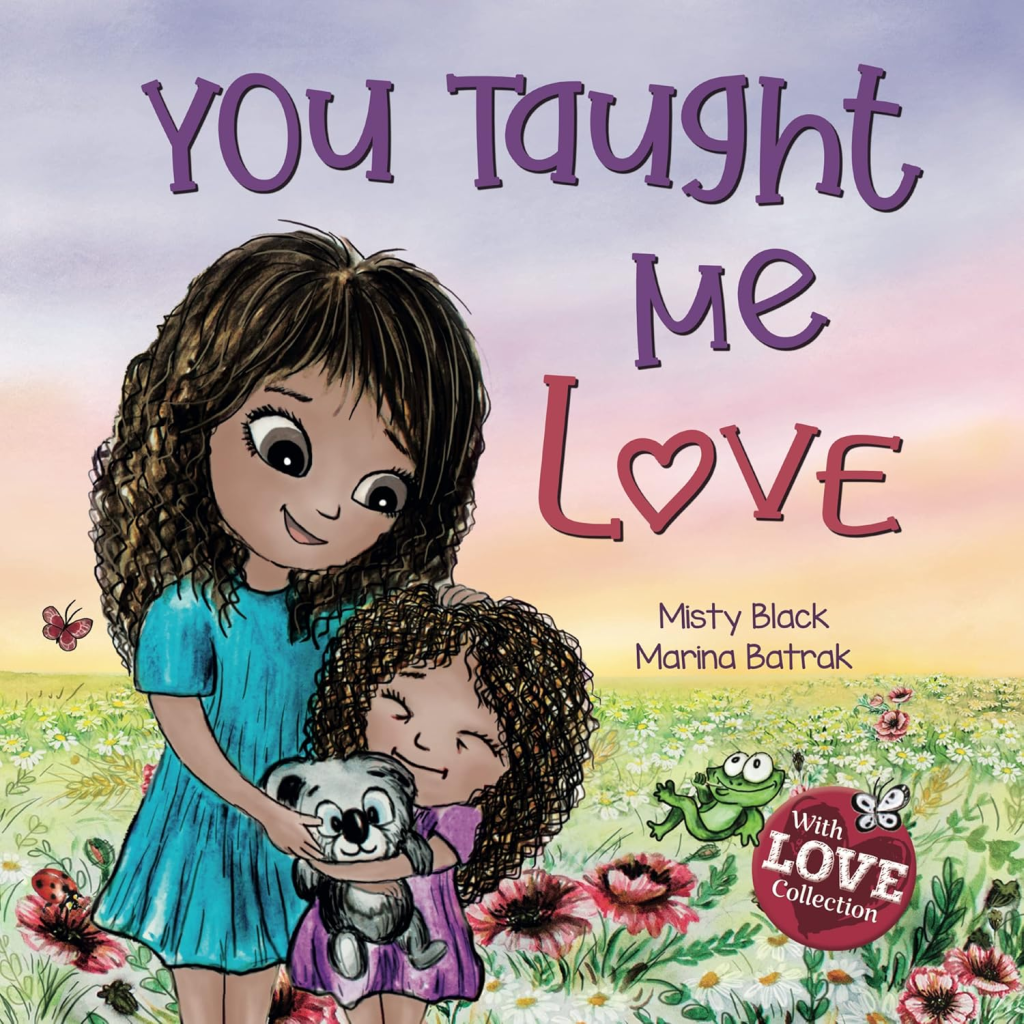
A phrase that has been shared over and over by many generations. A mother and child share different ways of expressing their love for one another. Is it a game? Is it a competition?
How many times have parents or grandparents played this game with their precious children. Each generation of a family finds new and different ways to reinforce this message. This book contains beautiful illustrations and exquisite analogies.
This lovely picture book is part of a series and would make a wonderful gift for a new parent or grandparent to share as a bedtime story.
SUBSCRIBE TO THIS BLOG FOR NEW BOOK REVIEWS EVERY WEDNESDAY AND SUNDAY.
Toothbrushing with Maggie & Mommy (Sparkly Smiles Series)
Written by Heidi Rocha, RDH
Illustrated by Nonni-Ayanna Gobern-Roach
This is the first book of a series written by a Dental Hygienist. The picture book with large, easy to read print and engaging illustrations features a little girl named Maggie and her mom.
Mom visits Maggie’s preschool and uses her stuffed dinosaur to demonstrate the proper way to brush teeth. This book will be appreciated by parents of preschoolers and pediatric dentists. There is a bonus activity chart to record progress and a find the hidden object page. The book is even approved by every little child’s friend, The Tooth Fairy.
Highly recommended, especially for parents and teachers of preschool children.
Mommy Has a Monster on Her Back!: A Story about Chronic Illness
Written by Liz Long
Illustrated by Ethan Roffler
The author and illustrator have succeeded in creating a beautiful picture book with an important message for young children.
This book is done in soft pastels and features words in bold that play on the different feelings engendered by chronic physical or mental illness. The illness is compared to a monster on mommy’s back. Some days are easy and others hard but mommy learns to deal with the illness and the child sees the need for resilience and acceptance. By using humor and analogies, even a preschooler can understand chronic illness.
Highly recommended for families and counselors who deal with chronic or physical illness.
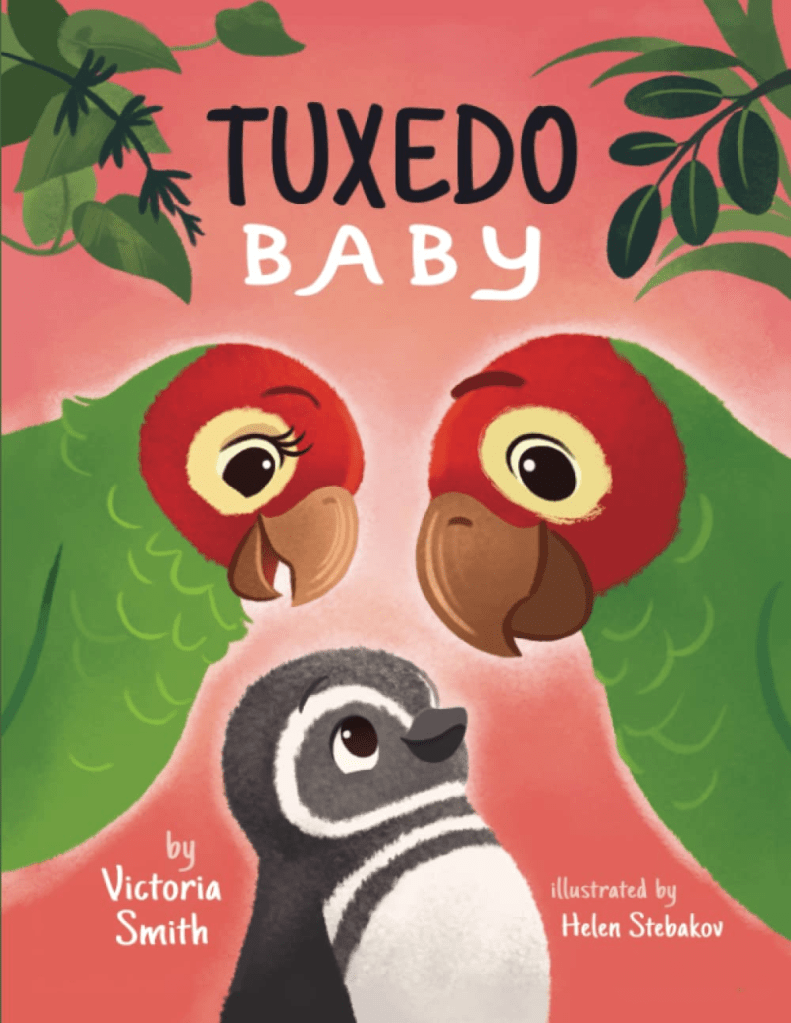
Tuxedo is a penguin orphaned due to an oil spill. Two conure parrots decide to adopt him.
Tuxedo is curious and passionate about trying new things. Sometimes he forgets that he is not a parrot and gets in trouble for attempting things his penguin body cannot achieve. His parents are patient and urge him to exercise curiosity but also caution. As Tuxedo grows, he learns how to maximize his unique qualities and talents.
I enjoyed the bonus sections that provide readers with facts about conures and penguins as well as background about oil spills.
This charming book contains valuable lessons as well as solid educational information.
Recommended especially for primary grade readers but also beginning chapter book readers.
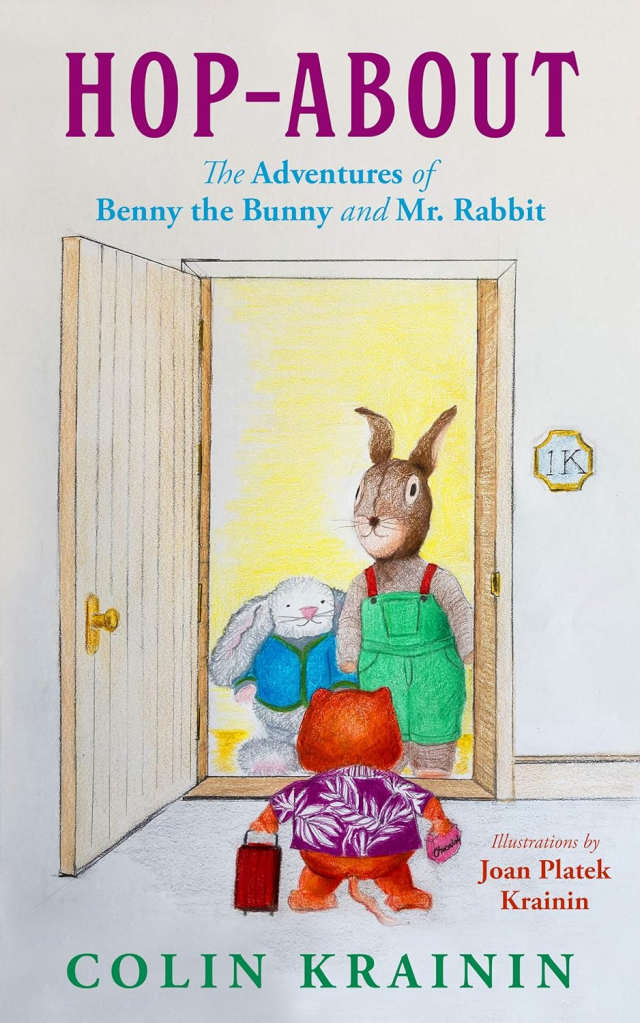
Hop-About: The Adventures of Benny the Bunny and Mr. Rabbit
Written by Colin Krainin
Illustrated by Joan Krainin
At first glance, one would guess this book title is for elementary school readers. Indeed, it contains charming illustrations, but the complexity of characters and issues addressed suggest it is more appropriate for middle-grade and older audiences.
At the outset, readers meet Mr. Rabbit, a stuffed rabbit who lives with his friends, Mr. Rabbit, and a large stuffed bear in an apartment in New York City. When a visitor arrives, their lives are turned upside down.
They are recruited in an adventure to search for a lost friend. This journey eventually leads to Australia where the friends encounter wildfires, climate-change disasters and a host of unsavory characters.
The plot and characters are rather complex for a young reader. Older readers are better equipped to understand the issues and appreciate the personality types presented.

 April 16, 2025
 bamauthor
 Comments Off on AN UNTRADITIONAL GRANDMA






 Barbara Ann Mojica's BLOG
You must be logged in to post a comment.