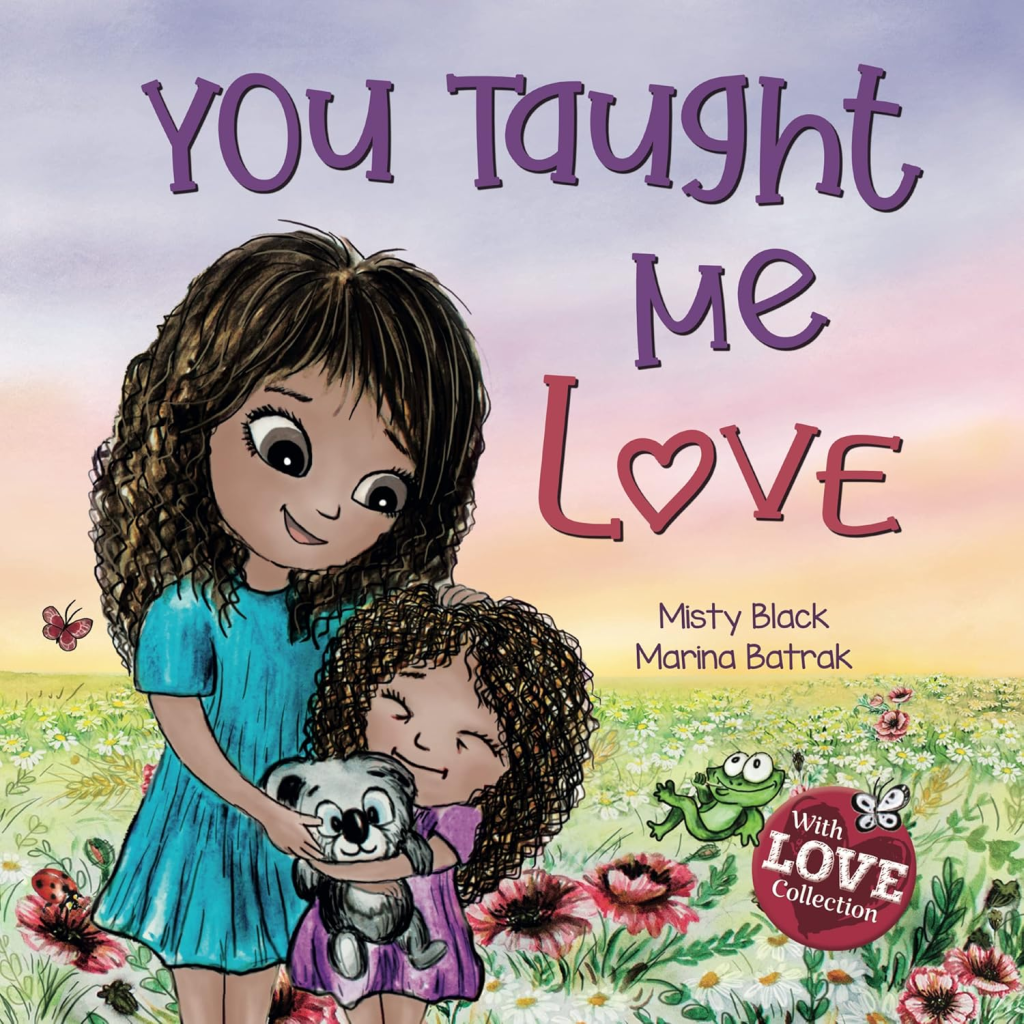
The protagonist is a heart who wandered among many hearts seeking to find out why she was named Love and what the word means. After much searching, Love comes to understand that it takes two separate hearts to make love come into being. It is something we cannot create within ourselves but must seek from another to make it complete.
The book makes the perfect Valentine’s Day present. Appropriate for any age.
SUBSCRIBE TO THIS BLOG TO GET NEW BOOK REVIEWS EVERY WEDNESDAY AND SUNDAY.
Grandma, It’s Me!: A Children’s Book about Dementia
Written by Y. Y. Chan
Illustrated by Pearly L.
So many families contain an elderly member suffering from dementia. This book goes a long way toward explaining and humanizing the difficult situation.
The protagonist is a young girl named Riley. It follows her diary entries over a period of time. One day Riley notices that her grandmother is forgetting things. As time passes, grandma wanders off and forgets the names of family members. She needs constant care and that is a burden on the family. Chan shows how to combine love with patience as the family must constantly adjust their situation.
This book is a great resource in explaining dementia to young children. I liked the multicultural images, the characters, and the abundant resources included. Readers receive a list of questions and reflections about what they read as well as activities to download.
This book is highly recommended not only to parents and teachers but also counselors who work in mental health facilities or in schools with children.
A cute picture book that will stimulate the imagination of the youngest readers. The author poses simple questions concerning common mysteries like “Why does buttered toast always land butter-side down?” and “Why does the internet get slow” Those little ghostly gremlins just might be responsible.
This book about ghosts presents them as non-threatening and not scary. The humor and light-hearted illustrations makes this book a great choice for a read aloud or bedtime story. Appropriate and fun for all ages beginning with preschool.
SUBSCRIBE TO THIS BLOG FOR NEW BOOK REVIEWS EVERY WEDNESDAY AND SUNDAY.
Daily Confidence Boosters Checklist Goal: Help your child build confidence through daily, simple actions that promote self-awareness, self-expression, and resilience.
Encourage Self-Expression • How: Give your child a chance to express themselves creatively each day, whether through drawing, writing, dancing, or speaking up about their feelings. • Why: Self-expression is key to developing a strong sense of identity and confidence in their own voice.
Morning Affirmations • How: Encourage your child to start their day with a positive statement. They can say something like, “I am strong, I am kind, I can do hard things.” • Why: Affirmations set a positive tone for the day, helping children build a mindset of self-belief and optimism.
Small Wins Celebration • How: At the end of the day, ask your child to share one thing they accomplished, no matter how small (e.g., “I finished my homework on time” or “I was kind to my friend”). • Why: Recognizing small successes builds momentum, reinforcing the idea that progress happens one step at a time.
“Challenge of the Day” • How: Introduce a fun, simple challenge each morning. Examples include: “Try to help someone today” or “Try to ask a question when you don’t know something.” • Why: Overcoming small challenges teaches children resilience and encourages problem-solving skills.
Body Language Power Pose • How: Teach your child to stand in a “power pose” for a few seconds each day—legs apart, hands on hips, standing tall. Do this before school or big events (like tests or presentations). • Why: Body language can have a huge impact on confidence. This quick physical exercise helps them feel strong and capable.
Kindness Check • How: Ask your child, “What kind thing did you do for someone else today?” or “How were you kind to yourself today?” • Why: Acts of kindness, whether for others or themselves, build emotional strength and empathy, both of which are essential to self-confidence.
“I’m Grateful For…” Journal • How: Encourage your child to write down one thing they are grateful for each day, even if it’s just something small. • Why: Focusing on gratitude helps shift their mindset away from what’s missing and towards what’s already good in their life, promoting a positive, resilient outlook.
Compliment Swap • How: Make it a daily habit to share compliments with each other as a family. You can go around the dinner table and say one nice thing about someone. • Why: Giving and receiving compliments helps children recognize their own strengths and the strengths of others.
Try Something New • How: Ask your child to try something new every day, even if it’s small, like trying a new food or solving a different type of puzzle. • Why: Trying new things helps them get comfortable with taking risks, learning, and expanding their comfort zone—all crucial for building confidence.
“Bounce Back” Reflection • How: At the end of the day, reflect with your child on something that didn’t go as planned. Discuss how they handled it and what they learned. • Why: This teaches children that setbacks are part of life and provides a chance to learn resilience and perseverance.
How to Use This Checklist:
• Age-Appropriate: Tailor these activities based on your child’s age and personality. • Consistency is Key: Pick a few of these to try each day, and be consistent over time. Little habits build big confidence! • Reflection Together: Spend a few minutes talking with your child about how they felt after each activity to deepen the experience.
SUBSCRIBE TO THIS BLOG TO“Join a Community That Builds Strong, Happy Families.”
As a singer, storyteller, and composer, Barbara Roman possesses the right credentials for writing this beautiful picture book with a wonderful message for parents and an interesting story for young readers.
When Horace’s parents hear strange sounds coming from his room at night, they are curious to investigate, but when asked, Horace says he doesn’t want to explain unless he has to. Furtively, the parents try to peek through the keyhole, climb a tree, and peer down from the attic to find the answer. When they hear Horace singing into a conch shell, they are even more mystified.
The answer is revealed at the school talent show, and things seem to return to normal. There is a surprise ending at the end of the story that puts a smile on the face of the reader. The text contains prose and rhyme, accompanied by colorful illustrations. A book that can be enjoyed by a reader of any age, but highly recommended for middle-grade readers.
SUBSCRIBE TO THIS BLOG FOR NEW BOOK REVIEWS EVERY WEDNESDAY AND SUNDAY.
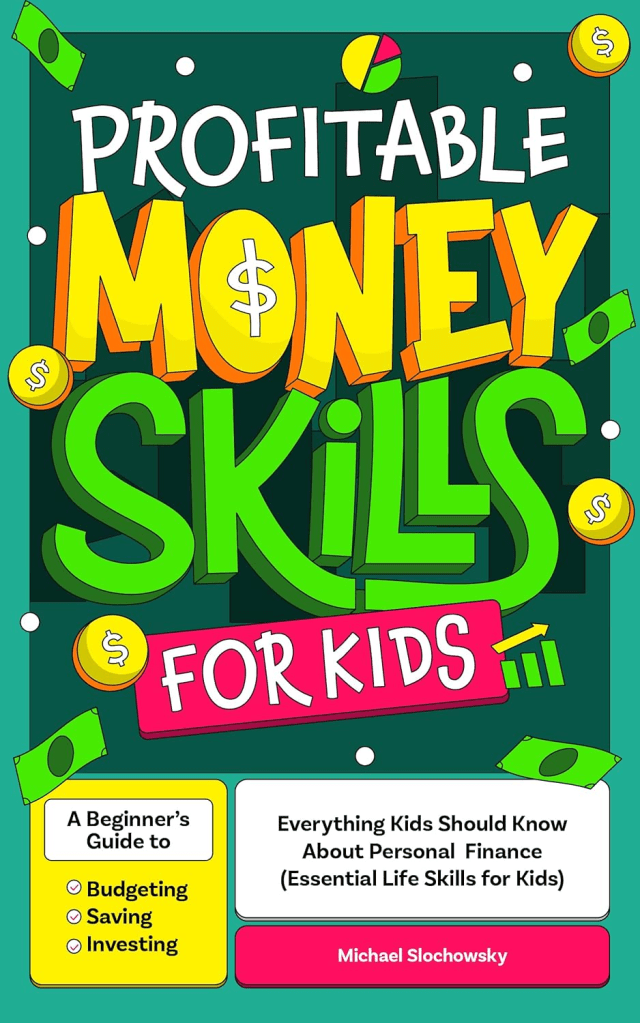
This is a basic primer for kids with all the necessary information to understand money.
It is written in fairly simple language though I believe younger children will need additional guidance for complete understanding. The author begins with an introduction as to why he wrote the book, and why he included interactive strategies to implement its lessons.
Chapter One explains the history of money and its purposes. Then we move on to different types of saving strategies, budgeting, and tools to use. Kids learn the differences between needs and wants, and how to invest smartly. There are suggestions about how kids can earn money, give to charity, and avoid scams. Finally, there are goal-planning strategies, and discussions about planning for a sound financial future.
This book is a valuable financial literacy tool that can grow with the child providing a strong foundation for a sound financial future. Highly recommended to parents and teachers.
SUBSCRIBE TO THIS BLOG FOR NEW BOOK REVIEWS EVERY WEDNESDAY AND SUNDAY.
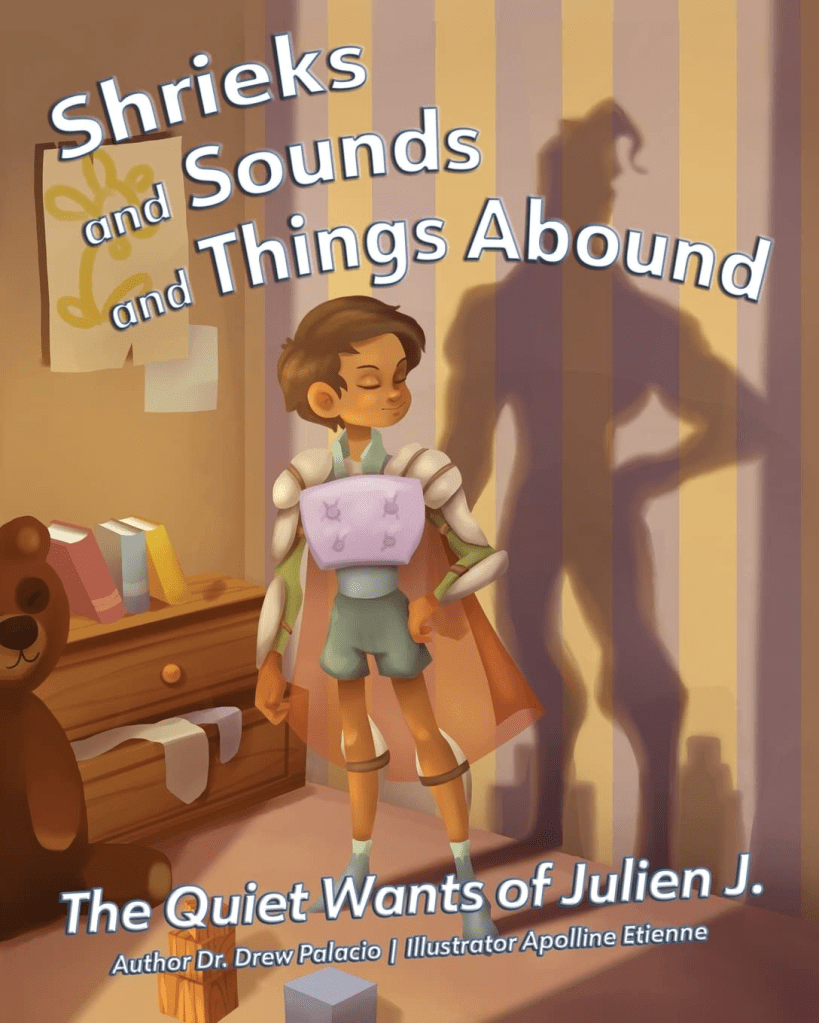
Shreiks and Sounds and Things Abound:The Quiet Wars of Julien J.
Written by Dr. Drew Palacio
Illustrated by Etienne Apollinne
Julien sits under the shade of a tree reading his comic book about his favorite superhero, but distractors keep getting in the way. Julien’s frustration escalates. Suddenly an amazing figure appears to offer some good advice that young readers might follow to release themselves from the anger engendered by minor frustrations.
The rhyming picture book draws readers into the emotions felt by Julien in the tale. Even adults can relate to how easily common frustrations arise within us to create uncontrollable feelings. This story uses a superhero to teach a valuable lesson on how to control our emotions.
Recommended highly to parents and teachers who are searching for an effective approach to help young children reign in harmful emotions that lead to frustration.
First book in a series for beginning and middle school students. Evie’s mom has a new job, and Evie is sent away from home for the summer. It doesn’t take long for Evie and her newfound friends to get into trouble. As punishment, her mother enrolls Evie as a volunteer in a local animal shelter where she meets an abused dog.
Evie learns the value of hard work and giving back to the community. As a backstory, young readers are introduced to the concept of PTSD and the difficulties military families must face. These are explained in an age-appropriate way.
I would recommend the book to readers in the seven to twelve age range. It would make an excellent choice as a classroom discussion read aloud book.
SUBSCRIBE TO THIS BLOG FOR NEW BOOK REVIEWS EVERY WEDNESDAY AND SUNDAY.
TAKE READING ON THE ROAD. Bring books on a picnic, to the park, visits to friends, and appointments.
SET AN EXAMPLE BY SHOWING YOUR CHILDREN THAT YOU LIKE TO READ. Encourage them to ask questions about what you are reading and ask for their opinions.
CHOOSE BOOKS THAT HAVE BEEN MADE INTO MOVIES. Encourage the child to read the book and then offer a movie night to watch the same story. Have a discussion about similarities and differences. Ask which version the child prefers.
SEARCH FOR READING INCENTIVE PROGRAMS. Local libraries offer summer reading incentive programs that reward children for reading. In the past organizations like Six Flags and Pizza Hut have offered rewards for reading programs.
SET UP YOUR OWN READATHON. This works well on a rainy day at home. Provide blankets and snacks and camp out in your living room with the family spending the day reading. You can also do this by spending a night under the stars in your backyard or arranging a sleepover with a child’s friends each bring their favorite books.
Benjamin is blessed with a plethora of talents. He considers himself an intellectual genius, kung-fu master and jack-of-all trades, but Benjamin occasionally finds himself upstaged by his two-year-old brother.
The adventure begins when a mechanical robot steals the helium that powers the pirate airship Benjamin’s family calls home. That’s right, the setting grabs the middle-grade audience before the story starts. Benjamin promises to find the culprit. Along the way, each page presents new obstacles.
This book contains more than three hundred pages, divided into fairly short chapters that are introduced with a black and white drawing. Parents and teachers will be happy to hear there is no swearing or violence, just a sprinkling of potty humor and age-appropriate euphemisms.
The book reminded me of the Hardy Boys series popular when I was growing up; it could be likened to a modern-day Harry Potter series. As a bonus, readers are introduced to stem concepts in engineering and physics rolled into the adventure.
Recommended for ages ten and older, but a fun read for any age.
SUBSCRIBE TO THIS BLOG FOR NEW BOOK REVIEWS EVERY WEDNESDAY AND SUNDAY.
You must be logged in to post a comment.