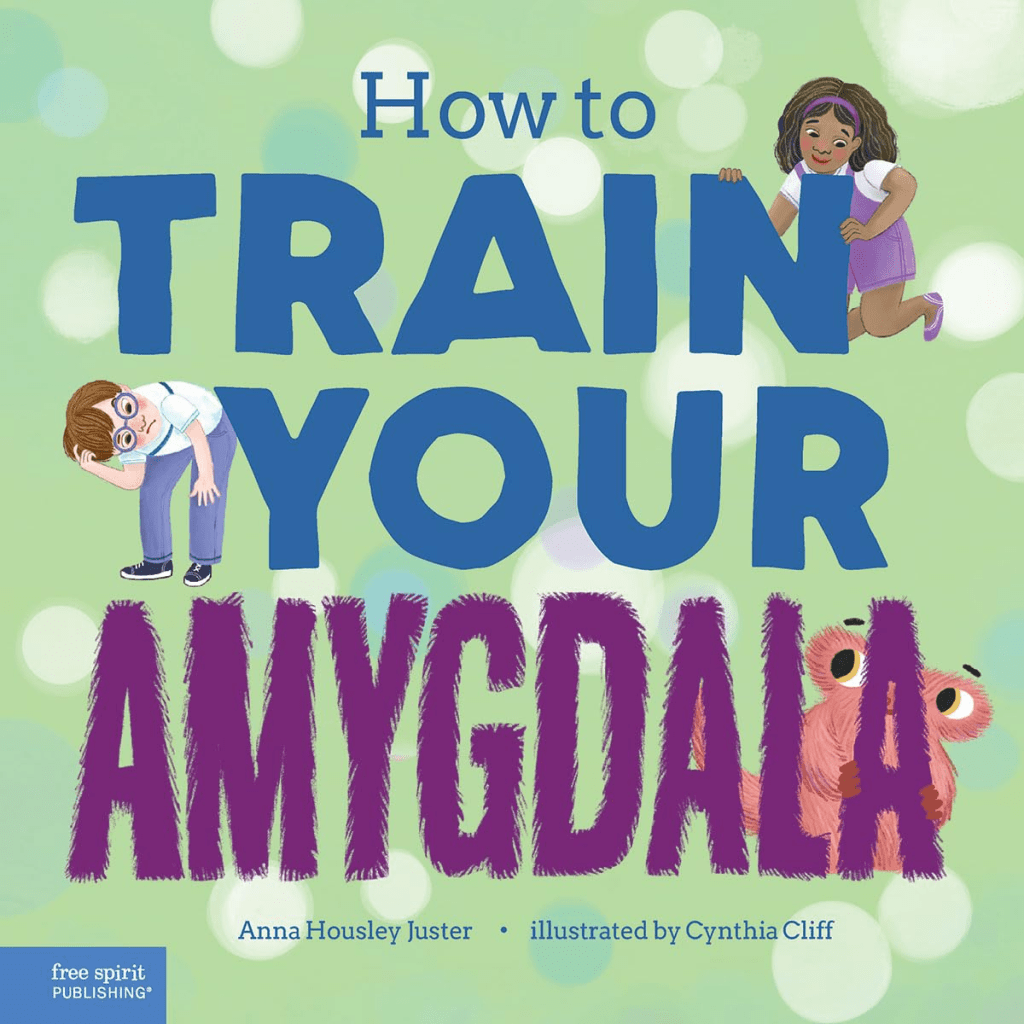
How to Train Your Amygdala Written by Anna Housley Juster Illustrated by Cynthia Cliff
Most kids have never heard of the Amygdala, but it plays a vital role in keeping them safe. The author uses creative imagery to explain in simple language how it works. Sometimes worrying about what might happen can make the Amygdala work overtime so it is important to train it not to set off false alarms.
Juster provides children with strategies and techniques to relax and remain calm. Examples include deep breathing, relaxing, and connecting with favorite people. The interactive part of this book provides step by step directions for children and an accompanying guide for adults working with children.
Kudos to the author for writing this guide in simple, easily understandable language with large text and appealing illustrations. Recommended for children from preschool through primary grades and the caretakers who love and support them.
SUBSCRIBE TO THIS BLOG FOR NEW BOOK REVIEWS EVERY WEDNESDAY AND SUNDAY.
A funny picture book for children who enjoy gaming and are part of a family of adults who enjoy the same hobby. Done in comic book style with illustrations that express the frustration of a loving mom who just cannot find time to enjoy her favorite hobby.
A beautifully crafted, multicultural picture book with a message of unconditional love for a child.
The author and illustrator have put together this message that expresses the unconditional love of a parent for a child who is also a child of God. This book also illustrates the life cycle and contains quotes from the Bible. As such, it conveys the message from a Christian viewpoint.
This book is a beautiful gift for a prospective parent or the perfect read aloud for a family expecting a new member. Recommended for readers from toddler to elementary school age.
SUBSCRIBE TO THIS BLOG FOR NEW BOOK REVIEWS EVERY WEDNESDAY AND SUNDAY.
This book is set around the topic of the burning of the library in Alexandria at the time of Cleopatra’s rule. Most historians consider the fire an accident with Caesar setting the fire to prevent the Romans from capturing him. The famous library built by Alexander the Great becoming an unfortunate victim.
Heron of Alexandria was indeed a great inventor though he was probably a biological male. The protagonist in this novel is a young girl who has assumed the identity of her brother. As Heron, she receives a coin to investigate the arson crime.
The story is really about the life of this young girl, her inventions, and her struggle to survive and escape slavery The story moves along well, but some of the sentences are disjointed and the language confusing.
This is the first book in a series. Hard to tell exactly where it will go from here. Appropriate for young adult and adult audiences.
SUBSCRIBE TO THIS BLOG FOR NEW BOOK REVIEWS EVERY WEDNESDAY AND SUNDAY.
TAKE READING ON THE ROAD. Bring books on a picnic, to the park, visits to friends, and appointments.
SET AN EXAMPLE BY SHOWING YOUR CHILDREN THAT YOU LIKE TO READ. Encourage them to ask questions about what you are reading and ask for their opinions.
CHOOSE BOOKS THAT HAVE BEEN MADE INTO MOVIES. Encourage the child to read the book and then offer a movie night to watch the same story. Have a discussion about similarities and differences. Ask which version the child prefers.
SEARCH FOR READING INCENTIVE PROGRAMS. Local libraries offer summer reading incentive programs that reward children for reading. In the past organizations like Six Flags and Pizza Hut have offered rewards for reading programs.
SET UP YOUR OWN READATHON. This works well on a rainy day at home. Provide blankets and snacks and camp out in your living room with the family spending the day reading. You can also do this by spending a night under the stars in your backyard or arranging a sleepover with a child’s friends each bring their favorite books.
This book is written and illustrated by parents of an autistic child. As a special educator who has worked with dozens of autistic children, I highly recommend this book both to autistic parents and teachers and also to those seeking to understand autism.
Jo is a beautiful child who is autistic. He has a special interest in music and space, both areas in which he excels. Jo learns differently. He sometimes shouts out his words and needs to have a structured routine in which to function. Jo tries his best to fit in socially though he sometimes needs adaptations.
I liked the way the illustrator portrays children with disabilities in a wheelchair and a child wearing noise-cancelling earphones. The parents support Jo with unconditional love. Every child deserves to learn in the way that best suits his talents and capabilities.
Another valuable part of the book comes at the end when the author shares tips about communication, socialization, and the sensory needs of autistic children, which are a valuable source of knowledge for any adult working with an autistic child.
Highly recommended as a read aloud discussion book for preschool and elementary school children.
SUBSCRIBE TO THIS BLOG TO GET NEW BOOK REVIEWS EVERY WEDNESDAY AND SUNDAY.
Best Practices for Designing a User-Friendly Website Navigation and Layout
Make your site easy to navigate and you’ll see more conversions, improved SEO, and stronger relationships with your audience. Here are some best practices you can implement today to create a website with user-friendly navigation and layout.
Keep It Simple
Prioritize and organize site elements by relevance
Minimize clutter and unnecessary design elements
Consistent Design
Maintain design consistency across all pages
Ensure uniformity in navigation elements
A Clear Hierarchy
Establish clear visual hierarchy for content and navigation
Use visual indicators and drop-down menus for primary options
Breadcrumb Navigation
Use breadcrumb navigation for user location tracking
Represents categories, subcategories, filters, tags, user path
Have you experienced decision fatigue? I’m sure you have, you may just not have had a word for it. It’s that feeling when you get toward the end of a busy and even stressful day, and you simply can’t make another decision. You can’t figure out what you should cook for dinner, and even the idea of picking something to watch on Netflix seems like a chore. Those are the days you’ve been suffering from decision fatigue.
We all experience them, and the more taxing your job is, and the more you’re required to make decisions throughout the day, the more you find yourself suffering from decision fatigue. That shouldn’t come as a big surprise. When we spend all day walking or running around, we feel tired in the evening and our muscles fatigue. If you’ve ever participated in any endurance sports event (or gone for a long run after a period of inactivity), you’ve experienced muscle fatigue. Why shouldn’t we experience the same when we tax our mind with lots of decision making?
Not only does decision fatigue impair our ability to make decisions altogether, but it also affects the quality of our decision making and our willpower. In short, after a long day of making good choice after good choice, we tend to start making bad ones. There’s a reason we see a lot of “Made for TV” products and infomercials on TV late at night and it isn’t just because of the cheaper advertising rates. It’s because that’s the time of day we’re most prone to making impulse purchases. It’s also when we give up on our diets and healthy eating intentions.
Keep this idea of decision fatigue in mind when you try to get a few last minute tasks done at the end of a long day. That may not be the best time for important choices or tasks that require well thought out responses or clear decision making.
Similarly, you should expect your team members, coworkers, bosses, and loved ones to experience the same. Asking your boss for a raise right before quitting time on Friday may not be a good idea. Your chances of getting a yes significantly increase if you wait until first thing Monday morning. Don’t expect your family to make healthy dinner and snack choices in the evening. Instead, plan your meals early on in the day and have them figured out well before lunchtime.
Important Lesson #1 – Don’t tackle important or difficult decisions late in the day, particularly if you’ve made a lot of decisions in the hours leading up to it already.
Now that we’ve established that there is such a thing as decision fatigue, we’ll investigate some things we can do to void it. The answer is simple. We need to find a way to reduce the number of decisions we make on a daily basis. Here are some simple ideas for cutting some of them from our lives.
Use Habits and Routines To Your Advantage
Let’s start with something you already know how to do. You may just not realize it. That’s creating routines and habits to cut back on the decisions you have to make. You don’t have to decide to brush your teeth every morning or talk yourself into deciding to go to work today. Instead, it’s a habit and something you do without having to think about, and more importantly without having to waste one of your precious and limited decisions.
As you go about your day and make decisions, particularly if they are decisions that you make on a regular basis, stop yourself and see if there’s a way you can turn that decision into a habit or routine.
Instead of spending the first minutes of your day figuring out what you should wear, create a simple uniform for yourself. Find a few pairs of similar pants and a couple of mix-and-match tops. Rotate through those outfits, so you always know what to wear on a given morning.
If there is a recurring task at work, you should schedule to do it first thing in the morning or right before you head to lunch. That gets it out of the way without having to decide when to take care of it.
Plan Ahead
Another great solution is to batch your decisions and plan ahead. Let’s use your food choices as an example. We all eat, and we make quite a few daily decisions about what to eat. You can cut those out of your daily routine by creating a weekly or monthly meal plan. Start with dinner. Sit down and come up with your dinner ideas for the week. Write them down and post them on the fridge door. When you go grocery shopping be sure to pick up everything you need. That way you don’t have to agonize about what to fix for dinner when you get home after a long day at the office. From there, expand and include breakfast and lunch plans as well. You can even choose a daily snack for yourself. For bonus points, create a couple of these menus and start rotating through them week after week. Once you’ve made your original meal plans, there’s no more decision making involved.
You can easily adapt this principle to other areas of your life and work. Sit down and make out a to-do list first thing in the morning or before you head home in the afternoon. You can batch a whole bunch of decisions together and have a game plan for your workday. Think about other ways to incorporate this into your life and cut back on the decisions you make.
Delegate And Cut Down Choices
Last but not least, start reducing the choices you have to make altogether. Not every decision has to be made by you. If you’re working in a team or have people under you, don’t be afraid to delegate. Yes, in the beginning, it’s a little extra work to explain what needs to happen and what’s involved. But as you start to delegate and give these people more and more responsibility, your decision making tasks will be considerably cut back. That allows you to focus on the critical stuff.
Another great strategy is to simply cut down on the number of choices you give yourself (and others). Get in the habit of trimming the list before you even attempt to choose.
These tips may seem like little things, but they will quickly add up. It doesn’t take a lot of decision cutting back to notice a big difference in when and how hard decision fatigue hits. Give it a try.
I thought we should end on a high note. The good news is that your decision-making abilities replenish and they do so regularly. In the last section of this short report, we’re going to go over the various ways we can encourage that replenishment and when and how it happens naturally.
In general, your decision-making ability replenishes with rest and with relaxation. Since we’re getting less and less of that in these busy times, it’s no wonder decision fatigue is becoming a big issue.
Decision-Making Ability Replenishes Overnight
Don’t panic when you find yourself unable to make another decision at the end of a long day. Sleeping replenishes your ability to make smart choices overnight. You’ll be back to a clear head and able to make important decisions in the morning. Use this to your advantage. If you feel decision fatigue is setting in you should rein things in for the rest of the day. Don’t schedule important meetings in the evening and use your mornings wisely.
Sometimes It Pays To Take A Mental Health Day
We all get busy, and we all get stressed out from time to time. When a good nights sleep doesn’t seem quite enough to bring your decision making batteries back to full strength, it may be a good idea to take the day off.
Do something fun, relax, destress, and most importantly make as few decisions as possible and certainly no important decisions. You’ll come back refreshed and ready to go.
Go Outside And Get Some Air
Sometimes taking the day off or waiting for the following morning isn’t an option. An important decision is expected from you before you leave the office, or within the next hour or so. If you’re feeling decision fatigue is setting in when a decision is needed there are two things I want you to remember. The first is that all other decisions can wait. Focus on making just the one more that can’t wait.
Go outside, get some air, and clear your head before you make your choice. While this won’t work as well as sleep or a day off, it may be just enough to give you that little boost of energy and willpower you need to make the right decision.
It May Be Time For A Vacation
Last but not least, let’s talk about taking a few days off and going on vacation. You know from experience how invigorating and restful a trip can be. Take advantage of this and come back ready to make those important decisions about the future of your company, your family, or what projects you want to tackle during the next quarter.
Above all remember to use your decision-making skills wisely and learn to recognize decision fatigue before it leads you to make a bad choice.
SUBSCRIBE TO THIS BLOG FOR TIPS ON HOW TO FIND RESOURCES TO LIVE A MORE FULFILLING LIFE FOR YOU AND YOUR FAMILY.
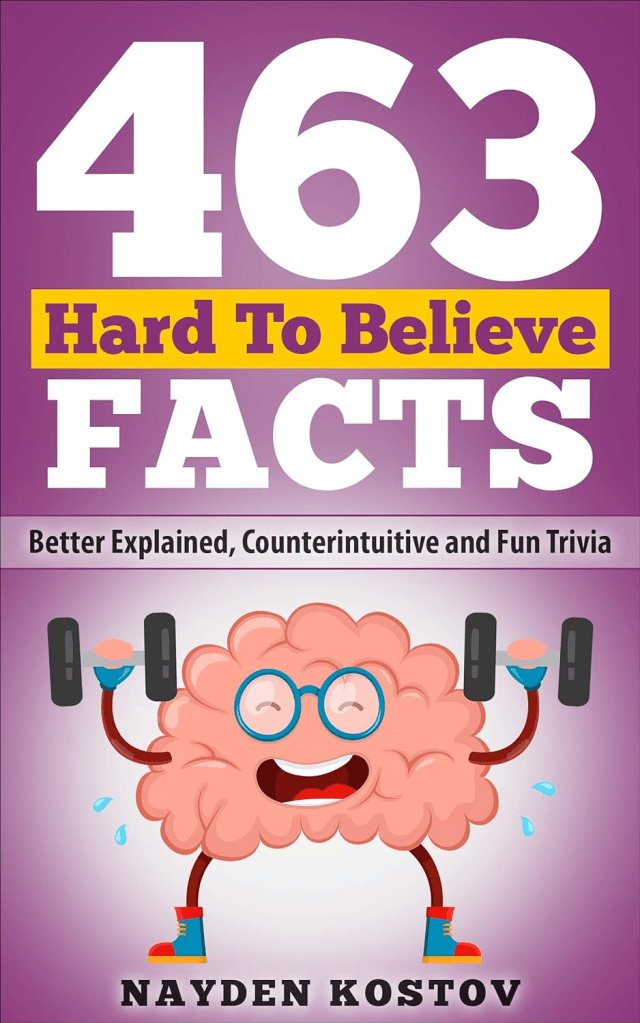
463 Hard to Believe Facts: Better Explained Counterintuitive and Fun Trivia
Written by Nayden Kostov
For the person who loves trivia, or one who likes to appear as an expert in everything, this book is right up your alley. The first chapter in the book is organized in a question, answer format. First, posing a myth, and then answering whether the question is true or false and why.
Readers definitely will come away with new knowledge on a plethora of topics. This author covers sports, language, climate, human and animal sexuality, and countries around the globe. It is fun to have this book around as a conversation starter. One word of caution, the chapter on sexuality is one that parents may not want younger children to discover without prior parental consent or discussion.
SUBSCRIBE TO THIS BLOG FOR NEW BOOK REVIEWS EVERY WEDNESDAY AND SUNDAY.


 December 1, 2024
 bamauthor
 Comments Off on KIDS IN CONTROL: TRAINING THE BRAIN















 Barbara Ann Mojica's BLOG
You must be logged in to post a comment.