Posts tagged ‘social skills’

IS YOUR CHILD GIFTED OR TALENTED?

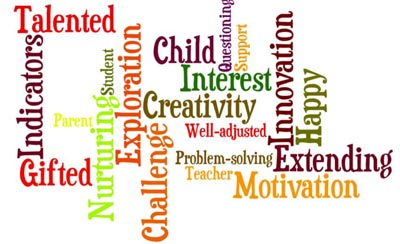
Since it is widely agreed upon in the educational and child development communities that early recognition of the characteristics of a gifted child, is a key factory in successfully developing the child, it is important for the parent to have at least a general understanding of these gifted characteristics.
First of all in order to be classified as a gifted child, the child must have the ability to perform at a level that is significantly beyond other children of like age. O.K. So, for a parent, what might this look like or what should I look for in my child?

Of course, every child is endowed with unique capabilities and has the potential for maximizing these qualities.


The following are some guidelines to help your awareness when it comes to recognizing the characteristics of a gifted child. Keep in mind that there are varying levels of giftedness, as you view the guidelines.

Cognitive Skills (thinking or though processing)


Ability to master new skills with extraordinary speed.
A deeper knowledge than other children the same age.
Extraordinary memory and recall of events, facts, and/or figures.
Advanced creativity and ability to improvise.
Acute alertness to their surroundings.
Advanced or more complex sense of humor.

Learning Patterns


Great and constant curiosity along with high level of motivation to learn.
As a result of the previous, being bored easily if not challenged
Advanced ability to stay focused or lengthy attention span. Even with more difficult topics.
Advance organizational or planning skills.
Advance logic and problem solving skills.

Speech and Language


Well developed word vocabulary and language compared to children of the same age.
Creative uses of words and sentence structure and again, sense of humor.
Ability to adapt their use of the language to a given level to fit the situation.
Ability to understand and carry out complex instructions.
General advanced ability in reading, writing, and working with numbers.

Social


Sensitivity to other s feelings
Use of their advance language skills to resolve conflict or debate.
Organize and direct behavior of other children (may seem bossy to other children).
Many times will feel more at home with older children.
May have high expectations of themselves (and others) that can lead to frustration and even anger.

Other


A generally high aptitude for logical problems, games, puzzles, or any type of problem solving or activity that requires creative thinking and reaction.

Final Note: Although these characteristics of a gifted child may provide you with some initial insight and understanding, it is important to seek a formal assessment of your child in this area if you feel that your child exhibits several of these characteristics.
SUBSCRIBE TO THIS BLOG FOR NEWS YOU CAN USE

Go back

Your message has been sent

Warning
Warning
Rate your experience(required)
Warning
Warning
Warning.

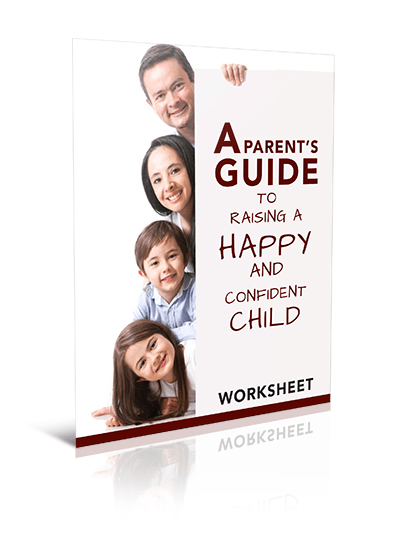
A PARENTS ‘GUIDE TO RAISING A HAPPY AND CONFIDENT CHILD

Raising a child is challenging. Raising a happy and confident child is even more challenging! Each child is different and will require a unique approach.

Answer these questions to gain a better perspective of your situation.

1. How do I define success? What traits and skills does my child need to be happy, confident, and successful?

__________________________________________________________________________________________________

__________________________________________________________________________________________________

__________________________________________________________________________________________________

__________________________________________________________________________________________________

__________________________________________________________________________________________________

__________________________________________________________________________________________________

2. What are my child’s strengths and weaknesses?

__________________________________________________________________________________________________

__________________________________________________________________________________________________

__________________________________________________________________________________________________

__________________________________________________________________________________________________

__________________________________________________________________________________________________

__________________________________________________________________________________________________

3. What experiences from my own childhood are relevant? What did my parents do well?

What could they have done better?

__________________________________________________________________________________________________

__________________________________________________________________________________________________

__________________________________________________________________________________________________

__________________________________________________________________________________________________

__________________________________________________________________________________________________

__________________________________________________________________________________________________

4. How can I help my child to be more successful in school?

__________________________________________________________________________________________________

__________________________________________________________________________________________________

__________________________________________________________________________________________________

__________________________________________________________________________________________________

__________________________________________________________________________________________________

__________________________________________________________________________________________________

5. How can I help my child develop better social skills?

__________________________________________________________________________________________________

__________________________________________________________________________________________________

__________________________________________________________________________________________________

__________________________________________________________________________________________________

6. What are five goals that would be appropriate for my child to achieve?

__________________________________________________________________________________________________

__________________________________________________________________________________________________

__________________________________________________________________________________________________

__________________________________________________________________________________________________

__________________________________________________________________________________________________

__________________________________________________________________________________________________

7. What are my child’s greatest fears? How can I help?

__________________________________________________________________________________________________

__________________________________________________________________________________________________

__________________________________________________________________________________________________

__________________________________________________________________________________________________

__________________________________________________________________________________________________

__________________________________________________________________________________________________

©Barbara Ann Mojica 2023

LEARNING TO BALANCE OUR EMOTIONS

Social Skills for Kids 3-10

Written by Kate Herm

I like the detailed introduction explaining just how to use the book. It is important to note that the author requests the book be read in sequential order. While the child may only need work enforcing one or two areas, it is necessary to examine each stage within the framework of social-emotional development.

Herm presents activity suggestions grouped in categories like communication, listening, body language, self-control, empathy, problem-solving, manners and developing friendships. Of course, many of these categories contain social emotional skills that overlap. Parents can mix and match activities according to resource availability and time constraints. Most of the activities can be adapted to be flexible with an older or younger child. Perhaps siblings could work on some of these together or parents might introduce them on play dates.

A good addition to a parent or teacher’s education bookshelf for preschool and elementary school social skills.

SUBSCRIBE TO THIS BLOG FOR NEW BOOK REVIEWS EVERY WEDNESDAY AND SUNDAY.

KEEPING KIDS ENGAGED

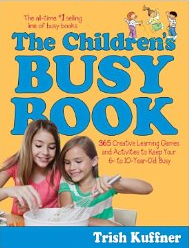
The Children’s Busy Book:365 Creative Learning Games and Activities to Keep Your 6-10 Year Old Busy

Written by Trish Kuffner

365ActivitiesBusy,pic

The author is not trying to reinvent the wheel; she does want to help you make the most of your child’s free time. Contents of this book are designed to stimulate creativity, social skills, imagination and thinking skills. They can be used after school, during the summer, or on a weekend. The ages six to ten are recommended but not arbitrary as younger children as well as adults might also enjoy them. They are not gender specific; the categories are generalized with much overlapping.

Let’s look at some of the chapter headings: rainy days, indoor Olympics, fun outdoors, my family and me, arts and crafts, and holiday fun. Under these headings the reader will find some traditional games like jump rope and hopscotch, marbles and card games. There are some great recipes in the kids in the kitchen section like oatmeal pancakes and Teriyaki chicken. In the math area there are activities like naming that coin and calendar games. Budding scientists learn how to make rock candy crystals fossils, and invisible ink. For a family project children might want to research a family tree, create a scrapbook or set up a “praise box.”

In the Appendix, Kuffner lists more suggestions for reading, resources for parents, and an index of supplies needed to complete or create the projects. This book leaves nothing to be desired. Everything needed is clearly delineated and indexed. The guide is a valuable resource to be placed on the shelves of parents, camp counselors, librarians and teachers. Just the thing to reach for as soon as an adult hears a child say, “I’m bored.”

If you enjoyed reading this post, please subscribe by clicking on the word Follow or by hitting the orange RSS Feed button in the upper right hand corner of this post.