Children’s book: The Torch of Peace (about relationships and better communication)
Written by Doron Erez
Illustrated by Abira Das
Oliver is a kindergarten student who dreams of a career in construction. Every night he dreams of building tall brick structures. At school, he enjoys acting out his dreams with toy trucks. One day he is playing with some other children who rent apartments in his building development when Rafael, the owner, passes by. Rafael demands that the children remove the bricks and play elsewhere because they are spoiling the appearance of his property.
When Oliver tells his dad what happened, Oliver’s father reads him a story about two native tribes who once argued over how to grow crops on the land and figured out a way to settle their differences. Oliver recognizes the lesson in the story and immediately finds a way to apply it to solve his problem with the property owner.
This book is written to teach young children how to communicate with each other and adults. It teaches them how to solve problems with words instead of actions. Highly recommended for preschoolers and primary grade children. Parents and teachers might use it to discuss problem solving and communication issues with peers and adults.
I received a copy of this book from the author and voluntarily decided to read and review it with my honest opinions for no compensation.
SUBSCRIBE TO THIS BLOG FOR NEW BOOK REVIEWS EVERY WEDNESDAY AND SUNDAY.
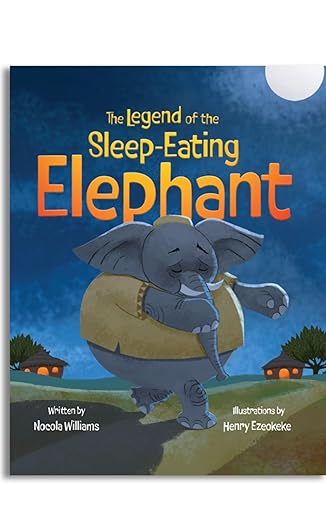
The Legend of the Sleep-Eating Elephant (Global Beekeeping Tales)
Written by Nicola Williams
Illustrated by Henry Ezeokeke
A charming legend from Kenya relates the tale of an elephant who cooperates with the humans and animals of his village by watering the crops.
One day, a cabbage is missing from the fields. On subsequent days, more crops are missing. Elephant becomes distressed as do the other animals and humans of the village. The members of the beehive community invent a clever solution.
Readers discover the problem and the innovative solution after reading this book. They also learn facts about elephants, honeybees, the environment, and conservation.
A good choice for the classroom or home bookshelf for children who enjoy learning about animals, problem-solving, and conservation.
Recommended for ages six through twelve.
SUBSCRIBE TO THIS BLOG FOR NEW BOOK REVIEWS EVERY WEDNESDAY AND SUNDAY.
Teaching critical thinking to children in elementary school is crucial for their overall development and future success. Here are a few reasons why it is important:
Enhanced Problem-Solving Skills: Critical thinking equips children with the ability to identify, analyze, and solve problems creatively. By encouraging them to think critically, we empower them to approach challenges with a logical and analytical mindset. This skill is not only beneficial during their academic years but also helps them navigate real-life situations effectively.
Promotes Independent Thinking: Teaching critical thinking encourages children to question information, sources, and perspectives. They learn to evaluate evidence, form their own opinions, and make informed decisions. This fosters independence of thought, empowering children to rely on their own judgment rather than simply accepting what they are told.
Develops Analytical Abilities: Critical thinking helps children develop strong analytical skills. They learn to break down complex problems into smaller manageable parts, analyze each part individually, and then synthesize the information to form a coherent understanding. This process of analysis develops their ability to assess situations objectively and make logical connections.
Encourages Curiosity and Creativity: When children are taught critical thinking, they naturally become more curious and open-minded. They learn to ask questions, explore various possibilities, and seek a deeper understanding of the world around them. This curiosity fuels their creativity and enables them to think outside the box, fostering innovation and originality.
Prepares for the Future: In today’s rapidly evolving world, critical thinking skills are more important than ever. As children grow up, they will encounter new challenges, diverse perspectives, and complex issues. By nurturing their critical thinking abilities from an early age, we equip them with the skills necessary to adapt, problem-solve, and thrive in an increasingly complex and dynamic society.
In conclusion, teaching critical thinking to children in elementary school is essential for their intellectual growth and overall development. It empowers them to think independently, make informed decisions, and face challenges with confidence. By fostering critical thinking skills, we prepare them for a future where adaptability, creativity, and analytical abilities are highly valued.
When a rhino, elephant, and gorilla are stolen by poachers, Rory the lion calls a meeting of all residents of the jungle.
They each use their own talents to devise a plan to rescue their friends and rid the jungle of poachers forever. The author presents charming illustrations and text to teach readers about teamwork, ingenuity, and problem-solving to rid the jungle from a deadly threat.
I appreciate the glossary which allows the author to teach new vocabulary to young readers and the hidden butterfly cycle which makes the book an interactive experience.
Recommended for preschoolers and primary grade readers.
SUBSCRIBE TO THIS BLOG FOR NEW BOOK REVIEWS EVERY WEDNESDAY AND SUNDAY.
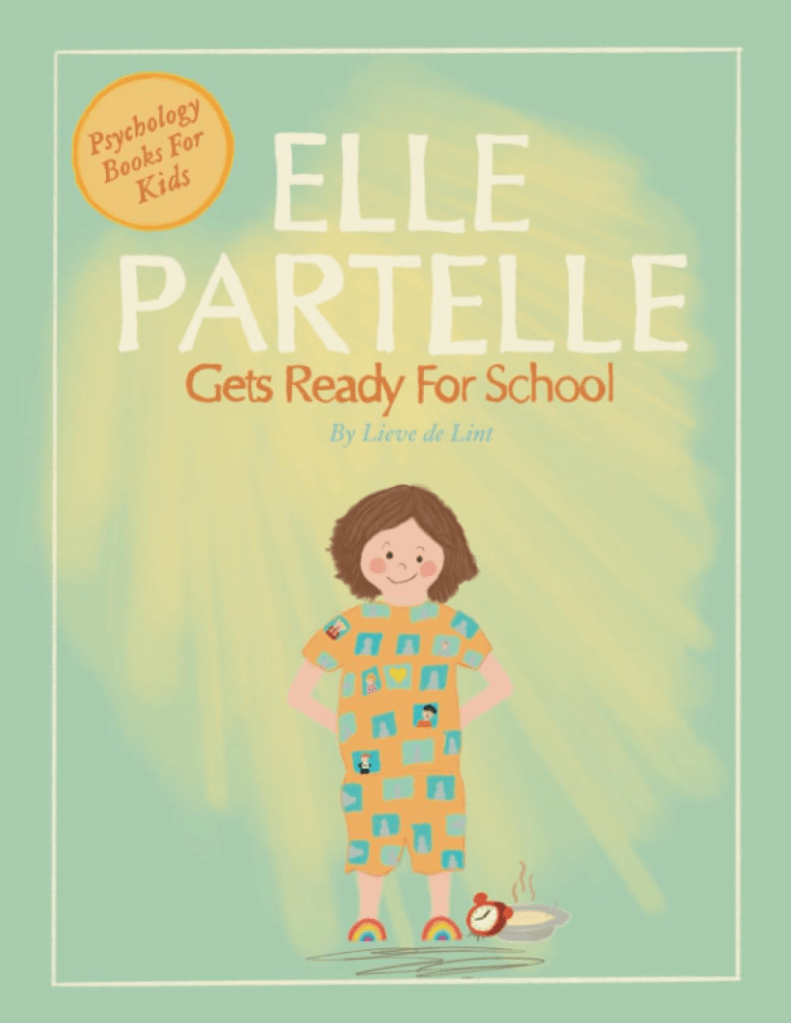
An interesting picture book that explains how to use self-talk to respond to the flood of emotions a child experiences everyday.
A little girl named Elle wakes up on a Monday and prepares to get ready for school. Her mind races with a bunch of different scenarios as she tries to sort things out.
The colorful illustrations assist in identifying each situation.
While the book is targeted for ages three through five, I believe it might be more beneficial for children a bit older.
SUBSCRIBE TO THIS BLOG FOR NEW BOOK REVIEWS EVERY WEDNESDAY AND SUNDAY.
Furry Fighters to the Rescue: How to Stop Feeling Angry Kids Book
Written by Lieve de Lint
Illustrated by Debby Rahmalia
A brilliantly vivid picture book to help preschool and primary grade children deal with feelings of anger.
They learn to face their feelings by identifying with furry, firefighting creatures who team up to identify and analyze their strong feelings and get them under control.
A good resource for parents, teachers, and counselors who work with children experiencing anger issues.
SUBSCRIBE TO THIS BLOG FOR NEW BOOK REVIEWS EVERY WEDNESDAY AND SUNDAY.
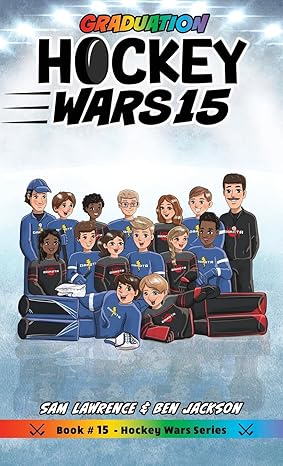
The conclusion to the Hockey Wars series in Book 15 does not disappoint. I feel as if I have been on the journey from childhood through middle school with this group of coed hockey friends.
The members of the boys’ and girls’ hockey team have shared emotional difficulties as well as physical struggles in their quest for success. Readers have laughed and cried with them along the way.
These characters are genuine. They have the kinds of strengths and weaknesses that the middle-grade target audience face within their daily lives. Certainly, it is not difficult to empathize with them as friends and competitors.
The length of these books makes them appealing to reluctant readers, while illustrations add to the charm. I must say I am sad to see the series end. A sequel following them in high school?
SUBSCRIBE TO THIS BLOG FOR NEW BOOK REVIEWS EVERY WEDNESDAY AND SUNDAY.
If you have listened to me on a podcast, watched one of my you tube videos, or read this blog, you probably already know how passionate I am about the importance of learning how to think both critically and creatively and the importance of passing down these skills to our children.
Today, I would like to explain in this short article, how to quickly develop your superpower using these two ways of thinking.
In this short report, I want to introduce you to an innovative way of thinking and problem solving that combines creative and critical thinking. These two approaches are very different. Each of them has advantages and disadvantages. By combining the two, you can tap into the power of both.
Let’s start by taking a look at creative thinking, what it is, and how we can start to think more creatively. The phrase most often used to describe creative thinking is “think outside the box.” I like to think about it as a way to think about something in a new and different way. Look for the not so obvious solutions not thought of by anyone else. Yes, it will be out of the box thinking, but it can be so much more.
Let’s look at an example of creative thinking. Suppose you just bought a new house, and between the cost of the down payment and renovations you had to make, you’re broke. Your neighborhood association sends you a letter that your yard needs to be redone to fit in with the overall landscape. There’s no money in the budget for landscaping. What do you do?
You have to get creative. The obvious answer is to do it yourself, but that takes time, money, and skill that you may not have. Some creative options may be to get in touch with an up and coming landscaping company to see if they are willing to redo your yard for free or at cost price in exchange for putting up a sign to advertise their business in your yard. If you have web design skills, you could barter those in exchange for the work. Think outside the box and come up with a creative solution.
To get your creative thinking cap on, you can ask yourself some interesting questions:
Start with what if. Keep it very open-ended. In this first brainstorming stage, no idea is too ridiculous or impossible to throw out. While the idea itself may turn out to be unusable, it may spark a creative thought that will lead you to the perfect solution.
Another great question to ask is “What else.” It encourages brainstorming and expanding on existing ideas. Last but not least, you can spark creativity by introducing an off the wall concept. For example, you could pretend that you have no income for the following year. How would you live and how would you pay for your home and renovations, including the yard? The solution may be to work on a side hustle like graphic and web design for small businesses in your area. That, in turn, will help you realize that you can pay for the landscaping by spending a few weekends on freelance projects.
Another problem-solving skill is critical thinking. It’s very different from creative thinking. Here the idea is to think logically and work from information and data collected. You start with the information gathering process and then sort and analyze it to find the best solution. You want to be as objective and unbiased as possible and come up with the best possible judgment based on the information you have.
For example, if you are a project manager for a construction firm, you would gather information on what you need on the job site and then order the materials at the best price you can find. Another example a little closer to home would be the critical thinking you use when you’ve lost your car keys. You start to search the house room by room, possibly retracing your steps until you find them. That’s a small-scale example, but it gives you an idea of what critical thinking is.
The significant advantage of critical thinking, as opposed to creative thinking, is that you usually come up with a workable solution. When you let your creativity run too wild, you end up with a fun potential solution but possibly not something that will work or even something you want to attempt to try.
Let me show you what I mean by an off the wall example that will illustrate my point. Let’s say you want to lose 25 pounds. When thinking creatively, you realize that the average human leg weighs about 26 pounds. Cutting one of yours off would instantly result in a 25+ pound weight loss. While creative, it’s also absolutely ridiculous.
When you switch to critical thinking, you gather data and information on various weight loss programs as well as how the biological process of burning body fat works. As a result, you fast intermittently, eat more whole foods, and start to go for daily walks. It’s a much more workable solution, isn’t it?
Think about some other times when you’ve used critical thinking to make important decisions. Maybe it was choosing the right health insurance or 401K plan. Maybe it was picking a house in a good neighborhood with great schools for your kids that fit within your budget. Maybe it was whether or not to make a big career move or relocate to a different area of the country. We use critical thinking skills all the time. They serve us well at home, school, and work.
Last but not least, we come to the fun stuff. In this section, we take a look at how we can combine creative and critical thinking to come up with out of the box solutions to problems that work. By combining both critical and creative thinking, we can take advantage of the benefits of both while avoiding the downsides.
Let’s go back to the silly weight loss example to show how this can work in action. Again the idea is to lose a fair amount of weight. Cutting off a limb is obviously not an option, but we can take a look at some of the reasons that make this an attractive consideration. We lose a set amount of weight, and we lose it in a set amount of time. That may spark a thought about tracking weight loss in interesting increments (like losing the equivalent of 3 packs of butter, or the equivalent of your arm’s weight). It may also inspire us to set a date for which we want to have x number of pounds gone. It may even get us to think about and consider surgical alternatives like liposuction or stomach stapling. While those may not end up being the right solutions for you, it’s good to include them and think about those options. You never know where they may lead you.
Looking into weight loss surgery may have you considering alternatives like fasting. At the very least, it will serve as a motivator if you want to avoid surgery at all costs.
In this case, we started out with creative thinking and then moved into critical thinking. We got a complete picture, collected a lot of data, and then analyzed it logically to come up with the best solution. That’s a great way to approach this process.
Another option is to start with critical thinking, then switch to creative thoughts to come up with more alternatives and more data sources. Then go back to critical thinking to determine what will work in the end.
By combining these two ways of thinking, we can come up with new and innovative solutions that will work. At other times we may find that the old tried and true way of doing things is popular for a reason. It may end up being the best possible solution. We won’t know that though until we’ve thought about it critically and creatively, working through all possible alternative options.
That’s why combining aspects of both critical and creative thinking is such a powerful strategy. Give it a try the next time you face a complex problem. Since switching between thinking creatively and analytically can be a little tricky at first, it can be helpful to sit down and work on creative brainstorming first. Get out a notebook and spend some time thinking of as many ideas as you can and write them down. Walk away for a bit and then get to work on the critical thinking part of the process, collecting more data, organizing it, analyzing it, and finally coming up with a workable solution. Rinse and repeat as needed until you find something that works well for you.
The more you get in the habit of practicing those creative and critical thinking skills and combining them, the better you get at it. Before long the entire process will become an integral part of how you approach problem-solving.
Want to learn how to become a problem solver today?

 October 1, 2025
 bamauthor
 Comments Off on A BETTER SOLUTION






 Barbara Ann Mojica's BLOG
You must be logged in to post a comment.