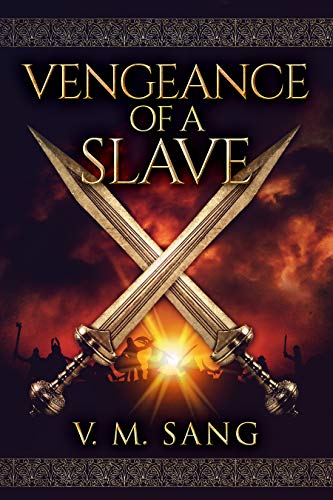
Adelbehrd and his family live in the Roman provinces. Their simple life is suddenly turned upside down when Roman soldiers come to exact revenge for a rebellion in which they played no part.
They randomly choose men to be examples. Adelbehrd’s father is crucified. He and his sister are singled out to be sold as slaves because of their blond hair. Torn from their grieving mother, the two terrified children are carted off to a far-off villa to be enslaved.
For many years, their monotonous life continues. One day, Adelbehrd discovers that his sister is about to be sold. A friend tells him about a group of Britons who rescue slaves. Adelbehrd is determined to protect his sister and hatches a plan to escape. Will they be successful, or will they suffer the dire consequences?
The book appears to be well researched. The plot moves along and keeps the reader’s interest. I would recommend it to those who enjoy history and intriguing characters.
If you enjoyed reading this post, please subscribe by clicking on the word Follow or by hitting the orange RSS Feed button in the upper right-hand corner of this page.
A leader in the workplace means setting a good example for others and/or heading up office programs and projects. It does not necessarily mean being a boss, manager, supervisor, or other “official” position, although it can mean that.
Here are some tips and ideas on how to be a leader in the workplace.
Be Confident
“Never let them see you sweat.” No one is perfect; but appearing confident inspires others to trust you and take your advice. Appear self-assured by not talking too much about your fears and concerns. Instead, talk to friends outside of the workplace about your uncertainties.
See the Good in Others
Always observe the good traits of other employees in the workplace. If you need to put certain people in charge of certain tasks, it pays to know who will do well with what task. You also may see potential in a co-worker and challenge him or her by requesting a task that might be a bit outside the scope of his or her current responsibilities. This improves the overall skill set of the workforce, and helps build self-esteem in your co-workers.
Don’t Be Afraid to Delegate
There’s a difference between being a people person and being a people pleaser. Being a people person means you have a genuine love for people, but you’re not afraid to ask people to do things. Being a leader doesn’t mean doing everything yourself; it means you are comfortable giving up some control and delegating tasks to others.
Appreciate Co-Workers
No one wants to work for or with someone who doesn’t appreciate them. If you let everyone know you appreciate what they’ve done and how they’ve given their time and talents, it can go a long way. Remember that there would be no leaders if there weren’t any followers. People who are appreciated may be more likely to follow your lead next time.
Problem Solving
If you step up with ideas on how to solve dilemmas or problems, and have resourceful ideas about how to accomplish something, then speak up. Employers value the ability to think through a problem and find a creative solution. This is a valuable leadership quality that demonstrates you have what it takes to be an effective leader in the workplace.
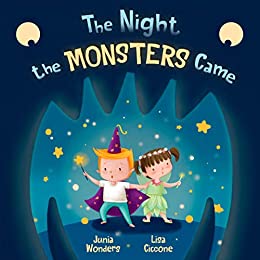
The Night the Monsters Came: A Fun Way to Teach Kids Healthy Habits as Part of Their Bedtime Routine
Written by Junia Wonders
Illustrated by Lisa Ciccone
Siblings Jack and Joy are getting ready for bed when Jack warns his sister, the monsters are outside and hungry. He dresses as a wizard and Joy puts on her fairy dress and crown.
As the monsters barge through the door, the children are steadfast. They warn the monsters they are not appealing targets because they follow good hygiene. Why does that turn the monsters off? Read the book to find out.
The rhymes are clever with extensive use of onomatopoeia and bright colors outlining new vocabulary. Illustrations are appropriate and colorful. I highly recommend the book for toddlers and primary grade children.
Publisher’s Synopsis: In the stand-alone companion to the New York Times–bestselling A Wolf Called Wander, a young orca whale must lead her brother on a tumultuous journey to be reunited with their pod. This gorgeously illustrated animal adventure novel explores family bonds, survival, global warming, and a changing seascape. Includes information about orcas and their habitats.
For Vega and her family, salmon is life. And Vega is learning to be a salmon finder, preparing for the day when she will be her family’s matriarch. But then she and her brother Deneb are separated from their pod when a devastating earthquake and tsunami render the seascape unrecognizable. Vega must use every skill she has to lead her brother back to their family. The young orcas face a shark attack, hunger, the deep ocean, and polluted waters on their journey. Will Vega become the leader she’s destined to be?
A Whale of the Wild weaves a heart-stopping tale of survival with impeccable research on a delicate ecosystem and threats to marine life. New York Times-bestselling author Rosanne Parry’s fluid writing and Lindsay Moore’s stunning artwork bring the Salish Sea and its inhabitants to vivid life. An excellent read-aloud and read-alone, this companion to A Wolf Called Wander will captivate fans of The One and Only Ivan and Pax.
Includes black-and-white illustrations throughout, a map, and extensive backmatter about orcas and their habitats.
This book drew me in from the opening chapter. The personified characters make you feel you a member of the whale pod. A compelling adventure that also provides readers with a wealth of knowledge about the dangers of life in the ocean. I highly recommend this beautiful book for elementary and middle-grade audiences. That doesn’t mean adults won’t enjoy it just as much!
A Whale of the Wild is at the top of my book list on the subject of whales. You will find other suggestions as you read on in the blog post.
ABOUT THE AUTHOR
Rosanne Parry is the author of the novels Heart of a Shepherd and Last of the Name, among other acclaimed titles. She lives with her family in an old farmhouse in Portland, Oregon, and writes in a treehouse in her backyard. www.rosanneparry.com
ABOUT THE ILLUSTRATOR
Lindsay Moore is an artist and writer with roots in Northern Michigan. She studied marine biology and fine art at Southampton College on Long Island and figure drawing at the Art Students League of New York, and earned her master of science in medical and scientific illustration from Medical College of Georgia, now Augusta University. Lindsay Moore lives with her family in Bowling Green, Ohio.
GIVEAWAY
Enter for a chance to win a copy of Rosanne Parry’s A Whale of the Wild!
Five (5) winners receive:
A copy of A Whale of the Wild, by Rosanne Parry
Giveaway begins September 1, 2020, at 12:01 A.M. MT and ends September 15, 2020, at 11:59 P.M. MT.
Interested in finding additional great books about whales?
Here are a few suggestions:
Song for a Whale
Lynne Kelly
Ages 8-12
In the spirit of modern-day classics like Fish in a Tree and Counting by 7s comes the Schneider Family Book Award-winning story of a deaf girl’s connection to a whale whose song can’t be heard by his species, and the journey she takes to help him.
National Geographic Readers: Great Migrations Whales
Lynn Marsh
Grade Level : 2 – 4
Over the course of their 70-year lifespan, sperm whales will easily travel the circumference of the Earth in search of food and the need to breed and find a mate. Males will travel as far north as the Bering Sea and as far south as Antarctica in order to find enough food to sustain their ways of live—up to 700 squid a day! Along the way, these massive beasts battle 30-feet-long giant squids, and each other, to sustain their ways of life.
Whales, Dolphins and Porpoises
Mark Carwindine
Illustrated Martin Camm
Reference book for all ages
Authoritative text, detailed illustrations, and a systematic approach make DK’s Smithsonian Handbook of Whales, Dolphins, and Porpoises the most comprehensive and concise pocket guide to cetaceans. With more than 900 illustrations, this visual recognition guide is designed to make identification as simple and accurate as possible.
This book is one of a series covering plants, animals, and other natural phenomena from around the world and is published in association with the Smithsonian Institution.
Baby Belluga (Raffi Songs to Read) Board Book
Written by Raffi
Illustrated by Ashley Wolff
Age one through preschool
Raffi’s most popular and beloved song about the “little white whale on the go” is available in a sturdy board book edition–just the right size for babies and toddlers!
Singing supports and encourages even the youngest child’s speech and listening skills, which makes Baby Beluga perfect for early learning. Join this adorable baby whale in a busy day at sea, culminating in a warm mother-child bedtime ending. With its delightful illustrations, this is the ideal sing-along for a whole new generation of readers.
Wally Whale’s Mighty Tail: A Book about Happiness
Written by Kim Linette
Illustrated by James Loram
A Multicultural Book for Elementary Readers
At least that’s what Koa hears, and so he sets out in search of Wally Whale and the valuable knowledge that he hopes Wally will share.
Determined to discover Wally’s secret to being mighty, Koa follows the whale through waves and reefs, never knowing the truth was inside him all along!
Wally the Whale helps Koa – the little island warrior – learn the real secret to being mighty! And you already have it inside!
It’s a lesson of emotional intelligence that is essential for any child—including Koa, who learns as he journeys through the Pacific with Wally Whale.
Get to know the entire EQ Explorer’s Series—including how we donate 100% of profits to help underserved kids around the world.
Leadership skills are crucial for success in life, from employment to relationships. The general consensus is that many of these skills are lacking among adults and young people. Whether you have youth and young adults living in your home or placed under your supervision, you can invest in their futures by teaching them how to be leaders.
Qualities necessary for teaching youth and young adults to be leaders.
Give Them Responsibility
As a youth group leader, parent, teacher, or other authority figure, this can seem like a scary prospect. Are they ready for responsibility? Can they handle it? Give them something to be responsible for that will build their self-confidence, but don’t make it something that’s life-and-death. Take your teens’ personal skills, strengths, and weaknesses into consideration, too.
Here are some examples of responsibilities for teens.
Running an errand for you, such as picking up something from the store. If they can’t drive, you can drop them off to run the errand.
Opening up a bank account.
Let them lead a class or group.
Household chores like laundry could be delegated to the young adults and teens in your home.
Have them organize the set-up and clean-up of an event.
Jobs
One of those ironies of good leadership is that being under leadership is often a great way to learn it. Youth and young adults would do well to work at least part time, This fosters learning responsibility and also learning what is involved in good leadership. Having a job is an important responsibility that can prepare young people to lead.
Consider jobs like camp counselor or babysitter, too. Those are both jobs that put young people in charge of others.
Workshops
Are there leadership workshops available in your area? If not, see if you can hire a leadership consultant to come in and speak to your group. Maybe you can find someone to speak to your teen’s class, or hold a seminar on your young adult’s college campus. If there is a workshop available, take your youth group to the workshop, or sign your kids up.
Groups and Organizations
Organizations like Boy and Girl Scouts are also good ways for young adults and youth to learn leadership skills. Don’t let the names “boy” and “girl” deter you – there are all kinds of opportunities in these organizations for youth and young adults. Other clubs and groups encourage leadership among members, too. Find out about what is offered in your community – even your local YMCA/YWCA might have some ideas or programs.
Take stock of the opportunities available that are tailored to the career opportunities that are unique to the community in which you live and the curriculum available in schools and colleges in your area. Discuss the hopes and dreams held by your youth and teens and encourage them to share them with you and their peers. Innovation and success spring from the seeds of ideas.
If you enjoyed reading this post, please subscribe by clicking on the word Follow or by hitting the orange RSS FEED button in the upper right-hand corner of this page.
This book is a brief overview of the history and implementation of online teaching. While college students have been using it in one form or another for a while, the concept has been thrust into the limelight as education on all levels has been shut down during the pandemic.
For traditional teachers, especially those in elementary and middle-grade classrooms, using the computer as a teaching tool has been a supplement up to this point. Now teachers are suddenly faced with the task of taking all their lesson plans and finding a way to deliver them virtually. Notwithstanding the problems of students and schools who do not have adequate bandwidth or hardware, there is the issue of appropriate software.
Pan points out some advantages of online learning. It is flexible, and today’s software programs allow for interactive student discussions, quizzes, and teacher-student direct interaction. It can be accessed at home or by mobile device. If teachers plan their lessons well ahead, they can input measures of accountability. Teachers must prepare parents in advance. They need to ask parents to participate, encourage and supervise the younger students.
There will be a period of transition when the method seems difficult, but with time and practice students and teachers become responsible and practiced with the techniques. There is no doubt in person instruction is a crucial and necessary component of education, but online teaching has emerged due to necessity and will not disappear from the educational landscape.
If you enjoyed reading this post, please subscribe by clicking on the word Follow or by hitting the RSS FEED button in the upper right-hand corner of this page.
YouTube Video Marketing: Video Marketing Tips, Tricks And Strategies EXPOSED
Written by Lavorite Martin
This book is written in an easy, non-technical style. While certainly not intended for an expert in videography, this book is a good choice for beginners. Authors who want to explore using video clips in their marketing campaigns will find it a good introduction.
Martin begins with explaining the importance and techniques for identifying and zooming in on your ideal customer and target audience. This is crucial for success. The author also stresses the need to tie video marketing in with the rest of your social media platform. The section on the many types of videos will help the reader decide which is the right kind of approach to video marketing.
Success will rise or fall if you don’t have the right equipment. Martin gives suggestions. I learned a lot about which formatting is most effective and how to choose the right one in each situation. Finally, Martin explains how to optimize videos with calls to action, keywords, and tags. He tells the reader how to embed a video on various social media platforms.
I recommend this book as a handy reference tool and quick reminder for a marketer’s video needs.
Whether you think that leaders are born or made, some characteristics that distinguish leaders from others stand out.
Have you wondered if you or someone you know is a natural leader? Are you interested in learning why they become leaders? Here are some personality characteristics that seem to go with effective leaders.
Task-Oriented
Are you the kind of person who likes to get things done? Do people come to you and ask you to do something for them and know you’ll do it? Not everyone is task-oriented, but those who are may end up being effective leaders. Being task-oriented means being a “doer,” the kind of person who focuses on getting something done and not stopping until the task is finished.
Task-oriented people generally follow through. This is important in a leader, because leaders have definite goals to reach and people to lead, and people will stop following you if you don’t get things finished.
Also, task-oriented leaders do not need “babysitting” to get something done. They can take initiative on their own – the task itself is motivation.
Honest Self-Image
Leaders tend to be pretty honest about their weaknesses and strengths, but not to the point of letting either one take over. For instance, a leader can balance between recognizing his weakness and not letting that stop him/her, and a leader can see his/her strengths without getting conceited. Those in leadership positions may find that they garner more respect when they are honest and “transparent” about their flaws than if they pretend to be perfect.
People Person
A leader tends to be a people person – someone who derives lots of energy from being around people. Such extroverted personalities make great leaders, but introverts are not barred from leadership, either. You can have a love for people and be introverted; you just respond differently to interacting with others.
In other words, you can be a “people person” even if you find yourself tired of leading at the end of a day. Extroverts and introverts can both be motivated by a love for people and their wellbeing.
“Infectious” Joy
Have you ever been around someone who just seems happy with life in general? If a person shares an idea or thought and seems really happy about it, do you feel like joining him or her? Leaders tend to exhibit this kind of infectious joy that draws other people to them. Positive-thinking leaders have a zest for life that compels other people to join them.
The general consensus is, characteristics of a good leader can be in-born or learned, or a bit of both. If you don’t have all of these traits naturally, you can learn many of them. No two leaders are the same.
If you enjoyed reading this post, please subscribe by clicking on the word Follow or by hitting the orange RSS FEED button in the upper right-hand corner of this page.
Visit my website http://www.LittleMissHISTORY.com to discover all my learning opportunities for #children #parents #authors and #teachers.
Is your child a strong leader? Do you suspect that he or she might grow up to be an effective and proactive leader? Maybe you aren’t sure what to look for. Does it matter if you discover leadership abilities early? Actually, some sources say it does matter. Observing leadership qualities early means parents, teachers and caregivers can work to develop those talents so they do not fall by the wayside.
If you want to make sure you develop your child’s leadership qualities, here are some signs to watch for. Some of them may surprise you!
Talkative
Does it sometimes drive you crazy that your child talks so much? Actually, being talkative may be a sign of things to come. A chatty nature indicates a child with excellent verbal skills, which are necessary for good leaders. Did your child talk early and proficiently? This may be a sign that he or she will be a good leader.
Treats Others with Respect
If you notice that your child seems to end up in responsible positions – team captain or band director – and you know he didn’t get that position because of “muscling” his way to the top or bullying others, then this may be a sign of leadership ability. Notice if others seem to “gravitate” toward her and wish to emulate her. Observe whether or not this is due to respectful treatment. If it is, you may have a strong leader on your hands.
Sees Both Sides
Some kids display an ability to understand both sides of an issue. They tend to be peace keepers, helping two arguing kids or adults to see reason, for example.
In the Know
Does your child always know what’s going on? Is he or she always aware of the latest events at school or in the family? This is not the same as being a gossip (that’s not a good leadership quality), but it does mean that he or she is paying attention and interested in what’s going on with others.
Inquisitive
A good leader is not afraid to ask questions, but he/she is not afraid to go looking for answers on his own. Too much questioning may indicate self-doubt – your child is always trying to make sure about things. On the other hand, healthy questions that spring from a real desire to know more about something may be a sign of leadership ability.
If you enjoyed reading this post, please subscribe by clicking on the word Follow or by hitting the orange RSS FEED button in the upper right-hand corner of this page.
So you have tried to create a home environment conducive to instilling leadership skills for all your children, whether they be preschoolers or teens. It’s been said that leadership starts at home and directly linked to early training. Experts disagree about how much leadership is inborn and how much is learned. I believe that it’s a combination of learning plus a child’s innate abilities.
If you’d like to do what you can to raise your children to be good leaders, here are some tips that may help.
Teach Them to Think
Some argue that the school system, whether it be public or private, teaches kids what to think rather than how to think. Common core curriculum has placed uniform requirements and testing standards on schools across the United States. There are likely exceptions to this – special schools and special teachers – but it’s entirely possible that your kids are not being taught how to think. So whether you homeschool or enroll your children in a traditional school setting, you might try some of these exercises to encourage independent thinking.
Give them an age-appropriate reading task that expresses a particular point of view. An opinion piece in the newspaper is a good place to start. Ask what your child thinks about it, and have him or her write an age-appropriate response. Do the same thing with an article that expresses a contrary or different opinion.
Encourage them to read about topics and books that covers a range of opinions and views.
Ask them if they agree or disagree, and why.
Any time your child reads something, ask him (or her) what he thinks about it. Find out what information he drew from the reading rather than finding out if he picked up what she was “supposed to” from the reading. Let them know it’s okay to disagree with parents and teachers. Encourage them to discuss the reasons behind their disagreement.
Leaders tend to be independent thinkers, so these exercises may go a long way toward teaching your child to be a good leader.
Teach Organization
This may be something of a challenge for parents who aren’t that organized themselves! On the other hand, for those parents who are very organized, you might find that you tend to organize everything for your kids without teaching them to do it themselves. Parents need to discover a comfortable balance between the two.
Give them a calendar and show them how to keep track of their own activities. Chore lists are an excellent way to help them organize their time. Age-appropriate chores and activities, written down or drawn on a calendar, can help kids “see” their time and how they are using it, even if they are too young to tell time yet.
Ask for Arguments
Huh! Are you joking with me? Ask your kids to talk back to you?
The art of arguing respectfully is an important leadership quality. We’re not talking about angry arguments. Think in terms of negotiation and persuasion. Ask your child to tell you why he (she) wants a certain thing, or why he should be permitted to attend an event or participate in an activity. This helps your children learn how to analyze his thoughts and present reasons that produce an argument to justify why he should achieve this goal.
If you enjoyed reading this post, please subscribe by clicking on the word Follow or by hitting the orange RSS FEED button in the upper right-hand corner of this page.
 September 20, 2020
 bamauthor
 Comments Off on SLAVE OR FREE




















 Barbara Ann Mojica's BLOG
You must be logged in to post a comment.