KIDS and MONEY TEACHING FINANCIAL RESPONSIBILITY AND VALUES TO CHILDREN
Written by Connie Ragen Green
I believe it’s never too early to teach children about financial responsibility. This book begins with a history of money from the earliest times. Green explains that our concepts about money shift during our lifetime. She demonstrates how to determine a child’s financial personality and disputes the traditional viewpoint of setting up an allowance. Her five-part plan assists in fostering independence. Green shows why alleviating financial stress makes a dramatic difference in lifestyle.
This book can be introduced in the elementary grades or during the middle grades. Recommended for parents who want to foster financial independence and accountability skills in their children.
SUBSCRIBE TO THIS BLOG FOR NEW BOOK REVIEWS EVERY WEDNESDAY AND SUNDAY.
Written by Geraldine V. Oates-Sese, Ph.D Illustrated by Franchesca A. Guerrero
Children who are unfamiliar with birding may be inspired to become nature lovers after reading this book. Highly recommended for elementary and middle grade readers.
I loved this colorful picture book packed with so much knowledge.
The protagonist, Melusine, enjoys bird watching. One day she notices an unfamiliar sound outside her window. Melusine travels to her multicultural neighborhood to identify this bird. Along her journey, readers learn about the songs and calls of many birds. In addition, Melusine’s trip to the market with her parents exposes readers to the different languages spoken by members of her community.
The author provides a comprehensive summary of each bird call and a glossary of the terms expressed by humans in the various languages spoken in the market. This book portrays a beautiful message of the diversity and inclusive sounds emitted by human and feathered friends.
Children who are unfamiliar with birding may be inspired to become nature lovers after reading this book. Highly recommended for elementary and middle grade readers.
SUBSCRIBE TO THIS BLOG TO RECEIVE NEW BOOK REVIEWS EVERY WEDNESDAY AND SUNDAY.
Five Signs You Might Need to Focus on Emotional Healing
What is emotional healing? It’s the process by which you recover emotionally and mentally from a negative life experience. You can’t keep tough times from appearing in your life. When you are emotionally healthy and balanced, you deal with those difficult situations that inevitably pop up, and you can move on with your life.
This isn’t always the case when your emotions are out of whack.
Sometimes, we don’t understand we need emotional healing. That’s the problem. If you suffer some injury and have a broken bone, you can see it. You can certainly feel it. You know you have to get it fixed.
You might think your emotional responses to your experiences are correct and healthy. They may be anything but. Here are five signs you could use some emotional healing to live a more complete and fulfilling life.
You Don’t Experience a Wide Range of Emotions
You have access to 34,000 different and unique emotions. That’s what psychologist Robert Plutchik believed. He stated that most of us only experience eight primary emotions most of the time. These are anger, sadness, disgust, trust, fear, joy, surprise and anticipation.
If only a couple of those are usually present, you probably need more emotional balance. This could indicate that you aren’t properly processing situations and human interactions.
Low Self-Esteem and a Poor Self-Image
This is an offshoot of what we just talked about. You constantly look down on yourself. Everyone has times when they doubt their abilities. That’s only normal. We recover and move on. The emotionally unhealthy person usually has a low sense of self-worth, even when there is evidence this isn’t the case.
You Have Difficulty Trusting Others
A lack of trust can come from emotional imbalance. You must love yourself and truly believe you can overcome a bad relationship experience, or you’ll never trust others.
You Can’t Move Past a Negative Experience
Life can be difficult, at times seemingly impossible. It might look like you’ll never recover in the middle of the most trying hardship. You will. Don’t embrace and hold onto negative emotions. Practice gratitude for the great things in your life. Lean on your support network and get whatever help you need if you can’t seem to let go of negative emotions.
Constant Anxiety and Stress
Chronic stress is a killer and has been directly linked to many common causes of death. A constant display of stress and anxiety could mean you’re not always responding to life correctly where your emotions are concerned.
There is no miracle pill you can pop to always enjoy perfect emotional balance. You will have ups and downs, experiencing difficult times that hurt you emotionally.
For you to live your best life and for those that you love, you need to learn to recognize a negative life experience, give it its due, and then move on. Consider seeking help if you often display these signs of poor emotional health.
Have You Seen My Sock? A Fun Seek-and-Find Rhyming Children’s Book for Ages 3-7.
Written by Barbara B. Thompson
Illustrated by Remesh Ram
I loved this rhyming picture book for toddlers and preschoolers. A little boy becomes increasingly frustrated when he cannot find his favorite dinosaur sock. The repetitive lines encourage vocabulary retention and early reading skills. Bright illustrations draw children into the story. It teaches them the necessity of patience and the ability to be patient as they learn to logically follow a sequence of steps to solve a problem. This book encourages interactivity and helps parents and teachers to guide their young charges to follow through and remain on task.
I highly recommend it for a home or classroom bookshelf.
SUBSCRIBE TO THIS BLOG FOR BOOK REVIEWS EVERY WEDNESDAY AND SUNDAY.
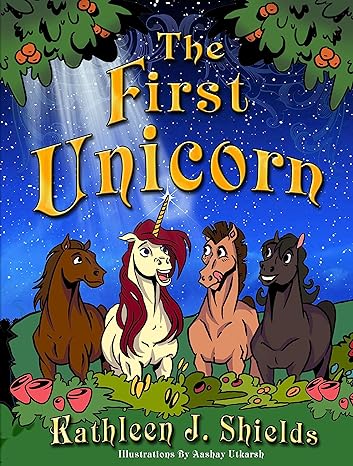
A beautiful rhyming picture book written for Christian children and their families.
What child does not love the mythical unicorn creature? Aden is introduced as a young yearling with spirit. He has a tender heart filled with compassion and kindness for others and never seems to put himself first.
One day Aden is gifted with a magical power. He is transformed into a unicorn. Rather than becoming impressed with this gift, Aden continues to be kind and unselfish. His love for others is soon tested. Will Aden ever fit in? Does he really want to be like all the others.
This book teaches children lessons from the Bible as well as strong character values.
I received a copy of this book from the author and voluntarily chose to read and review it with my honest opinions with no compensation.
SUBSCRIBE TO THIS BLOG FOR NEW BOOK REVIEWS EVERY WEDNESDAY AND SUNDAY.
I Am an Amazing Asian Girl: A Book of Positive Affirmations
Written by Yobe Qiu
Illustrated by Jade Le
This book features an Asian-American girl as the narrator, but the story is strongly multicultural. Qui discusses adjectives that describe qualities of the character like being adaptable, appreciative, and assertive. She is also independent in her opinions, while also being very community oriented. She interacts with children of different cultures while pursuing her own interests and projects.
There are not too many books available with female Asian protagonists and this book is a good choice for primary grade children to encourage self-confidence and reinforce self-esteem.
SUBSCRIBE TO THIS BLOG FOR NEW BOOK REVIEWS EVERY WEDNESDAY AND SUNDAY.
Publisher: Valley of Mexico | ISBN-13: 9781950957248
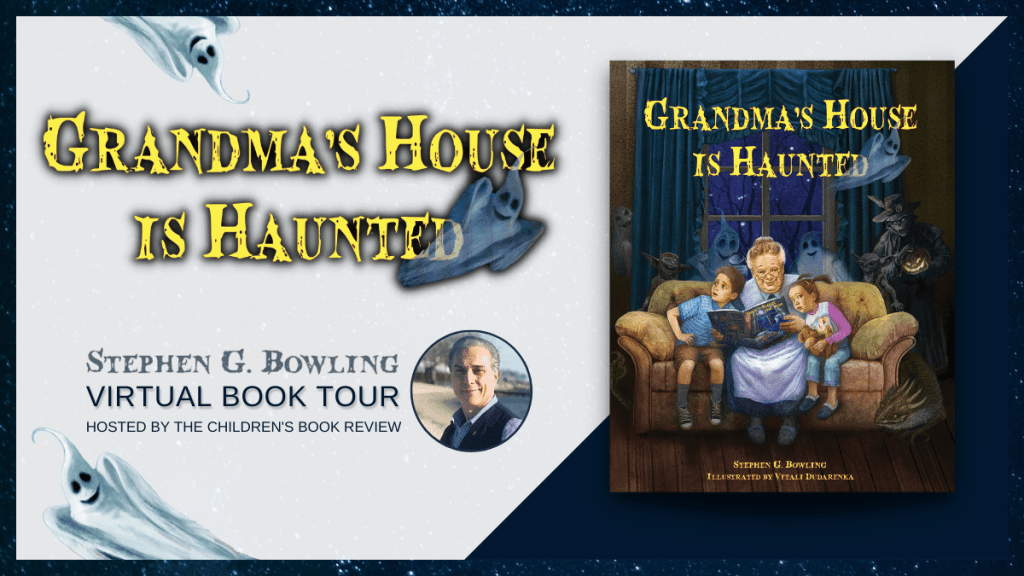
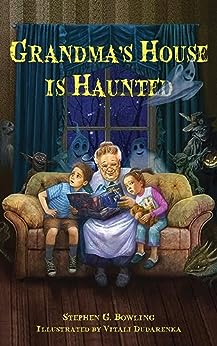
Publisher’s Book Summary: Everything is fun until nighttime comes. Are the howls in the dark only in their imaginations, or do ghosts and goblins become real when the full moon rises?
The children love visiting Grandmother. Playing great games and reading cool books goes perfectly with eating her delicious cookies and cakes. But when bedtime comes and off go the lights, things get a little scary as they say their goodnights.
The kids shiver at the creepy sounds from the attic and the strange shadows floating through the air. But Gran’s not worried at all; in fact, she has a secret to share…
Will they find a way to get over their dread, so they can finally rest their heads?
Grandma’s House is Haunted is a delightful children’s picture book, both spooky and sweet. If you like Halloween fun, bumps in the night, and doting grannies, then you’ll adore Stephen G. Bowling’s cheerfully eerie Picture Book that shows children there’s nothing to be afraid of when the lights go out.
Read Grandma’s House is Haunted to happily hide under the covers today!
Stephen G. Bowling is an award-winning author, entrepreneur, and philanthropist. Much like Peter Pan, Steve never wanted to grow up. Or rather, while he didn’t mind getting older, he never wanted to lose the child-like enchantment of imagination and wonder. Creating colorful worlds and stories for children has allowed Steve to both preserve his own imagination while sharing the joy of learning with children worldwide.
Steve has a Bachelor of Arts degree in Political Science from Brandeis University. He is an entrepreneur who has worked on and holds several U.S. Patents. He heads The Prometheum Foundation, a non-profit philosophical organization that helps teach students critical and analytical thinking, freedom of thought, and entrance into the marketplace of ideas. He is a lifelong weightlifter, an avid student of history and philosophy, and has a fascination with astrophysics.
A charming picture book that is clever, charming, and creative. The narrators are a brother and sister who describe their experiences when visiting their grandma’s house. While they thoroughly enjoy reading books, playing games, and laughing during the daylight hours, grandma’s old house transforms into a scary place at night.
The children imagine ghosts, goblins, shadows become witches, wolves, and all manner of beasts when darkness descends. Grandma calmly dispels all their fears by pointing out the sources of their imaginary visions and sounds.
I love the vintage feel of the illustrations painted with emotional expressions and coupled with crisp rhymes. The author deftly uses onomatopoeia and alliteration that promotes a fun read aloud. Vocabulary can be difficult in spots, but readers are encouraged to use context clues to stretch their reading comprehension.
I would highly recommend the book to both elementary and middle-grade readers for a Halloween choice or any time of the year.
GIVEAWAY
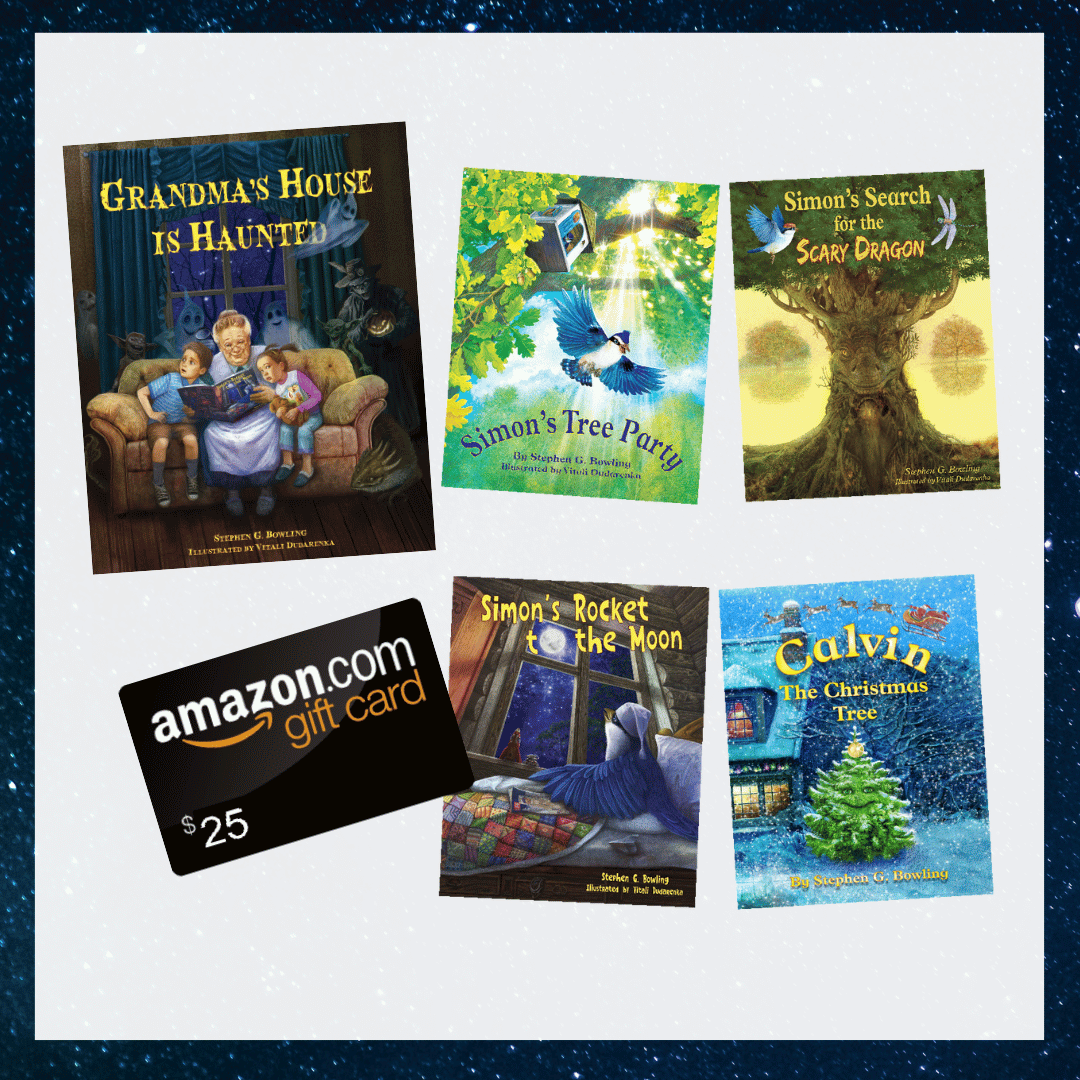
Enter for the chance to win a set of five books by Stephen G. Bowling, including Grandma’s House Is Haunted, and a $25.00 Amazon Gift Card!
One (1) grand prize winner receives:
– A paperback copy of Grandma’s House is Haunted
– A paperback copy of Calvin the Christmas Tree
– A paperback copy of Simon’s Tree Party
– A paperback copy of Simon’s Search for the Scary Dragon
– A paperback copy of Rocket to the Moon
– A $25 Amazon Gift Card
One (1) runner-up winner receives:
– A paperback copy of Grandma’s House is Haunted
– A paperback copy of Calvin the Christmas Tree
– A paperback copy of Simon’s Tree Party
– A paperback copy of Simon’s Search for the Scary Dragon
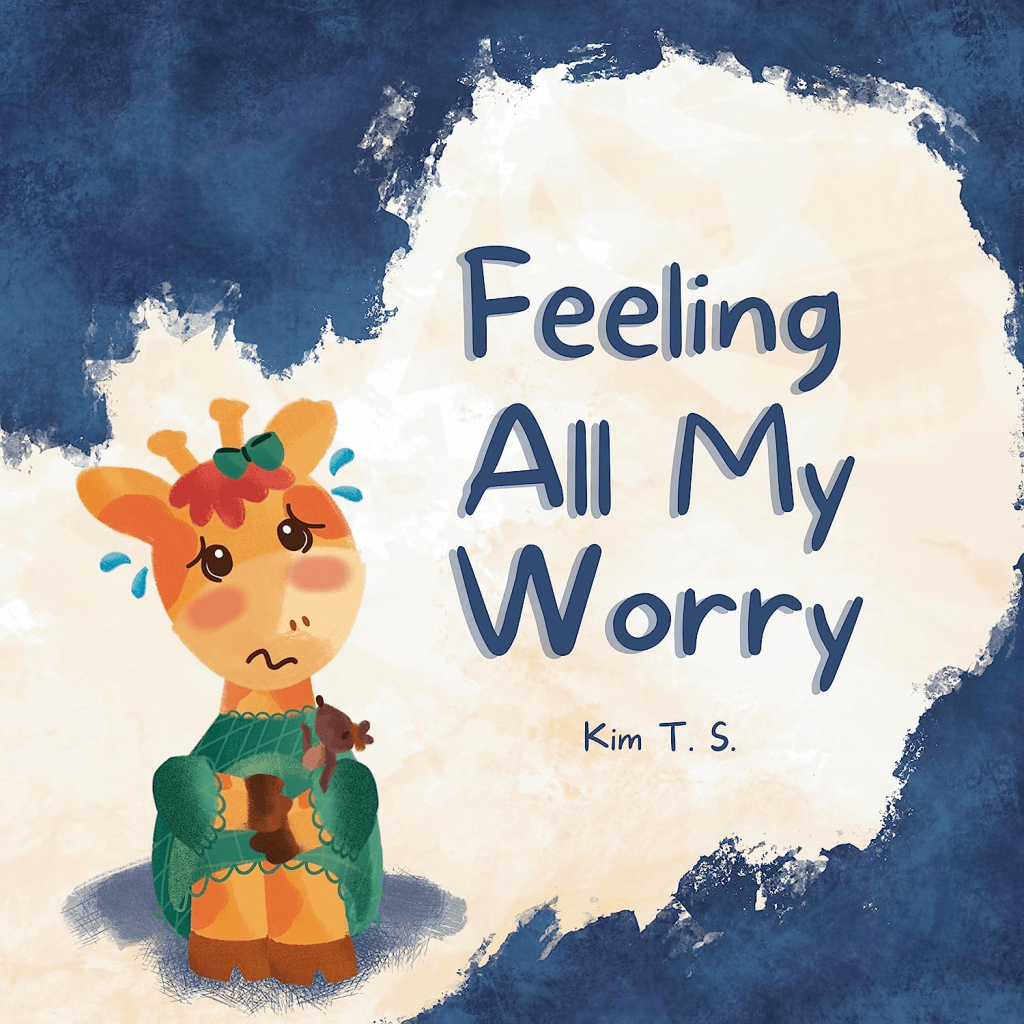
A beautifully illustrated picture book that explains the emotion of worry to even the youngest child.
The author covers the nature of worry, reassures children that it is a common occurrence, and presents examples of situations in which a young child might be afflicted with worrying. It instills a feeling of self-confidence and urges children to either take action or seek advice from an adult when facing the problem.
SUBSCRIBE TO THIS BLOG TO GET NEW BOOK REVIEWS EVERY WEDNESDAY AND SUNDAY.
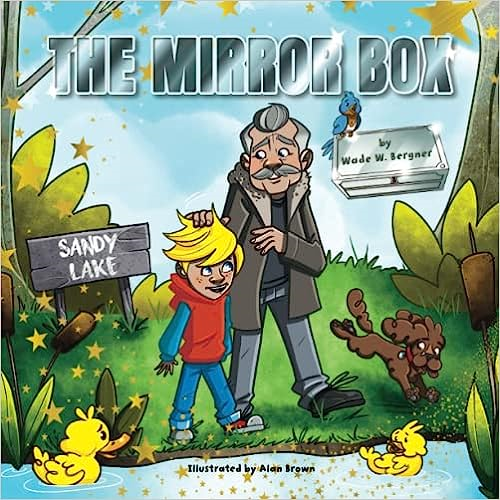
This is a tender picture book dealing with a topic families dread facing, the death of a loved one. In this book, the protagonist is a young boy who loves and enjoys spending time with his grandfather playing football, taking walks, sharing memories, and telling jokes.
One day his parents tearfully approach him with the news that his grandfather has passed away. The message confuses him. How could his grandfather leave without saying goodbye. Suddenly he remembers a gift that his grandfather gave him with the promise the boy would not peek. Will that gift be the key to relieving his grief?
I believe this book could be an important tool for parents or teachers with children who are grieving a personal or community loss. Recommended for elementary grade readers.
I received a copy of this book from the publisher and voluntarily decided to read and review it with my honest opinions for no compensation.
SUBSCRIBE TO THIS BLOG FOR NEW BOOK REVIEWS EVERY WEDNESDAY AND SUNDAY.
This rhyming picture book might be useful for parents of toddlers and preschoolers. The plot is more practical than exciting. A young girl moves through different types of foods and explains how each can become enticing. If read as a bedtime story or read aloud to an individual child or class, it could be an effective guide to a discussion about the benefits of a varied diet.
SUBSCRIBE TO THIS BLOG FOR NEW BOOK REVIEWS EVERY WEDNESDAY AND SUNDAY.


 December 13, 2023
 bamauthor







 Barbara Ann Mojica's BLOG
You must be logged in to post a comment.