Remy is a quiet, introverted child who suffers from disfigurement. He spends most of his time reading and hanging around his adopted father, Clint’s shop. Clint holds lots of secrets and magic in a special room that keeps Remy intrigued. Remy has benefited from the knowledge gained from patrons visiting the shop.
As Remy grows older, and ventures outside into the world with Clint, he will discover danger in many forms. Interesting characters, mythical creatures like dragons, ice-horses, and Phoenix lie in wait at every turn to trap and ensnare them.
This is the first book in a series. The fact that this book is part of the Vella program is a bit disappointing for those readers who prefer to binge read a series.
Recommended for older middle school, young adult, and adult audiences, particularly in the fantasy and coming of age genres.
SUBSCRIBE TO THIS BLOG FOR NEW BOOK REVIEWS EVERY WEDNESDAY AND SUNDAY.
If you have listened to me on a podcast, watched one of my you tube videos, or read this blog, you probably already know how passionate I am about the importance of learning how to think both critically and creatively and the importance of passing down these skills to our children.
Today, I would like to explain in this short article, how to quickly develop your superpower using these two ways of thinking.
In this short report, I want to introduce you to an innovative way of thinking and problem solving that combines creative and critical thinking. These two approaches are very different. Each of them has advantages and disadvantages. By combining the two, you can tap into the power of both.
Let’s start by taking a look at creative thinking, what it is, and how we can start to think more creatively. The phrase most often used to describe creative thinking is “think outside the box.” I like to think about it as a way to think about something in a new and different way. Look for the not so obvious solutions not thought of by anyone else. Yes, it will be out of the box thinking, but it can be so much more.
Let’s look at an example of creative thinking. Suppose you just bought a new house, and between the cost of the down payment and renovations you had to make, you’re broke. Your neighborhood association sends you a letter that your yard needs to be redone to fit in with the overall landscape. There’s no money in the budget for landscaping. What do you do?
You have to get creative. The obvious answer is to do it yourself, but that takes time, money, and skill that you may not have. Some creative options may be to get in touch with an up and coming landscaping company to see if they are willing to redo your yard for free or at cost price in exchange for putting up a sign to advertise their business in your yard. If you have web design skills, you could barter those in exchange for the work. Think outside the box and come up with a creative solution.
To get your creative thinking cap on, you can ask yourself some interesting questions:
Start with what if. Keep it very open-ended. In this first brainstorming stage, no idea is too ridiculous or impossible to throw out. While the idea itself may turn out to be unusable, it may spark a creative thought that will lead you to the perfect solution.
Another great question to ask is “What else.” It encourages brainstorming and expanding on existing ideas. Last but not least, you can spark creativity by introducing an off the wall concept. For example, you could pretend that you have no income for the following year. How would you live and how would you pay for your home and renovations, including the yard? The solution may be to work on a side hustle like graphic and web design for small businesses in your area. That, in turn, will help you realize that you can pay for the landscaping by spending a few weekends on freelance projects.
Another problem-solving skill is critical thinking. It’s very different from creative thinking. Here the idea is to think logically and work from information and data collected. You start with the information gathering process and then sort and analyze it to find the best solution. You want to be as objective and unbiased as possible and come up with the best possible judgment based on the information you have.
For example, if you are a project manager for a construction firm, you would gather information on what you need on the job site and then order the materials at the best price you can find. Another example a little closer to home would be the critical thinking you use when you’ve lost your car keys. You start to search the house room by room, possibly retracing your steps until you find them. That’s a small-scale example, but it gives you an idea of what critical thinking is.
The significant advantage of critical thinking, as opposed to creative thinking, is that you usually come up with a workable solution. When you let your creativity run too wild, you end up with a fun potential solution but possibly not something that will work or even something you want to attempt to try.
Let me show you what I mean by an off the wall example that will illustrate my point. Let’s say you want to lose 25 pounds. When thinking creatively, you realize that the average human leg weighs about 26 pounds. Cutting one of yours off would instantly result in a 25+ pound weight loss. While creative, it’s also absolutely ridiculous.
When you switch to critical thinking, you gather data and information on various weight loss programs as well as how the biological process of burning body fat works. As a result, you fast intermittently, eat more whole foods, and start to go for daily walks. It’s a much more workable solution, isn’t it?
Think about some other times when you’ve used critical thinking to make important decisions. Maybe it was choosing the right health insurance or 401K plan. Maybe it was picking a house in a good neighborhood with great schools for your kids that fit within your budget. Maybe it was whether or not to make a big career move or relocate to a different area of the country. We use critical thinking skills all the time. They serve us well at home, school, and work.
Last but not least, we come to the fun stuff. In this section, we take a look at how we can combine creative and critical thinking to come up with out of the box solutions to problems that work. By combining both critical and creative thinking, we can take advantage of the benefits of both while avoiding the downsides.
Let’s go back to the silly weight loss example to show how this can work in action. Again the idea is to lose a fair amount of weight. Cutting off a limb is obviously not an option, but we can take a look at some of the reasons that make this an attractive consideration. We lose a set amount of weight, and we lose it in a set amount of time. That may spark a thought about tracking weight loss in interesting increments (like losing the equivalent of 3 packs of butter, or the equivalent of your arm’s weight). It may also inspire us to set a date for which we want to have x number of pounds gone. It may even get us to think about and consider surgical alternatives like liposuction or stomach stapling. While those may not end up being the right solutions for you, it’s good to include them and think about those options. You never know where they may lead you.
Looking into weight loss surgery may have you considering alternatives like fasting. At the very least, it will serve as a motivator if you want to avoid surgery at all costs.
In this case, we started out with creative thinking and then moved into critical thinking. We got a complete picture, collected a lot of data, and then analyzed it logically to come up with the best solution. That’s a great way to approach this process.
Another option is to start with critical thinking, then switch to creative thoughts to come up with more alternatives and more data sources. Then go back to critical thinking to determine what will work in the end.
By combining these two ways of thinking, we can come up with new and innovative solutions that will work. At other times we may find that the old tried and true way of doing things is popular for a reason. It may end up being the best possible solution. We won’t know that though until we’ve thought about it critically and creatively, working through all possible alternative options.
That’s why combining aspects of both critical and creative thinking is such a powerful strategy. Give it a try the next time you face a complex problem. Since switching between thinking creatively and analytically can be a little tricky at first, it can be helpful to sit down and work on creative brainstorming first. Get out a notebook and spend some time thinking of as many ideas as you can and write them down. Walk away for a bit and then get to work on the critical thinking part of the process, collecting more data, organizing it, analyzing it, and finally coming up with a workable solution. Rinse and repeat as needed until you find something that works well for you.
The more you get in the habit of practicing those creative and critical thinking skills and combining them, the better you get at it. Before long the entire process will become an integral part of how you approach problem-solving.
Want to learn how to become a problem solver today?
Social media has become an integral part of our everyday lives. Parents use it, just like their children. However, on average, teenagers are the ones who spend the most time on Facebook, Instagram, Snapchat, Twitter, and similar platforms.
This leaves many parents worried. Some are afraid that this habit will grow into an addiction, while others are concerned about cyberbullying, over-sharing, and an “all-about-attention” attitude.
Author Donna Lynn Hope asks an important question: “How different would people act if they couldn’t show off on social media? Would they still do it?”
If our children were to be born in more innocent times, without social media, would they be any different?
Consider these questions:
How do we know what our children are doing online?
Is there a way to control our child’s behavior on social media, without invading their privacy and breaking their trust?
How do we recognize if social media is negatively affecting our children?
This topic is complicated, and there are no simple answers. However, if you ask your child about the time they spend on social media, you might be surprised at how willing they are to talk about it.
When you speak with them about their emotions and challenges, and address potential issues in self-esteem, you may find that social media won’t pose such a threat to them.
Even so, you may still be wondering how you can safely explore your child’s secret life on social media.
These solutions will help:
Dignify their devices. If you want to limit your child’s social media usage, avoid taking away their device. They will find another one. Help them find effective ways to self-regulate, instead.
● Teens are aware of the consequences this habit creates. Encourage them to reflect on these consequences and focus on the impact social media overload has on their personal, academic, and other goals.
Ask about the apps. Ask your child which apps they spend the most time on. Is it Instagram, Facebook, or perhaps Snapchat? Once you find out, install those apps on your phone, too, and figure out how they work.
● Some apps have geolocation which can pose a real danger. Try to manage your child’s social media activity by informing them of the danger rather than imposing your opinion.
● Don’t be a manager, be a mentor.
Help them to protect their privacy. Talk about privacy settings on different social media accounts. Some teens are not aware of this option.
● Agree with them to accept only the followers and friends that they know personally. This is not an easy task for a teen because the number of followers is often the barometer of popularity.
● However, if they understand the necessity for well-managed online presence, this shouldn’t be a problem.
Talk about sexting. Parents find the infamous conversation about “The Birds and the Bees” just as awkward as children do. However, now you have another level to deal with – sexting.
● Teens can often confuse sending explicit messages and photos for intimacy that might not exist.
● Talk about what it means to have a healthy relationship and how to develop and maintain one.
Overcome social media prejudice. Many parents believe that social media is completely, or almost completely, bad. However, it is neither good nor bad per se. It’s a new form of communication.
● When parents talk to their children about social media from this standpoint, the child is likely to withhold and hide information.
● Genuine curiosity and an open mind about your child’s interest in social media can make a significant difference.
Care about their emotions. Teenagers want their opinions to be heard. This especially goes for the things they’re passionate or angry about. Social media offers instant feedback to their posts, which makes kids feel listened to, validated, and acknowledged.
● However, if you offer empathy for challenges your child is facing, you can provide listening and validation inside of your family, too. This will give you an insight into what your teen posts on social media and an opportunity to help them self-filter.
When your child asks you for the first time if they can open a social media account, avoid judging them or jumping to conclusions. Accept their need to engage in such community-based way of communication, talk about it, and help them build a safe profile.
Teach them how to protect themselves and what to expect.
You’ll never have all the information about their activity, but if you’re interested and understanding, you might get just the right amount.
My Very First Friend: A Rhyming Picture Book About a Boy and His Dog
Written by Kristina Sheldon
Illustrated by Jillian Dister
Many first-time parents already have a dog in their home when their first child arrives. This picture book features a young boy reflecting on his early experiences with the family dog. That pet became his very first friend and protector.
The simple rhymes and soft illustrations appeal to babies, toddlers, and preschoolers. It is a nice memento for dog-loving families with a young child.
SUBSCRIBE TO THIS BLOG FOR NEW BOOK REVIEWS EVERY WEDNESDAY AND SUNDAY.
Best Practices for Designing a User-Friendly Website Navigation and Layout
Make your site easy to navigate and you’ll see more conversions, improved SEO, and stronger relationships with your audience. Here are some best practices you can implement today to create a website with user-friendly navigation and layout.
Keep It Simple
Prioritize and organize site elements by relevance
Minimize clutter and unnecessary design elements
Consistent Design
Maintain design consistency across all pages
Ensure uniformity in navigation elements
A Clear Hierarchy
Establish clear visual hierarchy for content and navigation
Use visual indicators and drop-down menus for primary options
Breadcrumb Navigation
Use breadcrumb navigation for user location tracking
Represents categories, subcategories, filters, tags, user path
Raising a child is challenging. Raising a happy and confident child is even more challenging! Each child is different and will require a unique approach.
Answer these questions to gain a better perspective of your situation.
1. How do I define success? What traits and skills does my child need to be happy, confident, and successful?
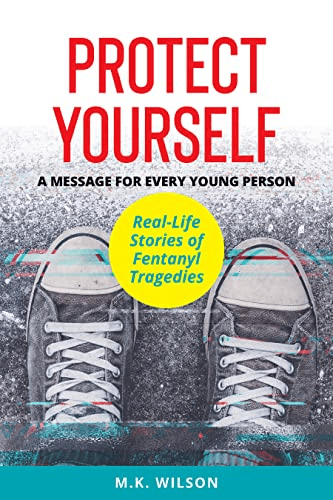
This short book contains a powerful message for tweens, teens, and young adults. It contains eleven tragic stories with photographs of young people who died too soon. They are just like the person who lives next door. Some of them had previously experimented with drugs, but many became victims of fentanyl given to them by friends or drug dealers who had laced pills with deadly fentanyl.
The author includes photos of the victims which highlight their personalities. A successful model, athletes, musicians, honor students: lives snuffed out before they had the opportunity to bloom. Letters from their parents magnify the loss experienced for each family. Wilson’s bottom line is that each young person must PROTECT THEMSELVES. No one can rely on a promise or the word of a “friend” who might be an enemy in disguise.
All of us can work together to wipe out the fentanyl epidemic. Take the first step today by reading this book.
SUBSCRIBE TO THIS BLOG FOR NEW BOOK REVIEWS EVERY SUNDAY AND WEDNESDAY.
Reading comprehension is essential to success in school and in life. You play a major role in helping your kids retain the information they read. There are basic and more advanced strategies that any parent can use to assist their children in this area.
Basic Steps to Strengthen Comprehension
Make it fun. Your child may already feel uneasy if reading is an area of weakness. Project a calm and happy attitude and even try to turn reading into a game.
Practice. Practice. Practice. Encourage your children to take advantage of every opportunity to test their reading skills. In addition to books, they can read street signs and cereal boxes.
Select materials that match the reading level of your child.People retain material best when they can read at least 90% of the words. Otherwise, they’ll get distracted by asking questions or trying to figure out the meanings of unfamiliar words.
Choose subjects your kids love. It’s easier to get your kids to read if you keep their passions in mind. Browse your local library for new books about dinosaurs, fairy princesses, or any other area of interest.
Create a summary. Ask your child to recap what was just read. If they struggle, prompt them gently by dropping some clues. When they get it right, praise them for doing a great job.
Take time off. Small children and even some adults have limited attention spans. Alternate between reading and other activities such as baking cookies or taking a walk.
Break long texts down into smaller segments. Approach a large textbook a few pages or one chapter at a time. You can gradually increase the length of reading assignments as your child progresses.
Find a comfortable reading spot. Designate a special area for reading. It could be the corner of the living room couch or while sitting at the dining room table.
Discuss the reading material. Encourage conversation about whatever you and your child are reading. Question one another and share your impressions.
Supplement reading with other activities.Generate more enthusiasm by combining reading with other special activities. This will give your children something to look forward to. If you’re reading a book about the American Civil War, you could plan a family outing to a local museum or even Gettysburg.
Read aloud to each other. Take turns reading aloud to each other. Kids learn faster when they hear and see words at the same time.
Go back and re-read. Let your kids know that a smart student goes back and re-reads sections that they find difficult. Tell them that even adults do this.
Advanced Steps to Strengthen Comprehension
Scan the text before reading. Give a complicated textbook the once-over before you plunge in. Suggest that your kids focus on the chapter titles, section headings, and any words in bold or italics.
Take notes. Purchase a memo pad and sticky notes so your children can jot down thoughts and questions as they read. This is called active reading. Older kids may be more comfortable taking notes using their eBook reader.
Experiment with inferences. Explain what inferences are and how to use them. Making an inference is when you draw conclusions based on clues in the text and your own experiences.
Spot flag words. Talk with your kids about how flag words help you to understand a text by establishing word relationships. Give examples such as analogies, cause and effect connections, or comparing and contrasting.
Map the story. Some readers have a more visual learning style. These kids may benefit from drawing squares or circles and filling them in with elements of the story such as characters, plot, and theme.
With skillful guidance, even children who are reluctant to read can discover the joys of reading for pleasure. As a parent, you’re the best role model and instructor for helping your kids to build reading comprehension skills and love of literature for a lifetime.
The ability to set goals and achieve them requires mustering up the courage to take responsibility for your life. That involves putting yourself first. By putting yourself first, you are simply making it a priority to take care of your mental, physical, emotional, and spiritual needs.
Creating the life that you desire is no one else’s responsibility but yours. You cannot do that if you keep getting in the way of yourself by thinking and caring too much about others. No doubt, caring for the needs of others is a natural human instinct, but it should never be to your detriment.
Many people are oblivious to the realization that they are the architects of their fortunes. They like to believe that putting the needs of others first, before their own, follows a universal moral code of conduct that you must adhere to, the failure of which makes them less human or less fortunate in life.
There are various reasons why people believe that putting the needs of others ahead of their own is the best and only way to live. They may think people will stop liking them, or that being a tireless caregiver gives them a sense of purpose and fulfillment. Some sincerely feel responsible for others, or worse, they don’t feel worthy of making themselves a priority.
Whichever one of the above categories you may find yourself in, the good news is that you can reset your thinking. Sadly, many people today suffer from thoughts of negating their own needs for the benefit of others. It is, however, essential to know that this thinking is false. You need to unshackle yourself from them to successfully take charge of your life and fully accomplish your goals.
Rather than confining your thoughts to the preconceived notion of scary consequence that would supposedly befall on you if you put yourself first, it is much more reassuring to focus on the numerous benefits guaranteed by putting yourself first. The importance of this is tied to many wholesome benefits some of which include:
Being more productive
Being happier and more joyful
Having more energy
Receiving more respect from others
Improved relationships
Experiencing less fear
Suffering from less stress
Feeling less resentment
Experiencing less depressed
These are the key areas where you stand to benefit if you learn to put yourself first. In this report, we will be looking at various healthy ways to put yourself first to gain the many wonderful benefits.
Strategies for Putting Yourself First
Below are some healthy ways and tips that can help you develop the habit of putting yourself first without burning bridges or negatively affecting your energy, enthusiasm, and motivation. Following them will help you achieve your goals, protect your mental and physical wellbeing, and overcome even your biggest challenges.
Choose Your Purpose
Having a clear purpose in life is essential. It is the simplest, most basic thing every person needs to live a fulfilling and satisfying life. Without a clear sense of purpose, you will end up living your life haphazardly. Your purpose also makes it easier for you to say ‘No’ to people and things that do not align with your highest good. Being aware of your life purpose and living it helps you identify those things that you need to do and when you need to do them. By consciously reaffirming your purpose regularly, you will be inspired to multiply your efforts of taking action to see your purpose fulfilled.
Live by a Vision
Putting yourself first also requires that you develop a clear vision of the life that you want to lead. A vision keeps you focused on the journey of your life. A clear vision will allow you to effectively prioritize your tasks and projects as the important things will align with your purpose and vision of your ultimate life. To get clear about your vision, start by reflecting on these three questions:
Who do I want to be?
What do I want to do?
How do you want to feel?
If you are unsure about your vision, ruminating on these questions will assist you in getting clear about what you want out of life.
Set Personal Goals and Plan
Setting personal goals is a wise way to ensure your vision becomes a reality. Goals make the realization of your vision much more achievable and will keep you motivated and focused on what you want out of life. After taking the time to set your goals, set aside regular time to plan how you will achieve each of them.
Learn New Skills
As you draw up your goals and develop your vision, you may find you need to learn new skills to make your ideal life a reality. Take some time to identify those areas that you may be lacking in knowledge and skills. Then take proactive steps to bridge the gap between your present level and your desired level regarding your knowledge and skills.
Set Personal Boundaries
Setting person boundaries is a skill you need to master when learning how to put yourself first because you will need it a lot on every step of your journey. That is especially true if you tend to be a people-pleaser. Others are used to you backing down and giving them what you want, so you’ll need to stay strong. Look them in the eye and kindly say, “No, thank you.” Even when they try to convince you to think otherwise, practice sticking to your decision by not get pressured into consenting. Setting personal boundaries is a vital skill because it enables you to defend your time and your rights which is an essential component of putting yourself first.
Get Exercise
Putting yourself first isn’t only about goal setting and getting ahead. It’s also about taking the time for self-care. After all, if you don’t take care of your health, you’ll be unable to live your purpose or fulfill your life’s vision. Put yourself and your health first by starting a program of regular exercise as soon as possible if you aren’t already doing so. Engaging in a brisk daily walk is all that’s needed to improve and maintain your health.
Eat Healthily
A healthy diet is equally as important as your body’s need to exercise. Eating a nutritious diet is a huge part of taking care of your health and putting yourself first. If your diet needs a major overhaul, take it one step at a time and work your way up to your ideal diet. Remember, putting yourself first is about being kind to yourself.
Sleep Enough
Getting sufficient sleep is another essential component of putting yourself first. It is also necessary for boosting your performance and replenishing your energy. By getting enough sleep, you will be better equipped to face the hurdles of the new day with greater confidence, energy, and enthusiasm. Never allow anyone or anything come between you and the need to get enough sleep.
Schedule Relaxation
Sometimes you may be lacking the energy you need to live your ultimate life. Rather than trying to push through such times, it is better to maximize your relaxation and recovery. You can engage in activities that will help reduce fatigue and replenish your energy, such as meditation, yoga, massage, or a quick nap. If you find you run low on energy and motivation on a regular basis, start scheduling relaxation or downtime into your day. A consistent relaxation routine will keep you on more of an even-keel, so you don’t burn out.
Journal
Apparently, you have 60,000 or more thoughts per day. When you feel you have a lot to do and you are overwhelmed with too many ideas, journaling will help clear your head. Journaling can also lead to better self-awareness, which is the foundation of putting yourself first. You can journal any way you wish—with paper and pen or by using an app. You might choose to journal every day or only when you feel overwhelmed or unsettled. Whatever works for you is perfect.
Practice Gratitude
Take some time each day to reflect on the positives in your life. It’s easy to focus on the things we’d like to change and neglect to be appreciative for all we have. It is very important to have a realistic perspective on your life and identify the positives for the sake of your health and wellbeing. As you find the time to write down and reflect on all the things you are grateful for each day, you will reduce your stress levels and naturally find more and more to be grateful for in your life.
Conclusion
Putting yourself first is something you must make a conscious effort to do. You must fill your cup first, or you will end up with nothing left to give to others. Even when you face negative reactions from people who feel that you are selfish for putting yourself first, remembering the tips outlined above and applying them will give you the wherewithal to go on regardless and live the life that you desire.
If you enjoy historical fiction and American Revolution nonfiction, you will love this book. Sergeant focuses on three female members of the Culper Spy Ring, George Washington’s main source of spying on British intelligence during the war.
Readers follow the lives of three women, Elizabeth Burgin, Margaret Coghlin, and Sarah, Sally Townsend. Slowly and inextricably, each of these woman’s lives entertwine with more familiar names in history like Aaron Burr and Benedict Arnold.
An intriguing and compelling read for fans of spy novels and historical fiction featuring lesser known but important historical figures.
SUBSCRIBE TO THIS BLOG FOR NEW BOOK REVIEWS EVERY SUNDAY AND WEDNESDAY.

 August 20, 2023
 bamauthor
 Comments Off on SHOP TALK











 Barbara Ann Mojica's BLOG
You must be logged in to post a comment.