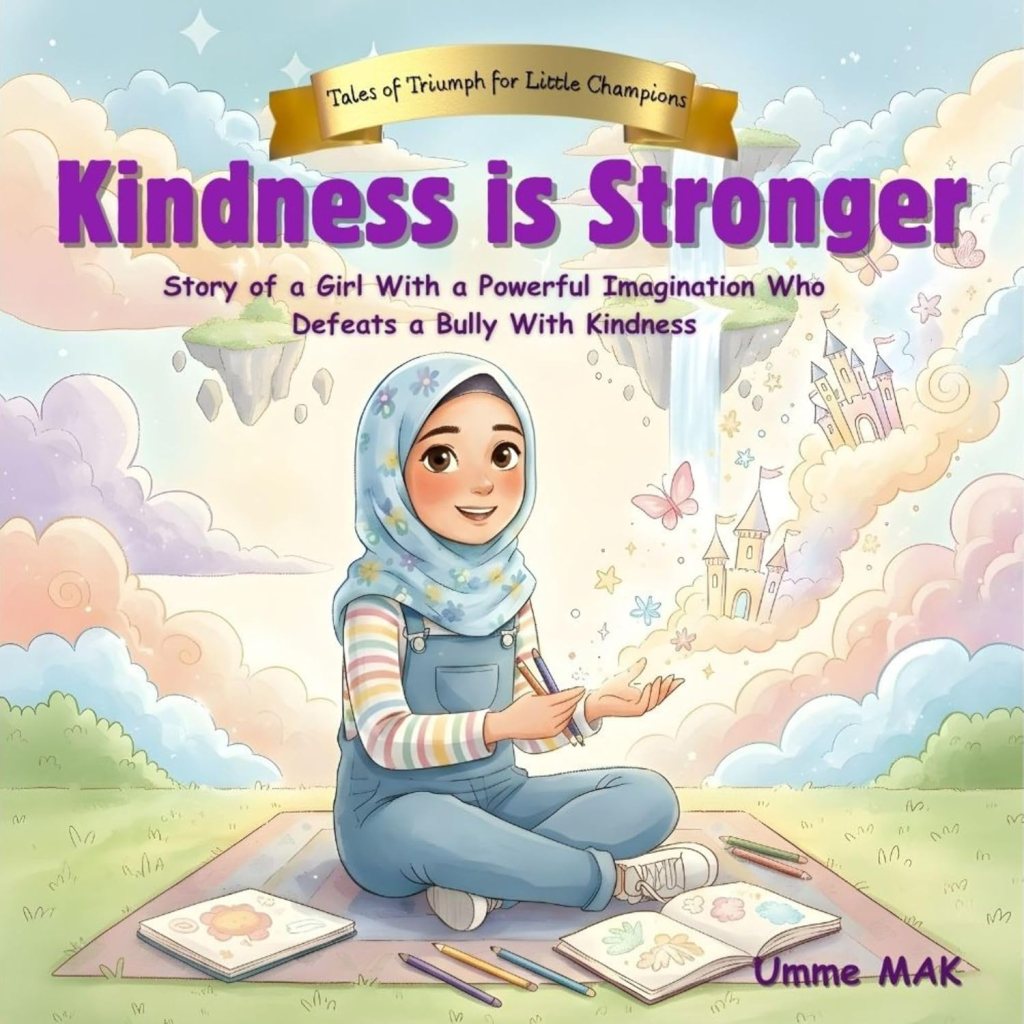
Kindness is Stronger | Tales of Triumph for Little Champions: A Girl With a Powerful Imagination Who Defeats a Bully With Kindness | Story for Kids about Self-Control, Inner Strength and Compassion
Written and Illustrated by Umme MAK
This book is part of a series to teach children about themselves.
Kadijah is a child who possesses a powerful imagination. She illustrates wonderful stories. Mike is the class bully. He uses his size and strength to control the other children.
One day, Kadijah is confronted by Mike while drawing in her notebook. She is upset but unafraid. Kadijah decides rather than cower, she will find a way to change Mike’s behavior with kindness. For a time, she is unsuccessful. Gradually, Kadijah teaches Mike how to understand his actions and find the strength to change his behavior.
The author uses large print for easier reading, but also a chapter format that allows children to imagine they are experienced readers. Bonus features include coloring pages and bookmarks.
A worthwhile series to educate and inspire students in the primary grades.
SUBSCRIBE TO THIS BLOG FOR NEW BOOK REVIEWS EVERY WEDNESDAY AND SUNDAY.
The Fairies – Petal & Nettle and The Best Story Ever: A magical picture book celebrating friendship, imagination and the joys of storytelling!
Written by Kirstie Watson
Illustrated by Tilia Rand-Bell
A cute picture book about two friends who are fairies. When Nettle decides he will write the best story ever, he soon gets stuck.
Enter his friend Petal. She coaxes Nettle not to give up by revealing one at a time the elements necessary to a good story. Characters, setting, plot, and a problem to solve.
Together these two friends, along with others that they meet during their adventure, inspire young readers to persevere and never give up on their dreams. They also teach children the qualities and value of true friendship.
This book is appropriate for elementary and middle grade readers.
SUBSCRIBE TO THIS BLOG TO RECEIVE NEW BOOK REVIEWS EVERY WEDNESDAY AND SUNDAY.
Animal Antics: A Rhyming Book of Creatures Big and Small
Written and Illustrated by Tamar Tepper Kochen
A silly rhyming picture book, the first in a series about animals doing absurd things. A few examples are a deer with a rainbow ear, a ferret dressed as a carrot, and a flamingo who loved to play bingo.
The rhymes are short and easy to remember, the illustrations huge and vibrant. Children are encouraged to make up their own silly rhymes with several scenarios included at the end of the tale.
I think that preschoolers and primary grade children who enjoy books about animals and silly stories will especially enjoy this book. It’s fun as a read-aloud or a bedtime story.
SUBSCRIBE TO THIS BLOG FOR NEW BOOK REVIEWS EVERY WEDNESDAY AND SUNDAY.
Dragon Cat Wins the Lottery(The Make-Your-Own Ending Collection)
Written by Audrey Beth Stein
Illustrated by Alina Lutaeva
This is a cute interactive book for elementary school children that encourages both artistic and storytelling skills and is part of a series.
Dragon Cat decides to buy a lottery ticket hoping to win $100. When he discovers he has won the next day, he gets the surprise of his life, discovering 100 otters in his kitchen. The book is filled with black and white illustrations that can be colored in the paperback edition. Yet, that is not the best feature of the book because the author leaves the ending of the story blank, allowing the young reader to become an author by finishing the story and becoming co-author of the book.
The book is a good choice for a reluctant or beginning reader. It could also be used with a group to encourage multiple outcomes to problem-solving.
Especially recommended for ages four through eight.
SUBSCRIBE TO THIS BLOG FOR NEW BOOK REVIEWS EVERY WEDNESDAY AND SUNDAY.
Copywriting Essentials: 4 Myths That Keep You from Writing Compelling Copy
You’re stuck. You’re not seeing the leads you want for your business. You’re offering quality products and great services but only a few people are buying from you.
You might be tempted to believe that the problem is that your platform isn’t big enough or that your website isn’t interactive enough. But for many small business owners and solopreneurs, these problems are usually the result of poor copywriting.
The good news is that persuasive copywriting is an essential skill that can be learned. But first, you have to understand that some things you might believe about copywriting are actually myths that are harming your business.
Myth #1: Copywriting is all about selling.
Some small business owners believe that copywriting is the equivalent of going to a cocktail party and screaming “Buy my product!” to every person you meet. This couldn’t be further from the truth. Copywriting is about so much more than selling your product or program.
Copywriting is about serving your audience. You can use persuasive copy to address your customers’ concerns, help them make smart buying decisions, and offer solutions to their needs.
Myth #2: Copywriting is all about action.
Many small business owners and solopreneurs think that every piece of content they create has to have a call to action, but that’s not true. Most of the time, you’ll be creating content to increase your customers’ awareness of your business. . This can be called the “know, like, trust” factor.
The ‘know, like, trust’ factor is about guiding your potential customers through the buying stages. In the first stage, the know stage, you’ll give potential customers content that informs them. In the second stage, you’ll share content that makes your brand likeable. The third and final stage is known as trust. It’s the point where your customers will decide whether they should purchase your productive or service.
Myth #3: Copywriting is all about you and your business.
Copywriting isn’t focused solely on you or even your customer. The best copywriting strikes a balance between “about you” and “about your reader”.
You want your copy to show your understanding of and compassion for your ideal clients’ situation. Your copy should highlight that your business cares and why your brand is the best one to choose.
Myth #4: Copywriting is all about making your brand look perfect.
Persuasive copywriting isn’t about positioning your brand as perfect. It’s about connecting with your reader on both an intellectual and emotional level. Your potential customers want to know about your expertise, but they also need to know that you understand them. One simple way to do this is to share stories about your brand. Don’t be afraid to include stories about your business’s failures.
Don’t make the mistake of thinking that your copywriting is set in stone. Even expert copywriters create several drafts before they find a version that truly connects with their readers. The important thing is to keep testing your copy until you find what works best for your business.
Journal Your Thoughts
Which of the copywriting myths do you struggle with the most? Why?
What’s your biggest challenge when it comes to copywriting?
Do you tend to make your copywriting all about you or all about your reader? How can you strike a better balance?
5 Steps to Reach Your Readers on an Emotional Level
When it comes selling yourself and your brand, it’s essential that you understand that your potential customers want to do business with people that they know, like, and trust. This is even more important if you’re a coach or service provider. Your potential clients may wonder if they’ll enjoy working with you, how you can help them, and if they’ll get their desired results.
This is where persuasive copywriting can help you. Copywriting will allow your ideal client the chance to know, like, and trust you. It also gives you an easy way to answer their questions before they even ask them. But before you start writing your copy, there are a few steps you’ll need to take.
Step #1: Identify Your Client
Describe your ideal client as detailed as you can. You need to be specific about their fears, frustrations, and feelings. Use forums and social media groups to see what words your ideal client uses to talk about their situation. Knowing how your potential clients describe what they’re dealing with will allow you to create copy that connects with them.You also need to think about what your potential client’s desired end result would look and feel like. For example, if you help overwhelmed working moms find time to prepare nutritious food to feed their families, then the end result might be less dinner time stress, more family time, and healthier bodies.
Step #2: Focus on your qualifications.
Next, think about how you’re uniquely qualified to help your potential clients. Describe why you’re qualified as a professional (education) and/or as a person (experience). You’ll want to offer proof of your qualifications in the form of diplomas, testimonials, and endorsements. These qualifications can be placed on the ‘home’ or ‘about’ page or a dedicated ‘testimonials’ page on your website and blog.
Step #3: Describe the milestones.
When you have a clear picture of what results your clients can expect from you, then you’ll want to think about the journey they’ll take. Try to describe the milestones your ideal client typically encounters during their journey. For example, if you’re a weight loss coach, one milestone might be losing the first ten pounds.
Don’t focus on just the good milestones. You’ll also want to consider the setbacks clients may face as well as the emotional aspects of their journey. For example, a setback might be gaining three pounds one week.
Step #4: Think about your clients’ objections.
Once you’re confident that you understand your potential clients’ journey, you need to take a moment to consider their objections. What hesitations might your client bring up when they’re ready to hire you? What are they afraid of if they take that first step? For example, if you’re a fitness coach that helps obese patients lose weight, you might find that potential clients are worried about visiting a gym for the first time.
When you understand these objections, you can offer solutions. Keep in mind that solutions don’t always have to be complex. You might simply tell clients that the first gym session is all about coming in and getting comfortable with the equipment, no workout required. Now, you’ve subtly eased a potential client’s objections to taking that first step toward fitness.
Step #5: Describe the action steps your reader would like to take.
Now that you know the journey your clients are on, it’s time to guide them to your product or services. You can do this by thinking about the action steps readers need to take when interacting with your content. For example, you might have a call to action at the bottom of your blog posts for joining your email list.
When you send emails to potential clients on your list, you might have a call to action at the bottom of each email that invites your subscribers to set up a free consultation with you. You want to continually invite your community to keep taking action. By doing this, you’ll have a list filled with valuable leads.
Understanding your client is the first step toward creating more persuasive copy. When you genuinely care about your clients’ journey, it will shine through in your copywriting efforts.
Journal Your Thoughts
Who is your ideal client? Why are you passionate about serving this client?
How will you be helping your ideal client? In what ways will you accomplish this (one-on-one coaching, webinars, etc)?
How will your clients’ lives be different after working with you and your brand?
Getting Started With Persuasive Copywriting: The First 3 Pieces of Content to Give A Makeover
When you’re ready to create some persuasive copywriting, you may be overwhelmed and wonder where to start. There are three places where your copywriting skills really matter and this is where you should start. Once you’ve mastered these three elements of your website, you can go on to tackle other areas of your site.
1. Your ‘About’ Page
The ‘about’ page on any website is usually the most visited one. That’s why it should be clearly labeled. Don’t use a cutesy name in the hopes that more people will click on it. You’ll just confuse your website visitors.
Your ‘about’ page should share your journey and cover why you’re qualified to help potential clients. Spin your journey into a story format that readers can relate to. For example, if you’re a business coach, you might share how you struggled to get your own business started for several years before finding success. By sharing your story, you’ll make it easy for your potential clients to relate to you and show them that you’re qualified to help.
2. Your ‘Services’ Page
Your ‘services’ page is your chance to stand out from other solopreneurs that offer similar services. But don’t cram every single service you offer on the same page. That will overwhelm visitors and they may leave your website before reading through all of the services you perform. That’s why it’s smart to have each service listed on a separate page of your website.
You want your service pages to show that you understand your ideal client and can deliver what they need. Then you should explain how you work and what end result your ideal client can expect. For example, if you’re a social media strategist, don’t tell potential clients that you can handle their Facebook advertisements. That’s vague and doesn’t describe what you can do. Instead, you might tell potential clients that you can increase Facebook ad conversions by 20%.
Now, include an easy next step, like joining your mailing list. Direct your visitors to your freebie sign up page with a helpful link, like this one: ===> Add Your Download Link to Your Free Report <===.
By doing this, you stay connected to potential clients that are interested in working with you but aren’t ready to hire you quite yet.
3. Your ‘Home’ Page
When it comes to your home page, you have less than seven seconds to make your first impression. You want that impression to be a good one.
When someone visits your home page, they should be able to tell immediately if they’re your ideal client or not from your copy. If you’re a social media strategist that works only with small businesses, then your copy shouldn’t be aimed at large corporations. It should be focused on small businesses and how you can help them.
Your home page is also your chance to state why you’re uniquely qualified to help. Don’t use the same wording you did on your about page. Instead, keep your qualifications to one or two sentences on your home page. If a visitor is interested in knowing more, they’ll click on your ‘about’ page for the full story.
Next, offer social proof on your home page. If you’ve guest posted on several popular blogs, share their logos. If you have testimonials from prominent clients, post those on your home page, too. If you’ve been interviewed in a magazine or podcast, be sure to add this information to your home page as well.
Before you post your new copy on your website, be sure to have a professional editor or proofreader look at it. An extra set of eyes can help you avoid embarrassing typos and make sure that your copy shines.
Journal Your Thoughts
How are you uniquely qualified to help your clients? Is this information on your about page?
How can you put more of your personality into your website or blog so that you stand out from other solopreneurs offering the same services?
What’s the story behind your brand? Does your copy showcase it or do you need to give some of your copy a makeover?
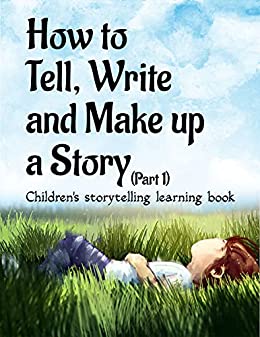
HOW TO TELL WRITE AND MAKE UP A STORY: CHILDREN’S STORYTELLING LEARNING BOOK PART 1
Rose Press House
An interesting approach to teaching the art of storytelling. In Part 1 of this series, readers meet Tom, a 12 year old boy who loves listening to stories. Tom, his uncle, spends lots of time doing telling Tom stories. One day, Tom suggests that they change things up. He asks the boy to tell him a story. The boy is at a loss. He says he does not know how to do that.
Patiently, Tom guides the boy step by step. Through their conversation, he guides readers through the process. First, Tom decides on the main character and describes him. Then he sets a moral and theme for his story. The boy decides on a name for his story and develops an outline to put the details that support his character and theme in order. Then the boy writes a draft of the first part of his story and shows it to an adult to read. But the story is not finished. The boy needs to complete the transitions, details, and supplementary characters that will provide a resolution or completion of the story. That will be coming in Part 2.
I liked this casual approach using storytelling as a vehicle not only to develop communication skills, but also to teach the steps necessary to write an effective story. Many middle-grade students who have difficulty organizing both their ideas and putting them down on paper will enjoy this unique approach to oral and written storytelling.
If you enjoyed reading this post, please subscribe by clicking on the word Follow or by hitting the orange RSS FEED BUTTON in the upper right-hand corner of this page.
This book is an adorable picture book that will inspire the creativity of budding young artists of any age everywhere. Pinky Doodle is a tiny bug who loves to paint her thoughts on everything she sees. One day she realizes that her drawings needed stories. So Pinky calls on her friends in the forest to share their stories.
Many animals of the forest like birds, butterflies, bunnies, caterpillars and others relate their tales to Pinky. She eagerly illustrates each of them with her doodles. By combining their talents, the friends had produced a beautiful composition.
This book is told in simple, crisp rhymes, accompanied by vividly colored illustrations. It is sure to please readers from preschool age on up. It will even put a smile on the face of adult readers.
If you enjoyed reading this post, please subscribe by clicking on the word Follow or by hitting the orange RSS FEED button in the upper right-hand corner of this page.
I recently read this book that I think both fiction and nonfiction writers will benefit by putting it on your reading list. Authors are storytellers. They reveal their soul to the world, whether that be creating fiction or talking about elements of the real world.
Here is my review of this thought-provoking book.
GETTING YOUR STORY OUT TO THE WORLD
THE STORY ADVANTAGE
Written by L J Bloom
If you want to effectively transmit your story to the world, this book will give you the tools to not only write but promote your story to your ideal audience. Nonfiction as well as fiction writers will find it useful.
Bloom begins by reminding us about the origin of storytelling, how the art has evolved over time, and the way stories need to be communicated in today’s world. The key to success is to make your story relevant to the type of audience who will benefit and relate to it. Bloom then explores the reasons we tell stories, and the many diverse types of stories that can be told.
The second part of the book gets into the nitty gritty of how to craft your story. That involves becoming clear about your audience and becoming clear about your message. Next, authors must find a way to make it pertinent to their audience. How can you make your message useful to them? A key ingredient is to get your readers emotionally involved in the story.
The last part of the book is the actual telling of the story. How does the storyteller use body language, voice, physical setting, and firsthand experiences to transmit the story in a memorable way to the listener? Only after accomplishing all these tasks will an author be able to successfully engage, inspire and influence her audience.
If you enjoyed reading this post, please subscribe by clicking on the word Follow or by hitting the orange RSS FEED button in the upper right-hand corner of this page.
Subscribe now to get in on the fun! See a preview of available episodes below.
Dorktales Storytime Podcast is classic children’s fairy tales told with a geek-ish twist! Jonathan Cormur is the host (and storyteller) of the family-fun podcast that featuring geeky-retellings of fairy tale classics and true tales about the Hidden Heroes of History. Think Fractured Fairy Tales meets Big Bang Theory and the History Detectives!
Find more on Podcast website: https://jonincharacter.com/dorktales/ You may recognize Jonathan from his work with his mom, Jodi, from Geek Club Books and Zoom Autism Magazine. His new podcast for kids, Dorktales Storytime Podcast, showcases his career as a successful voice actor who also happens to be on the spectrum.
CURRENT EPISODES:
Dorktales Storytime Podcast EP1: What are Dorktales?
Jonathan Cormur introduces himself as the host and storyteller of the Dorktales Storytime Podcast and answers the question you may be pondering, “What ARE Dorktales?”
Dorktales Storytime Podcast EP2: Three Little Hogs?! By Karen Simpson Gardiner
The Three Little…HOGS? Who’s heard of that? According to Mr. Redge, our Dorktales sidekick, it’s a classic tale from the fairy tale cannon! Come hear our storyteller recount the story of hedgehogs Porky, Percy and Peregrin, and their ultimate triumph over the dastardly wolf using a glue pot, rapier and a wheelbarrow. According to Percy, “It’s epic, man!”
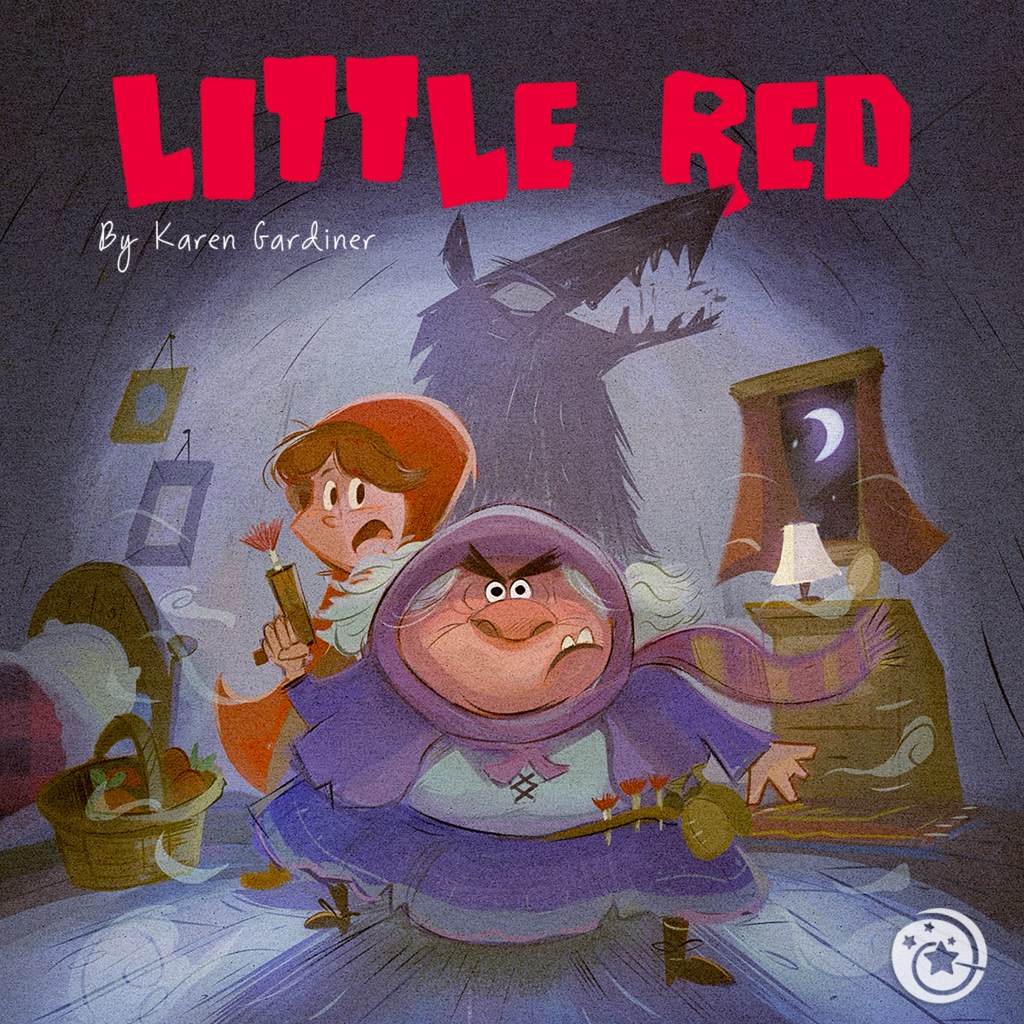
Dorktales Storytime Podcast EP3: Little Red By Karen Simpson Gardiner
La, la, la, la-la! Have you heard the tale of Little Red Riding Hood? You know, the one about the sweet, innocent little girl in the beautiful red cloak who out foxes the big bad wolf? Well forget that one and think ninja granny with a stealthy rescue plan and fierce tranquilizer dart skills.
Dorktales Storytime Podcast EP4: RumpleTaleSpin By Amy Thompson
“Rump, who?” asks Mr. Redge as Jonathan spins the tall tale of Daphne, the Miller’s daughter, who must spin thread into gold for a greedy king. It’s an epic yarn involving a magical lawn gnome, a clever guessing game and a Wizard of Oz ending!
Dorktales Storytime Podcast EP5: Mary Golda Ross Hidden Heroes of History By Molly Murphy
The true tale of a woman who reached for the stars! Mary Golda Ross was one of the first women to rise in the ranks of engineering and one of the first Native Americans in the field. Her work in the early days of spaceflight was very important and is still to this day.
Dorktales Storytime Podcast EP6: The Prickly Duckling By Amy Thompson
After the quacks and croaks of laughter from his siblings and bullying bullfrog, the poor little duckling waddles off through the marshes to find someone who will accept and love him. What about the gaggle of goslings? Or the brood of chicks? “No one understands me! I’ll never fit in,” he cries until he bumps into the best version of himself.
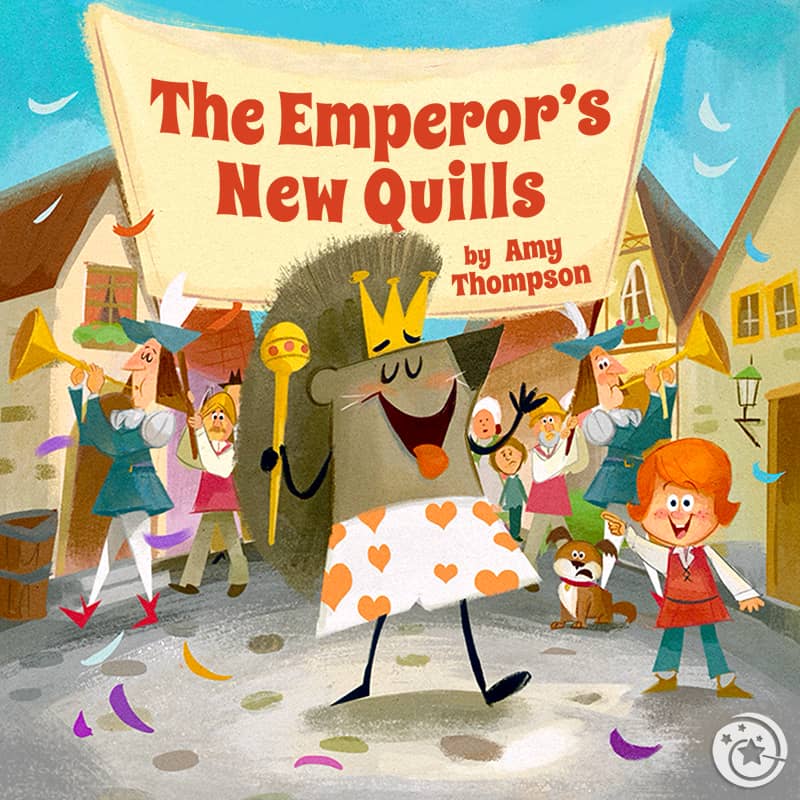
Dorktales Storytime Podcast EP7: The Emperor’s New Quills By Amy Thompson
Is the fancy fabric for the emperor’s new clothes really invisible to those who are not worthy? Or is this a case of double-dealing dupery by two wily weavers for the right boy to blurt out the naked truth.
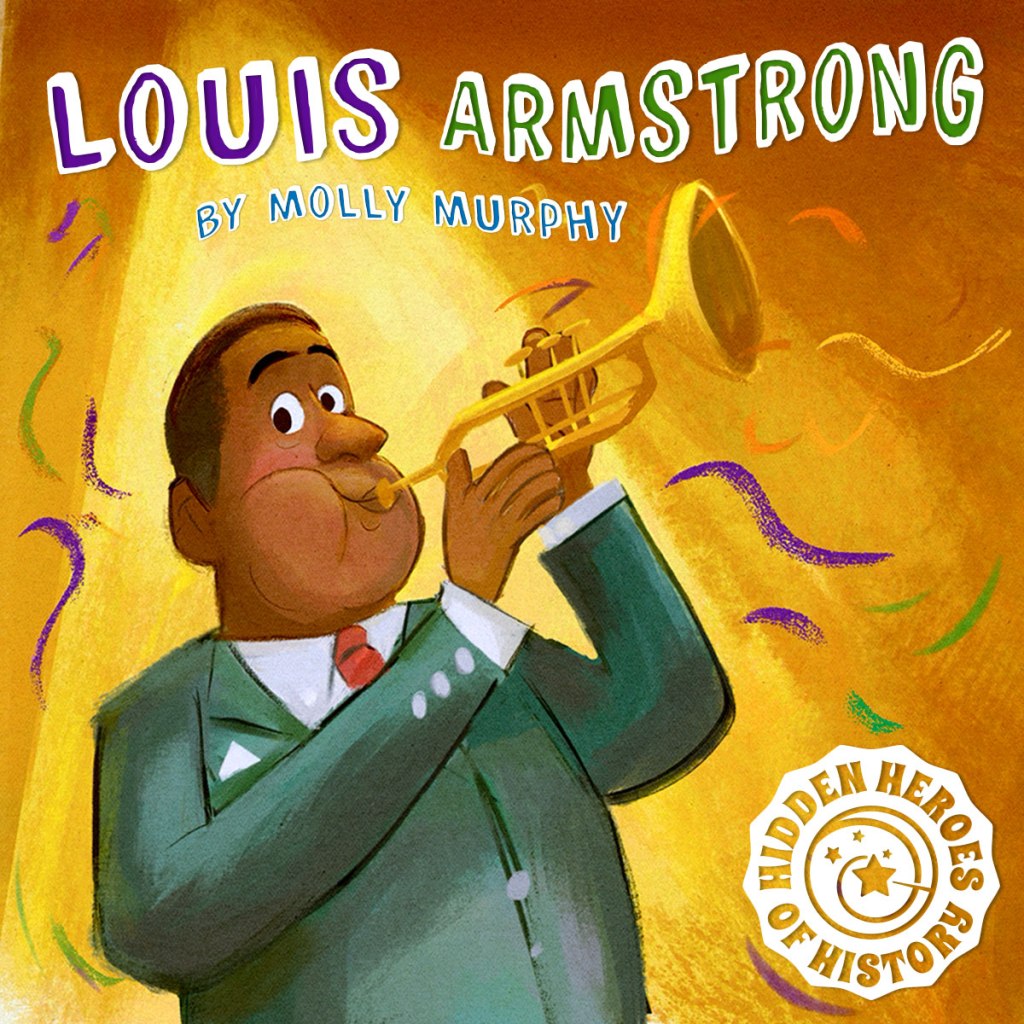
Dorktales Storytime Podcast EP8: Louis Armstrong Hidden Heroes of History By Molly Murphy
A tale of Mississippi river boats, parasol parades and breaking racial barriers! A man that built a music legacy and a legacy beyond music—Louis Armstrong transformed jazz music and became the beloved “Ambassador Satch” who performed all over the world! So much of his life was about a deep passion for music and using it to bring people together.
 March 1, 2026
 bamauthor
 Comments Off on TURNING FEAR INTO FRIENDSHIPS










 Barbara Ann Mojica's BLOG
You must be logged in to post a comment.