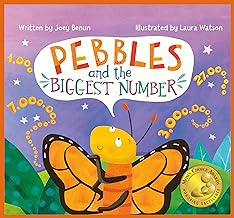
Benun has managed to combine storytelling with an effective presentation of stem concepts, large mathematical numbers, and ecology in one easy-to digest- picture book.
This book encourages even the youngest child to stretch these skills. Pebbles, a butterfly with an insatiable curiosity, sets out to travel the world to find the largest number. Along the way, she travels through deserts, rainforests, oceans, and space. At every stop readers discover fun facts, scientific knowledge, and learn about the animals living in each habitat.
Children learn a ton of information without even realizing it. This book can be enjoyed over and over, revealing something new in each page.
I would highly recommend this book to homeschoolers, teachers, and parents of elementary and middle-school students. Warning! adults will be expanding their brains along with the young reader.
SUBSCRIBE TO THIS BLOG FOR NEW BOOK REVIEWS EVERY WEDNESDAY AND SUNDAY.
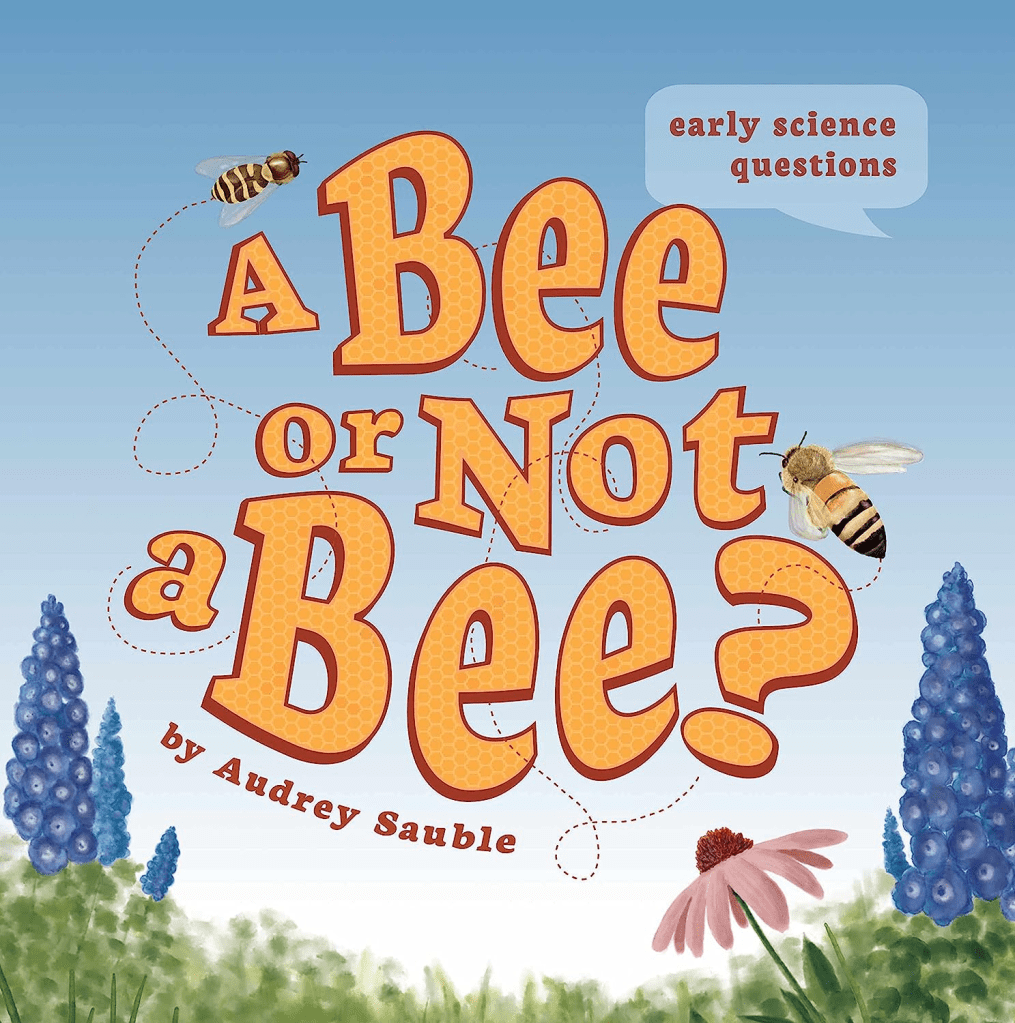
A wonderful nonfiction picture book that encourages elementary age school children to become young scientists.
The illustrations are colorful and fun but the biggest value of the book is the amount of information crammed into its short length. Readers not only learn about the types, habitats, and daily lives of bees but they are contrasted with many different types of insects. Children will learn about the likenesses and differences as well as learning about both bees and insects.
The author includes the scientific names for each and provides an interactive activity for matching pictures with information. They are also given a bee survey chart that they might complete by exploring bees in their own neighborhood.
A wonderful resource for parents and teachers to place in their home or school libraries.
SUBSCRIBE TO THIS BLOG FOR NEW BOOK REVIEWS EVERY WEDNESDAY AND SUNDAY.
Publisher: Greenleaf Book Group | ISBN-13: 978-1626349759
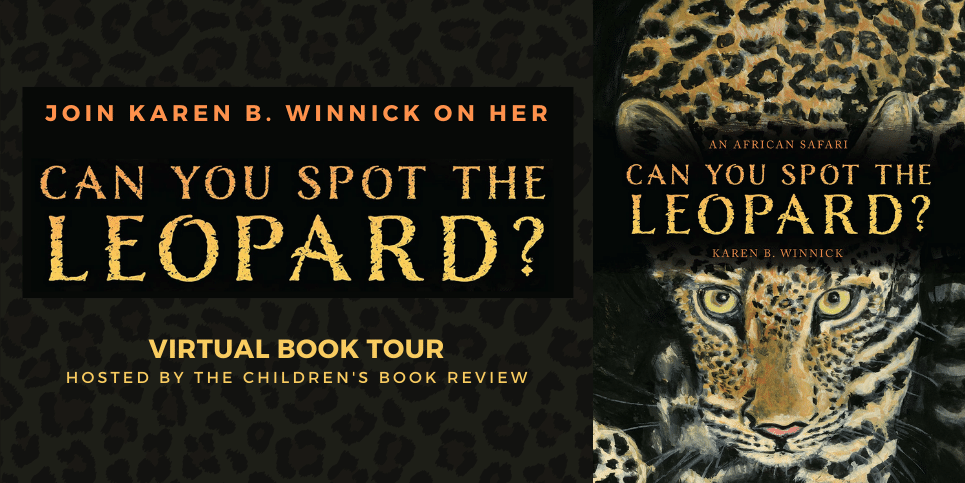
Publisher’s Book Synopsis: Can You Spot the Leopard? is author/artist Karen B. Winnick’s newest picture book, an adventuresome African safari presented through poems and full-color paintings. Readers begin at sunrise, climbing into a jeep for a bumpy ride to view the wondrous animals as they would on a real safari. All the poems are based on real observations of what animals do in the wild, related in an accessible way. There’s even a sighting, finally, of the elusive leopard, before returning to safari camp under a starry night. At the back of the book, further information is related about each animal. A fun, informational, educational adventure to read and reread.
Ms. Winnick is an animal enthusiast, president of the Los Angeles Zoo Commission, and author of more than a dozen picture books, including Gemina: The Crooked-Neck Giraffe, How Lucky Got His Shoe, and Mr. Lincoln’s Whiskers.
KAREN B. WINNICK is the author of more than a dozen picture books for children, most of which she illustrated. An animal lover, she serves on several boards devoted to the well-being of animals. She’s a graduate of Syracuse University, mother of three grown sons, grandmother of eight, and minder of five pups.
A beautiful adventure for the child with an active imagination. Winnick deftly authors the entire book in crisp rhymes that invite reading the tale over and over.
The illustrations are large and colorful, popping off the glossy pages. Young readers learn about animal habitats, food, family life, and survival. Children may have knowledge of elephants, rhinos, and giraffe but others like bushbucks, marabou, and bat-eared foxes are sure to intrigue the imagination.
Winnick presents the dangers in a non-threatening way. For adventurers who want to research, the glossary contains more information about thirty safari animals. This book is highly recommended as a reference book for a home or classroom library. It has appeal for elementary school and middle-grade readers, librarians, and teachers.
I look forward to reading more books by this talented author and illustrator.
GIVEAWAY
Enter for a chance to win an awesome Dooney Press Gift Pack of books and more fun goodies!
Ten (10) winners receive:
– A signed copy of Can You Spot the Leopard? An African Safari
This book discusses the two family groups of sloths which are further broken down into six species. Annett presents information about what they eat, where they live, their relatives, the dangers they face, how they move, and daily living habits. There are lots of color photographs that display sloths in all sorts of positions and situations.
Annett introduces the book by explaining that she feels all the creatures in her book series are part of God’s amazing plan. She urges her young readers to marvel at nature’s beauty. The rest of the book is a nonfiction narrative.
The Fun Sloth Facts is a summary of the most important facts contained in the book. It is a good starting point for those who wish to do a report or additional research on sloths. A glossary is helpful for students who may not be familiar with some of the more scientific terms.
I would recommend the book to readers of all ages who are interested in these curious, friendly creatures. Children of all ages will enjoy looking at the photos and learning about them.
If you enjoyed reading this post, please subscribe by clicking on the word Follow or by hitting the orange RSS FEED button in the upper right-hand corner of this page.
DOLPHINS: Fun Facts and Amazing Photos of Animals in Nature
Written by Emma Child
I have read several of the amazing animals books written by this author. Who can resist looking at the face of a dolphin? Child begins by describing the general features of dolphins like smooth skin and bottlenoses and then goes on to explain there are many variations. I had never heard of the dalmatian dolphin and was surprised to learn that dolphins migrate each year.
Child’s discussion of the way dolphins communicate by echolocation and a whistle sound that is unique to each dolphin is fascinating. I learned that dolphins use sea sponges to protect their mouths from spiny fish and that some dolphins have more than one hundred teeth. Children will be surprised to learn that dolphins live in families like theirs and that they delight in playing with each other. The dolphins’ intelligence level is second only to that of a human and they are good problem solvers.
This book is informative and a great research tool for children in the elementary or middle grades. Only one thing disappointed me. The photos on the Kindle can be enlarged by double-clicking, but this was not simple to do and once enlarged some of the photos looked blurry.
Recommended for dolphin lovers everywhere regardless of age.
If you enjoyed reading this post, please subscribe by clicking on the word Follow or by hitting the orange RSS FEED button in the upper right-hand corner of this page.
All My Relatives Are Dragons: Picture Book for Kids About Dragons
Written by Alice Cussler
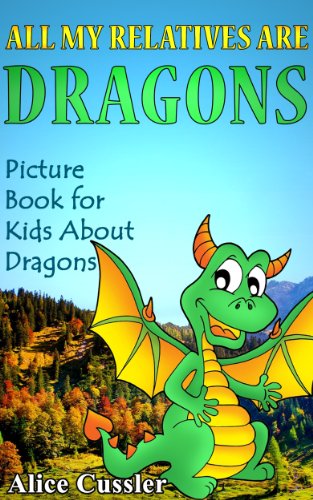
The picture on the cover is a bit deceptive. It might give the reader the impression that this will be a fictional account of a little dragon. Rather, the author uses an interesting approach to teach children about dragons, reptiles, and lizards. Draco, the narrator, is a young dragon who has many relatives. He proceeds to trace its history by first going back to prehistoric times and the dinosaur epoch. He then moves on the discuss many of the myths centered around dragons including the European and Chinese Dragons. He travels around the world to show readers crocodiles, alligators, iguanas, and chameleons.
Cussler presents identifying characteristics and brief highlights of each and notes the habitat of each. There are photos that illustrate the points that are being discussed. The language is easy to read and understand. I do wish the photos were larger as some of the details are difficult to see.
I would recommend this book for elementary school age children. It is a good way to introduce nonfiction to children who love dragon stories. Teachers might use it as a starting point for a lesson about reptiles. Recommended especially for children ages five through ten.
If you enjoyed reading this post, please subscribe by clicking on the word Follow or by hitting the orange RSS FEED button in the upper right-hand corner of this page.
Deadly Animals: 25 Most Deadly Animals in the World That You Should Know!
Written by Hathai Ross
While this book contains a lot of interesting information, I would rate it 3.5 stars because the photos that are included are often undersized and unclear.
The author includes animals found all over the world. Their size varies from the tiny mosquito and tsetse fly to the huge animals like the hippopotamus and polar bear. Habitats range from the sea to the glaciers and arid deserts of the Sahara. Readers will find many familiar names like the lion, rhinoceros, leopard, and elephants, but also more unfamiliar species like the Brazilian Wandering Spider, the Blue-Ringed Octopus, the Cone Snail, and the Cape Buffalo.
Ross describes each animal, its habitat, why it is dangerous, and how it affects humans. Some facts that I found particularly interesting are that the Poison Dart Frog is the most poisonous animal on the planet, the poisonous Puffer Fish is a delicacy eaten by many people, and the cute Polar Bear is not afraid of humans, and when hungry enough will even eat its own cubs.
The book is a collection of individual chapters that provide reference information about each of the twenty-five animals selected. It is useful as a starting point of research on some of the most interesting and dangerous animals with which we share our planet. Recommended for middle-grade, young adult or adult readers interested in animal research.
If you enjoyed this post, please subscribe by clicking on the word Follow or by hitting the orange RSS Feed button in the upper right-hand corner of this page.
Ants: Amazing Facts about Ants with Pictures for Kid
Written by Hathai Ross
The author packs a lot of information into this reference book about ants. Many kids enjoy watching them while exploring outdoors or under glass in an ant farm.
These fascinating creatures live in all parts of the world except Antarctica. More than 12,000 species have been alive for millions of years. Ants live in colonies and are social insects with designated roles. Broadly speaking, there are queens, workers, and male ants. The queen is the largest in the colony whose only job is to lay eggs. Male ants’ only responsibility is to mate with the queen. Worker ants feed the larvae, defend the colony, and remove the waste.
Ross spends a bit of time describing Argentine Ants, Pavement Ants, House Ants, Carpenter Ants, Crazy Ants and Fire Ants. The author describes their appearance, environment, daily life and interesting characteristics. Amazing facts include their exceptional strength, being able to carry twenty times their weight, and the fact that they fight till the death. Ants usually crawl in lines because they are following the pheromones of ants that have crawled before them. There are one million ants for every single human living on earth.
I would have liked to see more photos included in the book. At times the text begins to sound like a list of facts rather than a story about ants, but this book is an excellent reference for children who are interested in these fascinating creatures that are all around us. Recommended especially for young scientists in the eight to twelve age range. Good starting point for a research project.
If you enjoyed reading this post, please subscribe by clicking on the word Follow or by hitting the orange RSS FEED button in the upper right hand corner of this page.
Dolphins! Dolphin Facts for Kids:Amazing Pictures and Fun
Written by Valerie L. Cross
Dolphins have been in the news a lot lately with most of the controversy centering around whether they should be raised in captivity. Children and adults everywhere are intrigued by these friendly and intelligent animals.
This book is a fine resource for a home, classroom or public library. The author uses photographs to illustrate her information. She begins by explaining that dolphins come in all shapes and sizes belonging to a family of mammals known as cetaceans. The Orca or killer whale is the largest though it is not a whale at all but a dolphin. This beautiful animal species have been swimming in the oceans for approximately 50 million years.
Cross presents information on their colors, foods and unique method of communication known as echolocation. She discusses their anatomy mentioning the facts that they can move their eyes in many directions even backwards and in opposite directions. Their hearing is ten times better than that of a human. You can discover the age of a dolphin by counting the rings on the inside of their teeth. The reader is treated to a short profile of each type of dolphin and the habitats in which they live. Did you know that some dolphins live in rivers rather than oceans? Dolphins are social animals who live together in groups known as pods. Each dolphin has a unique sound different from others. Dolphins recognize voices just as humans can. Dolphins swim, dance and breathe with lungs as do humans. They love interacting and performing tricks with humans.
This book is recommended for children who love animals, parents and teachers needing a reference on dolphins, and any age reader who enjoys reading about this delightful mammal.
If you enjoyed reading this post, please subscribe by clicking on the word Follow or by hitting the orange RSS Feed button in the upper right hand corner of this page.
Incredible Animal Moms: Exploring Our Incredible World Series
Written by Mark Smith
This fifty six page book is another book in the exploring our world series. This volume focuses on the unique relationship between animal moms and their young. Smith has selected twenty animals; some are common but many are unique. He gives the reader just enough information to create a comprehensive portrait of the mother-child relationship and its uniqueness in the animal world. Each of them is accompanied by a photograph to illustrate the synopsis. The reader will be encouraged to pick out favorites and research other aspects of that animal’s life. Children aged eight and up might read the book independently. Younger children will enjoy an adult reading it aloud in several parts. Anyone who reads the book will learn something new; I know that I acquired a lot of new information. Did you know that a newborn elephant weights 250 pounds and that a mother elephant is pregnant for 22 months? All the female members of the herd live as one family and protect it.
Some animal moms and babies are remarkably similar to humans. They even look and act like us. These animals are extremely smart; they make their own tools which they use to find food. Some have even mastered how to use sign language to communicate with humans. The orangutan mom spends six or seven years teaching her babies survival skills. She teaches them how to make a new bed of leaves each night. Unfortunately, orangutans are disappearing because humans have cut down the trees they need for their habitat. The cow mother also is similar to a human mother. She will have a bond with her calf for life and socializes with her young throughout her life. The mother will travel for miles to find a calf that strays from the herd.
There are some animals that are very different from humans. You probably know that an octopus mom has eight arms, but did you know that each of them has a suction cup to move and catch food.? They are able to camouflage themselves and completely disappear. They also have a bird’s beak which they use to eat their food. An octopus mom has only one chance to have babies. She will lay as many as 200,000 eggs! For one month until they hatch, she stands guard for predators and does not eat. Some of these moms get so hungry that they eat their own arm rather than allow the eggs to go unguarded! Seahorse moms do not do any of the work in having babies. She chooses one mate, and lays all of her eggs in the dad’s pouch. He carries them until they hatch. He has a special hormone in his body to protect the eggs and give the eggs everything they require.
Some animals are beautiful and dangerous at the same time. The Strawberry Poison Frogs are brightly colored. They can be red, blue, green or spotted. They get their poison from the things they eat. These frogs are only about one inch long, but their bright color is a warning not to eat them. The mother lays about five eggs. When they hatch into tadpoles, she carries one at a time up a tree that may be 100 feet high and places it into a small pool she has made in its leaves. She feeds each one of her own eggs until they are fully grown. Pretty incredible for such a small creature!
I have only talked about a few of these incredible moms. Read this well written and illustrated non fiction book to find out much more extraordinary information about our animal world.
If you enjoyed reading this post, please subscribe by clicking on the word Follow or by hitting the orange RSS feed button in the upper right hand corner of the page.


 May 26, 2024
 bamauthor
 Comments Off on BIG, BIGGER, BEST
![Sloths! Sloth Book On Two-Toed Sloths & Three-Toed Sloths For Children: Fun Animal Picture Book for Kids with Interesting Facts & Wildlife Photos (God's Amazing Creation Series 3) by [Annett, Leanne]](https://images-na.ssl-images-amazon.com/images/I/518rwlqs9KL.jpg)



 Barbara Ann Mojica's BLOG
You must be logged in to post a comment.