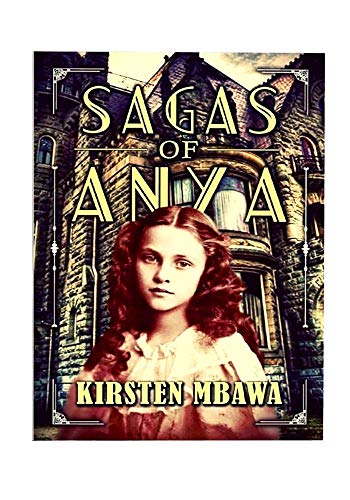
Anya is only thirteen. She lives in Cardiff, and her life has been difficult. Tad, her alcoholic father, has spiraled into alcoholism and depression. Unable to support himself and his daughter, he secures a position as a scullery maid in London for her.
Anya’s adventure begins with a train ride on a contraption she has never laid eyes on. When she disembarks at Paddington Station, the sights and smells of Victorian England surround her. She has no idea of what to expect. When she meets her boss, Mrs. Axton, her fears escalate.
But as Anya settles into a life of drudgery, more trouble looms before her. Anya has secured a few friendships, but she has also made many enemies. The novel traces her struggle to clear her name. This young Victorian girl is determined to obtain a measure of happiness and find a family to accept and love her.
The book is a fast-moving historical fiction adventure that is perfect for middle-grade readers.
If you enjoyed reading this post, please subscribe by clicking on the word Follow or by hitting the orange RSS FEED button in the upper right-hand corner of this page.
Whether you think that leaders are born or made, some characteristics that distinguish leaders from others stand out.
Have you wondered if you or someone you know is a natural leader? Are you interested in learning why they become leaders? Here are some personality characteristics that seem to go with effective leaders.
Task-Oriented
Are you the kind of person who likes to get things done? Do people come to you and ask you to do something for them and know you’ll do it? Not everyone is task-oriented, but those who are may end up being effective leaders. Being task-oriented means being a “doer,” the kind of person who focuses on getting something done and not stopping until the task is finished.
Task-oriented people generally follow through. This is important in a leader, because leaders have definite goals to reach and people to lead, and people will stop following you if you don’t get things finished.
Also, task-oriented leaders do not need “babysitting” to get something done. They can take initiative on their own – the task itself is motivation.
Honest Self-Image
Leaders tend to be pretty honest about their weaknesses and strengths, but not to the point of letting either one take over. For instance, a leader can balance between recognizing his weakness and not letting that stop him/her, and a leader can see his/her strengths without getting conceited. Those in leadership positions may find that they garner more respect when they are honest and “transparent” about their flaws than if they pretend to be perfect.
People Person
A leader tends to be a people person – someone who derives lots of energy from being around people. Such extroverted personalities make great leaders, but introverts are not barred from leadership, either. You can have a love for people and be introverted; you just respond differently to interacting with others.
In other words, you can be a “people person” even if you find yourself tired of leading at the end of a day. Extroverts and introverts can both be motivated by a love for people and their wellbeing.
“Infectious” Joy
Have you ever been around someone who just seems happy with life in general? If a person shares an idea or thought and seems really happy about it, do you feel like joining him or her? Leaders tend to exhibit this kind of infectious joy that draws other people to them. Positive-thinking leaders have a zest for life that compels other people to join them.
The general consensus is, characteristics of a good leader can be in-born or learned, or a bit of both. If you don’t have all of these traits naturally, you can learn many of them. No two leaders are the same.
If you enjoyed reading this post, please subscribe by clicking on the word Follow or by hitting the orange RSS FEED button in the upper right-hand corner of this page.
Visit my website http://www.LittleMissHISTORY.com to discover all my learning opportunities for #children #parents #authors and #teachers.
Is your child a strong leader? Do you suspect that he or she might grow up to be an effective and proactive leader? Maybe you aren’t sure what to look for. Does it matter if you discover leadership abilities early? Actually, some sources say it does matter. Observing leadership qualities early means parents, teachers and caregivers can work to develop those talents so they do not fall by the wayside.
If you want to make sure you develop your child’s leadership qualities, here are some signs to watch for. Some of them may surprise you!
Talkative
Does it sometimes drive you crazy that your child talks so much? Actually, being talkative may be a sign of things to come. A chatty nature indicates a child with excellent verbal skills, which are necessary for good leaders. Did your child talk early and proficiently? This may be a sign that he or she will be a good leader.
Treats Others with Respect
If you notice that your child seems to end up in responsible positions – team captain or band director – and you know he didn’t get that position because of “muscling” his way to the top or bullying others, then this may be a sign of leadership ability. Notice if others seem to “gravitate” toward her and wish to emulate her. Observe whether or not this is due to respectful treatment. If it is, you may have a strong leader on your hands.
Sees Both Sides
Some kids display an ability to understand both sides of an issue. They tend to be peace keepers, helping two arguing kids or adults to see reason, for example.
In the Know
Does your child always know what’s going on? Is he or she always aware of the latest events at school or in the family? This is not the same as being a gossip (that’s not a good leadership quality), but it does mean that he or she is paying attention and interested in what’s going on with others.
Inquisitive
A good leader is not afraid to ask questions, but he/she is not afraid to go looking for answers on his own. Too much questioning may indicate self-doubt – your child is always trying to make sure about things. On the other hand, healthy questions that spring from a real desire to know more about something may be a sign of leadership ability.
If you enjoyed reading this post, please subscribe by clicking on the word Follow or by hitting the orange RSS FEED button in the upper right-hand corner of this page.
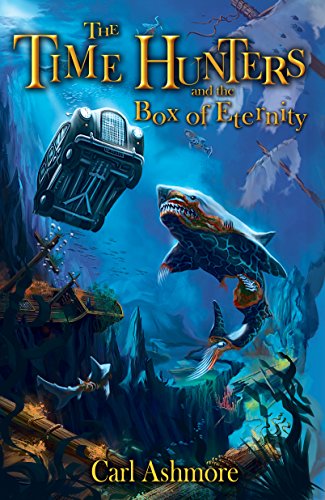
This is the second book in the series. Becky and Joe Mellon return home on school break to learn that nothing has changed at home. That home is as weird and unusual as ever. Saber-tooth tigers, a dodo, and a dinosaur share the home with the rest of the family. Things become more bizarre when an American named Bruce Westlake arrives. This time traveler has in his possession gold doubloons that contain magic powers.
In no time at all, Becky, and Joe, accompanied by their Uncle Percy and Will, find themselves time traveling to Victorian England, the 18th century Caribbean, and the city of Chicago in the 1920s. They will encounter gangsters, sharks and sea demons, and blood-thirsty pirates. What is their goal? Their quest is to find the elusive Pandora’s box.
This fantasy time-travel thriller will appeal to middle-grade, young adult, and adult audiences.
If you enjoyed reading this post, please subscribe by clicking on the word Follow or by hitting the orange RSS FEED button in the upper right-hand corner of this page.
Bodies in the Tiber: An Ancient Rome Political Thriller: The Sertorius Scrolls Book 3
Written by Vincent B. Davis II
Quintus Sertorius has just returned from five years of fighting for the Roman republic in the north. He is eager to return to Rome and pick up his life with a family that he is certain barely remembers him.
Davis has a fluid writing style. He bases his historical fiction on research, but he is adept at creating interesting and complex personal characters. It is the year 100 B.C. While Rome has been victorious, the republic has never been in greater danger. Sertorius has been writing a diary of sorts in his scrolls for the past year documenting history while also providing personal glimpses into his ambitions as well as his fears.
This is the third book in the series which begins seven years earlier when Sertorius loses his father and his rural village. In a struggle to survive and provide for his family, Sertorius leaves them and is thrust into the role of politician in a corrupt society.
The author uses his own military experience to enrich his story. An engaging and fascinating read for anyone interested in ancient history.
If you enjoyed reading this post, please subscribe by clicking on the word Follow or by hitting the orange RSS FEED button in the upper right-hand corner of this page.
Leading teens is different than leading children and older adults. Your role is to guide them into maturity and teach them how to manage adult responsibilities. Teens can handle more responsibilities and understand what’s expected.
But many older adults are intimidated to lead teens since they have a reputation for being rebellious. What if they won’t listen? What if they ignore your advice and “walk all over you”?
Here are some tips that may help you to lead teens.
The Right Attitude
It’s important to respect a teen’s place in the leadership process. (This is important with all ages, but teens are more aware of their own independence.) Remember that you can’t be a leader without followers! The teens have to be there for the leadership to happen.
Respect
Respecting those you lead is important. Teens probably won’t respond well to just being given orders. One way you can show your respect to the youths under your care is to listen to them. Really hear them, and respond respectfully to what they say. This proves your respect for them, In addition, it also sets a respectful tone in your group. When you do this, you’re leading by example.
Insist on Respectful Behavior
Because you’re modeling it, this shouldn’t be difficult to enforce. Ask that your teens treat each other with respect, and you can set yourself up as an example.
Be “Real”
Teens have a nose for sniffing out when something or someone is faking it. The teens in your charge don’t really expect perfection. They would prefer to interact with someone whose flaws they can identify with than someone distant and unfamiliar. Make sure to guard against hypocrisy. It’s fine to be genuine and share that you used to be a smoker or drinker while telling your teens not to smoke or drink, but if you are still smoking, your words will ring hollow and fake.
The Importance of a Good Relationship
Leading teens means assuming the role of a mentor and adviser. Mentoring means setting up an environment where learning takes place. Always set aside a time for teaching and answering questions. To form an effective leadership relationship with teens, it’s critical to know when to step back and let the teen try on his or her own and when to step in. If you develop a good relationship with your teens, then you will likely know them well enough to have figured out when to get involved and when to back off.
Mystery of the Egyptian Mummy: (Kid Zet Detective Book 4)
Written by Scott Peters
My first time reading a book in this series. Zet is a twelve-year-old boy living in the ancient Egyptian city of Thebes. He and his sister, Kat, run a pottery stall in the market to support their family. One night a mummy, guarded by a jackal, arrives at their home. Terrified, the siblings return to the market the next day to find that the whole town believes them to be cursed. Their business collapses. That makes them determined to solve the mystery.
What they discover is a much larger plot that will endanger the royal family and all of Egypt. As they artfully unravel clues to solve the mystery, readers learn a lot of information about ancient Egyptian history and culture.
Peters creates interesting characters and an engaging plot to keep middle-grade readers engrossed throughout the read. Educational and entertaining.
If you enjoyed reading this post, please subscribe by clicking on the word Follow or by hitting the orange RSS FEED button in the upper right-hand corner of this page.
I would describe this book as a short story that could easily be developed into a full-length novel.
Molly Marsh is a curious ten-year-old whose parents are off on a scientific expedition to New Guinea. Her trepidation begins with a bumpy plane ride. Molly is enchanted when a beautiful blue butterfly alights on her. When the family arrives at their new home, Molly meets Yosia, who will be working for them in their new jungle home. She is intrigued by him. At first his strange habits scare her. Then she learns about his magical talents.
These two characters are interesting and could be developed in a fuller narrative. I consider the adventure book a short, chapter book. It is well-written with challenging vocabulary that is most appropriate for nine to twelve-year-old readers.
If you enjoyed reading this post, please subscribe by clicking on the word Follow or by hitting the orange RSS FEED button in the upper right-hand corner of this page.
As You Wish: After Dinner Conversation Short Story Series
Written by Tyler W. Kurt
This book is a charming, coffee table book that can be used to spark conversations with family or friends. An elderly woman dressed in retro fifties clothing discovers an old trunk in the attic. The stuffed animals that are trapped inside have been there since their former owner abandoned them. They are torn, soiled, and tattered. The old woman has the ability to communicate with the stuffed animals. She offers to repair them and make them new once more. Then one of them announces he doesn’t want to change the way he looks or feels.
At the end of this short story, there is a set of discussion questions for readers with open minds and open hearts. I would recommend the book for all ages.
If you enjoyed reading this post, please subscribe by clicking on the word Follow or by hitting the orange RSS FEED button in the upper right-hand corner of this page.
This book is an excellent choice for a coffee table book or a fun game at parties. Rather than list trivia questions to be answered, Kostov divides the questions by topics like People and Animals or Facts about the World. The author challenges the reader by presenting three choices for each question. Now the trick is to choose which of the answers is NOT correct. This approach makes the task of finding the correct answer formidable. I was surprised at how much more difficult this technique made the challenge.
I would recommend the book to readers age ten and older. It is highly educational and informative.
If you enjoyed reading this post, please subscribe by clicking on the word Follow or by hitting the orange RSS FEED button in the upper right-hand corner of this page.
You must be logged in to post a comment.