Posts from the ‘toddlers’ Category

TENDER AND SWEET

Mama Loves You Always

Written by Lindsey Coker Luckey

Illustrated by Tanya Matikiv

The illustrations say it all. Soft colors and exquisite expressions portray the emotions set out in the rhymes. Most of the rhymes are on the mark, perhaps a couple stretch the meaning of the words.

Toddlers and preschoolers will get the message clearly by looking at the images. I think the book would have made an even greater impression if a few human examples of mother and child were included. Luckey gives specific examples of why a mother’s love is so deep and truly everlasting.

This book would be an excellent gift for a new mother. Grandmothers and caretakers will also enjoy reading it aloud or as a bedtime story.

If you enjoyed reading this post, please subscribe by clicking on the word Follow or by hitting the orange RSS FEED button in the upper right-hand corner of this page.

Check out all my learning opportunities at http://www.LittleMissHISTORY.com

#HOW TO FOSTER LEADERSHIP SKILLS IN CHILDREN #5 – SIGNS YOUR CHILD MAY BE A STRONG LEADER

Is your child a strong leader? Do you suspect that he or she might grow up to be an effective and proactive leader? Maybe you aren’t sure what to look for. Does it matter if you discover leadership abilities early? Actually, some sources say it does matter. Observing leadership qualities early means parents, teachers and caregivers can work to develop those talents so they do not fall by the wayside.

If you want to make sure you develop your child’s leadership qualities, here are some signs to watch for. Some of them may surprise you!

Talkative

Does it sometimes drive you crazy that your child talks so much? Actually, being talkative may be a sign of things to come. A chatty nature indicates a child with excellent verbal skills, which are necessary for good leaders. Did your child talk early and proficiently? This may be a sign that he or she will be a good leader.

Treats Others with Respect

If you notice that your child seems to end up in responsible positions – team captain or band director – and you know he didn’t get that position because of “muscling” his way to the top or bullying others, then this may be a sign of leadership ability. Notice if others seem to “gravitate” toward her and wish to emulate her. Observe whether or not this is due to respectful treatment. If it is, you may have a strong leader on your hands.

Sees Both Sides

Some kids display an ability to understand both sides of an issue. They tend to be peace keepers, helping two arguing kids or adults to see reason, for example.

In the Know

Does your child always know what’s going on? Is he or she always aware of the latest events at school or in the family? This is not the same as being a gossip (that’s not a good leadership quality), but it does mean that he or she is paying attention and interested in what’s going on with others.

Inquisitive

A good leader is not afraid to ask questions, but he/she is not afraid to go looking for answers on his own. Too much questioning may indicate self-doubt – your child is always trying to make sure about things. On the other hand, healthy questions that spring from a real desire to know more about something may be a sign of leadership ability.

If you enjoyed reading this post, please subscribe by clicking on the word Follow or by hitting the orange RSS FEED button in the upper right-hand corner of this page.

How to Raise Children to Be Good Leaders – #4 in Leadership Skills Series

So you have tried to create a home environment conducive to instilling leadership skills for all your children, whether they be preschoolers or teens. It’s been said that leadership starts at home and directly linked to early training. Experts disagree about how much leadership is inborn and how much is learned. I believe that it’s a combination of learning plus a child’s innate abilities.

If you’d like to do what you can to raise your children to be good leaders, here are some tips that may help.

Teach Them to Think

Some argue that the school system, whether it be public or private, teaches kids what to think rather than how to think. Common core curriculum has placed uniform requirements and testing standards on schools across the United States. There are likely exceptions to this – special schools and special teachers – but it’s entirely possible that your kids are not being taught how to think. So whether you homeschool or enroll your children in a traditional school setting, you might try some of these exercises to encourage independent thinking.

  • Give them an age-appropriate reading task that expresses a particular point of view. An opinion piece in the newspaper is a good place to start. Ask what your child thinks about it, and have him or her write an age-appropriate response. Do the same thing with an article that expresses a contrary or different opinion.
  • Encourage them to read about topics and books that covers a range of opinions and views.
  • Ask them if they agree or disagree, and why.
  • Any time your child reads something, ask him (or her) what he thinks about it. Find out what information he drew from the reading rather than finding out if he picked up what she was “supposed to” from the reading. Let them know it’s okay to disagree with parents and teachers. Encourage them to discuss the reasons behind their disagreement.

Leaders tend to be independent thinkers, so these exercises may go a long way toward teaching your child to be a good leader.

Teach Organization

This may be something of a challenge for parents who aren’t that organized themselves! On the other hand, for those parents who are very organized, you might find that you tend to organize everything for your kids without teaching them to do it themselves. Parents need to discover a comfortable balance between the two.

Give them a calendar and show them how to keep track of their own activities. Chore lists are an excellent way to help them organize their time. Age-appropriate chores and activities, written down or drawn on a calendar, can help kids “see” their time and how they are using it, even if they are too young to tell time yet.

Ask for Arguments

Huh! Are you joking with me? Ask your kids to talk back to you?

The art of arguing respectfully is an important leadership quality. We’re not talking about angry arguments. Think in terms of negotiation and persuasion. Ask your child to tell you why he (she) wants a certain thing, or why he should be permitted to attend an event or participate in an activity. This helps your children learn how to analyze his thoughts and present reasons that produce an argument to justify why he should achieve this goal.

If you enjoyed reading this post, please subscribe by clicking on the word Follow or by hitting the orange RSS FEED button in the upper right-hand corner of this page.

#HOW TO FOSTER LEADERSHIP SKILLS IN CHILDREN – #2 – SET AN EXAMPLE

Parents and teachers want children to be independent thinkers. They encourage children to develop their own opinions and have the courage to stand up for them. Whether you are working with children who are yours or you’re a caretaker for someone else’s children, learning how to lead them effectively is important. You may want to lead your kids to practice a healthy lifestyle, develop better communication skills, or something else. In any case, good leadership is a way to reach your goals with the children in your care.

How do you become a good leader for kids? It can be hard to know if you’re not used to it, or if you didn’t have strong leaders when you were a child. Here are some tips.

Set an Example

You’ve probably heard “lead by example,” but that means more than just doing something and hoping your kids will notice and imitate your behavior. It also means being purposeful in setting an example, and you’ll need to stop practicing certain behaviors and pay attention to what you say.

For instance, if you want your children to be patient with others – an important leadership attribute – then take care that you’re patient with them. If you want your children to be able to make decisions like a leader, then make sure you’re not making all of their decisions for them. Don’t be a helicopter parent. Permit your children to make mistakes and learn from them. To lead by example, you need to think about more than just living out healthy, positive lifestyle choices (although that’s important, too). It’s also important to set an example of how to treat others.

Include Them

Whether you are a teacher or a parent, including the children in your care is important to instill leadership. How do you include them? First, let them help. In the classroom, this might be a simple task like collecting papers and passing out papers. Students might be allowed to write an assignment on the board for the teacher. At home, let your children be a part of your daily routines, helping you wash the car and clean the house. After all, these are life skills, and those are the building blocks for good leadership.

Delegate

Good leaders know how to delegate responsibilities and tasks. In your home or classroom, give kids many different responsibilities. You can set things up so that the children in your care have a job to complete, and they have to delegate tasks to others to finish it. A different approach could be to simply explain the task, and give a job to each child to get it done. They will see the value of delegating. Perhaps, you might may explain that many jobs cannot be completed by one person without help from others. Each child participating will still have the satisfaction of helping to get something done.

Allow Them to Help Others

Wherever you can, let your kids help each other without being bossy or bullying. In fact, being bossy is not a good leadership skill. This is important to emphasize when you are working with children in different age groups. Teach them how to help others in an appropriate way, and then set up a scenario where that help can happen. When older siblings learn how to mentor rather than supervise a younger sibling, they learn how to transfer this skill from the family to the outside world. This method works in the classroom or at home with friends and/or siblings.

To Sum Up

Children are like sponges. They soak up what they see and hear in the world around them. Adults are their first role models. Parents, teachers, and caretakers set the example for the youth who will become tomorrow’s future. We will reap what we sow.

If you enjoyed reading this post, please subscribe by clicking on the word Follow or by hitting the orange RSS FEED button in the upper right-hand corner of this page.

Follow the award-winning Little Miss HISTORY nonfiction book series for children at http://www.LittleMissHISTORY.com

#WHATTODOABOUTYOURMONSTERS

COVER REVEAL

In partnership with The Children’s Book Review and Acorn Publishing

SYNOPSIS

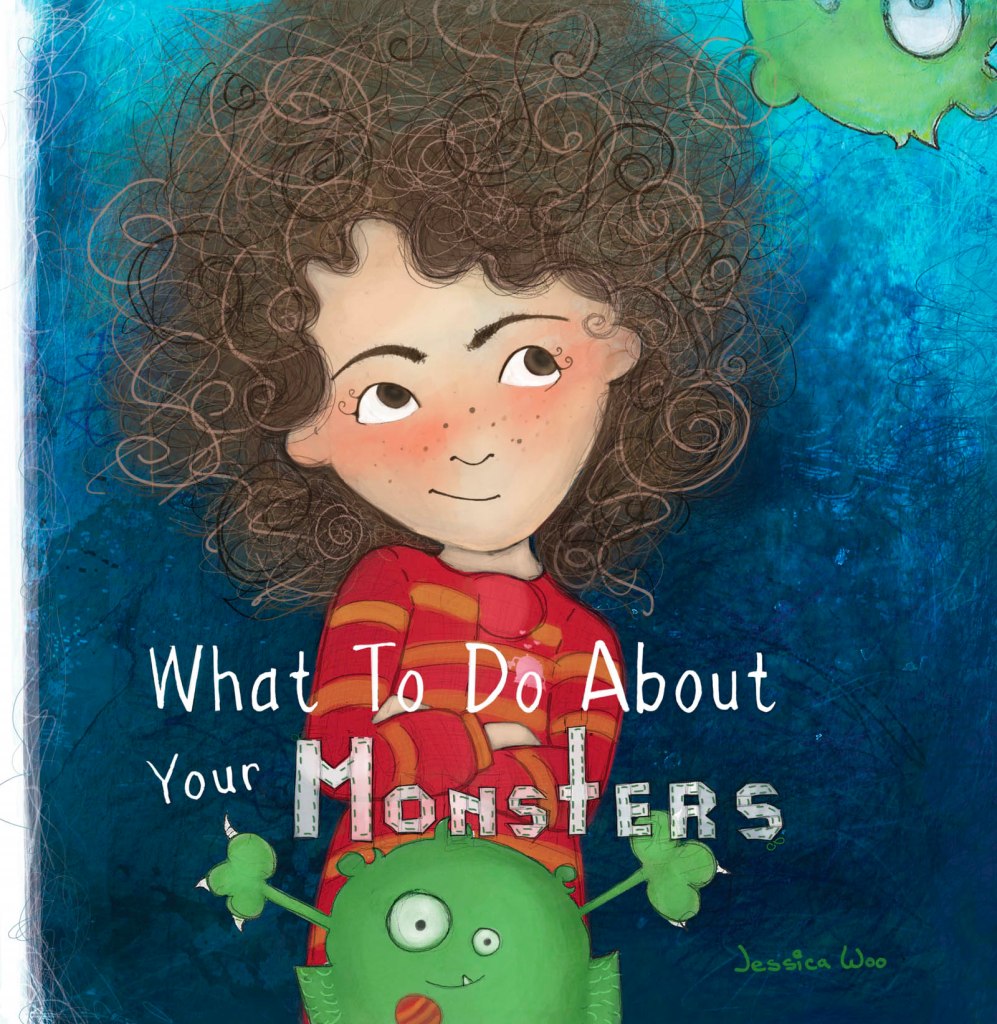
WHAT TO DO ABOUT YOUR MONSTERS

Created by Jessica Woo

Publisher’s Synopsis: Meet Kinzie. She has a bunch of fun-loving, slightly smelly, Monsters that live in her room. They never let her sleep at night. But that’s ok, her parents always help her out. Until one day they decide it’s time she learns to sleep on her own. What will Kinzie do about her Monsters?

What To Do About Your Monsters is a heartfelt story about a girl who has sleep issues. At its core, however, the story is not just about having problems sleeping, but about being afraid to try something new.

Ages 0-8 | Publisher: Acorn Publishing | October 2020 | ISBN-13: 978-1-952112-10-2

ABOUT THE AUTHOR

Jessica Woo is an author-illustrator and a mom of two wild things. Her debut children’s book, What To Do About Your Monsters, was inspired by her oldest child. Very quickly after Jessica became a mother, she found that while adults like to sleep, kids are way too busy to ever go to bed. 

Other than convincing her little ones to sleep at night, Jessica’s talents include professional animation, art direction, and illustration. In Illustration, Jessica most recently worked on a concept art piece for Universal. In art direction, her recent project, Dinner Party, was accepted in the exclusive Sundance film festival. Finally, in animation, her work is featured in movies such as Kung Fu Panda, Monster vs Aliens, Shrek 4, Kung Fu Panda Holiday Special, Kung Fu Panda 2, The Croods, and Turbo

An active member of SCBWI and 12 by 12, Jessica currently lives in Toluca Lake California with her family.

OFFICIAL LINKS

For more information, visit https://www.acornpublishingllc.com/single-post/2020/05/04/NEW-AUTHOR—Jessica-Woo

GoodReads link: https://www.goodreads.com/book/show/53494508-what-to-do-about-your-monsters.

#Too Tough to Handle

Never ask a Dinosaur: Funny Read-Aloud Story Book for Toddlers, Preschoolers and Kids 3-6) Book 4

Written and illustrated by Melinda Kinsman

A little boy decides to bring his pet triceratops to school with him, thinking that they will both have lots of fun. At first, his friends think this is cool. His teachers, principal, cafeteria workers, and staffers don’t agree.

This book contains terrific illustrations that are colorful and expressive. The rhyming text flows well and is fun to read aloud. Children will love the humor and funny antics. The bonus puzzles, matching activities, and games keep the fun rolling along. Book 4 in this series does not disappoint. Preschoolers and primary grade readers can have lots of fun with this series of books.

If you enjoyed this post, please subscribe by clicking on the word Follow or by hitting the orange RSS FEED button in the upper right-hand corner of this page.

BABY STEPS

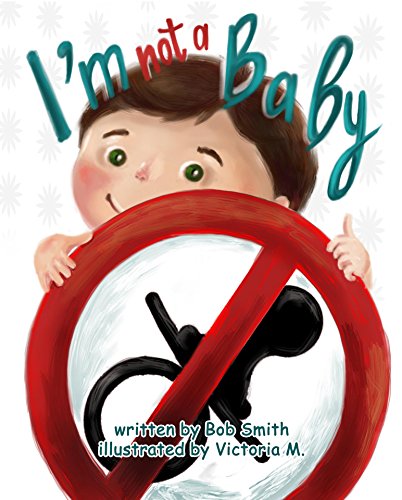
I Am Not a Baby

Written by Bob Smith

Illustrated by Victoria M.

This is a short, cute picture book written from the point of view of a toddler. Preschoolers and toddlers are constantly trying to demonstrate they can do things independently. In this tale, Mike sets out to prove he can do everything adults can do. While the pictures and story clearly demonstrate that is not the case, Mike gives his readers inspiration and confidence.

Recommended as a bedtime story or read-aloud book to encourage self-esteem for two to five-year-olds.

If you enjoyed reading this post, please subscribe by clicking on the word Follow or by hitting the orange RSS FEED button in the upper right-hand corner of this page.

BEING ALONE IS NO FUN

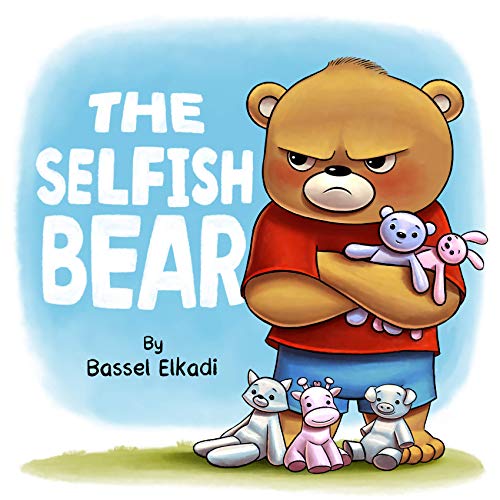
The Selfish Bear

Written and Illustrated by Bassel Elkadi

A little bear is selfish and does not like to share. One day he comes across his friends on the swings. He reflects on how he has treated each of them recently and figures out they will now not want to share with him.
The bear decides to build his own swing. He gathers material and makes a large swing. Bear did not plan well. One of the ropes breaks. Can you guess what might happen? Will Bear realize why it is important to share and be kind to your friends?

This is a rather short book. The illustrations are appropriate for toddlers and preschoolers. I was puzzled about the fact the Bear was not given a name to help personalize the character. Recommended especially for children ages three to six.

If you enjoyed reading this post, please subscribe by clicking on the word Follow or by hitting the orange RSS FEED button in the upper right-hand corner of this page.

I WANT TO HELP #parents #homeschool #teachers #students #coronavirus

Hi Friends,

I want to assist all those who are sheltered in place by sharing the information from fellow authors, educators, and teachers.

I will be posting daily on all my social media sites but in particular on:

Facebook Page https://facebook.com/Littlemisshistory.com

Twitter Page https://twitter.com/bamauthor

Check out my Pinterest Board for lesson plans, book suggestions, printables, and activities. https://www.pinterest.com/bamauthor/

Check out my youtube channel for videos to supplement your lessons.

https://www.youtube.com/channel/UCVUU3m8cCeBUr2wxHAQi6Lw

Beginning March 23, children’s book authors are coming together to read and share stories and activities with children at home on the Facebook page Storytime Adventures with Children at 12:00 P.M. CDT. I will be reading on March 31.

10 Ways to Stay Positive

  • Think about gratitude, not complaining
  • Think about others, not yourself
  • Think about forming new relationships, not what others give you
  • Think one day at a time, not the future
  • Think about the things you have, not what you’re missing
  • Think about new opportunities, not things you have lost
  • Think about making progress, not how hard things are
  • Think about making your life better, not the way things are right now
  • Think about giving value, not how much money you can make
  • Think about responding to changes in new ways, not the events you missed

Stay safe by following all federal and state guidelines but don’t expose children to pandemic news 24/7.

Answer children’s questions calmly and clearly according to their age

Don’t create unrealistic expectations but address disappointments

Create a schedule and stick to it

Make sure you get outside to exercise, if possible. If you live in an apartment, create indoor exercise programs

Enlist older children to work with younger siblings

Stay in touch with relatives and friends via telephone and social media.

Check on the elderly.

Relax and remain calm! We will get through this together.

BY THE LIGHT OF THE MOON…

Mommy, What Is the Moon?

Written by Crystal MM Burton

Illustrated by Michael Finch

Such a charming picture book commenting on the curiosity of a young child. A little boy looks up and the night sky and wonders about the moon. He reflects that it has different colors. It might appear white, yellow. Sometimes its size and shape change. It has marks on its surface. The boy compares it to familiar objects like cheese, bananas, lemons, and milk.

His mother answers with facts he can understand. The moon is made of rock. It may change color or form, but it is always there just like her love for him.

The author donates ten percent of book sales to the juvenile diabetes foundation. Just another incentive to buy this beautifully illustrated picture book for toddlers and preschoolers.

If you enjoyed reading this book, please subscribe by clicking on the word Follow or by hitting the orange RSS FEED button in the upper right-hand corner of this page.