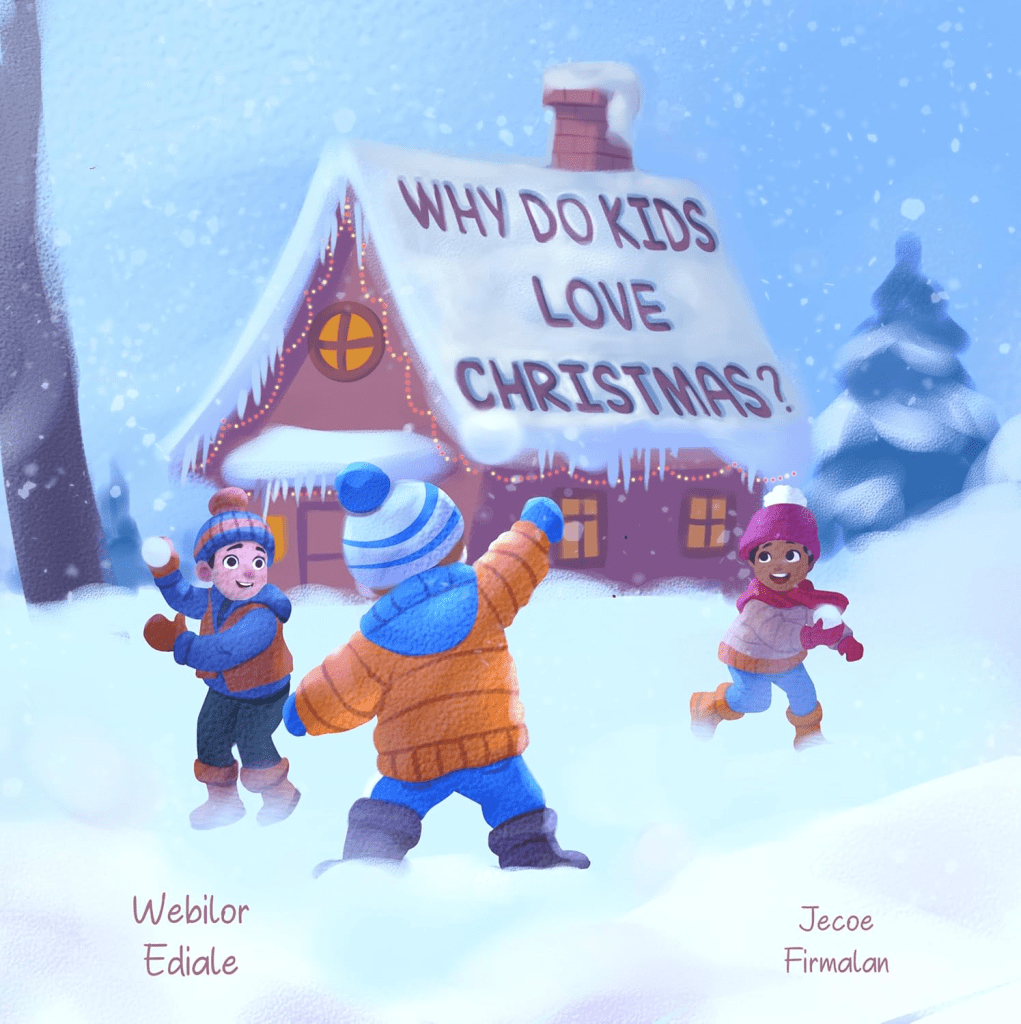
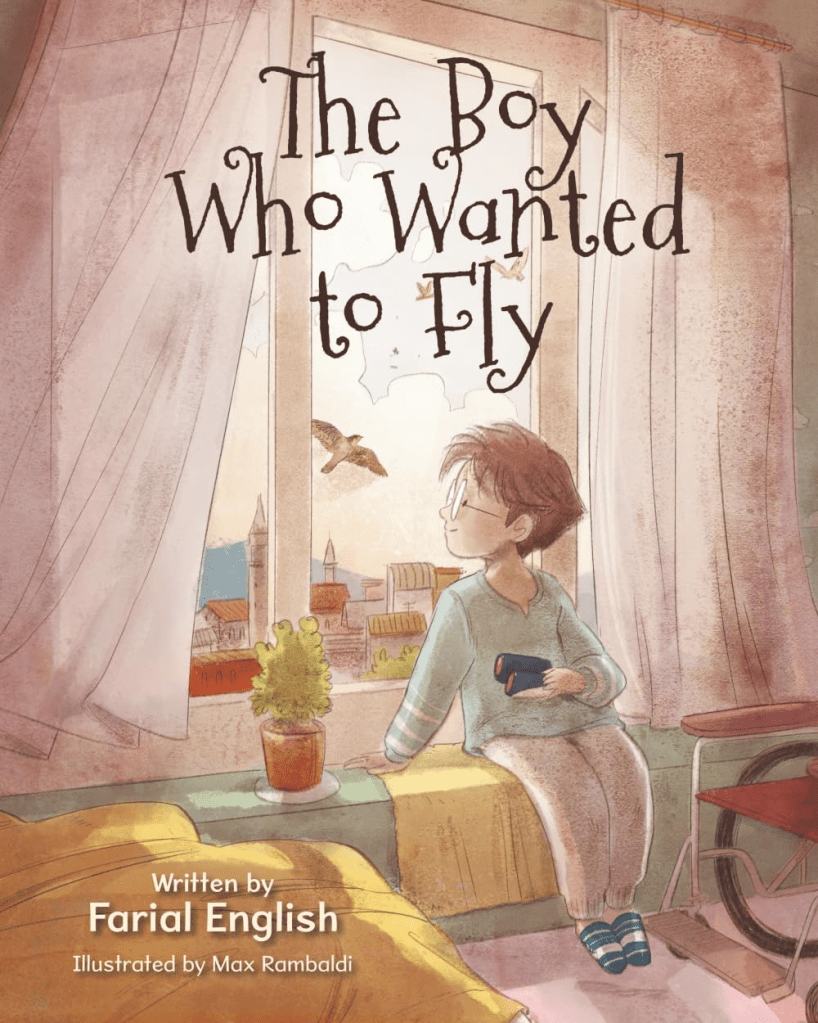
Another adorable addition to the Whiskers, the Cat, book series for elementary-age readers.
In this Christmas Eve addition, Whiskers is curled up under the Christmas tree when he notices a light that needs fixing. He tries but fails, and chaos ensues. Soon, Whiskers is getting into Santa’s goodies, and messing with the stockings on the mantel and the snowman outside the house. Will Whiskers destroy Christmas for his family?
The rhymes are spot on and fun to read aloud. Humor abounds, and the holiday spirit fills the hearts of the reader.
This one is sure to become a Christmas favorite for families and teachers’ holiday libraries.
SUBSCRIBE TO THIS BLOG FOR BOOK REVIEWS EVERY WEDNESDAY AND SUNDAY.
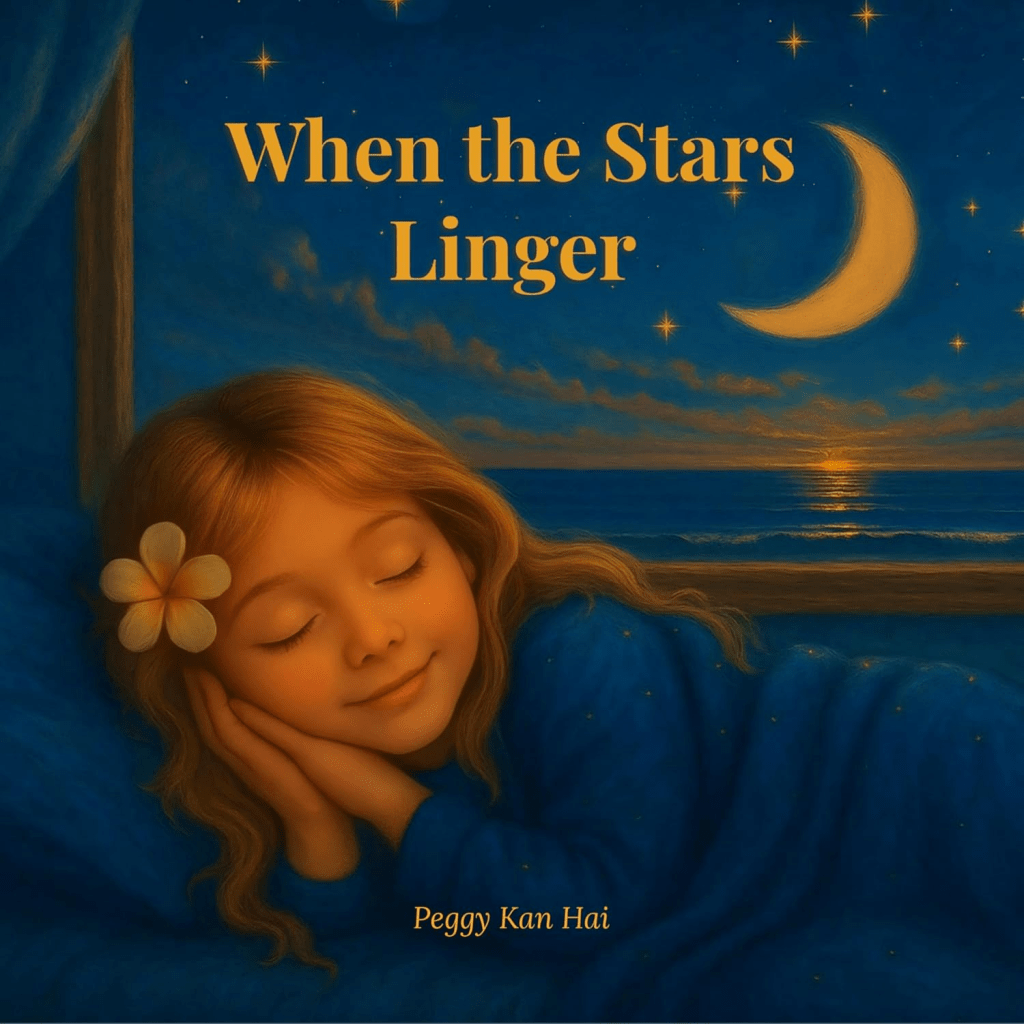
A creative and beautiful picture book that may entice your young ones to look forward to bedtime.
The child protagonist ponders possible careers like sailing, traveling to space, becoming a unicorn, or a leprechaun. He might travel to London, Paris, or Africa. He might even meet a dragon. Could he become a superhero one day?
Our imagination offers the ability to dream. We cannot dream if we do not go to sleep!
What a beautiful opportunity to combine reading with looking forward to bedtime and a healthy, good night of sleep.
Recommended for preschoolers and primary grade students.
SUBSCRIBE TO THIS BLOG FOR BOOK REVIEWS EVERY WEDNESDAY AND SUNDAY.
Pennygirl is an adorable Lab mix who lived on a farm in Texas with Grandma Adeline. One day Pennygirl is called upon to help Grandma in a time of need. She does not realize it would be the last time she would see her home.
Grandma never returned to the farm, and Pennygirl finds herself in an animal rescue shelter. One day turns into the next, but Pennygirl never loses hope. After a time, Pennygirl learns she will be going to a new shelter, far away in Canada. Does this mean she will find her forever home?
This book is well-written with just enough challenging vocabulary. Though a picture book, it would be suitable as a beginning reader or middle-grade choice for a reluctant reader.
I would suggest it for children ages five through ten.
SUBSCRIBE TO THIS BLOG FOR BOOK REVIEWS EVERY WEDNESDAY AND SUNDAY.
December is well-known for Christmas but do you know how people in countries around the world celebrate it? Here are some customs from various parts of the world that parents or teachers can use to jumpstart a multicultural holiday customs activity for the children in your family or classroom.
Australia
Greeting – Merry Christmas Santa’s Name – Santa Claus. Children leave him a piece of cake or biscuits and a glass of milk or a bottle of beer. Food – Many Christmas dinners include roasted meats and vegetables, special fruit cakes, and puddings with a coin baked inside. Since the temperature can reach 100 degrees Fahrenheit, people are starting to eat cold meats and salads, tropical fruits like mangoes, and stone fruits like plums. Often, the main meal is eaten for lunch. Gifts – These are left under the Christmas tree and opened Christmas morning. Decorations – Shops and homes are decorated with tinsel, Christmas trees, decorations for the holiday, and special lights. Customs – Traditional and Australian carols are sung by candlelight on Christmas Eve and are broadcast on television. On Boxing Day, the day after Christmas, two sporting events take place: The Boxing Day Test Match (cricket game) and the start of the Sydney to Hobart Yacht Race.
Brazil
Greeting – Feliz Natal Santa’s Name – Papai Noel (Father Noel), who is dressed in a red, silk suit with boots. Food – Many people eat a traditional feast with roast turkey and vegetables, while others eat chicken and rice or beans. Beer and wine are also served. Some regions begin eating around 9 PM on Christmas Eve, while others eat around midnight. Gifts – Local charities take in donations but do not seem to have enough presents for all the children. Decorations – Brazil has a mixture of people so Christmas is celebrated in different ways. In the northeastern area, it is common to find Nativity Scenes; in the southern part, snow is simulated with little pieces of cotton on pine trees. Customs – Brazilians sing a number of Christmas carols.
Greece
Greeting – Eftihismena Christougenna Food – Special holiday cakes are baked. Gifts – Most Greek people exchange gifts on Saint Basil’s Day, January 1. Customs – To honor Saint Basil, the holiday cakes have gold coins hidden inside them. The cakes are cut at midnight on New Year’s Eve. Whoever has a gold coin in his piece of cake will have good luck the following year.
Hungary
Santa’s Name – Actually, the Baby Jesus is said to bring presents on Christmas Eve. A bell sounds signaling that the Angels have brought the tree and gifts. Customs – On December 5, children leave out their shoes. During the night, Mikulas and Black Peter come to fill them with goodies for well-behaved children and switches for naughty children. India Decorations – Sometimes, houses are decorated with mango leaves; mango or banana trees are also decorated. Small, clay, oil-burning lamps are placed on the edges of flat roofs as decorations.
Israel
Greeting – Chag Semeach (Happy Chanukah) Santa’s Name – Actually, parents, grandparents, and other family members give presents to the children. Food – Because oil is an important part of the holiday, many foods are prepared with it. A favorite is potato latkes (pancakes). Gifts – Since Chanukah lasts for eight days, children may receive one present each night. Decorations – Jewish stars, blue or silver foil garlands, dreidels (spinning tops), Chanukah gelt (chocolate coins), and pictures of the Macabees (Jewish army that recaptured the Holy Temple and Jerusalem from the Assyrian Greek King Antiochus) are found around the house. Customs – The menorah (candelabra) is lit each night. On the first night, one candle is lit; on, the second night, two candles; and so on until all the candles are lit on the eighth night. After lighting the candles, families eat a festive meal, dance, play games, and open presents. They also attend Chanukah parties.
Japan
Greeting – Kurisumasu Omedeto Santa’s Name – Santa Kurohsu. He does not appear in person but is pictured in advertisements as a kind old man with a round sack on his back. Food – Depending upon the family’s custom, they eat turkey on Christmas Day or on Christmas Eve. Japanese families also eat Christmas cake. Gifts – Stores sell merchandise for men, women, and children; and on Christmas Day, families exchange gifts. Decorations – More and more artificial Christmas trees are beginning to appear. They are decorated with small toys, gold paper fans, dolls, lanterns, paper ornaments, and wind chimes. A popular ornament is the origami swan. Other decorations are mistletoe, evergreen, tinsel, and lights. An amulet is put on the front door for good luck and children exchange ‘birds of peace,’ pledging there must not be anymore war. Customs – The daiku, or Great Nine, refers to Beethoven’s Ninth Symphony and is performed many places.
Mexico
Greeting – Feliz Navidad Customs – Beginning on December 15, some families carry colorful lanterns and walk from house to house in their neighborhoods, each night, until Christmas Eve. This is called La Posada, which means ‘the procession.’ On each of the nights, the families are invited into different houses where they become guests at a party. There is plenty to eat and drink. Children play the pinata game, trying to break open the papier-mache figure with a stick while blindfolded; when it is cracked open, candies and small gifts fall out.
Netherlands
Greeting – Hartelijke Kerstroeten Santa’s Name – Sinterklaas (St. Nicholas), who wears a red bishop’s hat and bishop’s cloak and has white hair and a white beard. He arrives on a white horse with his servant, Black Pete, to put small gifts in children’s wooden shoes. Food – The Dutch people eat lots of marzipan, spiced ginger biscuits, tall chocolate letters, and ‘bankletter’ – initials made of pastry and filled with almond paste. When they are around the Christmas tree singing songs, they eat ‘Kerstkrans’ – a Christmas ring. Gifts – On December 6, after hearing a knock at their door, children find a bag full of toys, nuts, and gifts. Decorations – The Christmas tree is known as the Paradise Tree. Decorations of the season include dolls, musical instruments, fruit, candies, and lights. Customs – The Dutch sing carols, the most popular one being “O Christmas Tree, O Christmas Tree.”
Sweden
Greeting – God Jul Food – Coffee, cakes, and special buns are served on Santa Lucia Day, December 13. Customs – Santa Lucia Day honors Saint Lucy, who helped blind people. The oldest daughter in each Swedish household dresses in a white gown with a red sash, wears a crown of evergreen with seven candles in it, awakens the family with a song, and serves the coffee, cakes, and buns. Each town and city also chooses a young woman to be Lucia for the day. She then serves coffee and food to the townspeople at schools, hospitals, and other public buildings. From these women, a national Lucia is chosen; followed by a parade, feast, and dance.
Now comes the fun part. Let your children put the information in a comparison chart. Label the left side with the names of the countries and the bottom with the various information (ie: Greeting, Food, and so on). Then fill in the boxes!
Let your children do research Conduct research to find out the same customs for other countries, especially the heritage countries of students in your class or your own family.
SUBSCRIBE TO THIS BLOG FOR TEACHING RESOURCES THAT TEACH KIDS HOW TO THINK, NOT WHAT TO THINK
This book contains vibrant illustrations with colorful, diverse characters who invite young readers to bring their imaginations and dreams to the library.
Every time a visitor opens the door, they unlock thousands of possibilities to experience new adventures and initiate new friendships. They enter a world that enriches their brains and stretches their minds to new vistas and opportunities.
The rhymes are clever. This book entices the reader to return over and over. Especially appealing for ages three to seven.
SUBSCRIBE TO THIS BLOG FOR BOOK REVIEWS EVERY WEDNESDAY AND SUNDAY.
Adana the Earth Dragon: An Elemental Tale (Tales from Umbrae)
Written by Debbie Manber Kupfer
Illustrated by Tina Wijesiri
Adana is a small, brown earth dragon. She is very sad because the more powerful air, fire, and water dragons shun her. Adana seems small and insignificant to them.
One day a giant strides into the neighborhood. He marches into their midst and renders the air, fire and water dragons powerless and afraid. Meanwhile, Adana slept peacefully in her cave. When Adana wakes up and discovers the giant in their midst, she is determined to help. Adana figures out exactly what her secret power is and how to use it. Readers will chuckle at her ingenious plot to trick the giant and restore balance. In the future, the more powerful giants learn the value of Adana’s talents and appreciate her friendship.
There is enough text in this book to consider it a beginning chapter book, even though it is richly illustrated. Younger readers can follow the story through the pictures, while older children can read the tale independently. Especially recommended for children ages five through nine. This narrative emphasizes the value of individual talents and skills as well as the importance of extending friendship to those who are just like us. It teaches children to avoid bullying and to appreciate diversity.
SUBSCRIBE TO THIS BLOG TO RECEIVE BOOK REVIEWS EVERY WEDNESDAY AND SUNDAY.
This book is based on the theme of the 12 Days of Christmas. It is written as a poem or can be sung as a song. The characters are based on various types of sea creatures, especially different species of sharks.
The illustrations are hand-drawn in vibrant colors. While the length is less than twenty pages, reading or singing it can become a new holiday tradition. For me, the most interesting part of the book is the section at the end, which presents useful information about each of the different sharks.
SUBSCRIBE TO THIS BLOG TO GET NEW BOOK REVIEWS EVERY WEDNESDAY AND SUNDAY.
Oliver and the Twisting Tornado (Navigating Natural Disasters Book 2)
Written by Chrissy Hobbs and Ben Jackson
Illustrated by Tanya Zeinalova
This book is part of the Navigating Disasters series for children. The text is written in clear language to prepare children who live in areas that are prone to tornadoes. Without being scary, it clearly defines the steps that are necessary to plan ahead and then the actions necessary to keep safe.
Oliver and Emma live on a farm. They learn what to do. Although the children are apprehensive, their parents have prepared their farm and storm shelter. Readers are provided with a checklist and a certificate to prove that they have carefully read the story and know how to prepare their families and communities to do the same.
I highly recommend the book for parents and teachers who live in communities that may be susceptible to tornadoes as an excellent resource guide.
SUBSCRIBE TO THIS BLOG FOR NEW BOOK REVIEWS EVERY WEDNESDAY AND SUNDAY.
The Adventures of Pookie: Home is Where the Heart is
Written and Illustrated by Rebecca Yee
A story about animal adoption from the point of view of the dog being adopted.
Children meet Pookie, who is excited to meet her new owner. Readers follow her journey as she explores her new surroundings and the loving care of Pookie’s new human family.
The illustrations are simple yet expressive and evocative of the appropriate emotions. I would recommend this book to young children who want to adopt, and as a teaching tool to explain the shelter adoption system.
This book is recommended for toddlers, preschoolers, and primary-grade readers.
SUBSCRIBE TO THIS BLOG TO RECEIVE NEW BOOK REVIEWS EVERY WEDNESDAY AND SUNDAY.
Our Hearts: A children’s book about how we navigate all of our feelings together with the ones we love.
Written by Kathleen Davis
Illustrated by Martyna Nejman
This beautifully illustrated rhyming picture book imparts a beautiful message for any age. The feelings we hold in our hearts belong not only to us but to those around us who love and care for us.
Our parents and friends experience the joys and sorrows, successes and failures we hold in our hearts. As we grow older our hearts expand as does the ability of others to share in those feelings. Our ability to love always outshines the feelings of fear and sadness.
I especially enjoyed the multicultural illustrations and the interactive feature, which encourages young readers to find and identify scenes and objects in the book.
Highly recommended for elementary and middle school readers, but a joyful message for all ages.
SUBSCRIBE TO THIS BLOG TO RECEIVE NEW BOOK REVIEWS EVERY WEDNESDAY AND SUNDAY.
You must be logged in to post a comment.