Posts from the ‘productivity’ Category

DO YOU EVER WANT TO BE A KID AGAIN?

Contents

Introduction. 3

Why Do Adults Give up on Being Playful?. 5

The Top 10 Fears That Hold Adults Back. 6

Conclusion. 9

Introduction

This adulting thing can be hard, very hard. That’s true whether you’re raising a family or just yourself. In some cases, we were warned by our parents. For the most part, though, becoming an adult looked amazing, with little to no downside.

As a child, you saw your parents doing what you thought was whatever they liked. Little did you know that their efforts were driven by a desire for you to have the best possible life. While that was the case, all you saw were people who got to stay up late and make the rules.

Wouldn’t that be awesome when you were finally able to do it? It’s something you begin to look forward to … growing up.

Your parents and other grown-ups jumped into their cars whenever they wanted and drove anywhere. They could go shopping or to a restaurant. They always had money to buy things. You never had money and certainly weren’t able to drive a car.

That desire for adult-like independence was the reason you couldn’t wait to learn to ride a bicycle. You felt like a grown-up because you had a sense of being able to get up and go and explore. You could jump on your bike and take off! The end of the block, or “just down the road,” felt like it was a million miles away. This was, to you, your first taste of grown-up freedom.

Fast-forward a few years, and you’re leaving high school. You’ve heard as long as you remember that you can become whatever you want to become. You can’t wait to officially enter adulthood. It’s going to be so sweet!

Then you get out on your own at 18 or 20, or 25 years of age. What are all these responsibilities? There’s so much to do. Where is all the freedom and independence you thought your parents had when you were a kid? Why is life so tough?

Then the truth of the situation hits you. This grown-up thing isn’t very fun, and being a kid definitely was.

Why Do Adults Give up on Being Playful?

Ask any grown-up if they have enough leisure time, and they’ll look at you like you’re speaking a language from another planet. Of course, they don’t have enough time to do what they want? Why ask such a crazy question?

There’s never enough time for fun and playful activities. Only the independently wealthy can truly enjoy their lives, spending as much time as possible doing what they want rather than what they have to do.

That’s the number one reason grown-ups will give you if you ask why they don’t spend more time on enjoyable activities. They’ll tell you their job, family responsibilities, social commitments, and other “have to do” activities keep them from having any downtime. They have to be serious 24/7. There simply isn’t any time for humor and fun, and play.

Then there’s the fact that adults constantly worry.

Kids don’t. A child just does what he does for the sake of doing it. He’s not too concerned about consequences. He chases a butterfly or goes out of his way to splash in a rain puddle just because. It’s fun. So he does it.

The Top 10 Fears That Hold Adults Back

What is it that adults worry about most of the time? According to Inc. Magazine, in a blog post titled “The Top 10 Fears That Hold People Back in Life, According to a Psychotherapist”, here’s what your adult mind is stressing over most of the time. (They are listed in no particular order.)

  1. Change (Good or Bad)
  2. Being Lonely
  3. Failing
  4. Being Rejected
  5. Uncertainty
  6. The Results Are Going to Be Bad
  7. Being Hurt
  8. Judgment
  9. Feelings of Inadequacy
  10.  A Loss of Freedom

As an adult, you need to understand that change is inevitable. Sometimes it’s good, sometimes bad, but it is guaranteed to happen. Many changes are out of your control. Instead of worrying and fretting over change coming into your life and wreaking havoc, accept that it will appear and stop stressing about it.

If you worry about being lonely, guess what’s going to happen? We often create self-fulfilling prophecies. This means that concerning yourself with loneliness can lead to that reality. The fear of loneliness can also keep you in less than healthy relationships rather than going it alone.

Look, everyone hates failing. Sometimes we adults would rather simply not try because we’re scared of what will happen if we fail. This mindset will always fill you with stress and anxiety, which means less fun and happiness in your life.

Adults are constantly worried about being rejected in relationships and on the job. They don’t attempt new things or reach out to connect with others because they’re uncertain about what’s going to happen. The result could be bad.

Adults fear getting their feelings hurt, especially by loved ones. If they reach out to others for a little fun or just less seriousness, what if they’re judged poorly? They might feel inadequate to those around them.

Finally, adults are often fearful of a loss of freedom. Be careful that this doesn’t lead you into a bad situation. Someone who embraces freedom may avoid getting a steady job, which can lead to financial issues.

If these and other grown-up worries are constantly rolling around in your head, force yourself to take a break. Call your friends for a night out on the town. Take a walk, cycle with your BFF, or watch a funny movie.

Play, laugh, and smile like a child again. Enjoying the present moment without expectations can help remove yourself from these bothersome adult worries that can cause physical and mental stress.

You Probably Have More Free Time Than You Think You Do

By the way, the common excuse that adults don’t have much free time for playing around and goofing off might not be correct. Consider this.

  • NBC News reported in September of 2021 that the “… sweet spot for free time is about 3 or 3.5 hours per day.”
  • Life satisfaction was at its highest when people “had in the neighborhood of 2.5 hours of free time a day.”

[American Psychology Association – Having Too Little or Too Much Time Is Linked to Lower Subjective Well-Being – Sharif, Mogilner, Hershfield]

Adults will tell you they don’t have anywhere near that amount of free time. They might agree that they would have a much better life if they could enjoy their hobbies or other playful activities for a few hours each day. As it turns out, most adult Americans have more free time than they think they do (or will admit to having).

As reported by the Centers for Disease Control and Prevention (CDC), research from doctors Roland Sturm, Ph.D., and Deborah A Cohen, MD, reveals that you might have more leisure time than you realize. Here’s one big takeaway from that study.

  • “Americans averaged more than 5 hours of free time per day; no subgroup reported having less than 4.5 hours of free time per day.”

[Sturm R, Cohen, DA – Free Time and Physical Activity among Americans 15 Years or Older: Cross-Sectional Analysis of the American Time Use Survey]

Notice that no subset of the data had less than 4.5 hours of free time each day. This means people in their late teen years and twenties, thirties and forties, fifties, sixties, seventies, and older all had a minimum of 4.5 hours of leisure time.

Conclusion

Take an honest look at your life. How many 10 or 15 or 20-minute blocks of free time do you have? You don’t have to have fun in large doses. You can fill those small sections of your day with playtime and laughter rather than worry and stress.

We know that engaging in fun and enjoyable activities just for the sake of the activity itself, not for a specific result or achievement, is a great stress reliever. It can also put your life in perspective and help you learn not to take life too seriously all of the time.

It means that adults, including you, probably have a good bit of time to stop and smell the roses.

Prioritize play in your life. You never know when your number will be called, so why not have some fun? You know how good you feel when you laugh and smile. Schedule time for those activities that put a smile on your face. Hang out with that friend that makes you laugh.

Go out of your way to schedule more play and less seriousness. You can live a happier, healthier, and longer life. You can also find a lot more appreciation of your life, yourself, and the people in it.

Here’s to you smiling and laughing more and stressing out less.

SUBSCRIBE TO THIS BLOG TO RECEIVE NEWS YOU CAN USE.

PLAYFUL PATTERNS

Mrs. Wiggles and the Numbers Patterns: Discover Patterns for Ages 3-6 

Written and illustrated by Lisa Konkol

Patterns and numbers are everywhere! Teacher, Mrs. Wiggles, summons her pupils to the schoolyard to play an I Spy Game. They will be searching for patterns among flowers, farms, animals, ponds, and gardens. Poor number zero is confused, but soon catches up with the other numbers.

At the end of the book, children find a number chart including numbers one through zero, and a useful tool to help them count by tens. The rhymes are crisp and sharp, enticing children to learn while not even realizing they are doing work.

SUBSCRIBE TO THIS BLOG FOR NEW BOOK REVIEWS EVERY WEDNESDAY AND SUNDAY.

Teachers should add this resource to preschool and kindergarten libraries.

WHAT HAPPENED TO HAVING FUN IN LIFE?

CONTENTS

Introduction

Why Do Adults Give up on Being Playful?

The Top 10 Fears That Hold Adults Back

Conclusion

INTRODUCTION

This adulting thing can be hard, very hard. That’s true whether you’re raising a family or just yourself. In some cases, we were warned by our parents. For the most part, though, becoming an adult looked amazing, with little to no downside.

As a child, you saw your parents doing what you thought was whatever they liked. Little did you know that their efforts were driven by a desire for you to have the best possible life. While that was the case, all you saw were people who got to stay up late and make the rules.

Wouldn’t that be awesome when you were finally able to do it? It’s something you begin to look forward to … growing up.

Your parents and other grown-ups jumped into their cars whenever they wanted and drove anywhere. They could go shopping or to a restaurant. They always had money to buy things. You never had money and certainly weren’t able to drive a car.

That desire for adult-like independence was the reason you couldn’t wait to learn to ride a bicycle. You felt like a grown-up because you had a sense of being able to get up and go and explore. You could jump on your bike and take off! The end of the block, or “just down the road,” felt like it was a million miles away. This was, to you, your first taste of grown-up freedom.

Fast-forward a few years, and you’re leaving high school. You’ve heard as long as you remember that you can become whatever you want to become. You can’t wait to officially enter adulthood. It’s going to be so sweet! Then you get out on your own at 18 or 20, or 25 years of age. What are all these responsibilities? There’s so much to do. Where is all the freedom and independence you thought your parents had when you were a kid? Why is life so tough?

Then the truth of the situation hits you. This grown-up thing isn’t very fun, and being a kid definitely was.

Why Do Adults Give up on Being Playful?

Ask any grown-up if they have enough leisure time, and they’ll look at you like you’re speaking a language from another planet. Of course, they don’t have enough time to do what they want? Why ask such a crazy question?

There’s never enough time for fun and playful activities. Only the independently wealthy can truly enjoy their lives, spending as much time as possible doing what they want rather than what they have to do.

That’s the number one reason grown-ups will give you if you ask why they don’t spend more time on enjoyable activities. They’ll tell you their job, family responsibilities, social commitments, and other “have to do” activities keep them from having any downtime. They have to be serious 24/7. There simply isn’t any time for humor and fun, and play.

Then there’s the fact that adults constantly worry.

Kids don’t. A child just does what he does for the sake of doing it. He’s not too concerned about consequences. He chases a butterfly or goes out of his way to splash in a rain puddle just because. It’s fun. So he does it.

The Top 10 Fears That Hold Adults Back

What is it that adults worry about most of the time? According to Inc. Magazine, in a blog post titled “The Top 10 Fears That Hold People Back in Life, According to a Psychotherapist”, here’s what your adult mind is stressing over most of the time. (They are listed in no particular order.)

  1. Change (Good or Bad)
  2. Being Lonely
  3. Failing
  4. Being Rejected
  5. Uncertainty
  6. The Results Are Going to Be Bad
  7. Being Hurt
  8. Judgment
  9. Feelings of Inadequacy
  10. A Loss of Freedom

As an adult, you need to understand that change is inevitable. Sometimes it’s good, sometimes bad, but it is guaranteed to happen. Many changes are out of your control. Instead of worrying and fretting over change coming into your life and wreaking havoc, accept that it will appear and stop stressing about it.

If you worry about being lonely, guess what’s going to happen? We often create self-fulfilling prophecies. This means that concerning yourself with loneliness can lead to that reality. The fear of loneliness can also keep you in less than healthy relationships rather than going it alone.

Look, everyone hates failing. Sometimes we adults would rather simply not try because we’re scared of what will happen if we fail. This mindset will always fill you with stress and anxiety, which means less fun and happiness in your life.

Adults are constantly worried about being rejected in relationships and on the job. They don’t attempt new things or reach out to connect with others because they’re uncertain about what’s going to happen. The result could be bad.

Adults fear getting their feelings hurt, especially by loved ones. If they reach out to others for a little fun or just less seriousness, what if they’re judged poorly? They might feel inadequate to those around them.

Finally, adults are often fearful of a loss of freedom. Be careful that this doesn’t lead you into a bad situation. Someone who embraces freedom may avoid getting a steady job, which can lead to financial issues.

If these and other grown-up worries are constantly rolling around in your head, force yourself to take a break. Call your friends for a night out on the town. Take a walk, cycle with your BFF, or watch a funny movie.

Play, laugh, and smile like a child again. Enjoying the present moment without expectations can help remove yourself from these bothersome adult worries that can cause physical and mental stress.

You Probably Have More Free Time Than You Think You Do

By the way, the common excuse that adults don’t have much free time for playing around and goofing off might not be correct. Consider this.

NBC News reported in September of 2021 that the “… sweet spot for free time is about 3 or 3.5 hours per day.”

Life satisfaction was at its highest when people “had in the neighborhood of 2.5 hours of free time a day.”

[American Psychology Association – Having Too Little or Too Much Time Is Linked to Lower Subjective Well-Being – Sharif, Mogilner, Hershfield]

Adults will tell you they don’t have anywhere near that amount of free time. They might agree that they would have a much better life if they could enjoy their hobbies or other playful activities for a few hours each day. As it turns out, most adult Americans have more free time than they think they do (or will admit to having).

As reported by the Centers for Disease Control and Prevention (CDC), research from doctors Roland Sturm, Ph.D., and Deborah A Cohen, MD, reveals that you might have more leisure time than you realize. Here’s one big takeaway from that study.

  • “Americans averaged more than 5 hours of free time per day; no subgroup reported having less than 4.5 hours of free time per day.”

[Sturm R, Cohen, DA – Free Time and Physical Activity among Americans 15 Years or Older: Cross-Sectional Analysis of the American Time Use Survey]

No subset of the data had less than 4.5 hours of free time each day. This means people in their late teen years and twenties, thirties and forties, fifties, sixties, seventies, and older all had a minimum of 4.5 hours of leisure time.

CONCLUSION

Take an honest look at your life. How many 10 or 15 or 20-minute blocks of free time do you have? You don’t have to have fun in large doses. You can fill those small sections of your day with playtime and laughter rather than worry and stress.

We know that engaging in fun and enjoyable activities just for the sake of the activity itself, not for a specific result or achievement, is a great stress reliever. It can also put your life in perspective and help you learn not to take life too seriously all of the time.

It means that adults, including you, probably have a good bit of time to stop and smell the roses.

Prioritize play in your life. You never know when your number will be called, so why not have some fun? You know how good you feel when you laugh and smile. Schedule time for those activities that put a smile on your face. Hang out with that friend that makes you laugh.

Go out of your way to schedule more play and less seriousness. You can live a happier, healthier, and longer life. You can also find a lot more appreciation of your life, yourself, and the people in it.

Here’s to you smiling and laughing more and stressing out less.

SOUND FINANCIAL ADVICE

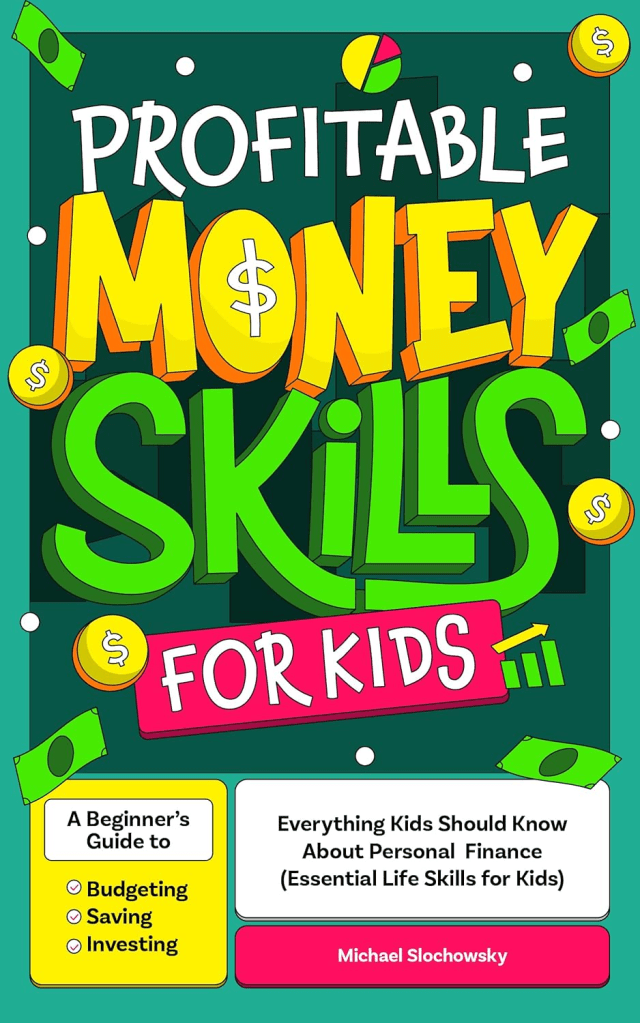
Profitable Money Skills for Kids

Written by Michael Slochowsky

This is a basic primer for kids with all the necessary information to understand money.

It is written in fairly simple language though I believe younger children will need additional guidance for complete understanding. The author begins with an introduction as to why he wrote the book, and why he included interactive strategies to implement its lessons.

Chapter One explains the history of money and its purposes. Then we move on to different types of saving strategies, budgeting, and tools to use. Kids learn the differences between needs and wants, and how to invest smartly. There are suggestions about how kids can earn money, give to charity, and avoid scams. Finally, there are goal-planning strategies, and discussions about planning for a sound financial future.

This book is a valuable financial literacy tool that can grow with the child providing a strong foundation for a sound financial future. Highly recommended to parents and teachers.

SUBSCRIBE TO THIS BLOG FOR NEW BOOK REVIEWS EVERY WEDNESDAY AND SUNDAY.

Go back

Your message has been sent

Warning
Warning
Warning.

CAN’T MAKE UP YOUR MIND? LET’S CHANGE THAT TODAY

Eliminate Decision Fatigue

Table of Contents

What Is Decision Fatigue? 

How To Cut Daily Decisions From Your Life 

Good News – Decision Making Ability Replenishes 

What Is Decision Fatigue?

Have you experienced decision fatigue? I’m sure you have, you may just not have had a word for it. It’s that feeling when you get toward the end of a busy and even stressful day, and you simply can’t make another decision. You can’t figure out what you should cook for dinner, and even the idea of picking something to watch on Netflix seems like a chore. Those are the days you’ve been suffering from decision fatigue.

We all experience them, and the more taxing your job is, and the more you’re required to make decisions throughout the day, the more you find yourself suffering from decision fatigue. That shouldn’t come as a big surprise. When we spend all day walking or running around, we feel tired in the evening and our muscles fatigue. If you’ve ever participated in any endurance sports event (or gone for a long run after a period of inactivity), you’ve experienced muscle fatigue. Why shouldn’t we experience the same when we tax our mind with lots of decision making?

Not only does decision fatigue impair our ability to make decisions altogether, but it also affects the quality of our decision making and our willpower. In short, after a long day of making good choice after good choice, we tend to start making bad ones. There’s a reason we see a lot of “Made for TV” products and infomercials on TV late at night and it isn’t just because of the cheaper advertising rates. It’s because that’s the time of day we’re most prone to making impulse purchases. It’s also when we give up on our diets and healthy eating intentions.

Keep this idea of decision fatigue in mind when you try to get a few last minute tasks done at the end of a long day. That may not be the best time for important choices or tasks that require well thought out responses or clear decision making.

Similarly, you should expect your team members, coworkers, bosses, and loved ones to experience the same. Asking your boss for a raise right before quitting time on Friday may not be a good idea. Your chances of getting a yes significantly increase if you wait until first thing Monday morning. Don’t expect your family to make healthy dinner and snack choices in the evening. Instead, plan your meals early on in the day and have them figured out well before lunchtime.

Important Lesson #1Don’t tackle important or difficult decisions late in the day, particularly if you’ve made a lot of decisions in the hours leading up to it already. 

How To Cut Daily Decisions From Your Life

Now that we’ve established that there is such a thing as decision fatigue, we’ll investigate some things we can do to void it. The answer is simple. We need to find a way to reduce the number of decisions we make on a daily basis. Here are some simple ideas for cutting some of them from our lives.

Use Habits and Routines To Your Advantage

Let’s start with something you already know how to do. You may just not realize it. That’s creating routines and habits to cut back on the decisions you have to make. You don’t have to decide to brush your teeth every morning or talk yourself into deciding to go to work today. Instead, it’s a habit and something you do without having to think about, and more importantly without having to waste one of your precious and limited decisions.

As you go about your day and make decisions, particularly if they are decisions that you make on a regular basis, stop yourself and see if there’s a way you can turn that decision into a habit or routine.

Instead of spending the first minutes of your day figuring out what you should wear, create a simple uniform for yourself. Find a few pairs of similar pants and a couple of mix-and-match tops. Rotate through those outfits, so you always know what to wear on a given morning.

If there is a recurring task at work, you should schedule to do it first thing in the morning or right before you head to lunch.  That gets it out of the way without having to decide when to take care of it.

Plan Ahead

Another great solution is to batch your decisions and plan ahead. Let’s use your food choices as an example. We all eat, and we make quite a few daily decisions about what to eat. You can cut those out of your daily routine by creating a weekly or monthly meal plan. Start with dinner. Sit down and come up with your dinner ideas for the week. Write them down and post them on the fridge door. When you go grocery shopping be sure to pick up everything you need. That way you don’t have to agonize about what to fix for dinner when you get home after a long day at the office. From there, expand and include breakfast and lunch plans as well. You can even choose a daily snack for yourself. For bonus points, create a couple of these menus and start rotating through them week after week. Once you’ve made your original meal plans, there’s no more decision making involved.

You can easily adapt this principle to other areas of your life and work. Sit down and make out a to-do list first thing in the morning or before you head home in the afternoon. You can batch a whole bunch of decisions together and have a game plan for your workday. Think about other ways to incorporate this into your life and cut back on the decisions you make.

Delegate And Cut Down Choices

Last but not least, start reducing the choices you have to make altogether. Not every decision has to be made by you. If you’re working in a team or have people under you, don’t be afraid to delegate. Yes, in the beginning, it’s a little extra work to explain what needs to happen and what’s involved. But as you start to delegate and give these people more and more responsibility, your decision making tasks will be considerably cut back. That allows you to focus on the critical stuff.

Another great strategy is to simply cut down on the number of choices you give yourself (and others). Get in the habit of trimming the list before you even attempt to choose.

These tips may seem like little things, but they will quickly add up. It doesn’t take a lot of decision cutting back to notice a big difference in when and how hard decision fatigue hits. Give it a try.

Good News – Decision Making Ability Replenishes

I thought we should end on a high note. The good news is that your decision-making abilities replenish and they do so regularly. In the last section of this short report, we’re going to go over the various ways we can encourage that replenishment and when and how it happens naturally.

In general, your decision-making ability replenishes with rest and with relaxation. Since we’re getting less and less of that in these busy times, it’s no wonder decision fatigue is becoming a big issue.

Decision-Making Ability Replenishes Overnight

Don’t panic when you find yourself unable to make another decision at the end of a long day. Sleeping replenishes your ability to make smart choices overnight. You’ll be back to a clear head and able to make important decisions in the morning. Use this to your advantage. If you feel decision fatigue is setting in you should rein things in for the rest of the day. Don’t schedule important meetings in the evening and use your mornings wisely.

Sometimes It Pays To Take A Mental Health Day

We all get busy, and we all get stressed out from time to time. When a good nights sleep doesn’t seem quite enough to bring your decision making batteries back to full strength, it may be a good idea to take the day off.

Do something fun, relax, destress, and most importantly make as few decisions as possible and certainly no important decisions. You’ll come back refreshed and ready to go.

Go Outside And Get Some Air

Sometimes taking the day off or waiting for the following morning isn’t an option. An important decision is expected from you before you leave the office, or within the next hour or so. If you’re feeling decision fatigue is setting in when a decision is needed there are two things I want you to remember. The first is that all other decisions can wait. Focus on making just the one more that can’t wait.

Go outside, get some air, and clear your head before you make your choice. While this won’t work as well as sleep or a day off, it may be just enough to give you that little boost of energy and willpower you need to make the right decision.

It May Be Time For A Vacation

Last but not least, let’s talk about taking a few days off and going on vacation. You know from experience how invigorating and restful a trip can be. Take advantage of this and come back ready to make those important decisions about the future of your company, your family, or what projects you want to tackle during the next quarter.

Above all remember to use your decision-making skills wisely and learn to recognize decision fatigue before it leads you to make a bad choice.

SUBSCRIBE TO THIS BLOG FOR TIPS ON HOW TO FIND RESOURCES TO LIVE A MORE FULFILLING LIFE FOR YOU AND YOUR FAMILY.

Go back

Your message has been sent

Warning
Warning
Warning.

A HOCKEY JOURNAL BOOK FOR MIND AND BODY

Hockey Wars Journal: Stat Tracker Activity Book

Created by Sam Lawrence and Ben Jackson

The authors have created a unique product that functions as a diary, journal, statistical record, exercises for mind and body, as well as fun activities geared toward life on and off ice. Inspired by The Hockey Wars series of books, boys and girls who are enthusiasts of ice hockey receive an opportunity to incorporate their passion with other areas of life.

Writing prompts encourage creativity, puzzles, inspirational quotes, tips on exercise and proper nutrition, riddles, space for artwork, and outside reviews of their games all have a place in this tracker. It is the perfect gift for children who are ice hockey afficionados.

SUBSCRIBE TO THIS BLOG TO RECEIVE NEW BOOK REVIEWS EVERY WEDNESDAY AND SUNDAY.

Go back

Your message has been sent

Warning

DO YOU HAVE YOUR EMOTIONS UNDER CONTROL?

Five Signs You Might Need to Focus on Emotional Healing

What is emotional healing? It’s the process by which you recover emotionally and mentally from a negative life experience. You can’t keep tough times from appearing in your life. When you are emotionally healthy and balanced, you deal with those difficult situations that inevitably pop up, and you can move on with your life.

This isn’t always the case when your emotions are out of whack.

Sometimes, we don’t understand we need emotional healing. That’s the problem. If you suffer some injury and have a broken bone, you can see it. You can certainly feel it. You know you have to get it fixed.

You might think your emotional responses to your experiences are correct and healthy. They may be anything but. Here are five signs you could use some emotional healing to live a more complete and fulfilling life.

You Don’t Experience a Wide Range of Emotions

You have access to 34,000 different and unique emotions. That’s what psychologist Robert Plutchik believed. He stated that most of us only experience eight primary emotions most of the time. These are anger, sadness, disgust, trust, fear, joy, surprise and anticipation.

If only a couple of those are usually present, you probably need more emotional balance. This could indicate that you aren’t properly processing situations and human interactions.

Low Self-Esteem and a Poor Self-Image

This is an offshoot of what we just talked about. You constantly look down on yourself. Everyone has times when they doubt their abilities. That’s only normal. We recover and move on. The emotionally unhealthy person usually has a low sense of self-worth, even when there is evidence this isn’t the case.

You Have Difficulty Trusting Others

A lack of trust can come from emotional imbalance. You must love yourself and truly believe you can overcome a bad relationship experience, or you’ll never trust others.

You Can’t Move Past a Negative Experience

Life can be difficult, at times seemingly impossible. It might look like you’ll never recover in the middle of the most trying hardship. You will. Don’t embrace and hold onto negative emotions. Practice gratitude for the great things in your life. Lean on your support network and get whatever help you need if you can’t seem to let go of negative emotions.

Constant Anxiety and Stress

Chronic stress is a killer and has been directly linked to many common causes of death. A constant display of stress and anxiety could mean you’re not always responding to life correctly where your emotions are concerned.

There is no miracle pill you can pop to always enjoy perfect emotional balance. You will have ups and downs, experiencing difficult times that hurt you emotionally.

For you to live your best life and for those that you love, you need to learn to recognize a negative life experience, give it its due, and then move on. Consider seeking help if you often display these signs of poor emotional health.

Dare To Question: Carrie Chapman Catt’s Voice for the Vote – virtual blog tour and giveaway #DareToQuestion

This post is sponsored by Jasmine Stirling. The review and opinions expressed in this post are based on my personal view.

ABOUT THE BOOK

Dare To Question: Carrie Chapman Catt’s Voice for the Vote

Written by Jasmine A. Stirling

Illustrated by Udayana Lugo

Ages 5+ | 48 Pages

Publisher: Union Square Kids (2023) | ISBN-13: 9781454934578

Publisher’s Book Summary: Jasmine A. Stirling, author of A Most Clever Girl: How Jane Austen Discovered Her Voice, delivers a powerful, poetic picture book biography about suffragist Carrie Chapman Catt, perfect for fans of I Dissent: Ruth Bader Ginsburg Makes Her Mark and the Rebel Girls series.

As a child, Carrie Chapman Catt asked a lot of questions: How many stars are in the sky? Do germs have personalities? And why can’t Mama vote? Catt’s curiosity led her to college, to a career in journalism, and finally to becoming the president of The National American Woman Suffrage Association. Catt knew the movement needed a change—and she set to work mobilizing women (and men) across the nation to dare to question a woman’s right to vote.

On August 18, 1920, Catt pinned a yellow rose to her dress and waited while lawmakers in Tennessee cast their deciding votes to ratify the 19th Amendment to the Constitution of the United States of America. After a seventy-year campaign, had women finally won the right to vote? 

Stirling’s suspenseful retelling of the dramatic final “yea” that changed the history of women’s rights brings the past to life for young readers.

PURCHASE LINK

Amazon

Bookshop

Barnes and Noble

ABOUT THE AUTHOR

Jasmine A. Stirling is the author of A Most Clever Girl: How Jane Austen Discovered Her Voice (Bloomsbury Publishing, 2021), named a Best Book of the Year by A Mighty Girl and Book Riot, and winner of the IPNE Book Award. It is currently being translated to Mandarin.

Her new book, Dare to Question, Carrie Chapman Catt’s Voice for the Vote (Union Square & Co, 2023, Booklist starred review), tells the story of the queer power couple who transformed the suffrage movement. Her third book, about Jeanne Barret, the botanist who disguised herself as a man and became the first woman to circumnavigate the globe, comes out in 2025.

Learn more about Jasmine.

Follow her on Instagram at @jasmine.a.stirling.author

ABOUT THE ILLUSTRATOR

Udayana Lugo is a self-taught illustrator of mixed heritage. Having worked as a designer of many varied things, from jewelry to auto-parts and from furniture to whole interiors, she still does that but in children’s books which are her true passion. She and her husband have lived in Mexico, Italy, and England, but they call British Columbia their home, along with their two kids. When not working on a book, you can find her walking her dog or baking something with her children.

MY REVIEW OF THIS BOOK:

WE’RE ALL IN THIS TOGETHER

DARE TO QUESTION: Carrie Chapman Catt’s Voice for the Vote

Written by Jasmine Stirling

Illustrated by Udayana Lugo

This picture book portrays in images and words one of the most significant events in American history, the enactment of women’s suffrage. The struggle before Carrie Chapman entered the battle had been limited to a small group of educated women.

Carrie was born to question. Her curiosity moved her to investigate the why behind anything that excited her imagination. She aroused and incited women from every part of society to enter the cause. Why not me? When Carrie joined Susan B. Anthony, the fire spread across the country. Then World War I broke out, even though Carrie did not believe in the war, she mobilized women to replace male soldiers in the factories, garnering the support and appreciation of President Wilson who formerly opposed women’s suffrage.

Once passed, the final hurdle of state approval needed to be overcome. Carrie feared failure once more, but an unexpected development turned the tide.

This book encourages children to believe hard work, dedication, empathy, and fairness can succeed if one is determined to persevere in the cause of equality and justice.

A picture book that will inspire and educate children and adults alike.

GIVEAWAY

Enter for the chance to win a personalized, signed copy of Dare To Question: Carrie Chapman Catt’s Voice for the Vote, a set of 5 Girl Power Enamel pins, and a $100 Amazon gift card!

One (1) grand prize winner receives:

-A personalized, signed copy of Dare To Question: Carrie Chapman Catt’s Voice for the Vote

-A set of 5 Girl Power Enamel pins

-A $100 Amazon gift card!

Four (4) winners receive:

-A personalized, signed copy of Dare To Question: Carrie Chapman Catt’s Voice for the Vote

CLICK ON THE LINK BELOW TO ENTER THE GIVEAWAY:

https://gleam.io/oF4IH/dare-to-question-book-giveaway

TOUR SCHEDULE

Tuesday, July 11, 2023The Children’s Book ReviewDare to Question Book Tour Kick-Off
Wednesday, July 12, 2023The Fairview ReviewBook Review of Dare to Question
Thursday, July 13, 2023Reading is My SuperpowerBook Review of Dare to Question
Friday, July 14, 2023The Tiny ActivistsBook Review of Dare to Question
Saturday, July 15, 2023Vivian KirkfieldAuthor Interview with Jasmine A. Stirling
Sunday, July 16, 2023Dad SuggestsBook Review of Dare to Question
Monday, July 17, 2023Feminist Books for KidsA Booklist Featuring Dare to Question
Tuesday, July 18, 2023icefairy’s Treasure ChestBook Review of Dare to Question
Wednesday, July 19, 2023Barbara Ann MojicaBook Review of Dare to Question
Thursday, July 20, 2023The Momma SpotBook Review of Dare to Question
Friday, July 21, 2023Twirling Book PrincessBook Spotlight of Dare to Question
Saturday, July 22, 2023MombianBook Review of Dare to Question
Monday, July 24, 2023Daddy MojoBook Review of Dare to Question
Tuesday, July 25, 2023Heart to HeartBook Review of Dare to Question
Wednesday, July 26, 2023Lisa’s ReadingBook Review of Dare to Question
Thursday, July 27, 2023My Reading GetawayBook Review of Dare to Question
Friday, July 28, 2023Me Two BooksBook Activity Paired with Dare to Question
Sunday, July 30, 2023Book Q&As with Deborah KalbAuthor Interview with Jasmine A. Stirling
Monday, July 31, 2023Satisfaction for Insatiable ReadersBook Review of Dare to Question
Tuesday, August 1, 2023Cover Lover Book ReviewBook Review of Dare to Question
Wednesday, August 2, 2023Because I Said SoBook Review of Dare to Question
Thursday, August 3, 2023Shooting Stars MagBook Review of Dare to Question
Friday, August 4, 2023The Fictional CaféAuthor Interview with Jasmine A. Stirling
Monday, August 7, 2023Glass of Wine, Glass of MilkBook Review of Dare to Question
Tuesday, August 8, 2023A Blue Box Full of BooksBook Review of Dare to Question and Little Free Library Drop
Wednesday, August 9, 2023Crafty Moms ShareBook Review of Dare to Question
Thursday, August 10, 2023Stargirls.Magical.TaleBook Review of Dare to Question
Friday, August 11, 2023One More ExclamationBook Review of Dare to Question

SUBSCRIBE TO THIS BLOG FOR NEW BOOK REVIEWS EVERY WEDNESDAY AND SUNDAY.

PRACTICE MAKES PERFECT

Kneading a Winning Idea: A Book on the Importance of Practice

Written by Terri Sabol

Illustrated by Pei Jen

I love the play on words for the title! Ben likes to bake. Every year he enters a contest with his buttermilk biscuits but never comes in first. Sofia is his fiercest rival.

When Ben’s father asks him if he will compete again, Ben decides he must make a change in his recipe to come out on top so he experiments by leaving out different ingredients. Then his cat gives him an idea. After trying it out, Ben’s father proclaims it a big success.

Can Ben finally achieve his dream of winning the contest with his buttermilk biscuits this year?

This book teaches elementary school readers that they must face their feelings and persevere until their desired goal is met. Patience is a virtue most young children find difficult to cultivate.

This book is a good start and readers receive a delicious bonus biscuit recipe as well.

SUBSCRIBE TO THIS BLOG FOR NEW BOOK REVIEWS EVERY WEDNESDAY AND SUNDAY.

YOU MATTER – PUT YOURSELF FIRST.

11 Healthy Ways to Put Yourself First

c2023 BY BARBARA ANN MOJCA

https://bamauthor.me

Introduction


The ability to set goals and achieve them requires mustering up the courage to take responsibility for your life. That involves putting yourself first. By putting yourself first, you are simply making it a priority to take care of your mental, physical, emotional, and spiritual needs.

Creating the life that you desire is no one else’s responsibility but yours. You cannot do that if you keep getting in the way of yourself by thinking and caring too much about others. No doubt, caring for the needs of others is a natural human instinct, but it should never be to your detriment. 

Many people are oblivious to the realization that they are the architects of their fortunes. They like to believe that putting the needs of others first, before their own, follows a universal moral code of conduct that you must adhere to, the failure of which makes them less human or less fortunate in life.

There are various reasons why people believe that putting the needs of others ahead of their own is the best and only way to live. They may think people will stop liking them, or that being a tireless caregiver gives them a sense of purpose and fulfillment. Some sincerely feel responsible for others, or worse, they don’t feel worthy of making themselves a priority.

Whichever one of the above categories you may find yourself in, the good news is that you can reset your thinking. Sadly, many people today suffer from thoughts of negating their own needs for the benefit of others. It is, however, essential to know that this thinking is false. You need to unshackle yourself from them to successfully take charge of your life and fully accomplish your goals.

Rather than confining your thoughts to the preconceived notion of scary consequence that would supposedly befall on you if you put yourself first, it is much more reassuring to focus on the numerous benefits guaranteed by putting yourself first. The importance of this is tied to many wholesome benefits some of which include:

  • Being more productive
  • Being happier and more joyful
  • Having more energy
  • Receiving more respect from others
  • Improved relationships
  • Experiencing less fear
  • Suffering from less stress
  • Feeling less resentment
  • Experiencing less depressed

These are the key areas where you stand to benefit if you learn to put yourself first. In this report, we will be looking at various healthy ways to put yourself first to gain the many wonderful benefits.

Strategies for Putting Yourself First


Below are some healthy ways and tips that can help you develop the habit of putting yourself first without burning bridges or negatively affecting your energy, enthusiasm, and motivation. Following them will help you achieve your goals, protect your mental and physical wellbeing, and overcome even your biggest challenges.

  1. Choose Your Purpose

Having a clear purpose in life is essential. It is the simplest, most basic thing every person needs to live a fulfilling and satisfying life. Without a clear sense of purpose, you will end up living your life haphazardly. Your purpose also makes it easier for you to say ‘No’ to people and things that do not align with your highest good. Being aware of your life purpose and living it helps you identify those things that you need to do and when you need to do them. By consciously reaffirming your purpose regularly, you will be inspired to multiply your efforts of taking action to see your purpose fulfilled.

  • Live by a Vision

Putting yourself first also requires that you develop a clear vision of the life that you want to lead. A vision keeps you focused on the journey of your life. A clear vision will allow you to effectively prioritize your tasks and projects as the important things will align with your purpose and vision of your ultimate life. To get clear about your vision, start by reflecting on these three questions:

  • Who do I want to be?
  • What do I want to do?
  • How do you want to feel?

If you are unsure about your vision, ruminating on these questions will assist you in getting clear about what you want out of life.

  • Set Personal Goals and Plan

Setting personal goals is a wise way to ensure your vision becomes a reality. Goals make the realization of your vision much more achievable and will keep you motivated and focused on what you want out of life. After taking the time to set your goals, set aside regular time to plan how you will achieve each of them.

  • Learn New Skills

As you draw up your goals and develop your vision, you may find you need to learn new skills to make your ideal life a reality. Take some time to identify those areas that you may be lacking in knowledge and skills. Then take proactive steps to bridge the gap between your present level and your desired level regarding your knowledge and skills.

  • Set Personal Boundaries

Setting person boundaries is a skill you need to master when learning how to put yourself first because you will need it a lot on every step of your journey. That is especially true if you tend to be a people-pleaser. Others are used to you backing down and giving them what you want, so you’ll need to stay strong. Look them in the eye and kindly say, “No, thank you.” Even when they try to convince you to think otherwise, practice sticking to your decision by not get pressured into consenting. Setting personal boundaries is a vital skill because it enables you to defend your time and your rights which is an essential component of putting yourself first.

  • Get Exercise

Putting yourself first isn’t only about goal setting and getting ahead. It’s also about taking the time for self-care. After all, if you don’t take care of your health, you’ll be unable to live your purpose or fulfill your life’s vision. Put yourself and your health first by starting a program of regular exercise as soon as possible if you aren’t already doing so. Engaging in a brisk daily walk is all that’s needed to improve and maintain your health.

  • Eat Healthily

A healthy diet is equally as important as your body’s need to exercise. Eating a nutritious diet is a huge part of taking care of your health and putting yourself first. If your diet needs a major overhaul, take it one step at a time and work your way up to your ideal diet. Remember, putting yourself first is about being kind to yourself.

  • Sleep Enough

Getting sufficient sleep is another essential component of putting yourself first. It is also necessary for boosting your performance and replenishing your energy. By getting enough sleep, you will be better equipped to face the hurdles of the new day with greater confidence, energy, and enthusiasm. Never allow anyone or anything come between you and the need to get enough sleep.

  • Schedule Relaxation

Sometimes you may be lacking the energy you need to live your ultimate life. Rather than trying to push through such times, it is better to maximize your relaxation and recovery. You can engage in activities that will help reduce fatigue and replenish your energy, such as meditation, yoga, massage, or a quick nap. If you find you run low on energy and motivation on a regular basis, start scheduling relaxation or downtime into your day. A consistent relaxation routine will keep you on more of an even-keel, so you don’t burn out.

  1. Journal

Apparently, you have 60,000 or more thoughts per day. When you feel you have a lot to do and you are overwhelmed with too many ideas, journaling will help clear your head. Journaling can also lead to better self-awareness, which is the foundation of putting yourself first. You can journal any way you wish—with paper and pen or by using an app. You might choose to journal every day or only when you feel overwhelmed or unsettled. Whatever works for you is perfect.

  1. Practice Gratitude

Take some time each day to reflect on the positives in your life. It’s easy to focus on the things we’d like to change and neglect to be appreciative for all we have. It is very important to have a realistic perspective on your life and identify the positives for the sake of your health and wellbeing. As you find the time to write down and reflect on all the things you are grateful for each day, you will reduce your stress levels and naturally find more and more to be grateful for in your life.

Conclusion

Putting yourself first is something you must make a conscious effort to do. You must fill your cup first, or you will end up with nothing left to give to others. Even when you face negative reactions from people who feel that you are selfish for putting yourself first, remembering the tips outlined above and applying them will give you the wherewithal to go on regardless and live the life that you desire.