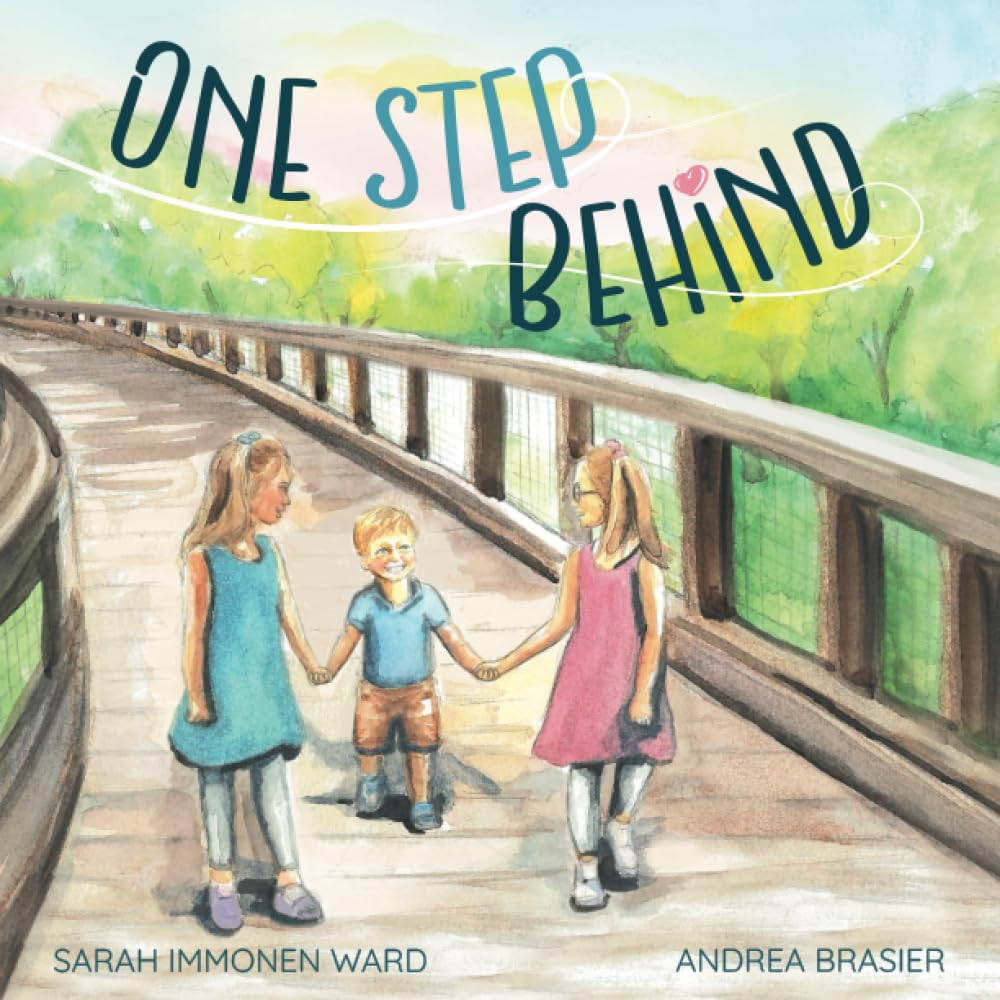
A beautiful rhyming picture book illustrated in soft pastels. This book focuses on sibling relationships and parental love for the child who is born last. It is a perfect shower or newborn gift for such a family.
It stresses the advantages of being born last. These children are born to parents with experience in raising children and siblings who provide role models that shore up a child’s confidence and social emotional skills.
I strongly suggest it as a read aloud for a family to share with the youngest child who will surely grow with confidence as she achieves each of the milestones mentioned in the picture book.
Appropriate for any age but especially suggested for toddlers and preschoolers.
Publisher’s Book Summary: Bubba and Squirt are back for another rousing quest as they travel through the mysterious vortex to Paris, France. It’s another wild adventure as they track down art thieves, encounter terrifying monsters, and discover the whereabouts of their missing father.
Will they make it out alive or join the rest of the skeletons in the City of Bones?
Coming Soon: The fourth book in the series, Bubba and Squirt’s Shield of Athena, will be released on May 7, 2024, and the final book, Bubba and Squirt’s Legend of the Lost Pearl, will be released in September 2024.
Sherry Ellis is an award-winning author and professional musician who plays and teaches the violin, viola, and piano. When she is not writing or engaged in musical activities, she can be found doing household chores, hiking, or exploring the world. Ellis has previously published Bubba and Squirt’s Big Dig to China; Bubba and Squirt’s Mayan Adventure;Don’t Feed the Elephant; Ten Zany Birds; That Baby Woke Me Up, AGAIN; and That Mama is a Grouch. She lives in Atlanta, Georgia.
For more information about her work, she invites you to visit her website at www.sherryellis.org.
MY REVIEW OF THIS BOOK:
NO BONES ABOUT IT
Bubba and Squirt City of Bones (Book 3 in the series)
Written by Sherry Ellis
This is the third book in a series featuring siblings, Bubba, and his younger sister, Squirt. In their first adventure, they travel through time back to Xian, China and the second hurls them back to the Mayan Empire. Each journey leads to a mystery they must solve and the possibility of never returning to the present.
This third adventure finds the pair falling through a vortex to ancient catacombs in Paris where they will encounter lots of creepy skeletons and nefarious characters in their attempt to rescue their father. The author relates the story with each sibling taking turns narrating the tale chapter by chapter. Combining history, fantasy, and a mystery adventure with lots of twists and turns creates a winning combination for middle grade readers, though I must admit it holds the interest of adults as well. Ellis supplies a glossary of information and a recipe as bonus items.
I highly recommend this educational and entertaining read for anyone age eight and older.
GIVEAWAY
Enter the giveaway for the chance to win an autographed copy of Bubba and Squirt’s City of Bones and a $50 Amazon gift card!
Five Signs You Might Need to Focus on Emotional Healing
What is emotional healing? It’s the process by which you recover emotionally and mentally from a negative life experience. You can’t keep tough times from appearing in your life. When you are emotionally healthy and balanced, you deal with those difficult situations that inevitably pop up, and you can move on with your life.
This isn’t always the case when your emotions are out of whack.
Sometimes, we don’t understand we need emotional healing. That’s the problem. If you suffer some injury and have a broken bone, you can see it. You can certainly feel it. You know you have to get it fixed.
You might think your emotional responses to your experiences are correct and healthy. They may be anything but. Here are five signs you could use some emotional healing to live a more complete and fulfilling life.
You Don’t Experience a Wide Range of Emotions
You have access to 34,000 different and unique emotions. That’s what psychologist Robert Plutchik believed. He stated that most of us only experience eight primary emotions most of the time. These are anger, sadness, disgust, trust, fear, joy, surprise and anticipation.
If only a couple of those are usually present, you probably need more emotional balance. This could indicate that you aren’t properly processing situations and human interactions.
Low Self-Esteem and a Poor Self-Image
This is an offshoot of what we just talked about. You constantly look down on yourself. Everyone has times when they doubt their abilities. That’s only normal. We recover and move on. The emotionally unhealthy person usually has a low sense of self-worth, even when there is evidence this isn’t the case.
You Have Difficulty Trusting Others
A lack of trust can come from emotional imbalance. You must love yourself and truly believe you can overcome a bad relationship experience, or you’ll never trust others.
You Can’t Move Past a Negative Experience
Life can be difficult, at times seemingly impossible. It might look like you’ll never recover in the middle of the most trying hardship. You will. Don’t embrace and hold onto negative emotions. Practice gratitude for the great things in your life. Lean on your support network and get whatever help you need if you can’t seem to let go of negative emotions.
Constant Anxiety and Stress
Chronic stress is a killer and has been directly linked to many common causes of death. A constant display of stress and anxiety could mean you’re not always responding to life correctly where your emotions are concerned.
There is no miracle pill you can pop to always enjoy perfect emotional balance. You will have ups and downs, experiencing difficult times that hurt you emotionally.
For you to live your best life and for those that you love, you need to learn to recognize a negative life experience, give it its due, and then move on. Consider seeking help if you often display these signs of poor emotional health.
Born in a Treacherous Time (Dawn of Humanity Book 1)
Written by Jacqui Murray
I read Jean Auel’s series and as other reviewers have mentioned, this series has a similar flavor.
The reader meets Lucy, a Homo Habilis creature, living in Africa 1.8 million years ago. She struggles each day to live to the next one. The author introduces a slew of characters. At the beginning of the book, it is difficult to sort them out, but they add depth to a plot that includes descriptions of ancient peoples struggles to communicate, to hunt and be hunted, and compete with an environment they did not know how to control.
This book is, of course, historical fiction. The amount of historical evidence is scant and much is left to our imagination. In my opinion, Murray does an excellent job of fitting the pieces together while adding compassion and empathy to soften the rough edges.
Recommended for readers ages ten and older who enjoy historical fiction, especially in the prehistory genre.
INTERESTED IN MORE BOOK REVIEWS?
SUBSCRIBE TO THIS BLOG FOR NEW BOOK REVIEWS EVERY WEDNESDAY AND SUNDAY.
Oh, How You Are Loved (A KeepsakeBook for Mother and New Baby)
Written by Melanie Hawkins
This simple rhyming picture book tells the story of a mother’s love for her children. Written by a mother of seven, the simple illustrated rhymes portray animal mothers with their young accompanied by nature scenes.
It would make an excellent bedtime story or read aloud for a child of any age. Buyers should note that the book reflects a Christian outlook on motherhood. It might also be a gift for a first-time parent.
SUBSCRIBE TO THIS BLOG FOR NEW BOOK REVIEWS EVERY WEDNESDAY AND SUNDAY.
One Giant Leap has much to offer. A middle-grade read that leans a bit more to the upper grades of that range contains an interesting plot. Four students have won a science competition to take a trip to outer space from a space tourist organization, but both of Fin’s parents are in the hospital. He needs a guardian to participate.
A conflict of emotions and stress at the outset. Well, I will reveal that Fin accepts the prize, but not the details of this fantastic opportunity. The book combines lots of space trivia, factual scientific information, and middle-grade angst connected with coming of age. Its adventure plot moves swiftly.
I especially enjoyed the author’s approach of including rather advanced vocabulary definitions in the glossary and a section at the end separating fact from fiction. Space afficionados and science geeks will both enjoy the book. Even adults will not be disappointed.
SUBSCRIBE TO THIS BLOG FOR NEW BOOK REVIEWS EVERY WEDNESDAY AND SUNDAY.
That phrase pretty much summarizes the feeling of twelve-year-old protagonist Porter Redmond. He just wants to hang out with friends at school and play soccer. Unfortunately, he must train to eventually replace his mother who is the gatekeeper between Earth and the parallel universe of Pericael.
The action begins almost immediately. Readers must quickly assimilate background information to keep up. While the action is nonstop filled with magic and fantasy, younger readers might have some difficulty at the outset. The vocabulary is rather complex and not intuitive. Slower or reluctant readers might not have the patience to stay with it to the end. I would classify it more of a young adult rather than a middle-grade choice.
The plot and characters would also appeal to an adult audience.
SUBSCRIBE TO THIS BLOG FOR NEW BOOK REVIEWS EVERY WEDNESDAY AND SUNDAY.
Allie Strom and the Ring of Solomon: A Middle Grade Fantasy (Bringer of Light Book 1)
Written by Justin M. Stone
How much bad news can one twelve-year-old handle? Allie has just learned her best friend is leaving, her mom has been deployed overseas, and Allie is about to start seventh grade in a new school.
If that were not enough, Allie faces bullies, her mother’s disappearance, and finding a necklace belonging to her mother that appears to have mysterious powers. This is the first book of a series that contains themes familiar and popular to a middle-grade audience but written in a way to appeal to an older audience as well.
Allie meets Daniel who will participate with Allie on her quest. I enjoyed the interesting sketches of the characters included in the book that make them come alive. This feature also will engage reluctant readers.
Readers of coming of age, paranormal, fantasy and magic will find something to like here.
SUBSCRIBE TO THIS BLOG FOR NEW BOOK REVIEWS EVERY WEDNESDAY AND SUNDAY.
An interesting choice for young adults and adults who enjoy medieval history. Narrated from the perspective of a nine year old boy, Archibald Douglas, who is orphaned in fourteenth century Scotland and exiled with the Scottish king to France.
It follows the career of Douglas as he passes through the stages of knighthood and eventually returns to Scotland to revenge the king. The author has a lot of experience with nonfiction so there is much attention to historical detail. The language with Scottish inflection is sometimes difficult to follow. Tomlin attempts to remedy that with an extensive glossary.
This book is part of a series. Readers who seek a satisfying ending may be disappointed. For readers who enjoy history with interesting characters and battle scenes, this series will fit the bill nicely.
SUBSCRIBE TO THIS BLOG TO GET NEW BOOK REVIEWS EVERY WEDNESDAY AND SUNDAY.
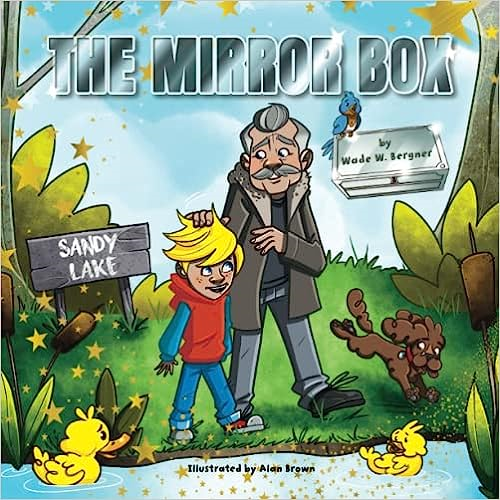
This is a tender picture book dealing with a topic families dread facing, the death of a loved one. In this book, the protagonist is a young boy who loves and enjoys spending time with his grandfather playing football, taking walks, sharing memories, and telling jokes.
One day his parents tearfully approach him with the news that his grandfather has passed away. The message confuses him. How could his grandfather leave without saying goodbye. Suddenly he remembers a gift that his grandfather gave him with the promise the boy would not peek. Will that gift be the key to relieving his grief?
I believe this book could be an important tool for parents or teachers with children who are grieving a personal or community loss. Recommended for elementary grade readers.
I received a copy of this book from the publisher and voluntarily decided to read and review it with my honest opinions for no compensation.
SUBSCRIBE TO THIS BLOG FOR NEW BOOK REVIEWS EVERY WEDNESDAY AND SUNDAY.


 January 28, 2024
 bamauthor
 Comments Off on LAST BUT NOT LEAST, A FAMILY TREASURE










 Barbara Ann Mojica's BLOG
You must be logged in to post a comment.