Posts tagged ‘Australia’

CHRISTMAS CUSTOMS AROUND THE WORLD
December is well-known for Christmas but do you know how people in countries around the world celebrate it? Here are some customs from various parts of the world that parents or teachers can use to jumpstart a multicultural holiday customs activity for the children in your family or classroom.


Australia


Greeting – Merry Christmas
Santa’s Name – Santa Claus. Children leave him a piece of cake or biscuits and a glass of milk or a bottle of beer.
Food – Many Christmas dinners include roasted meats and vegetables, special fruit cakes, and puddings with a coin baked inside. Since the temperature can reach 100 degrees Fahrenheit, people are starting to eat cold meats and salads, tropical fruits like mangoes, and stone fruits like plums. Often, the main meal is eaten for lunch.
Gifts – These are left under the Christmas tree and opened Christmas morning.
Decorations – Shops and homes are decorated with tinsel, Christmas trees, decorations for the holiday, and special lights.
Customs – Traditional and Australian carols are sung by candlelight on Christmas Eve and are broadcast on television. On Boxing Day, the day after Christmas, two sporting events take place:
The Boxing Day Test Match (cricket game) and the start of the Sydney to Hobart Yacht Race.


Brazil


Greeting – Feliz Natal
Santa’s Name – Papai Noel (Father Noel), who is dressed in a red, silk suit with boots.
Food – Many people eat a traditional feast with roast turkey and vegetables, while others eat chicken and rice or beans. Beer and wine are also served. Some regions begin eating around 9 PM on Christmas Eve, while others eat around midnight.
Gifts – Local charities take in donations but do not seem to have enough presents for all the children.
Decorations – Brazil has a mixture of people so Christmas is celebrated in different ways. In the northeastern area, it is common to find Nativity Scenes; in the southern part, snow is simulated with little pieces of cotton on pine trees.
Customs – Brazilians sing a number of Christmas carols.


Greece


Greeting – Eftihismena Christougenna
Food – Special holiday cakes are baked.
Gifts – Most Greek people exchange gifts on Saint Basil’s Day, January 1.
Customs – To honor Saint Basil, the holiday cakes have gold coins hidden inside them. The cakes are cut at midnight on New Year’s Eve. Whoever has a gold coin in his piece of cake will have good luck the following year.


Hungary


Santa’s Name – Actually, the Baby Jesus is said to bring presents on Christmas Eve. A bell sounds signaling that the Angels have brought the tree and gifts.
Customs – On December 5, children leave out their shoes. During the night, Mikulas and Black Peter come to fill them with goodies for well-behaved children and switches for naughty children.
India
Decorations – Sometimes, houses are decorated with mango leaves; mango or banana trees are also decorated. Small, clay, oil-burning lamps are placed on the edges of flat roofs as decorations.


Israel


Greeting – Chag Semeach (Happy Chanukah)
Santa’s Name – Actually, parents, grandparents, and other family members give presents to the children.
Food – Because oil is an important part of the holiday, many foods are prepared with it. A favorite is potato latkes (pancakes).
Gifts – Since Chanukah lasts for eight days, children may receive one present each night.
Decorations – Jewish stars, blue or silver foil garlands,
dreidels (spinning tops), Chanukah gelt (chocolate coins), and pictures of the Macabees (Jewish army that recaptured the Holy Temple and Jerusalem from the Assyrian Greek King Antiochus) are found around the house.
Customs – The menorah (candelabra) is lit each night. On the first night, one candle is lit; on, the second night, two candles; and so on until all the candles are lit on the eighth night. After lighting the candles, families eat a festive meal, dance, play games, and open presents. They also attend Chanukah parties.


Japan


Greeting – Kurisumasu Omedeto
Santa’s Name – Santa Kurohsu. He does not appear in person but is pictured in advertisements as a kind old man with a round sack on his back.
Food – Depending upon the family’s custom, they eat turkey on Christmas Day or on Christmas Eve. Japanese families also eat Christmas cake.
Gifts – Stores sell merchandise for men, women, and children; and on Christmas Day, families exchange gifts.
Decorations – More and more artificial Christmas trees are beginning to appear. They are decorated with small toys, gold paper fans, dolls, lanterns, paper ornaments, and wind chimes. A popular ornament is the origami swan. Other decorations are mistletoe, evergreen, tinsel, and lights. An amulet is put on the front door for good luck and children exchange ‘birds of peace,’ pledging there must not be anymore war.
Customs – The daiku, or Great Nine, refers to Beethoven’s Ninth Symphony and is performed many places.


Mexico


Greeting – Feliz Navidad
Customs – Beginning on December 15, some families carry colorful lanterns and walk from house to house in their neighborhoods, each night, until Christmas Eve. This is called La Posada, which means ‘the procession.’ On each of the nights, the families are invited into different houses where they become guests at a party. There is plenty to eat and drink. Children play the pinata game, trying to break open the papier-mache figure with a stick while blindfolded; when it is cracked open, candies and small gifts fall out.


Netherlands


Greeting – Hartelijke Kerstroeten
Santa’s Name – Sinterklaas (St. Nicholas), who wears a red bishop’s hat and bishop’s cloak and has white hair and a white beard. He arrives on a white horse with his servant, Black Pete, to put small gifts in children’s wooden shoes.
Food – The Dutch people eat lots of marzipan, spiced ginger biscuits, tall chocolate letters, and ‘bankletter’ – initials made of pastry and filled with almond paste. When they are around the Christmas tree singing songs, they eat ‘Kerstkrans’ – a Christmas ring.
Gifts – On December 6, after hearing a knock at their door, children find a bag full of toys, nuts, and gifts.
Decorations – The Christmas tree is known as the Paradise Tree. Decorations of the season include dolls, musical instruments, fruit, candies, and lights.
Customs – The Dutch sing carols, the most popular one being “O Christmas Tree, O Christmas Tree.”


Sweden


Greeting – God Jul
Food – Coffee, cakes, and special buns are served on Santa Lucia Day, December 13.
Customs – Santa Lucia Day honors Saint Lucy, who helped blind people. The oldest daughter in each Swedish household dresses in a white gown with a red sash, wears a crown of evergreen
with seven candles in it, awakens the family with a song, and serves the coffee, cakes, and buns. Each town and city also chooses a young woman to be Lucia for the day. She then serves coffee and food to the townspeople at schools, hospitals, and other public buildings. From these women, a national Lucia is chosen; followed by a parade, feast, and dance.


Now comes the fun part. Let your children put the information in a comparison chart. Label the left side with the names of the countries and the bottom with the various information (ie: Greeting, Food, and so on). Then fill in the boxes!


Let your children do research
Conduct research to find out the same customs for other countries, especially the heritage countries of students in your class or your own family.

SUBSCRIBE TO THIS BLOG FOR TEACHING RESOURCES THAT TEACH KIDS HOW TO THINK, NOT WHAT TO THINK

A PICTURE BOOK FOR OLDER READERS

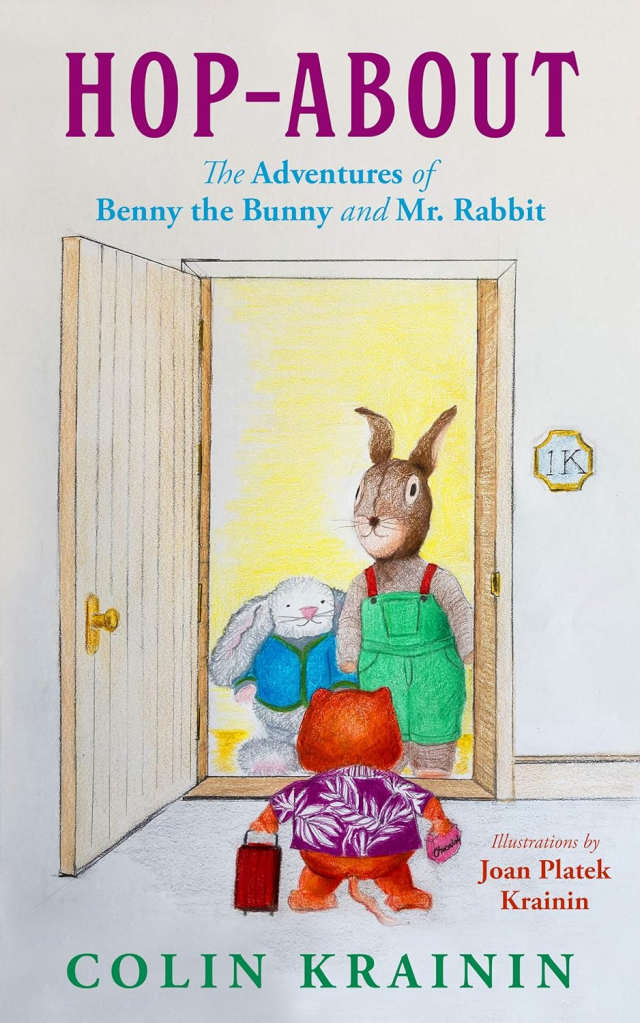
Hop-About: The Adventures of Benny the Bunny and Mr. Rabbit

Written by Colin Krainin

Illustrated by Joan Krainin

At first glance, one would guess this book title is for elementary school readers. Indeed, it contains charming illustrations, but the complexity of characters and issues addressed suggest it is more appropriate for middle-grade and older audiences.

At the outset, readers meet Mr. Rabbit, a stuffed rabbit who lives with his friends, Mr. Rabbit, and a large stuffed bear in an apartment in New York City. When a visitor arrives, their lives are turned upside down.

They are recruited in an adventure to search for a lost friend. This journey eventually leads to Australia where the friends encounter wildfires, climate-change disasters and a host of unsavory characters.

The plot and characters are rather complex for a young reader. Older readers are better equipped to understand the issues and appreciate the personality types presented.

An enjoyable read for readers ages ten and older.

Go back

Your message has been sent

Warning
Warning
Warning.

FOUR FRIENDS SIT FOR A SPELL #HappyEaster #EarthDay

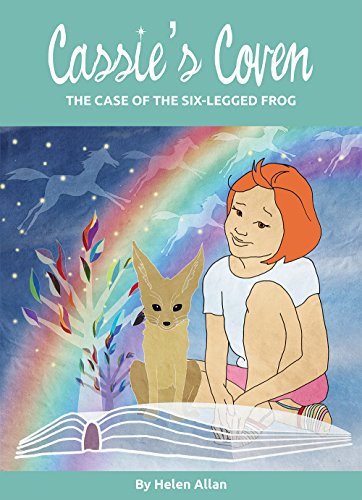
Cassie’s Coven: The Case of the six-legged frog (The Cassie Coven Series Book 1)

Written by Helen Allan

The first book in this middle-grade mystery series features four Australian girls. Cassie and Lolly share a love of horses and attend school together. One day Cassie buys an old book and discovers it is a magic book of spells. Shortly after Cassie finds a sickly fox kit and Lolly discovers a six-legged frog in a nearby creek. The book talks about a coven of four witches, yellow, black, white and green. Lolly and Cassie invite Charlotte and a new girl at school, Pia to join their group. Pia’s great-grandmother offers an old cottage on her property as a clubhouse. Soon the girls are using it to solve the mystery of why nearby animals and cattle are becoming sick and dying. Lolly and Cassie fall ill, and they show symptoms of poisoning.

The four girls decide that Mr. Larkin, a neighbor, seems too eager to scare them off his property and they vow to investigate why. They use the clubhouse to get close and are shocked to discover that the book of spells can help them to solve the mystery. This is the first book of the series that combines fun adventures of four ten-year-old friends, some magic, and issues related to the environment set in Australia. Recommended for readers ages ten and older.

If you enjoyed reading this post, please subscribe by clicking on the word Follow or by hitting the orange RSS FEED button in the upper right-hand corner of this page.


TRANSFORMATION FROM WITHIN

Raywyn and the Golden Bow

Written by Angelos Ashes

Young Raywyn and her parents are journeying from London to Australia by sea when they are shipwrecked. Raywyn has washed ashore where she is discovered by beachcombers. When she wakes up in the hospital, she realizes that her parents are dead. Raywyn meets her uncle, Patrick Blake, who will become her guardian. She is whisked away to his home named Black Swan at the southern tip of Australia.

Once there, Raywyn is immersed in a totally different environment. Patrick and his friend Rollo introduce her to archery, philosophy, literature and meditation. Raywyn discovers how to meditate and transform herself from within. The reader participates in her spiritual journey to the netherworld, the City of Light and the Ganges. Raywyn discovers how and when to fight. Her spiritual journey takes the reader on a roller coaster ride immersed in fantasy, science fiction and reality filled with interesting characters and life lessons. Recommended for readers ages eight and older who enjoy these genres.

If you enjoyed reading this post, please subscribe by clicking on the word Follow or by hitting the orange RSS FEED button in the right-hand corner of this post.

RAT ROUNDUP

Rat Books for Kids: Amazing Pictures and Interesting Facts for Kids

Written by Susie Eli

ratbookpic

Interesting nonfiction book especially suited for students in the elementary or middle grades. I will readily admit that I learned quite a bit from this thirty page book so I do not hesitate to recommend it for adult readers who have an interest in the subject. Royalty free common stock photos enhance interest and add an additional dimension.

Originally rats came from Australia and Asia, but are now found anywhere in the world. Readers learn that there are 60 types of rats, the brown rat and the house rat being the most common. Topics covered in the book include their behavior and habits, how they eat, grow and multiply, wild and pet rats, and the Gambian Pouched Rat. Some interesting facts that I gleaned from the book include: a group of rats is called a mischief, males are bucks and females are does, rats are smart and make good pets, happy rats might roll their eyes or make grinding sounds with their teeth, and one female may have as many as 2000 babies in one year! While rats are often seen as a nuisance, the Gambian Pouched rat can detect deadly land mines and diagnose a patient with tuberculosis.

Animal lovers will enjoy learning about this often maligned animal. Great resource for a science research project or report. Recommended especially for children in third through fifth grade. Fascinating read for adults as well as children. Available in kindle and paperback.

If you enjoyed reading this post, please subscribe by clicking on the word Follow or by hitting the orange RSS FEED Button in the right hand corner of this page.

RAISING YOUR VOICE

Layla Learns to be Brave: Series for beginning readers

Written by Bron Whitley

Illustrated by Melissa Bailey


Layla,picReally enjoyed reading this early chapter book about a second grader named Layla who lives in Australia. Young readers learn that while it is okay to be scared of new things, it is also a brave act to try something new.
I like the way the author introduces Australian customs, culture and habitat to her readers. For example readers learn about gum trees, kookaburras and cockatoos. Layla reveals her active imagination when she imagines being a cowgirl and sees bugs in her cupcakes. The humor and large black and white pencil drawings aid in sustaining interest for beginning or reluctant readers. Layla represents the thoughts and dreams of many of her readers.

Highly recommended chapter book for beginning and reluctant readers. Look forward to reading more books in the Layla down under series.

If you enjoyed this post, please subscribe by clicking on the word Follow or by hitting the orange RSS FEED button in the upper right hand corner of this page.

HITTING THE LOTTERY

Catnapped

Written by Teena Raffa-Mulligan

Illustrated by Daniel Weatheritt
Catnapped,pic

Charming early chapter mystery book of less than fifty pages that is perfect for the beginning reader. Jenna bemoans the fact that her Nanna has moved from a bustling Australian city to a quiet house on Wattle Drive. Well, actually not that quiet, Nanna has adopted several pets: Oscar a large orange cat, Goliath, a large Great Dane, Cleo, a black and white cat, Albert, a python snake, and Polly, a chatterbox parrot, who enjoys watching police shows. One night while watching TV, Nanna screams with joy when she finds out that she has just won the lottery. Nanna quickly decides that after setting some money aside for Jenna’s education and a trip to Disneyland; she will use the rest to take her friend Alice to the Sydney Opera House, but give the bulk of the money to build a special home for cats that nobody wants.

Cass Snatchit and her lazy teenage brother Jack read of Nanna’s good fortune in the newspaper. They live in a run-down trailer and quickly decide that they will kidnap Nanna’s cat and demand a large sum of money for ransom. The author details their plans to spy on her and break into her house. Will they succeed in their plan to swindle Nanna and foil her generous plan for the lotto winnings?

The six chapters are short and the text is easy to read and conversational. Characters are fun, and the black and white pencil illustrations are charming. I do think the illustrations might have been more effective if they were larger and in color. This book has lots of elements a child age six to nine will enjoy: animals, the good guys and the bad guys, and a touch of humor. Recommended as an independent reader or read aloud at home, in the classroom or for siblings to share with one another.

If you enjoyed reading this post, please subscribe by clicking on the word Follow or by hitting the orange RSS FEED button in the upper right hand corner of this page.

THE DIRT ON DINGOES

Dingo Facts: Easy Learning For Kids (Amazing Australian Animals)

Written by Sara Woods

DingoFacts,pic

This book is one of the amazing Australian animal series. It will enlighten the reader about what kind of animal a dingo is, where it lives, what it eats, how it moves and breeds, how it is threatened, and why it is important. The book packs a lot of information in thirty-four pages. While the author targets the book as a read aloud for younger children as well as an independent reader for older children, I think it more appropriate for the latter group.

Unfortunately, my travels have not yet taken me to Australian so I am unfamiliar with this animal. Looking at the photos, I immediately thought of a gray wolf and later learned from the author that the dingo is a subspecies of that animal introduced to Australia by seamen about 4,000years ago. I was fascinated to learn that dingoes are double jointed at all their joints, and that they use their paws as we do our hands. They can even open door knobs. Their ears stand straight up and can rotate backwards; they can rotate their heads 180 degrees for better vision. Most dingoes are monogamous and will mate yearly averaging four to six pups for about ten years. The mother will eat, swallow and regurgitate food to feed young much like a bird.

Landowners and hunters are the biggest threat to the dingoes, but crocodiles, snakes, and lack of food and water also factor in their survival. More contact with domestic dogs as urban sprawl progresses could eventually lead to extinction. Farmers who see them as a threat have engineered the world’s largest fence (3,488 miles) to protect sheep and farm lands. But dingoes are special animals because as the only native dog to Australia, they are apex predators at the top of the food chain who protect many smaller mammals and the native natural grasses. Some areas of Australia have set up sanctuaries to protect the dingoes.

This series will eventually include eighteen books about Australian animals. It certainly makes an excellent, well-organized reference source for classrooms in the elementary grades and libraries. Teachers could also use many of these books in science units comparing and contrasting with other animals. Highly recommended for children age seven and up. Adults who read these books to children will find themselves being entertained and informed as well.

If  you enjoyed reading this post, please subscribe by clicking on the word Follow or by hitting the orange RSS FEED button in the upper right hand corner of this page.