UNLIMITED POSSIBILITIES
But Gertie Garza, You’re a Girl!
Written by Melanie Mathis
Illustrated by Karissa Miller Laffey
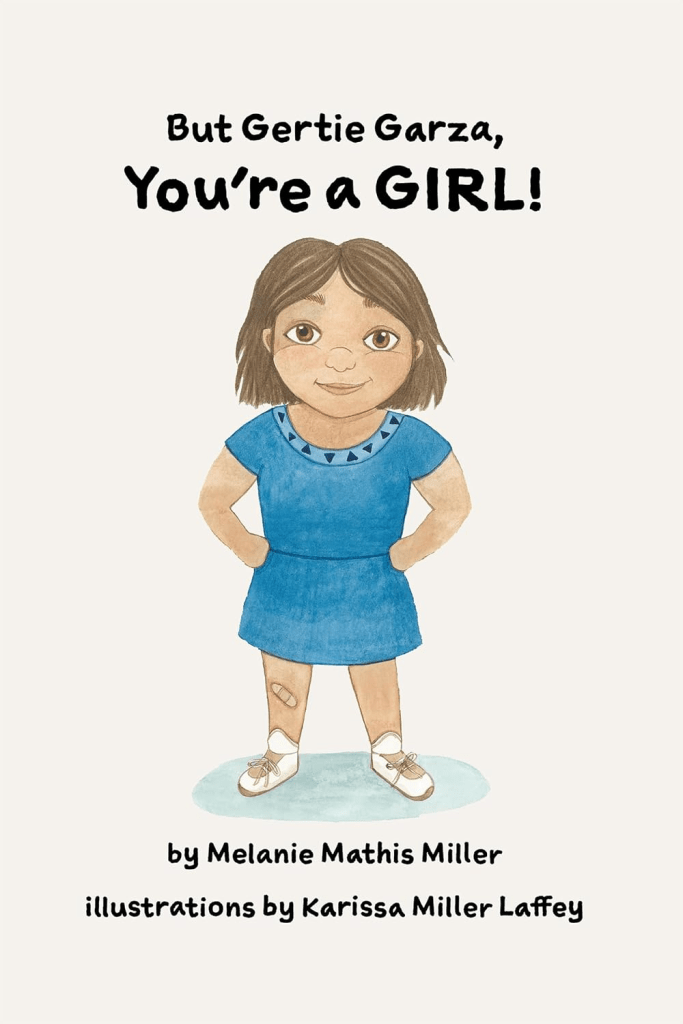
Gertie is a young lady who refuses to be told that being a girl limits her choices.
This book is written in catchy rhymes. The vocabulary is fun and challenging. The author includes alliteration and analogies.
When peers warn Gertie that her choices are limited because of her sex, she pushes back. Why can’t she be a lion tamer if she works hard to succeed? That message is reinforced by her grandmother, who lives in the home with Gertie. Grandma has lived an exciting life full of adventures, such as hiking and hot air balloon rides. She encourages Gertie to aspire to her dreams.
This book inspires young girls to place no boundaries on possibilities. Parents and teachers should put this one on home and school bookshelves.
SUBSCRIBE TO THIS BLOG FOR NEW BOOK REVIEWS EVERY WEDNESDAY AND SUNDAY.
 February 25, 2026
 bamauthor
 Comments Off on UNLIMITED POSSIBILITIES






 Barbara Ann Mojica's BLOG
You must be logged in to post a comment.