Posts from the ‘Parenting’ Category

Mid-Winter Blues? SUGGESTED READS FOR KIDS

Maybe you have had the children home all week for midwinter break. Much of the Western Hemisphere has been in the deep freeze for awhile now. Ready for some reading suggestions that are family friendly. I recently participated in a blog hop which shared some interesting book links.

Take a few minutes to take a look….

Turtle Wish by Murielle Cyr

I’m Proud to be Natural Me by Marlene Dillon
http://www.amazon.com/Im-Proud-Be-Natural-Me/dp/1470151995 

 Miro by Saoirse O’Mara
http://mirodrakonia.wordpress.com/the-miro-series-die-miro-reihe/

 Fiddle and Dee and the Bedtime Band by Lindsay Brant Brumwell
http://www.amazon.com/dp/B00IICQHMM 

Picture Books by Rhonda Patton
http://www.amazon.com/s/ref=nb_sb_noss_1?url=search-alias%3Daps&field-keywords=Rhonda+Patton 

Jazzyland by Gia De Saulnier

Amazing Matilda by Bette Stevens

Little Miss History (series) by Barbara Ann Mojica
LMHFrontCoverWithISBN

Books by Corine Dehghanpisheh

The Wiggly Squiggly Princess by Alissa Dix (Maureen)

 The Tangram Zoo and Word Puzzles Too! by Bette A. Stevens

The Wonderf ul World of Color Olors by Nina Carothers
http://www.amazon.com/s/ref=nb_sb_noss?url=search-alias%3Daps&field-keywords=nina+carothers

JAMAICAN ADVENTURES

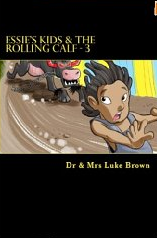
Essie’s Kids and The Rolling Calf -3:Island Style Ghost Story

Written by Dr. & Mrs. Luke Brown

Essie'sKids3pic

I came across this e book as a promotion. I had not read the first two books in the planned five book series. This third short story is a strange combination of Jamaican folklore, adventures, and moral lessons that pleasantly surprised me. It makes a good addition to a classroom multicultural library. The book is well written with lots of colorful verbs, analogies and descriptive language though I did find one typo in which the word joint was used for the verb join. A smattering of Jamaican lingo like the word, “mon” also provides an authentic touch.

At the outset, the reader meets Karl who is tossing in his bed because he is haunted by the memory of the dreadful beast known as a rolling calf , a large swift running creature with dragon like eyes who voices terrifying sounds. Karl has met this creature in previous stories and now is anxiously awaiting to confront him once and for all. When he finally succumbs to sleep, he dreams that he is tiptoeing down the ghost-like streets at night. Suddenly, his brother Leonard shakes him; Karl realizes it is all a nightmare.

Karl’s family has journeyed from the city of Montego Bay to their country home in Clear Mont for the summer. His sisters, Myrtle, Geena and Betty play hopscotch and jump rope, while the boys play tag in the front yard. The author contrasts nicely the differences between the “city” and “country” folks. The country children wear plain clothes and no shoes. City kids are teased for being cowardly and not willing to get dirty. In the end, both learn to give and take and respect each others skills and differences.

Junior’s best friend here is named Ben. He encourages Junior to come to the river and fish. Junior realizes his mother will probably say no, so he hesitantly decides to slip away without asking permission. Ben meets up with his friends, Johnny, Dave and Jasper, who he calls “bad company” because they always manage to get him in trouble. The girls, on the other hand, get their mother’s permission to go to the river and enjoy their day without worries.

Karl had not been himself since the nightmare. He sat by himself most of the day. Karl continued to believe that this strange beast had a message for him. Then he decides to go to the river by himself. As night is about to fall, he sees a bolt of lightning flash before him and feels the swaying of the ground beneath him. Will Karl find his way home? Does he succeed in his quest to confront the beast?

The story abruptly shifts back home to the children listening to their mom, Essie, relating one of her nightly stories. She talks of two men locked in a prison cell. The innocent prisoner sees the possibility of being set free someday even though he has no money to defend himself, but the other guilty prisoner is unhappy and mean. Essie’s lesson is that the mean prisoner continued to see only bad things, but the innocent prisoner continued to see promise and beauty outside his window. Before sending the children to bed, they are reminded to look for the good in every situation.

Boys and girls age seven and up will each find elements in the story to their liking. Adults will enjoy the clever interweaving of sound moral lessons intertwined with the charming setting and folklore of Jamaica and the familiar antics of children everywhere.

If you enjoyed this post, please subscribe by clicking on the word Follow or by hitting the orange RSS feed button in the upper right hand corner of this post.

THE BUZZ ON BEES

A, Bee, See: Who are our Pollinators and Why are They in Trouble?

Written by Kenneth Eade

Photographs by Valentine Eade

A,Bee,Seepic

The author decided to write a children’s edition of his adult book. You might expect it to be written by a biologist, but Kenneth Eade is a lawyer with the vision to look ahead toward environmental responsibility. He begins by explaining the interdependence of plants and animals and then introduces the bee as our most important pollinator. Bees have been at work for more than one hundred million years. There are thousands of kinds of bees, but Eade concentrates on the most common types like the honey bee and the bumblebee, and how they accomplish their work. Most of us are aware of the bees work, but are less familiar with the fact that moths and bats pollinate plants at night. Did you know that bats pollinate three hundred kinds of fruit and cacti?

The reader will learn how the honeybee colony is organized into queen bee, workers and drones. Did you know that honeybees have five eyes that help them navigate with light, color and direction? For years I have been telling children to stand still when any type of bee flies near them. I felt vindicated that this is the right action. What I found really interesting is that worker bees have two stomachs, one for eating and one for storing the nectar they gather, They even have tiny bags on their hind legs for carrying the pollen to the hive. I was never aware of the processing bee that puts nectar into a honeycomb cell nor that she adds an enzyme that allows it to ripen and dry into honey. Such a perfect food for the bees which lasts for years and provides nutrition for humans as well.

Bees are endangered now because excessive land clearing depletes home-sites for bees as well as other animals. At the same time the wildflowers are disappearing. Many farmers treat their crops with pesticides that kill bees. Children can help by urging their parents to plant wildflowers in their gardens and writing to government representatives to make them aware of environmental concerns.

This book contains beautiful photographs and is well written. It belongs on the shelves of every elementary classroom. Younger children can learn a lot about plants, animals and the environment by using this book as a reference. Older children might use it as a starting point for more advanced study. This book is enlightening and informative for all ages.

If you enjoyed this post, please subscribe by clicking on the word Follow or by hitting the orange RSS feed button in the upper right hand corner of this post.

TODAY IS MULTICULTURAL CHILDREN’S BOOK DAY!

Multicultural Children’s Book Day

Welcome! We are so glad you are here.

multicultural childrens book day

Multicultural Children’s Book Day:Celebrating Diversity in Children’s

Literature

January 27, 2014

Our mission is to not only raise awareness for the kid’s books that celebrate diversity, but to get more of these of books into classrooms and libraries.

Children’s reading and play advocates Valarie Budayr from Jump Into a Book and Mia Wenjen from Pragmatic Mom have teamed up to create an ambitious (and much needed) national event.  On January 27th, Jump into a Book and Pragmatic Mom will be presenting the first ever Multicultural Children’s Book Day as a way of celebrating diversity in children’s books.

Despite census data that shows 37% of the US population consists of people of color, only 10% of children’s books published have diversity content. Using the Multicultural Children’s Book Day, Mia and Valarie are on a mission to change all of that. Their mission is to not only raise awareness for the kid’s books that celebrate diversity, but to get more of these types of books into classrooms and libraries. Another goal of this exciting event is create a compilation of books and favorite reads that will provide not only a new reading list for the winter, but also a way to expose brilliant books to families, teachers, and libraries.

Content does matter, and we know that the more children read—especially about themselves—the better the odds are to close the achievement gap,” Prewitt said, who speaks to groups about the 30 Million Word Gap. The study showed that low income children hear 30 million fewer words by age three than high income children.  “It’s time for the publishing industry to catch up with reality and maybe Multicultural Children’s Book Day will be the catalyst.”Renee Prewitt-Author and CEO of Prewitt Group

Meet your hosts and co-creators of Multicultural Children’s Book Day.

Valarie Budayr

Valarie Budayr of Jump Into a Book is a best-selling children’s author of The Fox Diaries: The Year the Foxes Came to our Garden and The Ultimate Guide To Charlie and The Chocolate Factory. She is passionate about making kid’s books come alive and is proud to be a play and reading advocate. Valarie’s mission is to inspire children,families, and communities, to experience and create our world together while having fun.

MiaMedium

Mia Wenjen from Pragmatic Mom is a Harvard grad with a love  of children’s books (picture books through YA) and sneaking in teachable moments in art, science, math, foreign language and language arts. Mia is passionate about getting kids excited about reading and helping parents ensure that their child is successful at school.

Here are some ways you can help us celebrate Multicultural Children’s Book Day

  • Have children bring in their favorite multicultural book to school on this day and share it with the class.
  • Have a special Multicultural Children’s Book Day book read aloud time.
  • Create a Multicultural Children’s Book Day display around the classroom or library.
  • Read Around the Continents and Countries. Great resources list a JumpIntoaBook.com and PragmaticMom.com
  • Visit The Multicultural Children’s Book Day page at Jump Into a Book.
  • Visit our Multicultural Books for Kids Pinterest Board for more reading ideas.
  • Do a craft or activity presented on Jump Into a Book or Pragmatic Mom which relates to the many cultures in our world. Here are a few of our favorites:

Read Around the Continents: South America, Africa, Eastern Europe, Western Europe.

The Boy Who Harnessed The Wind

Same Sun Here by Silas House and Neela Vaswani

The Monkey King

Grandfather Tang’s Story: Storytelling with Tangrams

Mama Miti

Children of the Tipi: Life in the Buffalo Days

Our Wonderful Sponsors!

Wisdom Tales Press:

Wisdom Tales Press is a children’s book imprint of World Wisdom for the purpose of sharing the wisdom and beauty of cultures around the world with young readers and their families. Visit Wisdom Tales Books.

Chronicle Books:

Chronicle Books

One of the most admired and respected publishing companies in the U.S., Chronicle Books was founded in 1967 and over the years has developed a reputation for award-winning, innovative books. Recognized as one         of the 50 best small companies to work for in the U.S. (and the only independent publisher to receive this award), the company continues to challenge conventional publishing wisdom, setting trends in both subject and format, maintaining a list that includes illustrated titles in design, art, architecture, photography, food, lifestyle and pop culture, as well as much-admired books for children and ancillary products through its gift division. Chronicle Books’ objective is to create and distribute exceptional publishing that’s instantly recognizable for its spirit, creativity, and value. For more information about Chronicle Books, visit www.chroniclekids.com

Chronicle Books proud presents Josephine by Patricia Hruby Powell, illustrated by Christian Robinson as their Multicultural Children’s Book pick!

«“Baker’s entire life spreads out in this tapestry of words.”–Publishers Weekly, starred review

« “An extraordinary dancer and woman is here celebrated with style and empathy.”–Kirkus Reviews, starred review

Josephine_FC_LoRes (2)

Lee & Low Books:

Lee & Low Books

LEE & LOW BOOKS is a award-winning children’s book publisher focusing on diversity. Our books are about everyone, for everyone. Our goal is to meet the need for stories that all children can identify with and enjoy. We publish picture books, middle grade, and YA titles, including bilingual books under our CBP imprint and science fiction and fantasy under our Tu Books imprint.

Author Susan Fayad

Susan Fayad

Susan Daniel Fayad, author of My Grandfather’s Masbaha was written as a tribute to her father to honor him in the eyes of her children. Fayad wrote the book to highlight Lebanese culture while emphasizing a universal theme of appreciation and counting your blessings. You can connect with Susan on Twitter (@grandadmasbaha ) or Facebook.

MyGrandfathersMasbaha
Tweet: Please Pin, Tweet, Like,Honk, Dance or Shout to help us spread the word on this important event! http://ctt.ec/PY3BG+ #MCKlitDay

Pinterest collage

Support our MCCBD Review  Bloggers!

60+ wonderful bloggers stepped forward and agreed to review multicultural children’s books for our special event. Please take a moment to visit these bloggers, read their reviews and say “thank you” for spotlight all of the amazing books, authors and publishers.

2GirlsLostInaBook · 365 Days of Motherhood · A Bilingual Baby · A Simple Life, Really? · Africa to America · After School Smarty Pants · All Done Monkey · Andi’s Kids Books · Anita Brown Bag  · Austin Gilkeson · Barbara Ann Mojica ·  Books My Kids Read · Bottom Shelf Books · Cats Eat Dogs · Chasing The Donkey · Children’s Book-a-Day Almanac · Children’s Books Heal · Church o Books · CitizenBeta · Crafty Moms Share · Discovering The World Through My Son’s Eyes · Early Words · Flowering Minds · Franticmommy · Gathering Books · GEO Librarian · Gladys Barbieri · Going in Circles · Growing Book by Book · iGame Mom · I’m Not The Nanny · InCulture Parent · Itsy Bitsy Mom · Kid Lit ReviewsKid World Citizen · Kristi’s Book Nook · Mama Lady Books · Mama Smiles · Mission Read · Mother Daughter Book Reviews · Mrs AOk · MrsTeeLoveLifeLaughter · Ms. Yingling Reads · Multicultural Kids Blog · One Sweet World · Open Wide The World · P is for Preschooler · Rapenzel Dreams · School4Boys · Sharon the Librarian · Spanish Playground · Sprout’s Bookshelf · Squishable Baby · Stanley and Katrina · Teach Mama · The Art of Home Education · The Brain Lair · The Educators’ Spin On It · The Family-Ship Experience · The Yellow Door Paperie · This Kid Reviews Books  · Trishap’s Books · Unconventional Librarian · Vicki Arnold · We3Three · World for Learning · Wrapped in Foil  

UNFORTUNATELY, I DID NOT RECEIVE MY BOOK TO REVIEW SO I AM SHARING ONE OF MY FAVORITE MULTICULTURAL BOOKS

Four Feet, Two Sandals

Written by Karen Lynn Williams and Khadra Mohammed

Illustrated by Doug Chayka

FourFeetTwoSandals,pic

This story is based on Mohammed’s experiences working with refugees in Peshawar, which is a city on the Pakistan-Afghanistan border. It tells the story of two preteen Afghani girls living in a refugee camp in Pakistan, but the authors point out it could easily apply to any of the 20 million refugees living all over the world. The majority of them are children.

Lina and Feroza become friends when a “clothing dump” arrives at their tented camp. Both girls find one sandal and agree toshare and take turns wearing them. Most children can’t conceive of the hardships suffered in these camps. This short book portrays them in its illustrations, scrubbing their clothes clean with rocks in the stream and carrying jugs of water from the well. The girls practice their writing with sticks in the sand because there is only enough room for the boys to learn in a small one room used as a school. As time goes on the girls develop a deep friendship. One day Lina and her family find their number posted on the board for placement in America! But Feroza and her grandmother are not so lucky. Feroza offers a gift to Lina. Will she accept? What does the future hold for these girls who have forged a deep friendship out of the ravages of war?

Chayka does a marvelous job with the illustrations by using warm, soft colors to give the feel of the desert and by poignant facial expressions. The book is targeted to children age six and older. Younger children will get the idea from the pictures; older children who can read independently will want to discuss topics with parents and teachers. The subjects of friendship, sharing and displaced persons are all explored. I highly recommend this book to teachers as a good introduction to teaching about the conflict in the Middle East.


STRANGE BUT EFFECTIVE

Mr. Planemaker’s Flying Machine

Written by Shelagh Watkins

Mr.Planemaker'spic

When I first started reading this book, I was unsure of what to expect. At the beginning of the story we meet what seems to be an ordinary family living in Pierton, England. Soon the reader learns that the father, Mr. Planemaker is seriously ill. The successful builder becomes depressed at his forced early retirement and seeks a hobby, which turns out to be making a model airplane. Some very strange things happen when he tries to teach himself how to research the internet to lay out his plans. He has mystifying dreams that involve colleagues seeking to entice him to enter a dark and grey house which then miraculously disappears. A kitten suddenly materializes in his car and strange talking characters like A. Leon Spaceman appear on the computer. Is he going crazy?

On the day his model airplane kit arrives, Mr. Planemaker passes away. Here I feared the story was going down hill. Part Two takes a whole new turn. Now the children assume center stage. Emmelisa and Dell Planemaker are now nine and twelve struggling to overcome difficulties with peers and adjusting to a life without their father. Emmelisa is being bullied at school because she refuses to join the gang led by Mayja Troublemaker. Her brother has moved to middle school and no longer can protect her. She keeps all this to herself and as a diversion decides to pass time by using her father’s old computer now hidden in the attic. To her surprise, she learns that her father has a whole set of plans and hidden secrets within it. Their mysterious family cat named Cosmos helps the children to unlock them. They discover its secrets by stepping into the computer itself and taking a real tour of the inside of a computer in nanosecond time. While inside the computer, the children discover their father has left them a mission to follow his “trail of light.”

Here is the third part of the story in which the reader is taken on a space flight on their father’s original model plane kit which the CPU staff has put together for them. They train there as astronauts, but their space flight will be controlled by Astrow Naught and Mission OnControl. The children learn a lot about the space station while they whiz pass all the planets and observe comet behavior. There are lots of surprises on the journey leaving in doubt their ability to find their father’s trail and make a successful return journey home before their mother notices that they are missing.

This book is a strange mixture of elements, coming of age, bullying, grief issues, computer knowledge, metaphysics and realism. I can’t explain why, but ultimately it works. The author successfully grips the reader into being a willing captive to the personalities of the characters and the strange twists and turns of the story line. Critics might say that it is rambling; yet valid issues are addressed and a great deal of information is relayed. Tweens and teens interested in any of these issues will find it to be a satisfying read. The quirkiness of the novel kept me glued to it because I could not figure out what would happen next. My bottom line is this book is really different; give it a look.

If you enjoyed this post, please subscribe by clicking on the word Follow or by hitting the orange RSS feed button in the upper right hand corner of this page.

FRIENDS OR FOES

The Jade Dragon

Written by Carolyn Marsden and Virginia Shin-Mui Loh

theJadeDragonpic

This is the story of two second grade Chinese girls struggling to find their identity. Ginny was born in America and is being raised by Chinese parents who follow traditional customs and live out their Chinese culture. Stephanie, on the other hand, was born in China and has been adopted by white, Anglo-Saxon parents and does everything possible to avoid anything that associates her with being Chinese.

When Ginny arrives at school for the new year, she is delighted to find that this year there is another Chinese girl in her all white school. Stephanie tries to avoid her because she does not like being “different.” Ginny tries her best to make friends and finally succeeds because Stephanie’s mother would like her daughter to be exposed to her Chinese culture. When Stephanie visits Ginny, her mother is insulted because Stephanie won’t even try to eat Chinese food. Stephanie wants to play with blonde haired dolls and American toys. She makes fun of Ginny for wearing a traditional Chinese dress, and makes Ginny feel bad that her mother refuses to allow her to wear a party dress like that of Stephanie. As the girls get to know each other better, they exchange secrets. Ginny admits that she does not always like eating Chinese food, learning Chinese calligraphy and eating traditional Chinese foods. Stephanie admits that sometimes she wishes that she were not adopted and that she lived in China so that her parents would look like her. It is so hard to deal with the stares of people who see her walking with her American parents. The two girls trade gifts. Ginny is terrified that her mother will discover she has given her jade good luck dragon to Stephanie. At one point the girls become so close that they wear matching friendship necklaces, but that friendship is threatened when Stephanie becomes jealous of Ginny’s new talents learned in Chinese school. Will these two girls who seem to have so much in common find a common bond to develop and nurture their friendship?

This story is set in the 1980’s which does make some of the variables a bit different. I do believe the conflicts and struggles do present many similar challenges in the twenty first century, even though the times present us with more diversification in schools and communities. The story still speaks to immigrant and adopted children who are coping with similar situations. Targeted reading audience is age seven through ten. The one hundred sixty page book might present an independent reading challenge for children at the lower end of that range even though it is written fairly well and the vocabulary is generally not too difficult. Dialogue seems appropriate and flows well. There is a glossary with Chinese language expressions at the end for interested readers. This book will make a great addition to elementary classroom multicultural libraries.

If you enjoyed this post, please subscribe by clicking on the word Follow or by hitting the orange RSS feed button in the upper right hand corner of this page.

HAPPY NEW YEAR TO ALL…A NEW YEAR, NEW IDEAS

Parenting Book & Children’s Book DUO

Written by Jenny Loveless

Edited by Jean Oggins

Illustrated by Denis Prouix

ParentingTipsDuopic

I downloaded this kindle book because I was intrigued by the unique combination of parenting advice with a children’s book. This is the children’s book author’s first attempt at writing nonfiction. The children’s book Ducky Duck Doesn’t want to be a Duck is a reinforcement of the principles explained in the parenting tips. In fact, a parent might want to use this book as a trial run in employing the techniques acquired in the first book.

Loveless is the parent of three girls. Like most parents she has made mistakes. She did lots of research for the book which is also interspersed with her own parenting opinions. The author indicates which come from “experts” and which are her own. As any parent knows, there is no course that prepares you to become a parent. Lots of our learning comes from trial and error. Loveless lists some things that all of us know: children need to be read to, children need attention, children need enough sleep, children need proper nutrition, and children need definite rules. But the author tells us how to best apply our knowledge to help children know themselves better and grow into their own selves.

I like the way Loveless encourages parents to focus on the good in other people and to become involved in good deeds. She urges parents to teach children to examine their self image and to find ways to keep that image a positive one developing self esteem. Teach them that happiness is a choice. Allow them to try new things and perhaps sometimes fail at them so that they can learn about themselves in the process. In setting the rules, explain the reasons for your decisions so that as they grow, they might begin to understand the reasons behind our choices. I especially liked her tip to make a child feel as if the whole world lights up when he enters the room. Loveless does not mean that the child should feel as if he is the center of the universe, but he should know that the parent will always be there as a constant support.

Switching to the children’s story, Ducky Duck decides one day he no longer wants to be a duck. His mother lets him make his own decisions. First he wants to be a bunny, but when he plays hide and seek, his bill sticks out so that Ducky is easily found. When he returns home to go swimming with the family, his mother points out that bunnies don’t swim. Next day he wants to be a beaver so he again waddles off in search of adventure. Upon his return, he gets no supper because beavers don’t eat fish. Then he becomes a deer, who encounters difficulty because he cannot leap. Mother Duck permits him to explore until he finally realizes that it is a duck he wants to be. She provides encouragement and love no matter what he decides modeling the behavior of a loving human parent.

Loveless does not reinvent the wheel. She presents a parenting model that is easy to read and thoughtfully put together. Children of all ages will enjoy their beautifully illustrated story that inspires and motivates, while parents will appreciate the tips and reminders in the parent guide.

If you enjoyed reading this post, please subscribe by clicking on the word Follow or by hitting the orange RSS feed button in the upper right hand corner of this page.