Becky laughs when her teacher, Mrs. James, wears an octopus hat to class. Then she asks the class what they would like to be and why.
As each student takes a turn, they give answers like a kangaroo, cheetah, monkey, and alien. Becky begins to think that her answer (Becky’s pet dog) is too ordinary, and she is embarrassed.
Becky is in for a surprise when she finally gets her chance to contribute to the class discussion.
I love the claymation illustrations. They are huge in size, brilliant in color, and appear to pop off the page.
I heartily recommend the book for parents of children ages three through seven.
SUBSCRIBE TO THIS BLOG FOR BOOK REVIEWS EVERY WEDNESDAY AND SUNDAY.
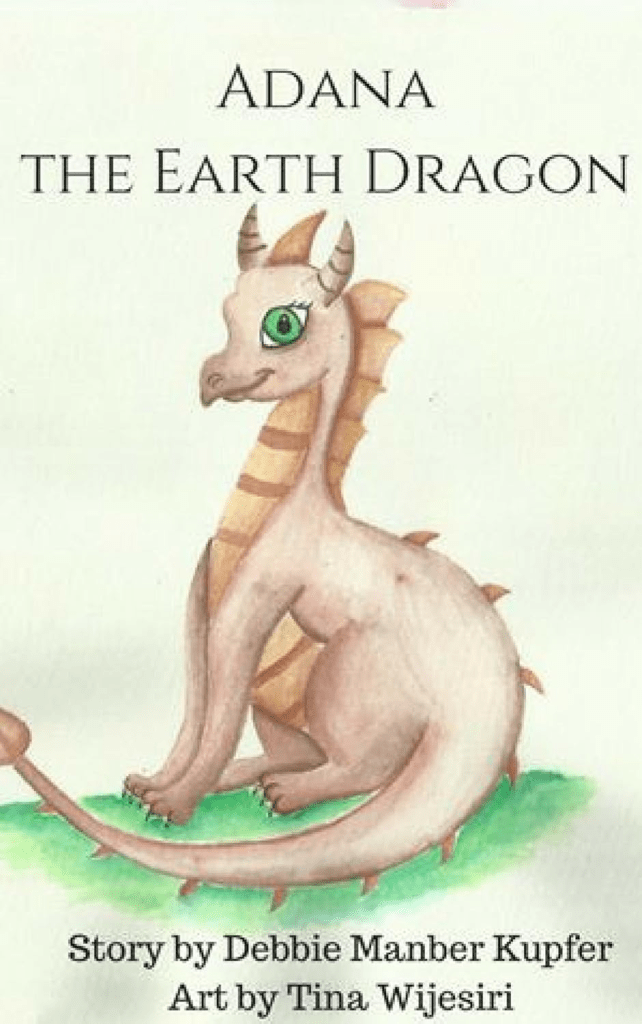
Adana the Earth Dragon: An Elemental Tale (Tales from Umbrae)
Written by Debbie Manber Kupfer
Illustrated by Tina Wijesiri
Adana is a small, brown earth dragon. She is very sad because the more powerful air, fire, and water dragons shun her. Adana seems small and insignificant to them.
One day a giant strides into the neighborhood. He marches into their midst and renders the air, fire and water dragons powerless and afraid. Meanwhile, Adana slept peacefully in her cave. When Adana wakes up and discovers the giant in their midst, she is determined to help. Adana figures out exactly what her secret power is and how to use it. Readers will chuckle at her ingenious plot to trick the giant and restore balance. In the future, the more powerful giants learn the value of Adana’s talents and appreciate her friendship.
There is enough text in this book to consider it a beginning chapter book, even though it is richly illustrated. Younger readers can follow the story through the pictures, while older children can read the tale independently. Especially recommended for children ages five through nine. This narrative emphasizes the value of individual talents and skills as well as the importance of extending friendship to those who are just like us. It teaches children to avoid bullying and to appreciate diversity.
SUBSCRIBE TO THIS BLOG TO RECEIVE BOOK REVIEWS EVERY WEDNESDAY AND SUNDAY.
ADHD Workbook for Kids: A Beginner’s ADHD Guide For Parents With 10 Curated Therapeutic Worksheets To Improve Child’s Focus and Build Character
Written by Henry Lee
This workbook is a good place to start for a parent investigating ADHD or for anyone seeking general knowledge about this disorder.
Lee addresses the symptoms, causes, and different types. He explores how to handle ADHD in different environments such as home, school, and social situations. The author explores different types of behavioral management plans, academic instruction plans, medications, meal plans, and the need for parents to join support groups.
While the book cannot address all the possible variations, medications, educational interventions or behavioral symptoms, it does provide a good starting point for parents facing a diagnosis or an educator seeking effective ways to deal with children in their classroom who have been diagnosed.
SUBSCRIBE TO THIS BLOG TO RECEIVE BOOK REVIEWS EVERY WEDNESDAY AND SUNDAY.
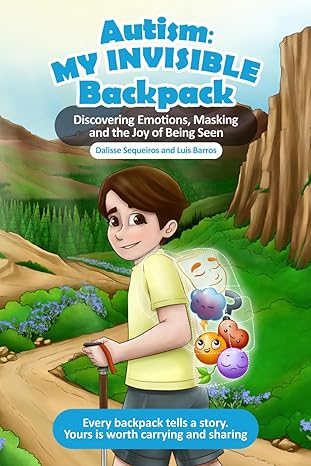
Publisher’s Book Summary: Autism: My Invisible Backpack is a heartwarming story that follows two autistic brothers, Adrián and Guillermo, on a mountain hike. Along the way, children discover that everyone carries an invisible backpack filled with feelings and thoughts, sometimes light, sometimes too heavy to carry alone.
Through this powerful metaphor, kids explore four common challenges —masking, hyper-empathy, literal thinking, and emotional overload —while also learning that therapy can be a safe place to unpack and rest.
With simple language, hand-drawn illustrations, and practical tools, this book helps children and families:
✔️ Recognize emotional overload and name feelings ✔️ Create mask-free zones to feel safe and authentic ✔️ See therapy as a trusted space to share openly ✔️ Celebrate moments of being truly seen and valued
A supportive resource for families, educators, and therapists, this story brings comfort, connection, and real strategies to make the autism journey feel lighter.
Dalisse Sequeiros is a devoted mom raising two incredible autistic boys. As a passionate autism advocate, she understands both the joys and challenges that come with parenting autistic children. Dalisse thoughtfully creates books for children ages 6–12, offering stories that celebrate their strengths, differences, and unique ways of connecting with the world.
Her mission is to offer resources that foster understanding, empathy, and confidence, helping autistic children feel seen, valued, and empowered. With every story, Dalisse hopes to create meaningful moments of connection for families navigating the world of autism.
She cherishes every milestone and dedicates herself to promoting acceptance and belonging through her writing.
Inspired by their own parenting journeys, authors Dalisse Sequeiros and Luis Barros have created a touching and practical story that opens a window into the world of a neurodivergent child. Told through the eyes of young Adrián, Autism: My Invisible Backpack follows a family hike that becomes a powerful lesson in understanding emotions and self-acceptance.
As Adrián struggles up the mountain, he learns about the “invisible backpack” we all carry—filled with our thoughts and feelings. The story gently shows how carrying too much emotional weight, or trying to “act normal,” can overwhelm a child on the spectrum. With the loving support of his parents, Adrián learns to unpack that weight and embrace his true self.
Vivid illustrations and easy-to-understand metaphors make complex emotional concepts come alive for young readers. The authors also include helpful notes and strategies for parents, offering guidance on emotional regulation, self-care, and creating safe spaces for every family member.
Autism: My Invisible Backpack is both heartwarming and practical. It is a story that encourages empathy, celebrates differences, and reminds readers that every child deserves to shine in their own way.
GIVEAWAY
Enter for the chance to win one of 10 paperback copies of Autism: My Invisible Backpack by Dalisse Sequeiros. Plus, one lucky grand prize winner will receive a complete set of books from Loving Pieces Books!
CLICK THE LINK BELOW TO SEE THE BOOKS AND ENTER THE GIVEAWAY
November 14, 2025 bamauthorComments Off on EXPLORING THE WORLD OF A NEURODIVERGENT CHILD, Autism: My Invisible Backpack, VIRTUAL BOOK TOUR AND GIVEAWAY
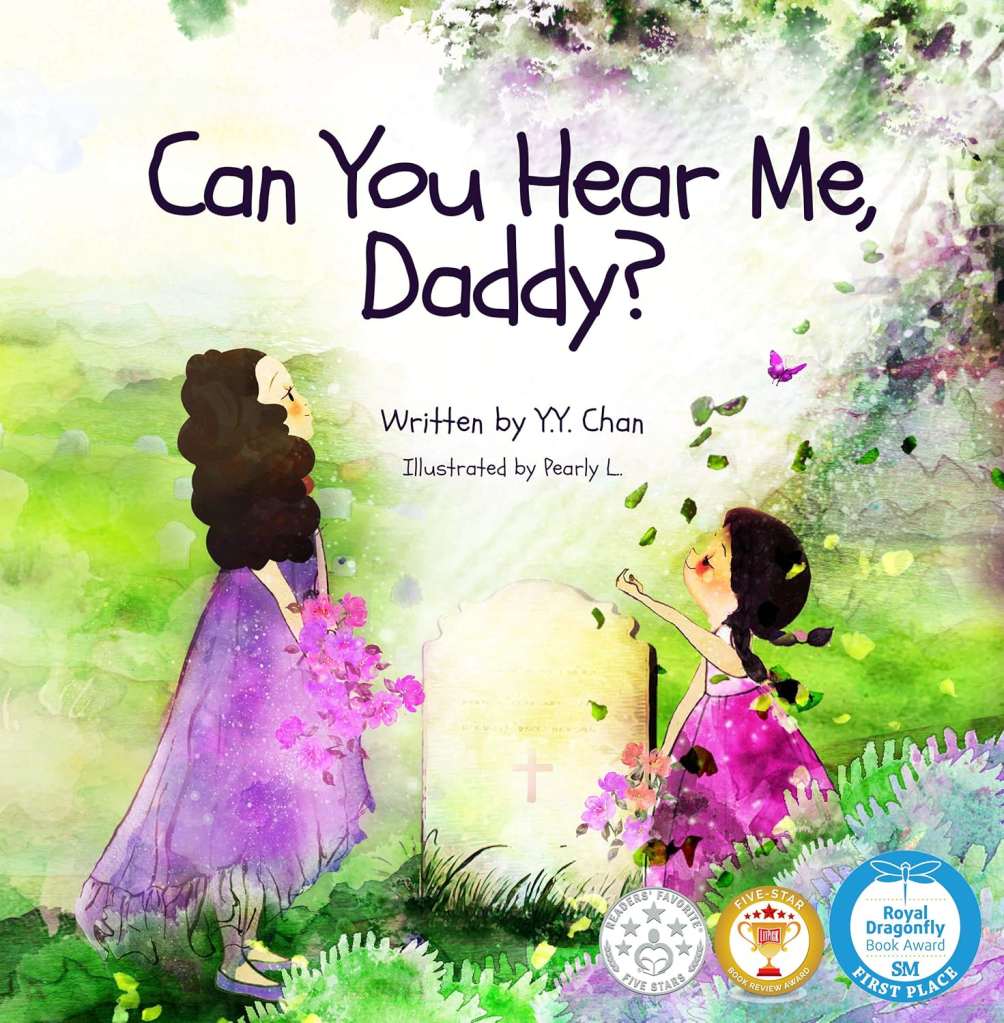
Can You Hear Me, Daddy?: A Heartwarming Children’s Book About Loss and Grief
Written by Y.Y. Chan
Illustrated by Pearly L.
This book explores how cancer affects children in a family. It is written in first person from the point of view of a young daughter whose father has been diagnosed with cancer.
Written in the calendar format of a diary, the daughter explores the ups and downs of cancer. There is surgery, then hope, and then despair. The dying father tenderly explains that his daughter will always be able to talk to him in her heart.
While the book discusses a sad topic, the author presents the topic with empathy and hope. I would recommend the book for families who face cancer and would like an approach to opening up the topic with their children.
SUBSCRIBE TO THIS BLOG TO RECEIVE NEW BOOK REVIEWS EVERY WEDNESDAY AND SUNDAY.
Riley the Rabbit Learns a New Habit: Mindset School Series Book #3
Written by Heather Lyn Davis
Illustrated by Corryn Webb
This is cute picture book for elementary age readers.
Riley the Rabbit is excited to attend school. The problem for him is jumping. Riley loves to jump and his rambunctious leaps cause havoc to friends and furniture in the classroom. His teacher urges Riley to be aware of the problem his jumping causes.
Riley’s grandmother teaches him a compromise, Riley learns to hop. While he finds the new skill difficult, Riley learns that sometimes compromise is important. Even more important, that does not mean giving up jumping all the time.
A delightful picture book for children ages six through ten.
SUBSCRIBE TO THIS BLOG TO RECEIVE NEW BOOK REVIEWS EVERY WEDNESDAY AND SUNDAY.
This book is based on the theme of the 12 Days of Christmas. It is written as a poem or can be sung as a song. The characters are based on various types of sea creatures, especially different species of sharks.
The illustrations are hand-drawn in vibrant colors. While the length is less than twenty pages, reading or singing it can become a new holiday tradition. For me, the most interesting part of the book is the section at the end, which presents useful information about each of the different sharks.
SUBSCRIBE TO THIS BLOG TO GET NEW BOOK REVIEWS EVERY WEDNESDAY AND SUNDAY.
Some Angels Have Rotor Blades: A Tale of Heroic Actions, Living Legacy, and Gratitude
Written by Darcy Guyant
Illustrated by Novel Varius
Dale wakes up excited because today is the first day of summer vacation.
As he enjoys breakfast, Dale asks his parents to take their boat out for a ride. He promises to wear his lifejacket and be careful.
When a freak accident ejects Dale from the boat, he frantically grasps the overturned boat. As time goes on, his chilled body weakens. Eventually, a Coast Guard Helicopter discovers Dale and rescues him.
The book teaches how rescue workers put themselves in danger helping strangers and expressing care and empathy for them.
In the second part of the story, forty years later, Dale takes his three grandchildren to an aviation museum where he is reminded of his second chance at life. Dale recounts all those opportunities and the family he loves that would not have existed.
The book contains excellent questions and topics to discuss with the intended elementary school reading audience. I highly recommend this picture book to parents and teachers who want children to appreciate the sacrifices of first responders and the sacrifices they make every day.
SUBSCRIBE TO THIS BLOG TO GET NEW BOOK REVIEWS EVERY WEDNESDAY AND SUNDAY.
I Can Deal With Anger: A Children’s Book About Understanding Big Emotions and Learning Anger Management Skills. (I Can Books 5)
Written and Illustrated by Alicia Ortega
A lovely illustrated, rhyming book that is part of the I Can Deal with book series for elementary school readers.
Mia is a Queen, but she lives her life out in the real world. Mia goes to school and interacts with her peers. She experiences the same emotions and feels the same frustrations.
Mia’s teacher, Miss Luna, teaches her many techniques to handle Mia’s emotions. Mia learns to use positive affirmations, quiet spaces, writing in her journal, counting, and breathing techniques.
At the end of the book, the author provides a maze and a coloring page for readers to practice implementing some of these strategies.
This nicely illustrated multicultural book deserves a place on the shelf of home and classroom libraries.
SUBSCRIBE TO THIS BLOG TO RECEIVE NEW BOOK REVIEWS EVERY WEDNESDAY AND SUNDAY.
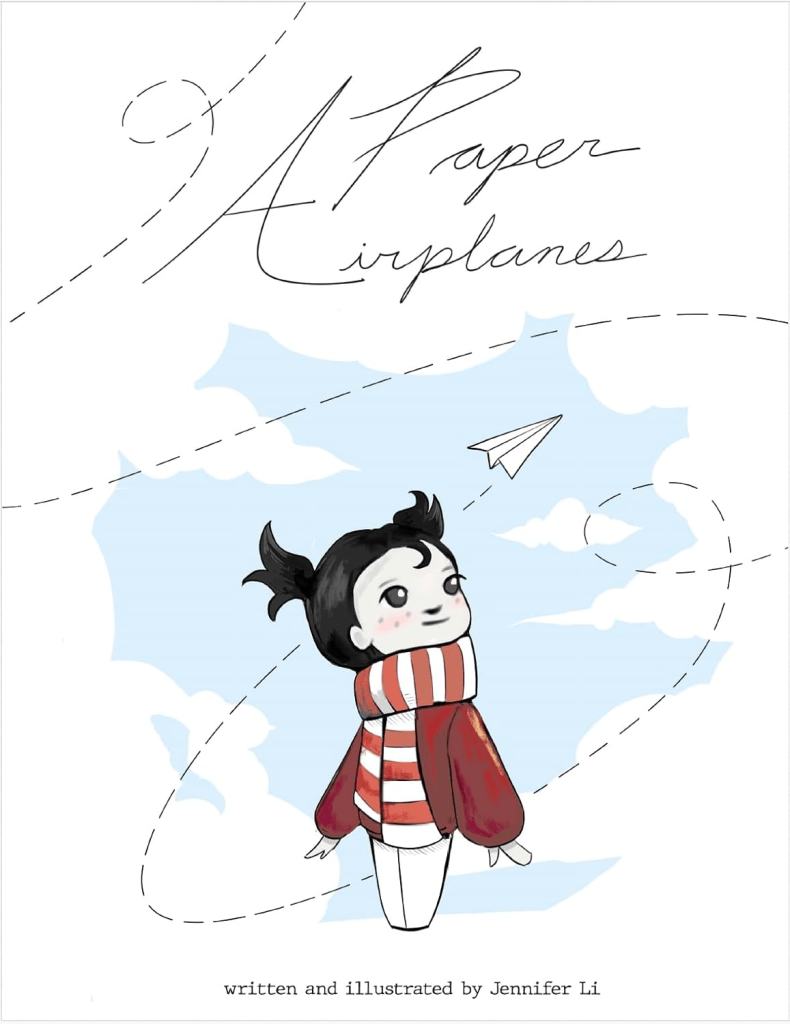
Paper Airplanes: A Girl, a Dream, and the Sky Between
Written and Illustrated by Jennifer Li
This book carries a beautiful message written in a lyrical, poetic style.
It begins with a little girl who has a dream and launches a paper airplane. The airplane takes off and travels around the world. She is frustrated when she loses sight of it. Then she meets a little boy who has also lost his paper plane. Together, they search and continue to meet other dreamers. They stop to plant and create dreams together.
I like the way the illustrations begin in black and white. As the theme of friendship and connection continues, more color is added. Children learn that we are stronger when dreaming and connecting with each other.
A beautiful book with an inspirational message for children of all ages.
SUBSCRIBE TO THIS BLOG TO RECEIVE NEW BOOK REVIEWS EVERY WEDNESDAY AND SUNDAY.

 November 26, 2025
 bamauthor
 Comments Off on THE LOVE OF HER LIFE







 Barbara Ann Mojica's BLOG
You must be logged in to post a comment.