I Can Try Again: An Inspiring Story for Kids About Perseverance, Grit, and Learning From Mistakes for Ages 4–8 (I Can Books Book 6)
Written and illustrated by Alicia Ortego
Another picture book in this charming series about Mia and life lessons.
The lesson in this book for early elementary readers is that perseverance pays off. Once again, Mia has her mother’s support. Mia realizes that we can learn from our mistakes and use them as stepping stones, practicing in small steps until the goal of mastery is achieved. Whether the goal is learning how to jump rope or mastering the sequence of steps in a dance, Mia discovers the importance of patience and perseverance. She comes to understand the true value of resilience.
This book also contains interactive activities and thoughtful questions that encourage readers to apply the valuable lessons Mia shares in their own lives.
SUBSCRIBE TO THIS BLOG FOR NEW BOOK REVIEWS EVERY WEDNESDAY AND SUNDAY.
The Wonderful Animals of the Boise River (Into Justin’s World Book 2)
Written by Heather Lyn Davis
Illustrated by Corryn Webb
This book is interactive. From the outset, children learn that they will find and identify many animals that inhabit the Boise River.
Each picture layout features a color and a black-and-white illustration. Readers are encouraged to color the black-and-white illustration. For each animal, children gain a wealth of information. At the end of the book, readers have the opportunity to illustrate their favorite animal.
The book is a good choice for studying local geography and animal life. It is highly recommended for curious upper elementary students.
SUBSCRIBE TO THIS BLOG FOR NEW BOOK REVIEWS EVERY WEDNESDAY AND SUNDAY.
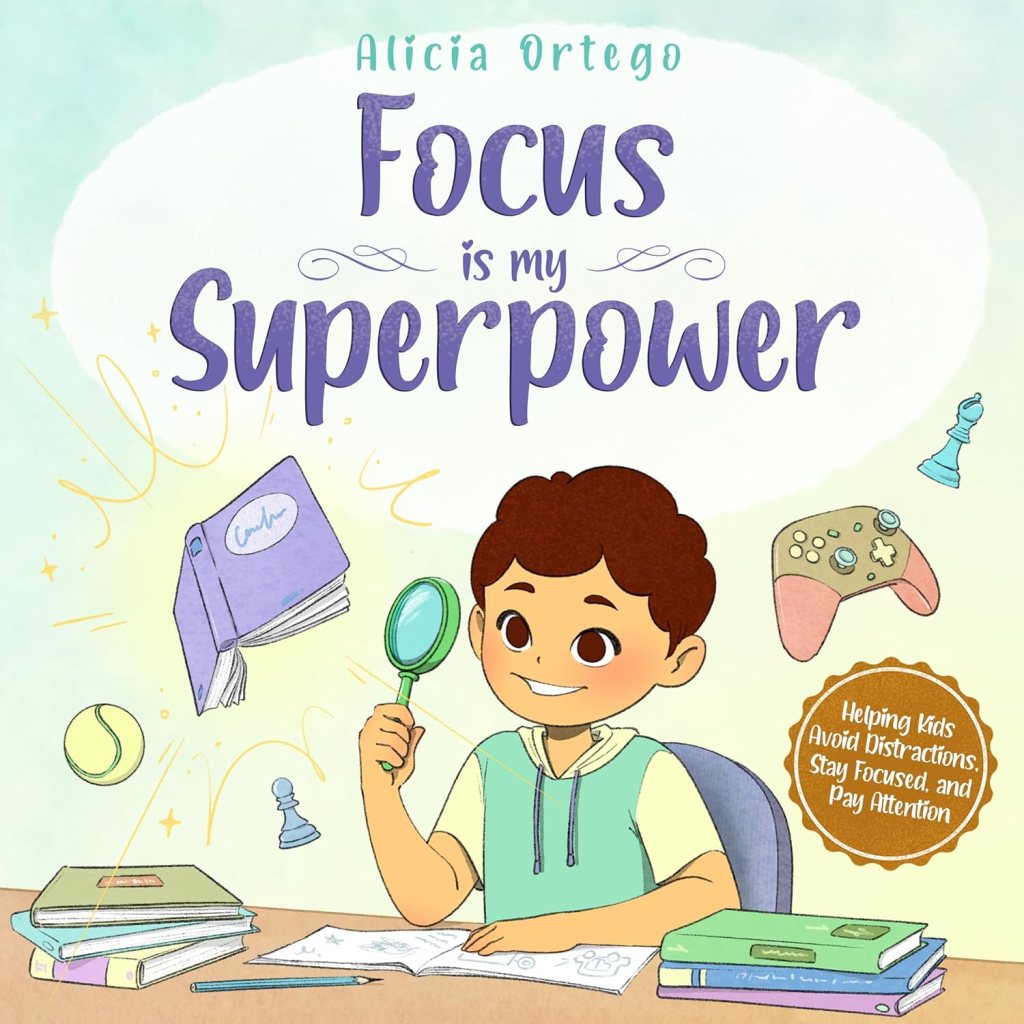
Focus Is My Superpower: An Inspiring Story to Help Kids Pay Attention, Avoid Distractions, and Improve Concentration for Ages 4–8 (My Superpower Books Book 15)
Written and illustrated by Alicia Ortego
This book is a wonderful resource for elementary-age children who have difficulty focusing.
The protagonist is a young boy who has difficulty staying focused and completing tasks. His grandfather brings the boy to the garage and shows him a magnifying glass. Grandpa explains how the glass focuses the rays of the sun to one point on the glass. His grandson should practice this method.
Grandpa also teaches him the five-finger step method for remaining on task. In the book, the author lays out this pathway and provides examples of how the boy achieved successful completion. In addition, Ortega provides a letter of encouragement and an interactive task for readers to follow the example.
A sequence of clever rhymes and charming illustrations draws readers, making this book an excellent choice for children and adults.
SUBSCRIBE TO THIS BLOG FOR NEW BOOK REVIEWS EVERY WEDNESDAY AND SUNDAY.
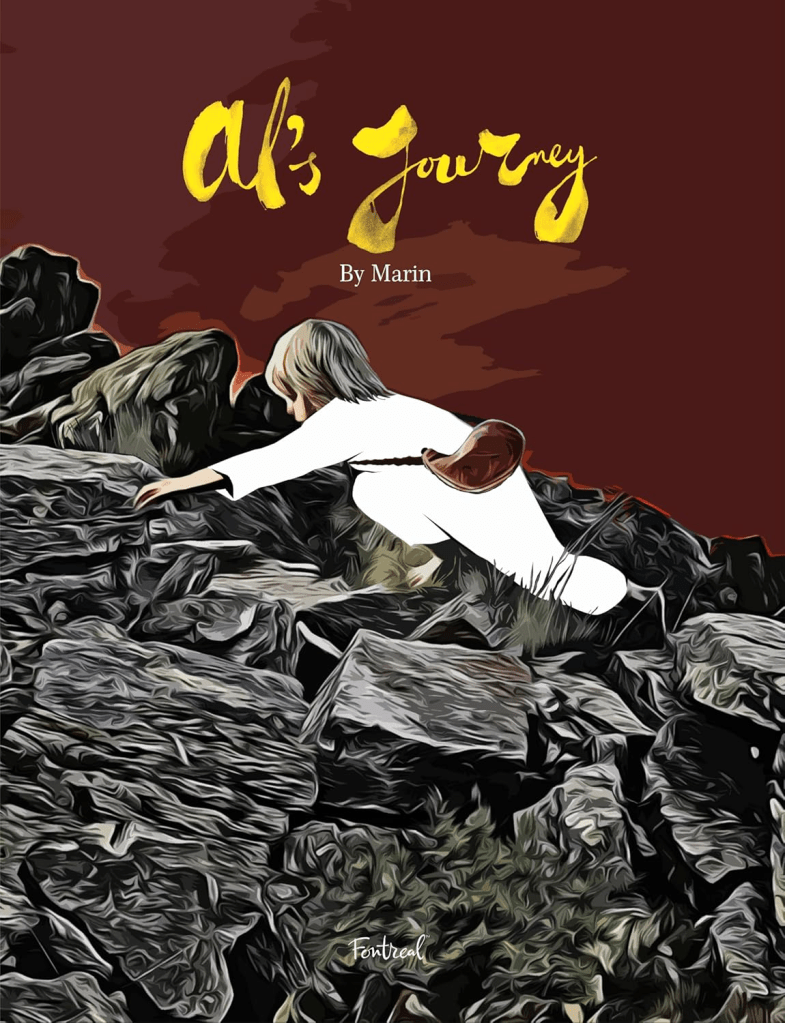
Al’s Journey: The Night Everything Changed: A Magical Story of Growing Up Fast and Learning Who You Are
Written and illustrated by Marin Darmonkow
This intriguing book contains 32 illustrated pages, but is far more than a picture book story.
The author has combined an earthly tale with mystical elements. At the outset, readers encounter a young boy being raised by his grandfather, who is the shaman of the village. When the shaman turns one hundred years old, he informs his grandson that he must climb the mountain to talk with God about his mission and purpose in life. The boy is guided by fireflies as he continues on his journey.
A book that begins as an adventure story becomes one of philosophical questions as the boy must grow up virtually overnight. Older readers will come face-to-face with finding answers on their own journey.
The illustrations are compelling. They draw the reader into the story and rapidly change its mood as the story evolves. This is a book that can grow with the reader who will return to it time and time again.
SUBSCRIBE TO THIS BLOG FOR NEW BOOK REVIEWS EVERY WEDNESDAY AND SUNDAY.
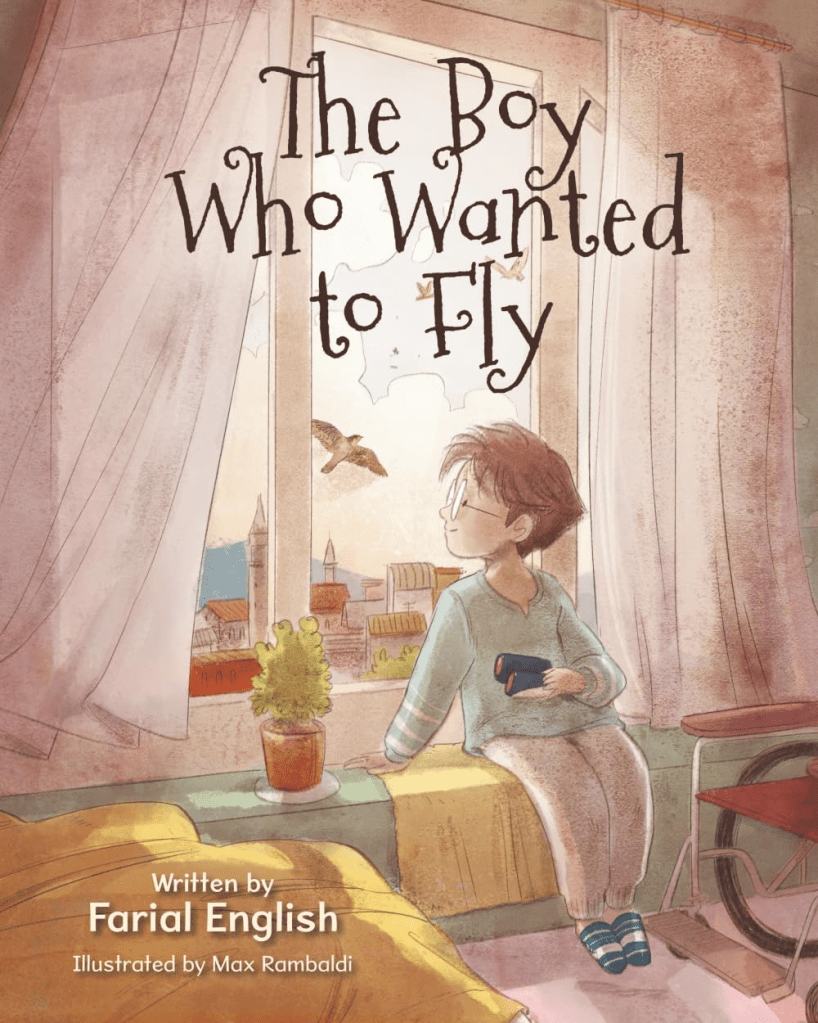
We need more books like this one. Max is a curious and intelligent young boy who is disabled and confined to a wheelchair. His sister Maya encourages and supports him.
When the siblings find out that they will be spending spring vacation at the beach. Max decides that he will act on his dream to fly. Max writes out a list of the things he needs to construct a kite. At first he is frustrated, but his sister encourages him not to give up. Will the kite soar? Can Max achieve his dream with the help of his imagination?
The illustrations enhance the mood and reinforce the theme. Every child deserves a chance to achieve a dream.
This is a book that children of all ages (including adults) will enjoy reading.
SUBSCRIBE TO THIS BLOG FOR BOOK REVIEWS EVERY WEDNESDAY AND SUNDAY.
Al’s Journey: The Night Everything Changed: A Magical Story of Growing Up Fast and Learning Who You Are
Written and Illustrated by Marin Darmonkow
This intriguing book contains 32 illustrated pages, but is far more than a picture book story.
The author has combined an earthly tale with mystical elements. At the outset, readers encounter a young boy being raised by his grandfather, who is the shaman of the village. When the shaman turns one hundred years old, he informs his grandson that he must climb the mountain to talk with God about his mission and purpose in life. The boy is guided by fireflies as he continues on his journey.
A book that begins as an adventure story becomes one of philosophical questions as the boy must grow up virtually overnight. Older readers will come face-to-face with finding answers on their own journey.
The illustrations are compelling. They draw the reader into the story and rapidly change its mood as the story evolves. This is a book that can grow with the reader who will return to it time and time again.
SUBSCRIBE TO THIS BLOG TO RECEIVE BOOK REVIEWS EVERY WEDNESDAY AND SUNDAY.
Another adorable addition to the Whiskers, the Cat, book series for elementary-age readers.
In this Christmas Eve addition, Whiskers is curled up under the Christmas tree when he notices a light that needs fixing. He tries but fails, and chaos ensues. Soon, Whiskers is getting into Santa’s goodies, and messing with the stockings on the mantel and the snowman outside the house. Will Whiskers destroy Christmas for his family?
The rhymes are spot on and fun to read aloud. Humor abounds, and the holiday spirit fills the hearts of the reader.
This one is sure to become a Christmas favorite for families and teachers’ holiday libraries.
SUBSCRIBE TO THIS BLOG FOR BOOK REVIEWS EVERY WEDNESDAY AND SUNDAY.
December is well-known for Christmas but do you know how people in countries around the world celebrate it? Here are some customs from various parts of the world that parents or teachers can use to jumpstart a multicultural holiday customs activity for the children in your family or classroom.
Australia
Greeting – Merry Christmas Santa’s Name – Santa Claus. Children leave him a piece of cake or biscuits and a glass of milk or a bottle of beer. Food – Many Christmas dinners include roasted meats and vegetables, special fruit cakes, and puddings with a coin baked inside. Since the temperature can reach 100 degrees Fahrenheit, people are starting to eat cold meats and salads, tropical fruits like mangoes, and stone fruits like plums. Often, the main meal is eaten for lunch. Gifts – These are left under the Christmas tree and opened Christmas morning. Decorations – Shops and homes are decorated with tinsel, Christmas trees, decorations for the holiday, and special lights. Customs – Traditional and Australian carols are sung by candlelight on Christmas Eve and are broadcast on television. On Boxing Day, the day after Christmas, two sporting events take place: The Boxing Day Test Match (cricket game) and the start of the Sydney to Hobart Yacht Race.
Brazil
Greeting – Feliz Natal Santa’s Name – Papai Noel (Father Noel), who is dressed in a red, silk suit with boots. Food – Many people eat a traditional feast with roast turkey and vegetables, while others eat chicken and rice or beans. Beer and wine are also served. Some regions begin eating around 9 PM on Christmas Eve, while others eat around midnight. Gifts – Local charities take in donations but do not seem to have enough presents for all the children. Decorations – Brazil has a mixture of people so Christmas is celebrated in different ways. In the northeastern area, it is common to find Nativity Scenes; in the southern part, snow is simulated with little pieces of cotton on pine trees. Customs – Brazilians sing a number of Christmas carols.
Greece
Greeting – Eftihismena Christougenna Food – Special holiday cakes are baked. Gifts – Most Greek people exchange gifts on Saint Basil’s Day, January 1. Customs – To honor Saint Basil, the holiday cakes have gold coins hidden inside them. The cakes are cut at midnight on New Year’s Eve. Whoever has a gold coin in his piece of cake will have good luck the following year.
Hungary
Santa’s Name – Actually, the Baby Jesus is said to bring presents on Christmas Eve. A bell sounds signaling that the Angels have brought the tree and gifts. Customs – On December 5, children leave out their shoes. During the night, Mikulas and Black Peter come to fill them with goodies for well-behaved children and switches for naughty children. India Decorations – Sometimes, houses are decorated with mango leaves; mango or banana trees are also decorated. Small, clay, oil-burning lamps are placed on the edges of flat roofs as decorations.
Israel
Greeting – Chag Semeach (Happy Chanukah) Santa’s Name – Actually, parents, grandparents, and other family members give presents to the children. Food – Because oil is an important part of the holiday, many foods are prepared with it. A favorite is potato latkes (pancakes). Gifts – Since Chanukah lasts for eight days, children may receive one present each night. Decorations – Jewish stars, blue or silver foil garlands, dreidels (spinning tops), Chanukah gelt (chocolate coins), and pictures of the Macabees (Jewish army that recaptured the Holy Temple and Jerusalem from the Assyrian Greek King Antiochus) are found around the house. Customs – The menorah (candelabra) is lit each night. On the first night, one candle is lit; on, the second night, two candles; and so on until all the candles are lit on the eighth night. After lighting the candles, families eat a festive meal, dance, play games, and open presents. They also attend Chanukah parties.
Japan
Greeting – Kurisumasu Omedeto Santa’s Name – Santa Kurohsu. He does not appear in person but is pictured in advertisements as a kind old man with a round sack on his back. Food – Depending upon the family’s custom, they eat turkey on Christmas Day or on Christmas Eve. Japanese families also eat Christmas cake. Gifts – Stores sell merchandise for men, women, and children; and on Christmas Day, families exchange gifts. Decorations – More and more artificial Christmas trees are beginning to appear. They are decorated with small toys, gold paper fans, dolls, lanterns, paper ornaments, and wind chimes. A popular ornament is the origami swan. Other decorations are mistletoe, evergreen, tinsel, and lights. An amulet is put on the front door for good luck and children exchange ‘birds of peace,’ pledging there must not be anymore war. Customs – The daiku, or Great Nine, refers to Beethoven’s Ninth Symphony and is performed many places.
Mexico
Greeting – Feliz Navidad Customs – Beginning on December 15, some families carry colorful lanterns and walk from house to house in their neighborhoods, each night, until Christmas Eve. This is called La Posada, which means ‘the procession.’ On each of the nights, the families are invited into different houses where they become guests at a party. There is plenty to eat and drink. Children play the pinata game, trying to break open the papier-mache figure with a stick while blindfolded; when it is cracked open, candies and small gifts fall out.
Netherlands
Greeting – Hartelijke Kerstroeten Santa’s Name – Sinterklaas (St. Nicholas), who wears a red bishop’s hat and bishop’s cloak and has white hair and a white beard. He arrives on a white horse with his servant, Black Pete, to put small gifts in children’s wooden shoes. Food – The Dutch people eat lots of marzipan, spiced ginger biscuits, tall chocolate letters, and ‘bankletter’ – initials made of pastry and filled with almond paste. When they are around the Christmas tree singing songs, they eat ‘Kerstkrans’ – a Christmas ring. Gifts – On December 6, after hearing a knock at their door, children find a bag full of toys, nuts, and gifts. Decorations – The Christmas tree is known as the Paradise Tree. Decorations of the season include dolls, musical instruments, fruit, candies, and lights. Customs – The Dutch sing carols, the most popular one being “O Christmas Tree, O Christmas Tree.”
Sweden
Greeting – God Jul Food – Coffee, cakes, and special buns are served on Santa Lucia Day, December 13. Customs – Santa Lucia Day honors Saint Lucy, who helped blind people. The oldest daughter in each Swedish household dresses in a white gown with a red sash, wears a crown of evergreen with seven candles in it, awakens the family with a song, and serves the coffee, cakes, and buns. Each town and city also chooses a young woman to be Lucia for the day. She then serves coffee and food to the townspeople at schools, hospitals, and other public buildings. From these women, a national Lucia is chosen; followed by a parade, feast, and dance.
Now comes the fun part. Let your children put the information in a comparison chart. Label the left side with the names of the countries and the bottom with the various information (ie: Greeting, Food, and so on). Then fill in the boxes!
Let your children do research Conduct research to find out the same customs for other countries, especially the heritage countries of students in your class or your own family.
SUBSCRIBE TO THIS BLOG FOR TEACHING RESOURCES THAT TEACH KIDS HOW TO THINK, NOT WHAT TO THINK
ADHD Workbook for Kids: A Beginner’s ADHD Guide For Parents With 10 Curated Therapeutic Worksheets To Improve Child’s Focus and Build Character
Written by Henry Lee
This workbook is a good place to start for a parent investigating ADHD or for anyone seeking general knowledge about this disorder.
Lee addresses the symptoms, causes, and different types. He explores how to handle ADHD in different environments such as home, school, and social situations. The author explores different types of behavioral management plans, academic instruction plans, medications, meal plans, and the need for parents to join support groups.
While the book cannot address all the possible variations, medications, educational interventions or behavioral symptoms, it does provide a good starting point for parents facing a diagnosis or an educator seeking effective ways to deal with children in their classroom who have been diagnosed.
SUBSCRIBE TO THIS BLOG TO RECEIVE BOOK REVIEWS EVERY WEDNESDAY AND SUNDAY.
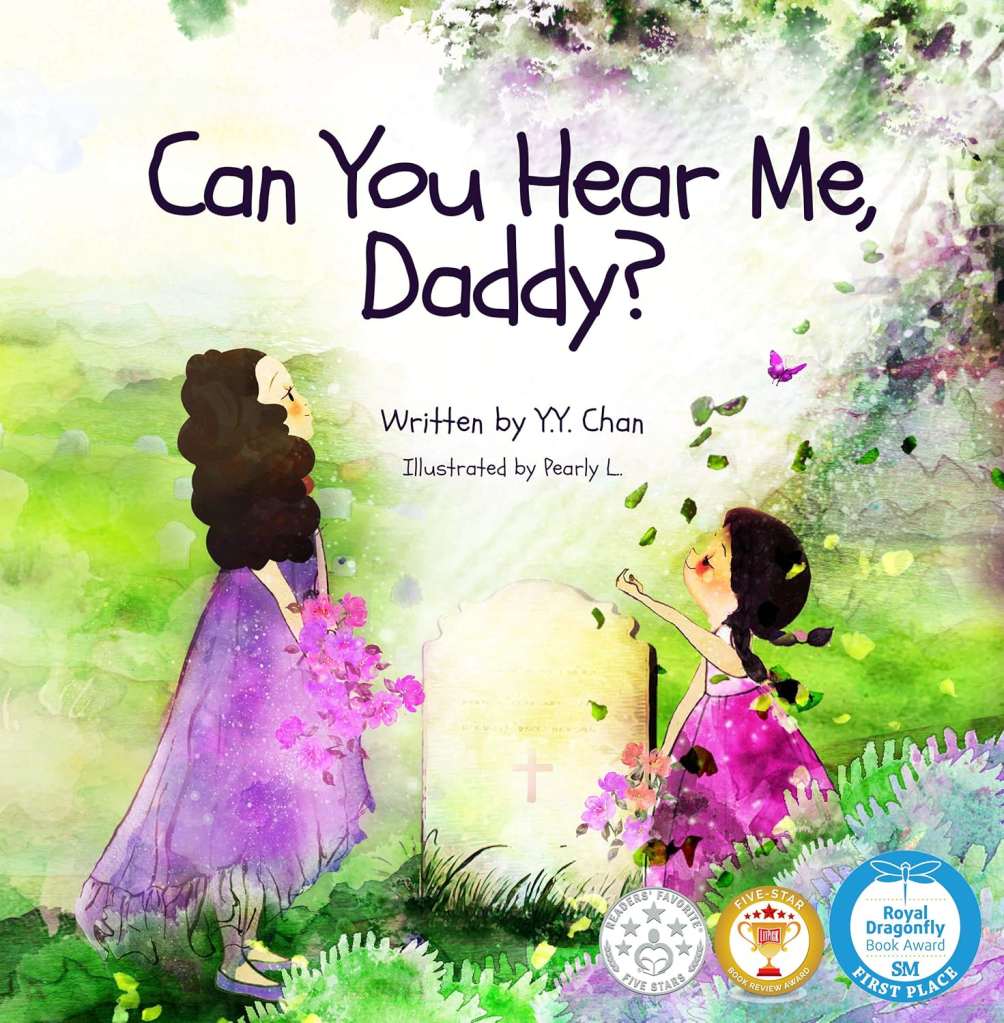
Can You Hear Me, Daddy?: A Heartwarming Children’s Book About Loss and Grief
Written by Y.Y. Chan
Illustrated by Pearly L.
This book explores how cancer affects children in a family. It is written in first person from the point of view of a young daughter whose father has been diagnosed with cancer.
Written in the calendar format of a diary, the daughter explores the ups and downs of cancer. There is surgery, then hope, and then despair. The dying father tenderly explains that his daughter will always be able to talk to him in her heart.
While the book discusses a sad topic, the author presents the topic with empathy and hope. I would recommend the book for families who face cancer and would like an approach to opening up the topic with their children.
SUBSCRIBE TO THIS BLOG TO RECEIVE NEW BOOK REVIEWS EVERY WEDNESDAY AND SUNDAY.

 April 5, 2026
 bamauthor







 Barbara Ann Mojica's BLOG
You must be logged in to post a comment.