Posts tagged ‘Mexico’

CHRISTMAS CUSTOMS AROUND THE WORLD

December is well-known for Christmas but do you know how people in countries around the world celebrate it? Here are some customs from various parts of the world that parents or teachers can use to jumpstart a multicultural holiday customs activity for the children in your family or classroom.


Australia


Greeting – Merry Christmas
Santa’s Name – Santa Claus. Children leave him a piece of cake or biscuits and a glass of milk or a bottle of beer.
Food – Many Christmas dinners include roasted meats and vegetables, special fruit cakes, and puddings with a coin baked inside. Since the temperature can reach 100 degrees Fahrenheit, people are starting to eat cold meats and salads, tropical fruits like mangoes, and stone fruits like plums. Often, the main meal is eaten for lunch.
Gifts – These are left under the Christmas tree and opened Christmas morning.
Decorations – Shops and homes are decorated with tinsel, Christmas trees, decorations for the holiday, and special lights.
Customs – Traditional and Australian carols are sung by candlelight on Christmas Eve and are broadcast on television. On Boxing Day, the day after Christmas, two sporting events take place:
The Boxing Day Test Match (cricket game) and the start of the Sydney to Hobart Yacht Race.


Brazil


Greeting – Feliz Natal
Santa’s Name – Papai Noel (Father Noel), who is dressed in a red, silk suit with boots.
Food – Many people eat a traditional feast with roast turkey and vegetables, while others eat chicken and rice or beans. Beer and wine are also served. Some regions begin eating around 9 PM on Christmas Eve, while others eat around midnight.
Gifts – Local charities take in donations but do not seem to have enough presents for all the children.
Decorations – Brazil has a mixture of people so Christmas is celebrated in different ways. In the northeastern area, it is common to find Nativity Scenes; in the southern part, snow is simulated with little pieces of cotton on pine trees.
Customs – Brazilians sing a number of Christmas carols.


Greece


Greeting – Eftihismena Christougenna
Food – Special holiday cakes are baked.
Gifts – Most Greek people exchange gifts on Saint Basil’s Day, January 1.
Customs – To honor Saint Basil, the holiday cakes have gold coins hidden inside them. The cakes are cut at midnight on New Year’s Eve. Whoever has a gold coin in his piece of cake will have good luck the following year.


Hungary


Santa’s Name – Actually, the Baby Jesus is said to bring presents on Christmas Eve. A bell sounds signaling that the Angels have brought the tree and gifts.
Customs – On December 5, children leave out their shoes. During the night, Mikulas and Black Peter come to fill them with goodies for well-behaved children and switches for naughty children.
India
Decorations – Sometimes, houses are decorated with mango leaves; mango or banana trees are also decorated. Small, clay, oil-burning lamps are placed on the edges of flat roofs as decorations.


Israel


Greeting – Chag Semeach (Happy Chanukah)
Santa’s Name – Actually, parents, grandparents, and other family members give presents to the children.
Food – Because oil is an important part of the holiday, many foods are prepared with it. A favorite is potato latkes (pancakes).
Gifts – Since Chanukah lasts for eight days, children may receive one present each night.
Decorations – Jewish stars, blue or silver foil garlands,
dreidels (spinning tops), Chanukah gelt (chocolate coins), and pictures of the Macabees (Jewish army that recaptured the Holy Temple and Jerusalem from the Assyrian Greek King Antiochus) are found around the house.
Customs – The menorah (candelabra) is lit each night. On the first night, one candle is lit; on, the second night, two candles; and so on until all the candles are lit on the eighth night. After lighting the candles, families eat a festive meal, dance, play games, and open presents. They also attend Chanukah parties.


Japan


Greeting – Kurisumasu Omedeto
Santa’s Name – Santa Kurohsu. He does not appear in person but is pictured in advertisements as a kind old man with a round sack on his back.
Food – Depending upon the family’s custom, they eat turkey on Christmas Day or on Christmas Eve. Japanese families also eat Christmas cake.
Gifts – Stores sell merchandise for men, women, and children; and on Christmas Day, families exchange gifts.
Decorations – More and more artificial Christmas trees are beginning to appear. They are decorated with small toys, gold paper fans, dolls, lanterns, paper ornaments, and wind chimes. A popular ornament is the origami swan. Other decorations are mistletoe, evergreen, tinsel, and lights. An amulet is put on the front door for good luck and children exchange ‘birds of peace,’ pledging there must not be anymore war.
Customs – The daiku, or Great Nine, refers to Beethoven’s Ninth Symphony and is performed many places.


Mexico


Greeting – Feliz Navidad
Customs – Beginning on December 15, some families carry colorful lanterns and walk from house to house in their neighborhoods, each night, until Christmas Eve. This is called La Posada, which means ‘the procession.’ On each of the nights, the families are invited into different houses where they become guests at a party. There is plenty to eat and drink. Children play the pinata game, trying to break open the papier-mache figure with a stick while blindfolded; when it is cracked open, candies and small gifts fall out.


Netherlands


Greeting – Hartelijke Kerstroeten
Santa’s Name – Sinterklaas (St. Nicholas), who wears a red bishop’s hat and bishop’s cloak and has white hair and a white beard. He arrives on a white horse with his servant, Black Pete, to put small gifts in children’s wooden shoes.
Food – The Dutch people eat lots of marzipan, spiced ginger biscuits, tall chocolate letters, and ‘bankletter’ – initials made of pastry and filled with almond paste. When they are around the Christmas tree singing songs, they eat ‘Kerstkrans’ – a Christmas ring.
Gifts – On December 6, after hearing a knock at their door, children find a bag full of toys, nuts, and gifts.
Decorations – The Christmas tree is known as the Paradise Tree. Decorations of the season include dolls, musical instruments, fruit, candies, and lights.
Customs – The Dutch sing carols, the most popular one being “O Christmas Tree, O Christmas Tree.”


Sweden


Greeting – God Jul
Food – Coffee, cakes, and special buns are served on Santa Lucia Day, December 13.
Customs – Santa Lucia Day honors Saint Lucy, who helped blind people. The oldest daughter in each Swedish household dresses in a white gown with a red sash, wears a crown of evergreen
with seven candles in it, awakens the family with a song, and serves the coffee, cakes, and buns. Each town and city also chooses a young woman to be Lucia for the day. She then serves coffee and food to the townspeople at schools, hospitals, and other public buildings. From these women, a national Lucia is chosen; followed by a parade, feast, and dance.


Now comes the fun part. Let your children put the information in a comparison chart. Label the left side with the names of the countries and the bottom with the various information (ie: Greeting, Food, and so on). Then fill in the boxes!


Let your children do research
Conduct research to find out the same customs for other countries, especially the heritage countries of students in your class or your own family.

SUBSCRIBE TO THIS BLOG FOR TEACHING RESOURCES THAT TEACH KIDS HOW TO THINK, NOT WHAT TO THINK

Magic at Matzatlan

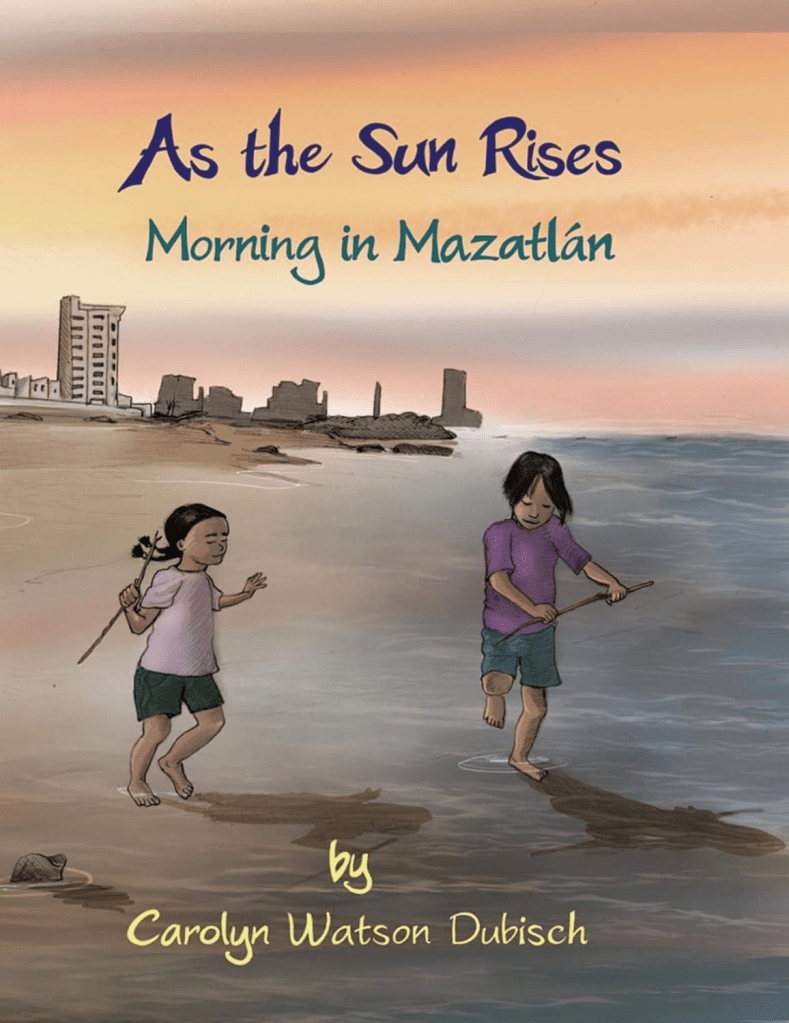
As The Sun Rises: Morning in Mazatlan (Tales of Mazatlán)

Written and Illustrated by Carolyn Watson-Dubitsch

A beautiful, multicultural picture book for preschoolers and kindergarten children.

The story relates the experience of two Mexican children who accompany their fisherman father to the beach. They observe him digging for clams and oysters. Later, they see a sea turtle on the beach.

As the day goes on, the tourist spot comes alive. Beachgoers and vendors teach readers about Mexican culture and food. As a bonus, the readers are treated to a native recipe.

Beautiful illustrations accompany the simple but moving multicultural tale.

SUBSCRIBE TO THIS BLOG FOR NEW BOOK REVIEWS EVERY WEDNESDAY AND SUNDAY.

A VINTAGE FLYING ADVENTURE

Mr. Macaw’s Paleta Adventure (The Mr. Macaw Children’s Book Series

Written by Leticia Ordaz

Illustrated by Yana Popova

This is an innovative bilingual picture book that relates an adventure taken by a one-hundred-year-old Macaw kite.

The Mexican children bring the kite to the seashore. Maxton and Bronx ask the kite if he can fly alone. The kite takes off on an adventure to a nearby village and then over the sea. Will Mr. Macaw find his way back to the beach in Mexico?

The book is written in simple phrases that are displayed in both English and Spanish on each page. Multicultural illustrations are lovely and appropriate. A lovely multicultural adventure for primary-grade readers.

SUBSCRIBE TO THIS BLOG FOR NEW BOOK REVIEWS EVERY WEDNESDAY AND SUNDAY.

COFFEE CONNOSSIEUR

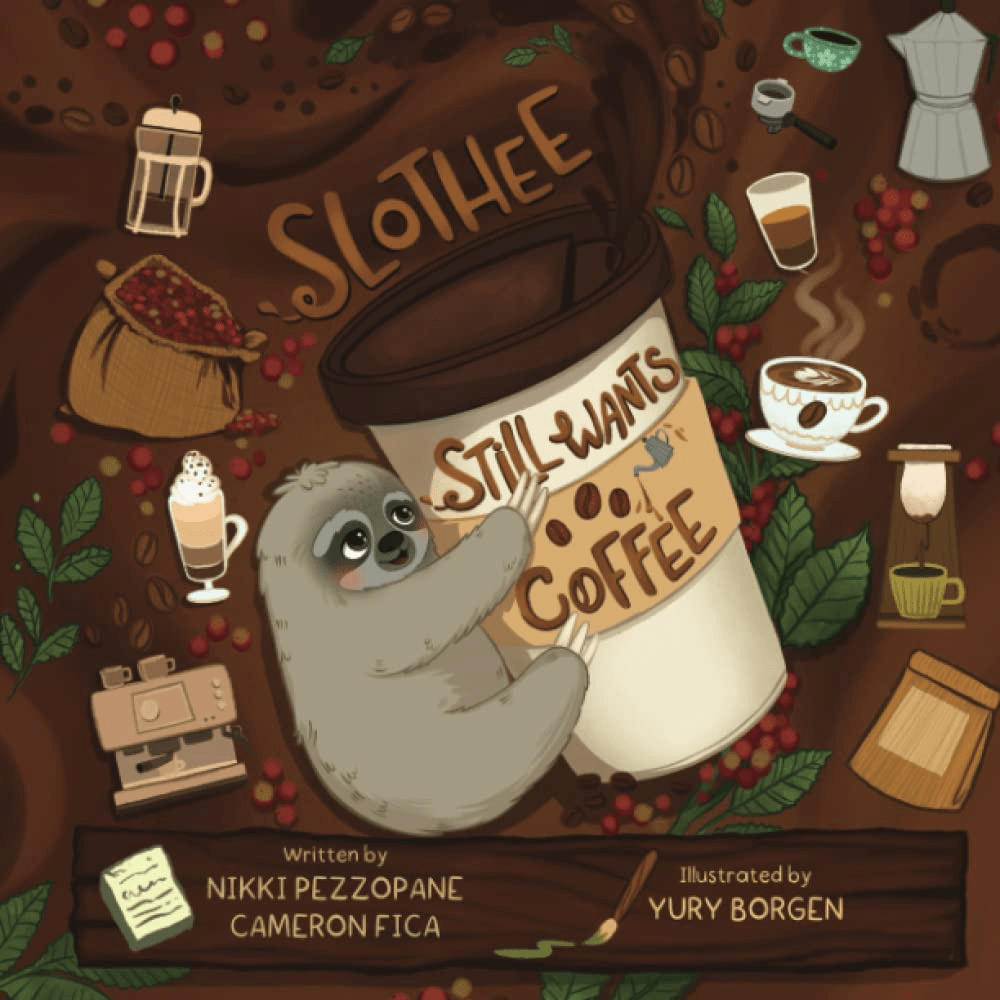
Slothee Still Wants Coffee (Slothee Wants Coffee)

Written by Nikki PezzopaneCameron Fica 

Illustrated by Yory Borgen

Slothee is off on another exciting adventure. He is determined to find the best coffee in the world. This adventure includes several countries notable for their coffee.

Slothee begins the journey in Peru, where he meets Lucia Llama and explores Machu Picchu. He introduces readers to the Mayan ruins in Mexico. Then he lands in Jamaica, before jetting off to far-away Uganda in Africa and Vietnam in Southeast Asia. Children learn about the types of coffee grown in each country, meet local animals, and sample local culture.

A good choice for elementary age readers to learn about local cultures, coffee, and the culture of several countries.

SUBSCRIBE TO THIS BLOG TO GET NEW BOOK REVIEWS EVERY WEDNESDAY AND SUNDAY.

LIGHTING THE WAY FOR HOMELESS STRAYS

THE LIGHTHOUSE CATS OF MAZATLAN (TALES OF MAZATLAN)

Written and Illustrated by Carolyn-Watson Dubisch

Sisters, Ana and Luna live in Mazatlan, Mexico by the sea. Everyday, they climb the winding steps of the lighthouse. Most people travel there for the view, but the sisters have a different reason. They make the journey to feed and play with the numerous stray cats that inhabit the lighthouse and its surroundings.

One day, after a terrible storm, the town and its lighthouse are left flooded and without power. The disconcerted sisters cannot reach the closed lighthouse. They worry their cat friends will not survive.

When the lighthouse finally reopens, the girls cannot find one of their cats. Readers will be surprised to find out what surprise awaits these compassionate sisters.

This multlicultural picture book is available in Spanish and English. It teaches primary grade readers about empathy, compassion, and the problem of animal homelessness.

Recommended for ages two through six.

SUSCRIBE TO THIS BLOG FOR NEW BOOK REVIEWS EVERY WEDNESDAY AND SUNDAY.

Go back

Your message has been sent

Warning

POIGNANT AND POWERFUL

The Thackery Journal

Written by John Holt

TheThackeryJournal,pic

This well-written book of historical fiction is divided into three parts: the first part sets the stage for the personal tragedy the looming civil war will impose on friends and family; the second part begins in 1864 when the South is on the brink of defeat and engages in plot to buy weapons from the French government, and the third part delineates the intricate plot of Northern generals to carry out the assassination of President Abraham Lincoln using John Wilkes-Booth as their instrument. Holt informs the reader that only three of his characters are genuine, Grant, Lincoln and Booth. The reader will be hard pressed to believe that statement because Holt does such a good job of making all his characters realistic and seamlessly weaves them together with both the historical and the fictional.

At the outset the reader meets Aaron Thackery, an old man who sits before the fire in the remains of his Southern home reading the journal of his deceased son who has been implicated in some sort of plot. Thackery thinks back upon his own arrest and his wife’s death. After the flashbacks, the author shifts to the town of Larkspur in Virginia introducing us to Jacob Thackery and his friend, Miles Drew. When war is declared, Miles, who does not believe in slavery nor the fact that the South can win, flees to join the Union forces. He quarrels with his best friend Jacob, who will join the Confederacy. Their paths will cross again during the war.

In the second part of the book, the scene shifts to 1864. Jacob realizes that the South will lose, but he becomes involved with the plot of the Confederacy to buy weapons from the French government. When a Mexican agent finds out about the plot, he hatches a new plan to steal the gold needed from the Mexican government, which Thackery will be responsible for delivering to the French in Canada. After the weapons destined for the Confederacy are blown up, he must decided what to do with the gold.

The third part of the book is the crux of the plot. Holt creates a character named Jarvis who will enlist Lincoln’s most trusted generals in a plot to wrest power from him and replace him with Grant. The plan goes awry, so Booth is enlisted to carry out the plan. How will Miles and Jacob be involved and how will it affect the rest of their lives and the future of the new restored Union government?

Holt does a magnificent job of transporting the characters into the minds of the reader. His research is carefully done and the descriptions of battle, angst, and raw emotion are outstanding. I had to finish the entire book in one setting, and by the end of the read was totally convinced that the story was plausible.

As a historian, I liked the fact that Holt gave citations to his research to permit further exploration of the topics. The cover is a painting from the Battle of Antietam and the period photographs add another dimension of personality to the work. There is no graphic violence or sexuality so the book is suitable for young adults. This book sheds light on the psychological, historical and moral aspects of the American Civil War much better than any historical text and is highly recommended.

If you enjoyed this post, please subscribe by clicking on the word Follow or by hitting the orange RSS feed button in the upper right hand corner of this page.

POIGNANT AND POWERFUL

A Journey of Dreams

by Marge Pellegrino

Journey of Dreamspic

Journey of Dreams is a work of historical fiction which takes place in 1984-85. During that time the Guatemalan government destroyed 440 villages using a slash and burn campaign. More than one million families were displaced and 200,000 people fled Guatemala. Human rights volunteers and religious leaders found safe havens for some of the exiled. It became known as the Sanctuary Movement. These volunteers funneled them to safety and helped them to gain political asylum. In this book Tomasa is a thirteen year old Mayan girl born in the highlands. She embodies the experiences of many of these refugees. Her story reflects the courage of many like herself and reveals the rich tapestry of her culture.

At the beginning of the story Tomasa and her family live in a small village. They farm on their land; the women sell native clothing and crafts at the local market. But lately, the rebel soldiers have been forcing young boys to join the army. They mercilessly wipe out the opposition. One day Tomasa’s mother tells her son Carlos that government planes are spraying harmful chemicals. They are overheard and must flee the village to survive. Conditions continue to deteriorate. Many local villagers have been placed in model villages, which are nothing more than concentration camps. Papa is determined to escape with the family. Soldiers suspect them; they are forced to return. Soon after soldiers come to burn their village. Their grandmother dies trying to escape. They hide and make their way slowly on foot to the capital city. From there they will try to cross into Mexico. Every night as they cower in the fields, Papa tells them a native story, while every night Tomasa has haunting nightmares. Papa must find work while Tomasa, her brother Manuel and baby sister, Maria hide. They are afraid of everyone. It takes three tries to cross the border to Mexico.They almost lose their lives on the river and are endangered by the soldiers shooting at them and the “coyotes” who take their money to protect them.

Finally, as they arrive in Mexico, their friends in the Sanctuary Movement attempt to protect them. Manuel despairs of ever finding his mother and adopts Juana, another refugee as his protector. Their goal is to reach Phoenix, Arizona in the United States and to locate their mother and brother, Every move is fraught with danger. They fear moving around in the daytime. Will they ever find a measure of safety and become a family again?

This book is carefully researched and well written. I finished the book in less than two hours. Age recommendation is eleven and up. The book provides a glimpse into the horror of warfare and human enslavement. The interweaving of native culture in dreams and storytelling is vivid and engaging, The author provides a glossary of Spanish and native terms as well as a map to mark the journey. Teachers will find much to discuss with their students and adults will learn more about a tragedy that resulted in making a native people stronger and more resilient.

If you enjoyed reading this post, please consider subscribing and following my biweekly reviews. Just hit the word Follow or subscribe with the orange RSS button.

A BIG WELCOME AND THANK YOU TO ALL MY NEW FOLLOWERS!