Posts tagged ‘environment’

BEAUTY IS IN THE EYE OF THE BEHOLDER

Becky and the Butterfly Girl

Written by Janet Young

Illustrated by Vladimir Cebu

beckybutterflypic

Charming picture book featuring a child named Becky who guides her young readers on a tour of her butterfly garden. Becky’s garden is designed as a wild flower garden with water features, a pond filled with fish, birdhouses and bee houses, but most importantly it provides a safe haven for butterflies. Monarch butterflies are quickly disappearing due to the rapid expansion of roads and cities. Becky’s tour leads us through cone flowers, monarda, asters, goldenrod and milkweed. This garden is free of pesticides and chemical fertilizers. The monarch butterflies lay their eggs on the underside of milkweed leaves; which are the only kind of food they eat, but which are poisonous to humans. Once the eggs become caterpillars, Becky’s dad carefully moves them to a cage where they continue to feed on milkweed leaves until they form a chrysalis. After about ten days they emerge as butterflies, when they are carefully released from their cage.

The illustrations depict Becky and her beautiful garden plants and animal friends. Story is based on Becky Lecroy, a genuine character whose parents raise monarch butterflies in their own wild flower backyard. Nice way to teach children about the life cycle of the monarch butterfly and the importance of conserving the species. Targeted for grades preschool through grade four, this book should be included on classroom shelves in elementary school as well as those in libraries and environmentally conscious parents who might want to undertake the project on a smaller scale. I personally plant milkweed in my tiny garden to encourage monarchs to settle there. Sadly, in recent years, I have noticed a dramatic drop in the lovely creatures that used to fill my backyard.

If you enjoyed  reading this post, please subscribe by clicking on the word Follow or by hitting the orange RSS FEED button in the upper right hand corner of this page.

NO BAD LUCK HERE

Albatrosses: Amazing Animal Facts

Written by Rita Terry

albatrosspic

Contrary to the widely known expression from The Rime of the Ancient Mariner, “an albatross around your neck,” the albatross has nothing to do with bad luck. These beautiful animals are the world’s largest seabirds. Levy enlightens readers about the twenty-two varieties, their distinctive appearance, size and weight, diet, habitat, breeding habits, courtship, enemies, and environmental threats.

Most readers probably know little about these birds. I found it interesting that they live for long periods of time on one island, mate with one partner for life, and do not leave their parents until they master the intricate courtship dance to attract their life partner. The fact that the Wandering Albatross can soar without moving its wings for days at a time is amazing. It is sad that so many of these birds are killed when they dive down deep for fish bait and then drown before they can return to the surface.

This book is targeted for readers ages five to eighteen. Photographs are beautiful; the book will probably be most interesting to readers eight and older, who will be better able to master the text. This book contains a lot of information in less than fifty pages, and is well written with the exception of a typo in the spelling of Antarctica. Young animal lovers or children looking for an interesting research project will find the book a valuable nonfiction resource.

If you enjoyed reading this post, please subscribe by clicking on the word Follow or by hitting the orange RSS FEED button in the upper right hand corner of this page.

#KIDSREADCLASSICS ROUND AND ROUND WE GO

Busy Wheels

Written by Peter Lippman

busywheels,pic

My April choice for a vintage classic is one that I read to my son, who like many young boys was enamored with anything that had wheels. Published by Random House in 1973, this book would be considered a new kids classic. While not as well known as some of the classic fairytales or animal favorites like Charlotte’s Web, I do believe it had widespread popularity.

Lippman employed everyday scenes witnessed by children living in city or country environments. He wrote with colorful adjectives, alliterative phrases and onomatopoeia. “Early in the morning garbage trucks roll down the street. Cans clatter. Men shout.” Lipmann put into words what children saw and heard everyday. Moms pushing baby carriages, tow trucks, ambulances, fire trucks, trains, tractors, airplanes, mail trucks, ice cream trucks and school buses. Stretching their imagination to the stars, he reminds us that wheels of the moon rover have even gone to the moon and moved moon dust.

My son and I loved to study the illustrations for the hilarious hidden pictures like an alligator on top of the school bus or a dalmatian driving the fire truck. On each reread, something new remained to be discovered. There are limited copies of this book available in hard or soft cover on amazon. http://www.amazon.com/Busy-Wheels-Peter-Lippman/dp/0394827066/

Lippman produced these board books for toddlers who love wheel books:

Lippmanbooks

I can’t end this post without mentioning Richard Scary whose books also included transportation favorites:

Scary1Scary2

If you enjoyed reading this post, please subscribe by clicking on the word Follow or by hitting the orange RSS FEED button in the right hand corner of this page.


STRETCH YOUR NECK

Giraffes: Fun Facts and Amazing Photos of Animals in Nature

Written by Emma Child

Giraffes,pic

Emma Child gives us another well-written selection in the animals of nature series. The author presents a comprehensive view of the life of a giraffe in the wild. She covers their appearance, eating habits, social habits, environment, breeding, and enemies. At the end of the book there is a kind of summary or fun facts page, which children can use to share quickly with friends. Here are just a few things I learned in this book: a giraffe’s neck might weigh as much as 600 pounds, giraffes have four stomachs and a purple tongue to help protect against sunburn, and giraffes sleep only from ten minutes to two hours per day!.

Four color photo illustrations accompany each chapter. Unlike most children’s e books, these pictures can be enlarged so that the reader can study them in greater detail. The author has a good sense of humor and the book is written in a casual free flowing text style. Perhaps because the giraffe is considered such a docile animal, it is often overlooked. Children who are animal lovers will enjoy learning and looking at this book over and over. Appropriate for any age, but especially recommended as an independent read for children ages seven and older.

If you enjoyed reading this post, please subscribe by clicking on the word Follow or by hitting the orange RSS FEED button in the upper right hand corner of this page.

SUMMER ANGST

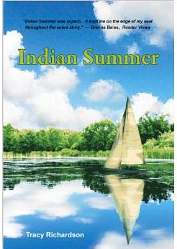
Indian Summer

Written by Tracy Richardson

IndianSummer,pic

Twelve year old Marcie Horton is feeling good about finishing the last day of school, but at the same time is dreading the upcoming summer. While she has always enjoyed spending time at her grandparents’ home on Lake Pappakeechee, this year is different. None of her friends will be going.

Marcie is a talented and competitive athlete, but not one of the “popular girls” at school. Her discomfort is increased when the parents of one of these girls inform her that they have just built a huge house on the lake, and invite her to spend time at their home with their daughter, Kaitlyn.

As the summer unfolds, things get more and more complicated. Kaitlyn pushes Marcie to make decisions with which she is not comfortable. Her loyalties are torn between peer pressure and family. When Kaitlyn’s father plans a development that will threaten the existing lake environment, Marcie is again forced to choose. To make matters worse, strange visions are haunting Marcie. She feels as if she in living both in the past and present. An unexpected turn of events allows her to be drawn by some mystical force to make a miraculous discovery.

In some ways the plot is predictable, yet the characters are compelling and so well-drawn that I read the book in one sitting. This book hits on so many issues that face tweens and teens. A bit of magic, history, fantasy, coming of age, environmental issues, family, and loyalty all combine to make one entertaining story With a page count of just over two hundred pages, it is a bit long for a middle grade read, but the book is a comfortable and easy read. Recommended for ages ten and above with lots of appeal for both boys and girls.

If you enjoyed this post, please subscribe by clicking on the word Follow or by hitting the orange RSS Feed button in the upper right hand corner of this page.

SAFARI GONE WRONG

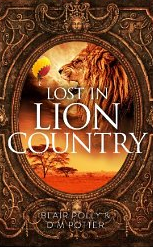
Lost in Lion Country

Written by Blair Polly and D.M. Potter

lostinlioncountry,pic

This book is an interactive adventure for children age ten and above. The setting is Serengeti National Park. A young boy traveling in a Land Rover on safari is our protagonist. He is standing beside the truck taking photos when suddenly it zooms off. No one appears to notice that he is missing. Suddenly he is alone being chased by hyenas faced with his first decision. Should he climb an acacia tree or follow a dried creek bed to get out of viewing range? At the end of each chapter, the reader is given the opportunity to determine the outcome of the story. Each section has two choices. Readers may decide to go back and change their mind or reread the story an entirely different way.

Students will enjoy being in control of the outcome of their adventure. The author provides tips on how to navigate the story on different types of devices. The size of the chapters make them perfect for teachers to use as a short classroom read aloud over a period of several days. Topics are interesting for adventure lovers, environmentalists, animal lovers and enthusiasts of African culture. Highly recommended for reluctant readers. The complexity of text is just right for middle school readers, but is not condescending. As an adult, I found it pleasurable to read as well.

THE DIRT ON DINGOES

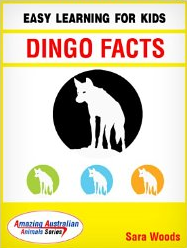
Dingo Facts: Easy Learning For Kids (Amazing Australian Animals)

Written by Sara Woods

DingoFacts,pic

This book is one of the amazing Australian animal series. It will enlighten the reader about what kind of animal a dingo is, where it lives, what it eats, how it moves and breeds, how it is threatened, and why it is important. The book packs a lot of information in thirty-four pages. While the author targets the book as a read aloud for younger children as well as an independent reader for older children, I think it more appropriate for the latter group.

Unfortunately, my travels have not yet taken me to Australian so I am unfamiliar with this animal. Looking at the photos, I immediately thought of a gray wolf and later learned from the author that the dingo is a subspecies of that animal introduced to Australia by seamen about 4,000years ago. I was fascinated to learn that dingoes are double jointed at all their joints, and that they use their paws as we do our hands. They can even open door knobs. Their ears stand straight up and can rotate backwards; they can rotate their heads 180 degrees for better vision. Most dingoes are monogamous and will mate yearly averaging four to six pups for about ten years. The mother will eat, swallow and regurgitate food to feed young much like a bird.

Landowners and hunters are the biggest threat to the dingoes, but crocodiles, snakes, and lack of food and water also factor in their survival. More contact with domestic dogs as urban sprawl progresses could eventually lead to extinction. Farmers who see them as a threat have engineered the world’s largest fence (3,488 miles) to protect sheep and farm lands. But dingoes are special animals because as the only native dog to Australia, they are apex predators at the top of the food chain who protect many smaller mammals and the native natural grasses. Some areas of Australia have set up sanctuaries to protect the dingoes.

This series will eventually include eighteen books about Australian animals. It certainly makes an excellent, well-organized reference source for classrooms in the elementary grades and libraries. Teachers could also use many of these books in science units comparing and contrasting with other animals. Highly recommended for children age seven and up. Adults who read these books to children will find themselves being entertained and informed as well.

If  you enjoyed reading this post, please subscribe by clicking on the word Follow or by hitting the orange RSS FEED button in the upper right hand corner of this page.

COLOR MY WORLD

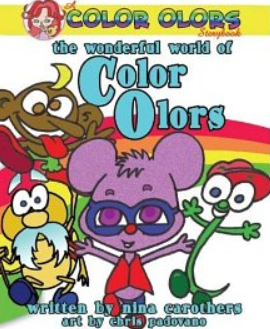
Color Olors Storybook:The wonderful world of Color Olors

Written by Nina Carothers

Illustrated by Chris Padovan

ColorOthers,pic

The author originally came up with the idea for the book in 1993, but she was too occupied with bringing up her four children back then. Fortunately for today’s readers, she used those years to incorporate her own life experiences in these tales of adorable color characters that each have a memorable and valuable life lesson to share with children and their families. The simple, bright and bold illustrations will endear children from toddler to the early elementary grades. Parents and teachers will like the catchy rhymes and moral themes that make this book an excellent choice for a read aloud. This first book previews the color characters, their outstanding traits, and a clue to the story that each will share in their own storybook. Children have the opportunity to find their favorites and read further.

I will present a quick overview of the Color Olors. Silver Ilver is the wisest and their leader who keeps all the other members in line. She reminds me of a cross between a fairy godmother and a teacher. Gold Owl is the oldest; he is steady and true to task. Gray Ray is a two year old who lives at the bottom of the sea and teaches about the meaning of family. Yellow Ellow is always bright and happy like the sunshine; he will not fail to give you something positive to think about. Don’t surmise that the Color Olors are always perfect. White Hite has a habit of telling little white lies. Red Ed likes to share Christmas Holiday traditions; Blue Lue is a caboose who holds things together even though he is last in line. Orange Range is an excellent cook. Brown Rown rides on his bike showing everyone how to preserve our environment, and Black Lack flys around during the night to protect us while we sleep. Green Reen loves to eat his vegetables and teaches us how to be strong and healthy. Purple Urple looks like a little mouse, but he rides a stallion and grants wishes. Last but not least, Pink Ink is dainty fairy who travels with her teddy bear landing on those who might need advice whispered in their ear.

Quite an assortment of characters from which to choose. The series promises to be a hit with parents, teachers and children. Take a peek at the first book with your little one and then decide which character you would like to meet in a unique adventure. Available in kindle and paperback formats.

If you enjoyed reading this post, please subscribe by clicking on the word Follow or by hitting the orange RSS Feed button in the upper right hand corner of this page.

EARTH, OUR PLANET

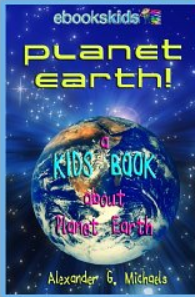
Planet Earth! A Kids Book About Planet Earth-Fun Facts & Pictures About Our Oceans, Mountains, Rivers,Deserts, Endangered Species & More

Written by Alexander G. Michaels

PlanetEarth,pic

The title of this post is much shorter than the name of the book, but in fact the author provides a concise guide to all those things in an e book of less than fifty pages. Targeted for children in the early elementary grades and written in fairly simple language, this guide sets forth basic information combined with beautiful photographs. It can be a asset to the science section of the classroom as well as serve as a quick reference book or starting point for more research. The author might consider releasing a paper edition for libraries and print book lovers.

Michaels begins with the planet’s history, characteristics, composition, and place in solar system. He next outlines the geographic regions of land and water and gives details about well known examples. The section on fun facts is sure to be a favorite among children; it provides a vast compendium of information in sentence form. For example, each winter approximately one septillion snow crystals drop from the sky or that 75% of the earth’s animals could be extinct within the next three hundred years. Michaels concludes with some ideas on how we can preserve the planet for our descendants.

I have to admit that I learned quite a few things from this book. While I knew that most of the Earth’s surface is water, I was not aware that only 3% of the water on earth is fresh water. Did you know that the largest desert in the world is in Antarctica? Where can you find most of the Earth’s gold? How are mountains, volcanoes and rivers formed? There are lots of surprises for adults as well as the children who pick up this book.

Take a look at this beautiful guide to our planet and share it with your children. Michaels has written a whole series of books, including one on the solar system, endangered species, and dinosaurs. I plan on taking a look at those as well.

If you enjoyed this post, please subscribe by clicking on the word Follow or by hitting the orange RSS Feed button in the upper right hand corner of this page.

POETRY MONTH, EARTH DAY, AND EVERYTHING GREEN

Green, An Eclectic Anthology of Poetry & Prose (Silver Birch Press)

Edited by Melanie Villines; contributing editor Joan Jobe Smith.

GreenEclectic,pic

The editors have brought together authors from all over world to display their talents in poetry, short stories, novel snippets and interviews. Their subject is anything green: word meanings, nature, environment, seasons, food, money, emotions, and much more. Some of the material comes from well known authors like L. Frank Baum, Kurt Vonnegut, James Joyce and William Blake. Other selections are chosen from contemporary or lesser known writers. In keeping with the theme, the editors chose to dedicate the anthology to Graham Greene. I found the cover art appropriate; it features a four leaf clover which is a plant that not only is a symbol of good luck but one that enriches the soil.

It is difficult to know where to start in this anthology. The reader need not read the book in chronological order. One might want to select a passage depending on one’s mood or the genre one feels like reading at the time. Editors provide a Table of Contents listing the works by author as well as by Section. The contents by Section are organized by themes. For example, selections are devoted to money, family, environment, envy, and new life. These readings might relate to everyday objects like avocados, lifesavers or green corn tamales. Some touch on places like beaches, subways, and Chicago. There are tales of past and present. Emotions run the gamut from hope to despair. The length of entries range from one to several pages. This book can be picked up for a five minute or a fifty minute read. One of my favorites is “What Can I Do” by Ivon Prefontaine. Here are a few lines:

                                                       Change begins in me.

                                                            I am a catalyst

                                                              I look inside:

                                                      Call forth a gentle spirit-

                                                             Give it voice.

The reading level of the passages vary in difficulty. Again, the reader might want to devote extra thought to some of the more esoteric passages. In general, I would say that the book could be enjoyed by anyone age twelve and older. It certainly would be an asset to the libraries of upper middle grade and high school classrooms. The reader might also use this edition as an introduction to further exploration of other works by authors she enjoyed in this anthology.

If you enjoyed reading this post, please subscribe by clicking on the word Follow or by hitting the orange RSS feed button in the upper right hand corner of this page.