Posts from the ‘children’s books’ Category

VINTAGE VOYAGE

The Rocket Book

Written and illustrated by Peter Newell

TheRocketBook2,pkc

This book was originally copyrighted by Harper and Brothers Publishing in 1912. Peter Newell was born in 1862. He illustrated for Mark Twain and the Alice in Wonderland books. Once relegated to the shelves of the Library of Congress, the book has been reissued in print and digitized versions. It is available online at amazon.com.

As many of my readers know, I am a history lover; I write about history. I live in a house that is more than one hundred years old, and I grew up in an apartment not unlike the “flat” in this story. The illustrations in this book are priceless! Newell uses black and white and muted colors that make the drawings pop. Facial expressions convey the humor and intent of the story. Each part of the story contains eight lines of catchy, clever verse. Even though today’s children may be unfamiliar with many of the items pictured: a Remington typewriter, a wooden hobby horse, a taxidermist with his walrus head, they will get the story from looking at the rhyme and the accompanying illustration.

What is the story? The janitor’s kid named Fritz, who is described as a “bad kid,” finds a rocket in the basement of a twenty-one story apartment building. He lights it up. The reader is taken on a humorous journey following the rocket through an apartment on each of those floors. The mayhem which ensues includes knocking off grandpa’s wig, ripping through a new hat through a hat box, destroying a breakfast table while exploding catchup on the family, and scaring off a burglar in one of the apartments. Where and when does it stop? Take a look at this book to learn a lot about early twentieth century people, clothing, and lifestyle. This book will appeal to adults interested in vintage objects and children age eight and up who enjoy humor, a good verse, and a dose of history.

If you enjoyed this post, please subscribe by clicking on the word Follow or by hitting the orange RSS feed button in the upper right hand corner of this page.

FOOD FOR THOUGHT

Thought Soup: A Story for Youngsters and the Adults Who Love Them

Written by Lyle Olsen

Illustrated by Marnie Webster

ThoughtSoup,pic

This short e book packs a lot of punch in a few pages. A stranger ambles into a small town carrying an iron kettle on his back. He unloads it in the middle of the town square and proceeds to set up cooking. The townspeople distrust him, having been tricked into contributing to strangers many times before. When the mayor confronts the stranger as to what he intends to cook; he answers, “thought soup” and offers to demonstrate.

The stranger says that he will solicit thoughts from them and pulls out a large sack from his belongings. He requests each of the townspeople place his head in the sack and deposit his thoughts within. Once they are finished, the stranger empties his sack into the boiling water and asks that each bring a bowl and spoon to taste the soup. Much to their surprise, the soup is so bad that many believe themselves to be poisoned. The stranger admits that the soup tastes bad. All the citizens want to run him out of town, but the stranger convinces them to give him another chance with dinner. If they will only think delicious thoughts, he will produce a wonderful soup. So they throw him into jail until supper.

During that same day, the townsfolk reflect on what could have made that soup taste so bad. Each of these colorful characters remember how negative their thoughts were that morning and think about how to make their lives better. For example, the candlestick maker realizes how greedy she has been and resolves to make better candlesticks quicker using cheaper materials while offering better prices. The town crier admits to himself that he has been spreading gossip and should concentrate on positive things. Even the mayor recognizes that deep inside he has not lived up to his campaign promises and owes it to the citizens to do a better job.

Dinner time arrives and the soup-maker is released. Each of the townspeople once again add their thoughts to the sack. There were so many positive thoughts they had to use a basket to keep the sack from flying away. How do you think the soup will taste? What will happen to the stranger and the members of the town in the future? Our author ends the book with the caveat, “This is Not the End.”

This book is really a delightful read for children and adults. I would recommend it as an independent read for ages eight and up, but parents and teachers can certainly use it as a read aloud and valuable teaching tool to discuss how our negative feelings can poison ourselves and others. My one regret is that the pictures were not larger and more detailed because the nostalgic setting and characters are charming, and if illustrated in detail, would really bring this book to life.

If you enjoyed this post, please subscribe by clicking on the word Follow or by hitting the orange RSS feed button in the upper right hand corner of this post.

A JOURNEY THROUGH TIME

Alice’s Adventures In Wonderland

Written by Lewis Carroll and illustrated by John Tenniel

e Book design by Marie-Michelle Joy

Aliceinwonderland,pic

I picked up this new e book version of the classic Victorian tale on a whim. What I did not expect was a totally new perspective on this classic fantasy tale.

As a child I read the book, but did not much care for it. After doing a bit of research I discovered that Carroll (real name Charles Dodgson) told this story to a friend and his three young children while enjoying a boat ride. The children were so pleased with it that he decided to write it down and commission John Tenniel to do the drawings for the publication. Dodgson was a mathematician intrigued by the math and science that was being applied daily to inventions as England was entering the Industrial Revolution. His other interests included reading, poetry and photography.

Alice was modeled on one of these three girls. She is curious and polite. The character in the story displays fear and courage, resilience, and the ability to adapt to change. The anthropomorphic characters she encounters are a strange bunch; some of them like the Cheshire Cat and the Caterpillar appear to teach her, while others like the Mock Turtle and the Flamingo appear sillier and more frivolous. A careful reading will produce numerous evidences of mathematical reasoning and the importance that the author attaches to mathematics in the world around us; yet the reader’s main focus centers on the trials and tribulations that Alice must face from the time she falls into the rabbit hole: how she must swim herself across the sea of tears to face the challenges that many creatures present, to her ultimate escape from the nefarious Queen of Hearts at the trial, which almost results in her losing her head! Alice learns to think on her feet quickly in this coming of age tale.

Adult readers will reminisce and recall many of the famous quotations, like “Off with his head,” and “Curious and curiouser.” Tenniel’s woodcut engraved illustrations are etched in time and delight the eye, whether in black and white or in color. The beautiful scroll work that edge the pages are a reminder of the care taken with printing books long ago. Alice is a strong, intelligent character who maintains the proper balance between respect and independence; she is probably one of the first strong female models in modern literature. This book can be used as wonderful tale for family discussion on so many levels. I would recommend it for tweens and teens as well.

If you enjoyed reading this post, please subscribe to this blog by clicking on the word Follow or by hitting the orange RSS feed button in the upper right hand corner of this page.

BULLY FOR YOU!

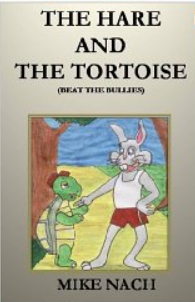
The Hare And The Tortoise (Beat The Bullies!)

Written by Mike Nach

TheTortoiseandtheHare,pic

This book is certainly not a rehash of the familiar tale, but rather a unique guide on the problem of bullying written to inform, entertain and enlighten children and adults. In the introduction, the author presents an overview on what bullying is, the effects of bullying, and the problems it causes. He promises that the story will help out victims of bullying.

His story is set in the peaceful forest where an alligator, bear, owl and python maintain law and order. Harry Hare is a natural athlete. His wife, Cathy scolds him for his vanity and tells him, “Your attitude sucks.” On the other hand, Tom Tortoise and his family are the slowest creatures in the forest, but they are kind and peaceful. One day while on his way to collect mushrooms for his family, Tom is accosted by Harry who taps on his shell and belittles him for his slowness. Poor Tom tries to avoid Harry and becomes troubled and anxious. But one day, Mr. Fox notices his worry and assures Tom he has a plan. Tom follows his suggestion, even though he is not confident that the plan will work. Harry will learn his lesson and Tom will have a peaceful life once more.

That is not the end of the lesson for the reader. In the second half of the book Nach provides a summary of the seven types of bullies: verbal bullies, emotional bullies, physical bullies, cyber bullies, sexual bullies, racist/status bullies, and adult bullies. More importantly, he sets up an action plan for the victims of bullies to pursue. The strategy includes remaining calm and confident, avoiding the bully whenever possible, controlling your emotions, reporting all instances to an authority figure, blocking gossip from the bully, and learning self defense. Nach’s final advice to a victim of bullying is never give up on yourself or give in to bullying others.

I recommend this book to parents, librarians, and teachers as an much needed and effective guide to introducing and discussing the problem of bullying to all school age children. The author does not preach, rather he talks to children in language they understand using phrases like, “whatever” and “don’t mess with me.” Makes the reader feel as if he is speaking with a good friend discussing a problem. In my opinion, that is what makes this book so enjoyable, informative and effective.

If you enjoyed reading this post, please subscribe by clicking on the word Follow or by hitting the orange RSS feed button in the top right corner of the page.

TOWER OF FEAR

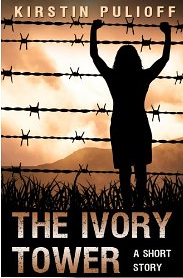
The Ivory Tower

Written by Kirstin Pulioff

The Ivory Tower,pic

This is a well written short story set in a dystopian world where fear and repression are the norms of everyday living. The colorful descriptions and lively verbs guide the reader on an adventure in which she will be eager to proceed on course with the heroine, Simone, and at the same time, be terrified of the outcome.

As the story opens, the reader meets two young friends named Simone and Christine, who are on very different social levels in the camp and bear totally opposite personalities. Simone is number 277 because she is an orphan. Sometimes she does not even receive food rations. Christine is number 35; she and her family are considered productive citizens. The army is present to protect the citizens by keeping them in a restricted area which is free from contaminants of a recent disaster. Young children attend school, but begin laboring in the factory as soon as they are old enough. Everyone is prohibited from going near an old rusted tower that lies at the end of the forest.

Simone and Christine are enjoying their last days of freedom before factory assignments. They are playing hide and seek when Simone gets near the fence and spies the tower. Christine urges her to retreat because she gets in trouble and is beaten by her parents when they find out she has been near the edge of the forest. They warn her of the contaminants and punishment for risking disease by going there. A few days later, Simone urges Christine to play hide and seek one more time. Reluctantly, she agrees. Of course the fearless and curious Simone takes off straight to the tower. While Christine waits outside, Simone gains entrance. She finds duplicate pictures of those in the camp and monitors that are spying on its citizens. Soon she hears footsteps and the approach of one of the soldiers. Desperately, she tries to make her escape. He informs her that they are there to “protect all citizens” whether they realize that or not.

Before the close of the story, Christine and her friend are reunited in the hospital, but Simone is wounded and branded. Will she become another dutiful citizen or do further adventures await this young citizen who does not appear willing and able to conform to camp life? Can their friendship survive?

Children ages eight and up, especially those who love dystopian adventures, will surely enjoy this fast paced and well written short story. This reader is already looking forward to a sequel.

If you enjoyed reading this post, please subscribe by clicking on the word Follow or by hitting the orange RSS feed button in the upper right hand corner of this page.

FORMULA FOR READING SUCCESS

Johnny’s Adventure Makes Reading Fun

Written by Jodi DeSautels

Illustrated by Sarah Bowman

Johnny's Adventure in Readingpic

The story begins with a familiar scene for many parents. It’s a rainy day and Johnny cannot go outside. His mother suggests that he read a book, but Johnny does not want to read. In school he is often a victim of bullying because he reads too slowly and has trouble sounding out the words.

Fortunately, Johnny’s mom encourages him by inquiring what kind of adventure would he like to experience. Maybe he could transform himself into a hunter, king, acrobat or adventurer. When he says that he he would like to travel to outer space, she accommodates him by helping Johnny find a helmet, walkie-talkies and a refrigerator box for a spaceship. Together they use their imaginations and bodies to act out a space launch scenario.

Johnny now feels so much better about himself. His mom takes advantage of that to urge him to write and illustrate a story about the adventure. She continues to draw him into conversations that will extend learning as he gets deeper and deeper into the project. In no time at all, Johnny has stretched his knowledge base and enriched his vocabulary.

This book will not only provide an enjoyable story of encouragement for reluctant readers in the early grades of elementary school, but also allows parents and teachers to use it a a teaching model. This adventure  provides a warning about the effects of bullying on the self-esteem of children. The author makes her points simply and effectively. I recommend that you take a look.

If you enjoyed reading this post, please subscribe by clicking on the word Follow or by hitting the orange RSS feed button in the upper right hand corner of this page.

MICKEY’S MAGIC

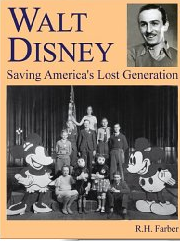
Walt Disney: Saving America’s Lost Generation

Written by R.H. Farber
WaltDisney,pic

I thought I knew quite a bit about Mickey Mouse and the Mickey Mouse Club TV show that I enjoyed watching on TV while growing up in the fifties. Turns out, the Micky Mouse Club involved a lot more than the TV show, and its origin happened quite by accident.

Back in 1927, the young Walt Disney signed a one year contract with Universal Pictures to do animated films with his new creation, Oswald the Rabbit. After the contract expired, Walt learned that he had been misled. A loophole in the contract gave Universal full ownership of the character. To make matters worse, the studio had stealthily hired Walt’s best animators so they could continue making the cartoon. Walt refused to deal with the studio and developed a new character, a mouse named Mortimer. His wife encouraged him to change the name to Mickey, and so the soon to be famous character was born. When Disney decided to produce his third Mickey cartoon, Steamboat Willie with sound, it met with rave reviews.

Children were flocking to the movies to see the cartoons that preceded the movie. An entrepreneur named Harry Woodin of the Fox Dome Theater had a brilliant idea. He suggested to Disney that they launch a fraternity for children which would focus on the latest Disney cartoon. Walt’s brother, Roy, worked with Woodin to develop the club with Mickey Mouse as its central character. Walt was delighted that these clubs could teach children about values he thought were important: honesty, integrity, compassion and patriotism. He insisted that these clubs be made available to all children regardless of race, creed or sex. Club membership was open for children in grades one through seven; children had to be enrolled in a school. They needed to maintain high grades and moral values. All members were eligible for election to officer positions. The first club opened in September, 1929, and by 1933, three million children were enrolled. The Saturday meeting with entertainment, contests, and child centered activities helped lift the spirits of children and parents during the Depression when there was so little to be hopeful about.

Mickey Mouse became a role model to children and adults. Merchandise and advertising sprung up everywhere. Mickey Mouse and his character friends became associated with every major holiday and event like the Macy’s Thanksgiving Day Parade. Mickey became a part of weddings and family vacations. The California Pacific Exposition and the New York World’s Fair featured the cartoon character. Mickey became a symbol of all that is good versus all that is evil in society. By the time World War II came around, the original Mickey Mouse Club members would find his name and image a significant inspiration in war operations.

This book contains pictures of priceless Disney mementos. There are movie posters, flyers, pictures of historical events, touching photos of Disney and his family, as well as Disney merchandise and the adorable children who enjoyed it. Personally, I wish the author would have continued the saga into the later stages in the fifties and beyond with the advent of television and the development of Disneyland. Perhaps too much time was spent on the early years. Unless, of course, the author plans to write another book finishing the story to the end of Disney’s life. If you are in the mood for some nostalgia and an uplifting read, this book is recommended for ages eight through eighty.

If you enjoyed this post, please subscribe by clicking on the word Follow or by hitting the orange RSS feed button in the upper right hand corner.

Mid-Winter Blues? SUGGESTED READS FOR KIDS

Maybe you have had the children home all week for midwinter break. Much of the Western Hemisphere has been in the deep freeze for awhile now. Ready for some reading suggestions that are family friendly. I recently participated in a blog hop which shared some interesting book links.

Take a few minutes to take a look….

Turtle Wish by Murielle Cyr

I’m Proud to be Natural Me by Marlene Dillon
http://www.amazon.com/Im-Proud-Be-Natural-Me/dp/1470151995 

 Miro by Saoirse O’Mara
http://mirodrakonia.wordpress.com/the-miro-series-die-miro-reihe/

 Fiddle and Dee and the Bedtime Band by Lindsay Brant Brumwell
http://www.amazon.com/dp/B00IICQHMM 

Picture Books by Rhonda Patton
http://www.amazon.com/s/ref=nb_sb_noss_1?url=search-alias%3Daps&field-keywords=Rhonda+Patton 

Jazzyland by Gia De Saulnier

Amazing Matilda by Bette Stevens

Little Miss History (series) by Barbara Ann Mojica
LMHFrontCoverWithISBN

Books by Corine Dehghanpisheh

The Wiggly Squiggly Princess by Alissa Dix (Maureen)

 The Tangram Zoo and Word Puzzles Too! by Bette A. Stevens

The Wonderf ul World of Color Olors by Nina Carothers
http://www.amazon.com/s/ref=nb_sb_noss?url=search-alias%3Daps&field-keywords=nina+carothers

BEDTIME BONANZA

LOTS AND LOTS (RHYMING CHILDREN BEDTIME STORIES)

Written by Peter Collier

Lots and Lots pic

What a refreshing collection of amusing short stories written in rhyme! This collection is very different from the typical bedtime fairytale or animal story. I especially like the fact that the featured character is a very bright little girl named Frances Nicolson, who just can’t stop asking questions. She inquiries about common everyday activities like baking a cake without a recipe and using the wrong kind of pebble as a skipping stone. Frances questions her neighbor about the funny words he uses like, “Hunky Dory” and “old curmudgeon.” She refuses to believe in tales like the Loch Ness Monster because they can’t be proven. Her imagination is unlimited: Frances uses her own backyard to go on an African safari, have tea with kings and queens, and climb the world’s highest mountain.

Frances’ curiosity is insatiable. Some of her questions include:

Do you have any bellybuttons?
If chickens are boneless, how could they walk?
What’s the difference between hunks and chunks?

When the circus came to town, Frances had all sorts of questions for the clowns like what is the reason for their baggy pants and why don’t they get dizzy from standing upside down all the time. Frances has a friend named Susan Jane who has a habit of exaggerating the truth. That exasperates Frances because she just has to have the right answer! There is only one time when Frances is quiet. Can you guess when?

The bottom line of this enticing book is that you cannot learn without asking questions. That might be annoying to parents and teachers, at times, but it is the way all children enrich their minds. Collier is to be commended for a clever story line and a character who represents a wonderful role model for children.

MONSTER MELANGE

Monsters I Know (Rhyming Bedtime Stories

Written and illustrated by Peter Collier

MonstersIKnow, picThis book would make a delightful Halloween read. The types of monsters are unorthodox and most of them are not very scary! First, the reader encounters The Big Foote Belly Button Lint monster. He lives at the feet of Thomas Mcfee’s bed. It began as some belly button lint and grows bigger every day eating only colored string. There is a Hungry Tree who walks about eating farm animals, the Smelly Kiss, Smelly Sam stomach gasses monster, a Spaghetti Dinner Monster, and the Dead End Rubbish monster.

Perhaps the scariest is the cursed School Chair monster.
The author describes it as,

“One moment you’re there
and the next you’ll be gone;”

The Jones family certainly lived to regret not getting rid of The Fridge. I won’t give away its secrets except to say,

“No one goes near it anymore:
Never will anyone open its door;
All it does now is snarl and snore.”

Children age six and up will love the absurdity and the silliness in these rhymes, although some of the vocabulary will not be understood by younger readers This kind of slapstick humor is especially appealing to middle grade boys. Although the concepts are clever, the rhymes are sometimes a bit forced. There are some issues with punctuation and line placement. In this kindle version, the illustrations are very small. Larger pictures would have added a lot more to the desired effect of the tales. On the other hand, if you are looking for a very different and funny Halloween book of short tales, this one will surely fit the bill.

If you enjoyed reading these posts, please subscribe by clicking on the word Follow or by hitting the orange RSS feed button in the upper right hand corner of this page.

NEOLITHIC NIGHTMARES

Angel Bones (Angel Cats)

Written by Linda Deane

Angel Bones,pic

This is the second book in a series exploring the somewhat mystical and supernatural powers of cats. But make no mistake, this book is not a fantasy novel. It is set in the neolithic age on the island of Cyprus on which recent archaeological excavation has revealed, cats were present in the neolithic period, about six thousand years before their domestication in Egypt.

It is a short novella, yet the plot explores characters in depth and there are many twists and turns in the adventurous life of Melita, Yannis and their three children. They have been driven from their home on the mainland to flee in a makeshift boat in the dark of night due to the jealousy and superstition of their peers. A trader named Andros attempted to woo Melita and when she refused him, he spread rumors implicating her as a sorceress because of her gift in communicating with animals, especially the strange creatures later known as cats. He was also jealous of Melita’s husband, who was a gifted tool maker and pottery artisan. Their terror escalated until the family feared for their lives.

Eventually they land on an island only to find a strange people who had never seen cats. Over a period of time, the family earns the trust and respect of the village. However, as they settle into a peaceful existence, trouble looms on the horizon once more as a hunting party from the mainland arrives to stir up trouble in the tranquil settlement. Melita and her daughter called Eleni will have to summon all their strength and powerful connections with Tammy, their cat, in a desperate effort to survive and save the community.

The author develops the characters well; the reader quickly identifies with the personalities of each and the conflicts each must face, whether they be good or evil in intent. There are many twists and turns in this short read. One senses the overwhelming hardships and difficulties early humans faced in their daily existence in the face of the powerful forces of nature and the brute force of a “might makes right” philosophy. Tweens, teens and adults will all enjoy this carefully researched historical fiction story with just a tinge of the supernatural. I am looking forward to more in the series.