This book is part of an adventure, detective series. Steve, Matt, and Jenny are twelve-year-old amateur sleuths who love to solve mysteries. They call themselves, The Decoders.
In this selection, Book 2, the detectives are thrilled that they have been invited to be extras in a movie. When they begin filming, the trio discover that a saboteur has been destroying equipment and causing mischief on the set.
Young detective readers will enjoy figuring out the clues to solve the mystery.
Middle-grade detective and adventure story fans should enjoy this series.
SUBSCRIBE TO THIS BLOG FOR NEW BOOK REVIEWS EVERY WEDNESDAY AND SUNDAY.
Publisher: Beach Lane Books | ISBN-13: 9781534451056
About the Book: Discover the true story of how a shy miner’s daughter became one of the most legendary costume designers in Hollywood in this inspiring nonfiction picture book biography.
As a child in the small mining town of Searchlight, Nevada, Edith Head had few friends and spent most of her time dressing up her toys and pets and even wild animals using fabric scraps. She always knew she wanted to move somewhere full of people and excitement. She set her sights on Hollywood and talked her way into a job sketching costumes for a movie studio.
Did she know how to draw or sew costumes? No. But that didn’t stop her!
Edith taught herself and tirelessly worked her way up until she was dressing some of the biggest stars of the day, from Audrey Hepburn to Grace Kelly to Ginger Rogers. She became the first woman to head a major Hollywood movie studio costume department and went on to win eight Academy Awards for best costume design—and she defined the style of an era.
Jeanne Walker Harvey studied literature and psychology at Stanford University and has worn many job hats, ranging from being a roller coaster ride operator to an attorney, a middle school language arts teacher, and a long-time docent for school groups at the San Francisco Museum of Modern Art. She is the author of several books for young readers, including the picture book biographies Dressing up the Stars: The Story of Movie Costume Designer Edith Head,Ablaze with Color: A Story of Painter Alma Thomas, and Maya Lin: Artist-Architect of Light and Lines. Jeanne lives in Northern California.
Diana Toledano is an illustrator, writer, and educator. She is also a Pisces who loves children’s books, patterns, and dancing her heart out. Originally from Spain, Diana (pronounced the Spanish way: dee-ah-na) grew up in Madrid where she studied art history and illustration. Now she lives in San Francisco with her husband and two fluffy cats. Her mixed media art seeks to capture the magic of the ordinary. Diana’s product designs, picture books, board books, and chapter books have been published and sold all over the world. Diana also teaches workshops for kids and adults. She enjoys doing school visits and speaking at conferences.
This is a beautifully illustrated picture book that relates the biography of Edith Head, the famous Hollywood costume designer.
Edith seemed an unlikely candidate for such a career. She grew up in isolated mining towns in the desert; her father worked as a mining engineer. Edith grew up with few friends, so she dressed up pets and invented make-believe friends with scraps of fabric. When she moved to Searchlight, Nevada, Edith created costumes for her two girlfriends.
Life changed when her mother sent her to high school in Los Angeles. There she fell in love with the movies. After attending college, she got a job drawing costumes. At first, she failed, but Edith worked hard until she became an Academy Award winning costume designer.
Edith provides a strong female role model for young girls everywhere, proving to them that through arduous work, determination, and perseverance, anyone can achieve a dream.
I would highly recommend this gorgeous picture book for primary grade readers, especially those interested in fashion design and the movies.
GIVEAWAY
Enter for a chance to win a set of five copies of Dressing Up the Stars: The Story of Movie Costume Designer Edith Head!
Five (5) winners receive:
A set of five copies of Dressing Up the Stars: The Story of Movie Costume Designer Edith Head
Do you ever feel stuck in rut? Want to find some fresh ideas?
Here are some things I do to get my juices flowing:
Invent a brand new character
Use the conditional term, What if? to create new possibilities and scenarios
Reimagine a character or a setting from a previous book or article and give it a new perspective.
Watch a movie, documentary or TV show that feature the genres in which you write.
Read books in many types of genres. Mix up the classics with new releases.
When reading periodicals, clip articles of interest and revisit them from time to time for new ideas.
Do the same with photos. You can put them into groups like travel, people or memorable events.
Eavesdrop wherever you go. Listen to what members of each generation are talking about on public transportation, at the park or on the street.
Hang out with people in different age groups. Learn about what generates their interest. Include these ideas when targeting that age group.
If you enjoyed reading this post, please subscribe by clicking on the word Follow or by hitting the orange RSS FEED button in the upper right-hand corner of this page.
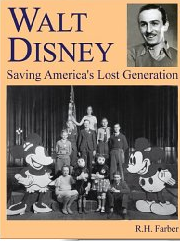
I thought I knew quite a bit about Mickey Mouse and the Mickey Mouse Club TV show that I enjoyed watching on TV while growing up in the fifties. Turns out, the Micky Mouse Club involved a lot more than the TV show, and its origin happened quite by accident.
Back in 1927, the young Walt Disney signed a one year contract with Universal Pictures to do animated films with his new creation, Oswald the Rabbit. After the contract expired, Walt learned that he had been misled. A loophole in the contract gave Universal full ownership of the character. To make matters worse, the studio had stealthily hired Walt’s best animators so they could continue making the cartoon. Walt refused to deal with the studio and developed a new character, a mouse named Mortimer. His wife encouraged him to change the name to Mickey, and so the soon to be famous character was born. When Disney decided to produce his third Mickey cartoon, Steamboat Willie with sound, it met with rave reviews.
Children were flocking to the movies to see the cartoons that preceded the movie. An entrepreneur named Harry Woodin of the Fox Dome Theater had a brilliant idea. He suggested to Disney that they launch a fraternity for children which would focus on the latest Disney cartoon. Walt’s brother, Roy, worked with Woodin to develop the club with Mickey Mouse as its central character. Walt was delighted that these clubs could teach children about values he thought were important: honesty, integrity, compassion and patriotism. He insisted that these clubs be made available to all children regardless of race, creed or sex. Club membership was open for children in grades one through seven; children had to be enrolled in a school. They needed to maintain high grades and moral values. All members were eligible for election to officer positions. The first club opened in September, 1929, and by 1933, three million children were enrolled. The Saturday meeting with entertainment, contests, and child centered activities helped lift the spirits of children and parents during the Depression when there was so little to be hopeful about.
Mickey Mouse became a role model to children and adults. Merchandise and advertising sprung up everywhere. Mickey Mouse and his character friends became associated with every major holiday and event like the Macy’s Thanksgiving Day Parade. Mickey became a part of weddings and family vacations. The California Pacific Exposition and the New York World’s Fair featured the cartoon character. Mickey became a symbol of all that is good versus all that is evil in society. By the time World War II came around, the original Mickey Mouse Club members would find his name and image a significant inspiration in war operations.
This book contains pictures of priceless Disney mementos. There are movie posters, flyers, pictures of historical events, touching photos of Disney and his family, as well as Disney merchandise and the adorable children who enjoyed it. Personally, I wish the author would have continued the saga into the later stages in the fifties and beyond with the advent of television and the development of Disneyland. Perhaps too much time was spent on the early years. Unless, of course, the author plans to write another book finishing the story to the end of Disney’s life. If you are in the mood for some nostalgia and an uplifting read, this book is recommended for ages eight through eighty.
If you enjoyed this post, please subscribe by clicking on the word Follow or by hitting the orange RSS feed button in the upper right hand corner.


 May 29, 2024
 bamauthor
 Comments Off on AN UNEXPECTED CULPRIT





 Barbara Ann Mojica's BLOG
You must be logged in to post a comment.